MAHAAVAAKYA MANJOOSHA
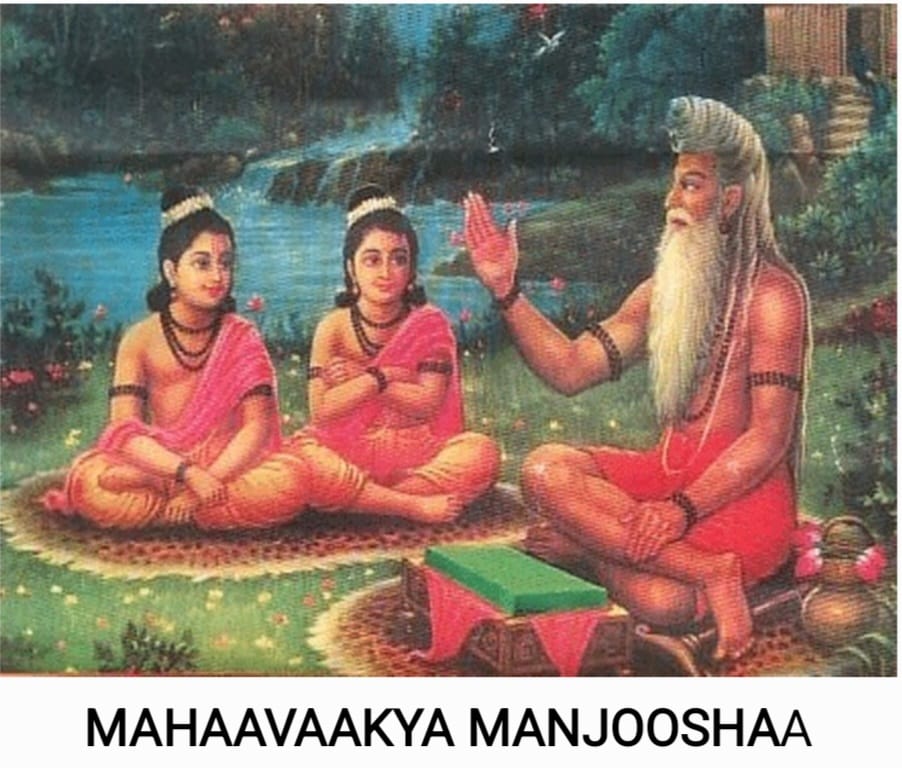
SHVETAASHVATARA UPANISHAD
ॐ श्री गुरुभ्यो नमः। ॐ श्री भवानिशङ्कराय नमः।
ॐ श्री मात्रे नमः।
JAI SHANKAR. SHVETAASHVATARA UPANISHAD
This Upanishad belongs to KrishNa Yajurveda
and its शान्ति मन्त्र is सह नाववतु सह नौ भुनक्तु सह वीर्यं
करवावहै तेजस्विनावधीतमस्तु मा विद्विषावहै।। ॐ शान्तिः शान्तिः शान्तिः।।(Already explained in an earlier series).
‘AS’ begins His commentary thus: श्वेताश्वतरोपनिषद्
इदं विवरणमल्पग्रन्थं ब्रह्मजिज्ञासूनां सुखावबोधाय आरभ्यते।
(To facilitate easy understanding for those desirous of knowing Brahman, this commentary is begun on Shvetaashvatara Upanishad, which is small in size and is less knotty)(Alpa grantha has two meanings, says Revered Swami Akhandananda Saraswati – it is small in compass and has fewer knots(granthi ) to puzzle us intellectually. Upanishads like Chhandogya and BRIHADAARANYAKA are hard nuts to crack. Not so this Shvetaashvatara
Upanishad, which is a compilation by sage Shvetaashvatara.
Revered Swami Harshanandaji of RKM says: “This Upanishad starts with a discussion by some sages on the ultimate cause of this world and comes to the conclusion, in the very first chapter, that the Devaatmashakti or the inherent power of God, is that cause. This truth is discovered by them through meditation
(Dhyaana Yoga). This is followed by a description of जीवात्मन् and परमात्मन् through various elegant phrases.”
SHVETAASHVATARA UPANISHAD
ॐ श्री गुरुभ्यो नमः। ॐ श्री भवानिशङ्कराय नमः।
ॐ श्री मात्रे नमः।
JAI SHANKAR. SHVETAASHVATARA UPANISHAD
This Upanishad belongs to KrishNa Yajurveda
and its शान्ति मन्त्र is सह नाववतु सह नौ भुनक्तु सह वीर्यं
करवावहै तेजस्विनावधीतमस्तु मा विद्विषावहै।। ॐ शान्तिः शान्तिः शान्तिः।।(Already explained in an earlier series).
‘AS’ begins His commentary thus: श्वेताश्वतरोपनिषद्
इदं विवरणमल्पग्रन्थं ब्रह्मजिज्ञासूनां सुखावबोधाय आरभ्यते।
(To facilitate easy understanding for those desirous of knowing Brahman, this commentary is begun on Shvetaashvatara Upanishad, which is small in size and is less knotty)(Alpa grantha has two meanings, says Revered Swami Akhandananda Saraswati – it is small in compass and has fewer knots(granthi ) to puzzle us intellectually. Upanishads like Chhandogya and BRIHADAARANYAKA are hard nuts to crack. Not so this Shvetaashvatara
Upanishad, which is a compilation by sage Shvetaashvatara.
Revered Swami Harshanandaji of RKM says: “This Upanishad starts with a discussion by some sages on the ultimate cause of this world and comes to the conclusion, in the very first chapter, that the Devaatmashakti or the inherent power of God, is that cause. This truth is discovered by them through meditation
(Dhyaana Yoga). This is followed by a description of जीवात्मन् and परमात्मन् through various elegant phrases.”
01. ब्रह्मवादिनो वदन्ति – किं कारणं ब्रह्म कुतः स्म जाता जीवाम केन क्व च सम्प्रतिष्ठाः। अधिष्ठिताः केन सुखेतरेषु
वर्तामहे ब्रह्मविदो व्यास्थाम्।।(1-1)
01. Disciples inquire within themselves: What is the cause of this universe? Is it Brahman? Whence do we come? Who gives us life?
Where shall we at last find rest? Under whose command are we bound by happiness and its opposite?
02. कालः स्वभावो नियतिर्यदृच्छा भूतानि योनिः पुरुष इति
चिन्त्या। संयोग एषां नत्वात्मभावादात्माप्यनीशः सुखदुःखहेतोः।।
(1-2)
02. Time(which brings about modifications कालो नाम सर्वभूतानां विपरिणामहेतुः), nature(the intrinsic property like heat in fire स्वभावो नाम पदार्थानां प्रतिनियता शक्तिः अग्नेरिव औष्ण्यम्), destiny(Outcome of our good and bad deeds पुण्यपाप लक्षणं कर्म), chance(आकस्मिकी प्राप्तिः sudden happening), matter(पञ्च महभूतानि), the intelligent self(पुरुषः विज्ञानात्मा – none of these nor a combination of these, can be the ultimate cause (योनिः) of the universe. The dependent individual self cannot be the cause as he is himself subject to happiness and misery and hence, not free.
03. ते ध्यान्योगानुगता अपश्यन् देवात्मशक्तिं स्वगुणैर्निगूढाम्।यः कारणानि निखिलानि तानि कालात्मयुक्तान्यधितिष्ठत्येकः।।
(01-3)
03. The seers, absorbed in contemplation, saw within themselves the ultimate Reality, the
Self-luminous Being, the One God, with His intrinsic power. He is the One without a second. Deep within all beings He dwells, hidden from sight by the coverings of the guNa-s(satva rajas tamas). He presides over all (eight) apparent causes alluded to in second Mantra, beginning with time and upto the self.
NOTE: AS says: Dhyaana is concentration of the mind. That itself is Yoga since it serves to unite (the साधक) with the object of (his/her) contemplation.(ध्यानं नाम चित्तैकाग्र्यं तदेव योगो युज्यते अनेनेति ध्यातव्यस्वीकारोपायः।). His intrinsic power is
creation, sustenance and dissolution of the universe, symbolised respectively by Brahmaa, VishNu and Shiva.(देवस्य परमेश्वरस्य आत्मभूतां जगदुदय
स्थितिलयहेतुभूतां ब्रह्मविष्णुशिवात्मिकां शक्तिमिति।).
04. सर्वाजीवे सर्वसंस्थे बृहन्ते अस्मिन् हंसो भ्राम्यते ब्रह्मचक्रे।
पृथगात्मानं प्रेरितारं च मत्वा जुष्टस्ततस्तेनामृतत्वमेति।।
(01-6).
04. This vast universe is a wheel. Upon it are all creatures that are subject to birth, death and rebirth. Round and round it turns, and never stops. It is the wheel of Brahman. As long as the individual self thinks it is separate from
Brahman, it revolves upon the wheel in bondage to the laws of birth, death and rebirth. But, when through the grace of Brahman it realises its identity with Him, it revolves upon the wheel no longer. It achieves
immortality. (For the first time the image of wheel is applied to birth, death and rebirth in the Upanishads).
NOTE: God is the life of all, so the adjective
सर्वाजीव(सर्वेषां जीवनम् अस्मिन् इति). All are dissolved in Him(at the time of dissolution),hence the adjective सर्वसंस्थ(सर्वेषां संस्था प्रलयो यस्मिन् इति). The
Jeeva is called Hamsa in this Mantra because he moves, हन्ति, on the road of Samsaara (हन्ति गच्छति अध्वानम्). Why does he
suffer this fate? Because, he is not aware of his identity with God(जीवेश्वर भेददर्शनेन संसारे परिवर्तत
इत्यर्थः).When does he realise his immortality?
By realising ‘I am Divine’ (अहं ब्रह्मास्मीति समाधानं कृत्वा अमृतत्वमेति). In one of His last discourses,
Sri Satya Sai Baba urges us very emotionally to remind ourselves daily ‘I am God, I am God,
I am God’ (meaning I am divine, not a brute).
05. संयुक्तमेतत् क्षरमक्षरं च व्यक्ताव्यक्तं भरते विश्वमीशः।
अनीशश्चात्मा बध्यते भोक्तृभावात् ज्ञात्वा देवं मुच्यते सर्वपाशैः।।
(1-8)
05. The Lord supports this universe, which is made up of the perishable and the Imperishable, the manifest and the unmanifest. The individual soul, forgetful of the Lord, attaches himself to the idea that he is the enjoyer and is thus bound. When he comes to the Lord, He is freed from all fetters.
NOTE: There are three gems of wisdom in this Mantra. 1) The Jeeva(individual soul) is not his own master. He is swayed by माया, which is a power of God. The Lord says in Gita that only they can crossover माया, who surrender to Him.
(7-14 दैवी ह्येषा गुणमयी… तरन्ति ते।). 2).Bondage results when one beguiles himself with the false notion that he is the doer(कर्ता) and the enjoyer(भोक्ता) whereas the truth is कर्ता भोक्ता महेश्वरः HE is the Doer and the Enjoyer. 3) Release from all the bonds is possible ONLY WHEN God-Realization (ज्ञात्वा देवम्) takes place.
06. क्षरं प्रधानम् अमृताक्षरं हरः क्षरात्मानौ ईशते देव एकः।
तस्याभिध्यानाद् योजनात् तत्त्वभावात् भूयश्चान्ते विश्वमाया निवृत्तिः।।(1-10)
06. Prakriti is perishable, the Imperishable soul is immortal . Hara( the destroyer of ignorance,
हरति अज्ञानम्) is Imperishable, immortal. He is the One God, the Lord of the perishable Prakriti and of all souls. By meditating on Him, by uniting oneself with Him, by identifying
oneself with Him, one gets over finally माया which deludes the world.
NOTE: Here again there are three gems. When does the world-deluding माया beat a hasty retreat? The answer is: 1) by meditation अभिध्यानाद्. 2) by nurturing a bond with Him with heartfelt devotion and 3) by imbibing the truth,
तत्च, of AHAM BRAHMAASMI.
07. ज्ञात्वा देवं सर्वपाशापहानिः क्षीणैः क्लेशैः जन्ममृत्युप्रहाणिः।
तस्याभिध्यानाद् तृतीयं देहभेदे विश्वैश्वर्यं केवलः आप्तकामः।।
(1-11)
07. Know God and all fetters will be loosened.
With the withering of the afflictions(अविद्या अस्मिता राग द्वेष अभिनिवेश), birth and death will be no more. Meditate upon Him and rise over body-consciousnss(देहभेद). Thus will you reach union with the Lord of the universe who is One without a second. In Him all your desires will find fulfilment.(Liberation is the third, तृतीयम्, the two जन्म मरण being transcended forever.
09. एतत् ज्ञेयं नित्यमेवात्मसंस्थं नातः परं वेदितव्यं हि किञ्चित्। भोक्ता भोग्यं प्रेरीतारं च मत्वा सर्वं प्रोक्तं त्रिविधं ब्रह्ममेतत्।।(1-12)
09. That which is always within (I.e.God) is to be known(experienced). Nothing more remains to be known. The experiencer(individual soul, जीव), Nature that is the object of experience and He, who inspires (both) are to be reflected upon – all this triad is Brahman.
NOTE: This is a very dear Mantra of the followers of Shri Ramanuja, the exponent of
Qualified Non-Dualism(Vishishtaadvaita). They visualise Brahman as a triad – प्रकृति and जीव
being appendages(शेष) of Brahman(शेषी).
10. वह्नेर्यथा योनिगतस्य मूर्तिः न दृश्यते नैव च लिङ्गनाशः।
स भूय एवेन्धनयोनिगृह्यः तद्वोभयं वै प्रणवेन देहे।।(1-13)
10. Fire, though present in the fuel, is not manifest(until lighted up). There is no destruction of the fuel(the indicator, linga).
(The Self is like the latent fire). It is realised in this very body by meditation on the sacred syllable AUM.
11. स्वदेहमरणिं कृत्वा प्रणवं चोत्तरारणिम्। ध्याननिर्मथनाभ्यासाद् देवं पश्येन्निगूढवत्।।(1-14)
11. One should ‘see'(realise) the Divine,who is hidden(like the latent fire). How? Make one’s body the lower piece of wood and AUM the upper and treat meditation as the process of
attrition. (For Vedic sacrifices, fire was kindled
by अरणि मन्थन).
12. तिलेषु तैलं दधनीव सर्पिः आपः स्रोतः स्वरणीषु चाग्निः।
एवमात्माऽत्मनि गृह्यतेऽसौ सत्येनैनं तपसा योऽनुपश्यति।।
(1-15)
12. Like oil in sesame seeds, ghee in curds, water in the river bed and fire in the tinder, the Self dwells within the soul. Realize Him through
truthfulness and meditation.
NOTE: Santa Jnaneshwar says in His Haripaatha: मन्थूनि नवनीता तैसे घे अनन्ता। Santa Tukaram says: देह देवाचें मंदिर, आंत आत्मा परमेश्वर।।जशी ऊसांत हो साखर, तसा देहांत हो ईश्वर। जसें दुधामधें लोणी, तसा देहीं चक्रपाणी।।
13. सर्वव्यापिनमात्मानम् क्षीरे सर्पिरिवार्पितम्।
आत्मविद्यातपोमूलं तद्ब्रह्मोपनिषत् परम्।। तद्ब्रह्मोपनिषत् परम्।।(1-16)
13. Like ghee in milk, the Self is latent in everything everywhere. Through Self-Knowledge and meditation, He is realised.
This is the secret of Brahman, this is the secret(Upanishad) of Brahman. (Tapas here is meditation).(One of the meanings of the word Upanishad is secret).
NOTE: In अभिलाषाष्टकम् (of Brahma Vaivarta PuraaNa) there is this beautiful verse: तोये शैत्यं दाहकत्वं च वह्नौ, तापो भानौ शीतभानौ प्रसादः। पुष्पे गंधो दुग्धमध्ये च सर्पिः, यत्तत् शंभो त्वं ततः त्वां प्रपद्ये।।(Thou art coolness in water, the burning power in fire, heat In sun, serenity in moon, fragrance in flower and ghee in milk, O Shambho, so I take refuge in Thee!).
14. युजे वां ब्रह्म पूर्व्यं नमोभिः विश्लोक एतु पथ्येव सूरेः।
शृण्वन्तु विश्वे अमृतस्य पुत्रा आ ये धामानि दिव्यानि तस्थुः।।
(2-5)
14. Hear, all ye children of the Immortal One,
also ye gods who dwell in the high heavens:
Follow only in the footsteps of the illumined ones and, by continuous meditation, merge
both mind and intellect in the eternal Brahman.
NOTE: Poojya Swami Vivekanandaji addressed the Parliament of Religions at Chicago, quoting the above line: O ye children of the Immortal One!
15. त्रिरुन्नतं स्थाप्य समं शरीरं हृदीन्द्रीयाणि मनसा सन्निवेश्य।
ब्रह्मोडुपेन प्रतरेत विद्वान् स्रोतांसि सर्वाणि भयावहानि।।
(2-8)
15. Sit upright, holding the chest, neck and head erect. Turn the senses and the mind inward. The wise aspirant should cross the
fearful currents of worldliness by means of the raft of Brahman(i.e.the syllable AUM).
16. यथैव बिम्बं मृदयोपलिप्तं तेजोमयं भ्राजते तत् सुधान्तम्।
तद्वाऽत्मतत्वं प्रसमीक्ष्य देही एकः कृतार्थो भवते वीतशोकः।।
(2- 14)
16. As a soiled piece of metal, when it has been
brushed, shines brightly, so the dweller in the body(self, Jeeva )when he has realised the truth of the Self, gives up sorrow and feels fulfilled and fortunate.
17. यदात्मतत्त्वेन तु ब्रह्मतत्वं दीपोपमेनेह युक्तः प्रपश्येत्।
अजं ध्रुवं सर्वतत्वैर्विशुद्धं ज्ञात्वा देवं मुच्यते सर्वपाशैः।।(2-15)
17. The Yogi experiences directly the truth of Brahman by realising the light of the Self within. He is freed from all impurities – he, the pure, the birthless, the bright.
NOTE: ज्ञात्वा देवं मुच्यते सर्वपाशैः – ‘By ‘knowing’ God, one shakes off the chains that bind him’. This is a recurring refrain in this Upanishad. The words may vary, but, the message is same.
आत्मतत्त्वेन ब्रह्मतत्वम् – this is a profound statement. How can I know Brahman? The answer is: by knowing myself. When I know WHO AM I?, I know Brahman too. When I see that one grain of rice is cooked, I know the entire lot in the vessel is cooked too. When I analyse one drop of water and find out its formula as H2o, I know all the water in the ocean is H2o too. This is the maxim known as स्थालीपुलाक न्याय(पुलाक means one cooked grain of rice). I am चैतन्य and who is Brahman? HE is चैतन्यसागर. My formula is सत् चित् आनन्द and it is the formula of Brahman too. This is the logic and the rationale of the Sage of Arunachala Bhagavan RamaNa Maharshi always urging us to first find out WHO AM I rather than waste precious time in idle speculation about how God is!
18. एषः ह देवः प्रदिशोऽनुसर्वाः पूर्वो ह जातः स उ गर्भे अन्तः।
स एव जातः स जनिष्यमाणः प्रत्यङ् जनान् तिष्ठति सर्वतोमुखः।। (2-16)
18. He is the One God, present in all directions.
He is the Creator. He enters into all wombs. He alone is now born as all beings and He alone is to be born as all beings in the future. He is within all persons as the Inner Self, facing all
directions.
19. यो देवो अग्नौ योऽप्सु यो विश्वं भुवनं आविवेश।
य ओषधीषु यो वनस्पतिषु तस्मै देवाय नमो नमः।।(2-17)
19. Let us offer salutations to the Lord, the Luminous One, who is in fire, who is in water, who is in herbs and plants(and trees), who pervades the whole universe.
20. एको हि रुद्रो न द्वितीयाय तस्थुः य इमान् लोकान् ईशत ईशनीभिः। प्रत्यङ् जनान् तिष्ठति सञ्चुकोचान्तकाले संसृज्य
विश्वा भुवनानि गोपाः।।(3-2)
20. Rudra(dispeller of sorrow, रुत् द्रावयति इति रुद्रः)
is One without a second. Within man He dwells
and within all beings. He rules over all the worlds with His powers. He projects the universe, maintains it and withdraws it into
Himself.
21. विश्वतश्चक्षुरुत विश्वतोमुखो विश्वतो बाहुरुत विश्वतस्पात्।
सं बाहुभ्यां धमति संपतत्रैः द्यावा भूमी जनयन् देव एकः।।
(3-3)
21. His eyes are everywhere; His face, His arms, His feet are in every place.Out of Himself He has projected the heavens and the earth and with His arms and His wings(feet) He holds them together.
NOTE: GOD is One(देव एकः). HE is Omnipresent. He not only creates(जनयन्) the world, but, is its caretaker too. These ideas are the takeaways from this Mantra.
22. यो देवानां प्रभवश्चोद्भवश्च विश्वाधिपो रुद्रो महर्षिः।
हिरण्यगर्भं जनयामास पूर्वं स नो बुद्ध्या शुभया संयुनक्तु।।
(3-4)
22. He is the origin and support of the gods. He is the Lord of all. He dispels sorrow(Rudra – रुत् द्रावयति इति रुद्रः). He is immensely foreseeing
(महर्षि – ऋषिः क्रान्तदृष्टा, महान् ऋषिः).In the beginning He created HiraNyagarbha. May He endow us with good intelligence!
NOTE: “May HE endow us with good intelligence which we can employ in auspicious
(शुभया) ways. Our बुद्धि should not be a scourge to others. It should be used for आत्मनो हितार्थं जगद् हिताय च (for one’s own and the world’s welfare). This is the message of the word शुभया . A perverse intelligence (विपरीत बुद्धि) is an invitation to disaster(विनाश काले विपरीत बुद्धि:).
23. या ते रुद्र शिवा तनूः अघोरा अपापकाशिनी।
तया नस्तनुवा शंतमया गिरिशन्त अभिचाकशीहि।।(3-5)
23. O Lord, clothed in Thy most holy form, which is calm and blissful, and which destroys all evil and ignorance, pray look at us benignly !
NOTE: Many Mantra-s in this Upanishad are found in Rudra Namaka. Above is an example.
24. ततः परं ब्रह्म परं बृहन्तं यथानिकायं सर्व भूतेषु गूढम्।
विश्वस्यैकं परिवेष्टितारमीशं तं ज्ञात्वाऽमृता भवन्ति।।(3-7).
24. Thou art the Supreme Brahman. Thou art infinite. Thou hast assumed the forms of all creatures, remaining hidden in them. Thou pervadest all things. Thou art the One God of the universe. Those who realise Thee become immortal.
25. वेदाहमेतं पुरुषं महान्तम् आदित्यवर्णं तमसः परस्तात्।
तमेव विदित्वाऽतिमृत्युमेति नान्यः पन्था विद्यते अयनाय।।
(3-8)
25. Says the great Shvetaashvatara: I have known, beyond all darkness, that great Person of golden effulgence. Only by knowing Him does one conquer death. There is no other way of crossover.
26. यस्मात् परं नापरमस्ति किञ्चित् यस्मान्नाणीयो न ज्यायोऽस्ति कश्चित्। वृक्ष इव स्तब्धो दिवि तिष्ठत्येकः तेनेदं पूर्णं
पुरुषेण सर्वम्।।(3-9).
26. There is nothing superior to Him, nothing different from Him, nothing subtler or grosser than Him. Alone He stands like a Tree, changeless, self-luminous; He, the Great One,
fills the universe.
NOTE: Here God is compared to a tree. In Namaka of Rudraadhyaaya salutations are offered to the trees with green foliage
– नमो वृक्षेभ्यो हरिकेशेभ्यः। The late Illustrious Swamiji Chandrashekharendra Saraswati of Kaanchi gives an ingenious explanation for this
homage to the trees. Rudra is Neelakantha,
having imbibed the poison हालाहल. The tree with green foliage also imbibes the Carbon- Dioxide (poison) exhaled by us and gives us
the life-giving oxygen. Every tree is thus a saviour for us. A tree is also compared to a Yogi in our sacred books. The tree silently braves all the inclemencies of weather – a living symbol of forbearance(द्वन्द्व सहिष्णुता).
27. ततो यदुत्तरतरं तदरूपमनामयम्।
य एतद्विदुरमृतास्ते भवन्ति
अथेतरे दुःखमेवापियन्ति।।(3-10)
27. Though He fills the universe, He transcends it. He is untouched by sorrow. He has no form. Those who know Him become immortal. Others remain in sorrow only.
28. अङ्गुष्ठःमात्र: पुरुषोऽन्तरात्मा सदा जनानां हृदये सन्निविष्टः। हृदा मन्वीशो मनसाभिक्ऌप्तो य एतद् विदुः
अमृतास्ते भवन्ति।।(3-13)
28. This Great Being, assuming a form of the size of a thumb, forever dwells in the heart of all creatures as their innermost Self. He can be known directly by the purified mind through spiritual discrimination. Knowing Him, they(the
aspirants) become immortal.
NOTE: They become immortal – अमृतास्ते भवन्ति –
these words come up again and again. They should not be misunderstood. It does not mean that we are now mortal and later we become immortal. No, Even now we are immortal only, but, we are not aware. This awareness, this realisation comes later as a gift of divine Grace.
29. सहस्रशीर्षा पुरुषः सहस्राक्षः सहस्रपात्। स भूमिं विश्वतो वृत्वा अत्यतिष्ठद्दशांगुलम्।।(3-14)
29. This Great Being has a thousand heads, a thousand eyes and a thousand feet. He envelopes the universe and transcends it by ten cubits. (This ‘ten cubits’ is not to be taken literally).
30. पुरुष एवेदं सर्वं यद्भूतं यच्च भव्यम्। उतामृतत्वस्येशानो
यदन्नेनातिरोहति।।(3-15)
30. He alone is all this – what has been and what shall be. He is the custodian of immortality. He surpasses the material universe.
NOTE: Above two Mantra-s are from Purusha Sookta.
31. सर्वतः पाणिपादं तत् सर्वतोऽक्षिशिरोमुखम्। सर्वतः श्रुतिमल्लोके सर्वमावृत्य तिष्ठति।।(3-16)
31. His hands and feet are everywhere. His eyes and mouths are everywhere. His ears are everywhere. He pervades everything in the universe.
32. सर्वेन्द्रिगुणाभासं सर्वेन्द्रियविवर्जितम्। सर्वस्य प्रभुमीशानं
सर्वस्य शरणं बृहत्।।(3-17)
32. He is the energizer of all our senses, yet, He Himself has no senses. He is the Lord and the Ruler of all. He is the Great Refuge of all.
NOTE: There is a similar verse in गीता (13-14).
33. अपाणिपादो जवनो ग्रहीता पश्यत्यचक्षुः स शृणोत्यकर्णः।
स वेत्ति वेद्यं न च तस्यास्ति वेत्ता तमाहुरग्रय्ं पुरुषं महान्तम्।।
(3-19).
33. He moves fast, though without feet. He grasps everything, though without hands. He sees everything, though without eyes. He hears everything, though without ears. He knows all that is, but none knows Him. He is called the Supreme, the Great One.
34. अणोरणीयान् महतो महीयान् आत्मा गुहायां निहितोऽस्य
जन्तोः। तमक्रतुः पश्यति वीतशोको धातुप्रसादान्महिमानमीशम्।।(3-20)
34. Subtler than the subtlest, greater than the greatest, the Self is hidden in the cave(heart) of every creature. Through His grace, a man loses his cravings, gives up grief and realises
Him as Brahman Supreme.
NOTE: This Mantra is in Kathopanishad(1-2-20) also. AS says: दुर्विज्ञेय आत्मा कामिभिः प्राकृतपुरुषैः (Self remains unknowable to a lustful, uncultured person). Hence, the stress on अकृतु (desirelessness). This Mantra also highlights the role of Divine Grace(धातुः प्रसाद). We are born as creature(जन्तु), but, we should not die as जन्तु . When the time comes to say goodbye to the world, we should rise up to an awareness of the glory(महिमा) of the Self(आत्मनः). AS says ईशं अयम् अहमस्मि इति साक्षात् जानाति(I am He, the Lord) – gone forever is body-consciousness. In its place comes Brahman -Consciousness). Thundered Revered Swami Vivekanandaji: “Come up, O lions, and shake off the delusion that ye are sheep”!
35. य एकोऽवर्णो बहुधा शक्तियोगाद् वर्णान् अनेकान् निहितार्थो दधाति। वि चैति चान्ते विश्वमादौ स देवः स नो बुद्ध्या
शुभया संयुनक्तु।।(4-1)
35. He is colourless, yet, conjoined with His Shakti, He brings forth innumerable variegated forms. Why? We don’t know(निहितर्थो).
He projects the universe and finally He withdraws it into Himself. May He endow us with benign intelligence!
36. तदेवाग्निः तदादित्यः तद्वायुः तदु चन्द्रमाः। तदेव शुक्रं तद् ब्रह्म तदापः तत् प्रजापतिः।।(4-2)
36. He is the fire, He is the sun, He is the the air, He the moon. He is the starry firmament, He is Brahman Supreme. He is the waters, He the creator of all.
37. त्वं स्त्री त्वं पुमान् असि त्वं कुमार उत वा कुमारी। त्वं जीर्णो दण्डेन वञ्चसि त्वं जातो भवसि विश्वतोमुखः।।( 4-3)
37. Thou art woman, thou art man, thou art the youth, thou the maiden. Thou art the old man
tottering with his staff, Thy face is everywhere.
38. नीलः पतङ्गो हरितो लोहताक्ष: तडिद्गर्भ ऋतवः समुद्राः।
अनादिमत् त्वं विभुत्वेन वर्तसे यतो जातानि भुवनानि विश्वा।।
(4-4)
38.Thou art the dark butterfly, thou the green parrot with red eyes. Thou art the thundercloud, the seasons and the seas.
Without beginning art thou, beyond time, beyond space. Thou art He from whom sprang the three worlds.
Next there are two Mantra-s about two birds(द्वा सुपर्णा…) in the self-same tree, which are found also in MuNDaka Upanishad. I am skipping them since we have already covered MU.
39.ऋचो अक्षरे परमे व्योमन् यस्मिन् देवा अधि विश्वे निषेदुः। यस्तं न वेद किम् ऋचा करिष्यति य एतद् विदुः त इमे समासते।।(4-8)
39. Changeless Thou art, Supreme, Pure. In Thee dwell the gods. The source of all scriptures Thou art. Yet, what shall scriptures avail if they be smooth on the lip, but absent from the heart? To him who knows Thee comes fullness – to him alone.
40. मायां तु प्रकृतिं विद्यात् मायिनं च महेश्वरम्।
तस्यावयवभूतैस्तु व्याप्तं सर्वमिदं जगत्।।(4-10).
40. Nature is माया and the Supreme Lord is the Wielder of माया. This entire universe
is enveloped by His forms that are His limbs as it were.
41. यो योनिं योनिं अधितिष्ठत्येको यस्मिन् इदं स च वि चैति सर्वम्। तमीशानं वरदं देवमीड्यं निचाय्येमां शान्तिमत्यन्तमेति।।
(4-11)
41. One is He, though He enters many wombs. All this universe comes from Him and unto Him it returns. By knowing Him with determination, Him the Supreme Ruler, Bestower of Boons, the most Adorable, one gets everlasting peace.
NOTE: In the above Mantra we find two letters
– स च वि च – स and वि . This means unity(स, समानता) in diversity(वि, विविधता). In our Math logo we have सं च पश्येम वि च पश्येम। We should be able to see(pashyema) the unity and, at the same time, appreciate the diversity. In a floral garland there is a thread which goes through all flowers. The thread is सम्. We appreciate the flowers, too, of various hues and fragrance. This is वि. It is the humble thread which integrates, which keeps the flowers together. Snap the thread and the flowers will drop here and there and risk being trampled.
So, both are necessary for an integral vision.
42. एष देवो विश्वकर्मा महात्मा सदा जनानां हृदये सन्निविष्टः।
हृदा मनीषा मनसाऽभिक्ऌप्तो य एतद् विदुः अमृतास्ते भवन्ति।।(4-17)
42. This God is the craftsman of the universe.
He is the Great Soul, always resident in the hearts of all. He is accessible through heart
(devotion), intellect(inquiry) and mind(meditation). Those who do so become immortal (,i.e.realise that they are immortal).
NOTE: We have to experience God through all the three avenues He has blessed us with: When imbibed with heart, He is Love. When analysed with intellect, He is Truth. When relished with mind, He is Beauty. Satyam Shivam Sundaram.
43. नैनमूर्ध्वं न तीर्यञ्च न मध्ये परिजग्रभवत्। न तस्य प्रतिमा अस्ति यस्य नाम महद्यशः।।(4-19)
43. None can get hold of Him from above, from
below and from middle. There is no equal to Him. His (another) name is Magnificent Glory!
44. न संदृशे तिष्ठति रूपमस्य न चक्षुषा पश्यति कश्चनैनम्।
हृदा हदिस्थं मनसा य एनमेवं विदुरमृतास्ते भवन्ति।।(4-20)
44. The eye cannot see Him. None sees Him with his eye. They who ‘,know,’ Him, resident in their heart, with their heart and
(purified) mind become immortal. (This is the Path of Love).
45. बालाग्रशतभागस्य शतधा कल्पितस्य च। भागो जीवः स विज्ञेयः स चानन्त्याय कल्पते।।(5-9)
45. The soul is very subtle – imagine a strand of hair split into a hundred and that split part again split into hundred – but, he is capable of being infinite.
46. नैव स्त्री न पुमान् एष न चैवायं नपुंसक:। यद्यत् शरीरमादत्ते
तेन तेन स रक्ष्यते।।(5-10)
46. Neither female nor male art Thou nor neuter. Whatsoever form Thou assumest, that Thou art.
47. अनाद्यनन्तं कलिलस्य मध्ये विश्वस्य सृष्टारमनेकरूपम्।
विश्वस्यैकं परिवेष्टितारं ज्ञात्वा देवं मुच्यते सर्वपाशैः।।(5-13)
47. Being in the midst of chaos(kalilam) (that is Samsara), we should strive to know Him, who has no beginning nor end, the craftsman of the cosmos, who assumes many forms, who is One,the encircler of the universe, the luminous God(devam). By knowing Him thus, one attains peace.
NOTE: कलिलम् means mess, chaos. कलिं लाति इति कलिलम् – that which sows discord. The labyrinth of I and mine spells chaos. But, there is a silver lining even in this – from chaos we should turn to the giver of cosmos.
48. स्वभावमेके कवयो वदन्ति कालं तथान्ये परिमुह्यमानाः।
देवस्यैष महिमा तु लोके येनेदं भ्राम्यते ब्रह्मचक्रम्।।(6-1)
48. Some learned people (speculating on the origin of the universe)speak of the inherent nature of things as the cause. Some invoke Time as the cause. They are deluded. It is the glory of God that keeps this Wheel of Brahman revolving.
NOTE: This universe is here given a beautiful name. It is the Wheel of Brahman(ब्रह्मचक्रम्).
49. तमीश्वराणां परमं महेश्वरं तं देवतानां परमं च दैवतम्।
पतिं पतीनां परमं परस्ताद् विदाम देवं भुवनेशमीड्यम्।।(6-7)
49. May we know Him as the Lord of all lords,
as the Supreme among all deities, as the Ruler of rulers, Higher than the highest, the Radiant
Lord of the universe! He is worthy of all our adoration.
50. न तस्य कार्यं करणं च विद्यते न तत्समश्चाभ्यधिकश्च दृश्यते।
परास्य शक्तिः विविधैव श्रूयते स्वाभाविकी ज्ञान बल क्रिया च।। (6-8)
50. He has neither a body nor organs. There is none equal to Him, none superior to Him. We hear that His power is boundless – His omniscience, strength and creativity are all so innate and natural to Him.
51. न तस्य कश्चित् पतिरस्ति लोके न चेशिता नैव च तस्य लिङ्गम्। स कारणं करणाधिपाधिपो न चास्य कश्चित् जनिता
न चाधिपः।।(6-9)
51. He has no Master, no Ruler and He is above gender. He is causeless. He is the Master and
Monitor of our organs(indriya). He has no
Generator nor Ruler.
52. यस्तन्तुनाभ इव तन्तुभिः प्रधानजैः स्वभावतः। देव एकः स्वमावृणोत् स नो दधात् ब्रह्माप्ययम्।।(6-10)
52. Just as a spider encloses itself with self-spun threads, so does the Lord cover Himself (with His माया). May He lead us to merge into Brahman.
NOTE: Worship of Ishvara(सगुण, with Form) paves the way to the Formless (निर्गुण) Brahman.
53. एको देवः सर्वभूतेषु गूढः सर्वव्यापी सर्वभूतान्तरात्मा।
कर्माध्यक्षः सर्वभूताधिवासः साक्षी चेता केवलो निर्गुणश्च।।
(6-11)
53.God is One, latent in all creation, all-pervasive, the inner monitor of all, overseer of our action, the supportive basis for all, the witness, conscious, alone and above the (three) गुण-s.
NOTE: If we are asked what is the concept of God in our Hinduism, above Mantra is the answer. It is the definition – concise, yet
comprehensive – of God of our सनातन धर्म।
54. एको वशी निष्क्रियाणां बहूनामेकं बीजं बहुधा यः करोति।
तमात्मस्थं येऽनुपश्यन्ति धीराः तेषां सुखं शाश्वतं नेतरेषाम्।।
(6-12)
54. God is One, Controller of souls who, by themselves, are inactive. He transforms one single seed into a crop of plenty. The wise(dheeraah) behold Him constantly within
themselves. To them (and none else) is happiness assured and not to others(who are blind to Him).
55. नित्यो नित्यानां चेतनश्चेतनानामेको बहूनां यो विदधाति कामान्। तत्कारणं सांख्ययोगाधिगम्यं ज्ञात्वा देवं मुच्यते सर्वपाशैः।। (6-13)
55. He is the Eternal among the eternals.
Conscious among the conscious. He, the One,
fulfills the desires of the many. He is the Cause.
Knowing (सांख्य) Him and uniting(योग) with Him,
one is released from all bonds.
56. न तत्र सूर्यो भाति न चन्द्रतारकं नेमा विद्युतो भान्ति कुतोऽयमग्निः। तमेव भान्तमनुभाति सर्वं तस्य भासा सर्वमिदं विभाति।।(6-14)
56. There is neither the sun nor the moon nor the stars. Not to speak of lightning nor fire.
He shining, all these luminaries become
luminous. All this creation basks in His shine.
57. एको हंसः भुवनस्यास्य मध्ये स एवाग्निः सलिले संनिविष्टः।
तमेव विदित्वा अतिमृत्युमेति नान्यः पन्था विद्यते अयनाय।।
(6-15)
57. He is the Swan at the centre of this universe. He is the warmth (Agni) (in our body).
In the pure(सलिले) heart, He has His residence.
Only by ‘knowing’ (realising) Him, one goes beyond death. There is no other way for our
crossover.
NOTE: The sun sailing across the sky is called as swan. Swan symbolises discrimination (विवेक). We owe our विवेक to Him. Pure, crystal-
clear water is सलिल. God loves such pure hearts.
58. यॊ ब्रह्माणं विदधाति पूर्वं यो वै वेदांश्च प्रहिणोति तस्मै।
तं ह देवं आत्मबुद्धिप्रकाशं मुमुक्षुर्वै शरणमहं प्रपद्ये।।(6-18)
58. I, the seeker of Moksha, have come to Him
in surrender. (How is He?) Brahmaa was His first projection. HE inspired Brahmaa with the
Veda-s. He is Luminous. He is the giver of light to the soul, to Buddhi(etc).
59. यदा चर्मवदाकाशं वेष्टयिष्यन्ति मानवाः।
तदा देवमविज्ञाय दुःखस्यान्तो भविष्यति।।(6-20)
59. When human beings are able to roll up the sky like a sheet of leather, then their sorrow will end even without devotion to God.
NOTE: The meaning is: It is impossible to overcome sorrow unless we cultivate sincere and steadfast Bhakti.
60. तपः प्रभावाद् देवप्रासादाच्च ब्रह्म ह श्वेताश्वतरोऽथ विद्वान्।
अत्याश्रमिभ्यः परमं पवित्रं प्रोवाच सम्यगृषिसङ्घजुष्टम्।।
(6-21)
60. Due to the effect of his rigorous penance and also the Grace of God, the learned
Shvetaashvatara was able to teach the
renunciates the very holy wisdom of this Upanishad, which was imbibed by many many sages together.
NOTE: A masterpiece like this Upanishad could occur to Shvetaashvatara as a cumulative result of his own penance and the Grace of God. It attracted other sages (ऋषिसङ्घ), too,with its simplicity and poetic charm.
61. यस्य देवे परा भक्तिः यथा देवे तथा गुरौ। तस्यैते कथिता ह्यर्थाः प्रकाशन्ते महात्मनः प्रकाशन्ते महात्मनः।।(6-23)
61. The true import of the Mantra-s of this Upanishad will occur only to to that noble soul,
whose devotion to his Guru equals his devotion to God.
GLEANINGS FROM SHVETAASHVATARA UPANISHAD CONCLUDED
WITH THIS WE HAVE COMPLETED GLEANINGS FROM WELLKNOWN ELEVEN UPANISHADS. THESE ARE OFT QUOTED BY COMMENTATORS
IN THEIR BHAASHYA ON TEXTS LIKE VISHNU SAHASRANAAMA. REVERED SWAMIJIS OF
VARIOUS MATHS AND MISSIONS QUOTE THEM
IN THEIR DISCOURSES.
LET US CELEBRATE BY LISTENING TO “YORE YORE VENKATESHA” VERY MELODIOUSLY
RENDERED BY SMT. BASTY KAVITHA SHENOY.