MAHAAVAAKYA MANJOOSHA
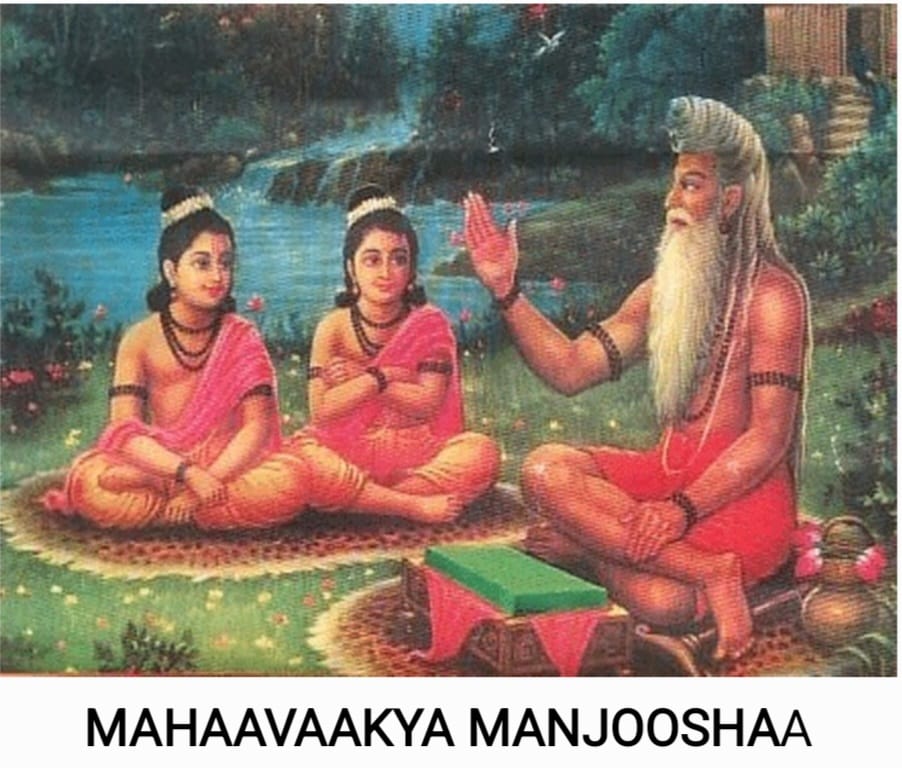
JAABAALOPANISHAD
ॐ श्री गुरुभ्यो नमः। ॐ श्री भवानिशङ्कराय नमः।
ॐ श्री मात्रे नमः।
JAI SHANKAR JAABAALOPANISHAD
Shanti Mantra is ॐ पूर्णमदः पूर्णमिदं पूर्णात्पूर्णमुदच्यते…
(explained earlier in another series).
This is a small Upanishad belonging to Atharva Veda. It has just six passages.
JAABAALOPANISHAD
ॐ श्री गुरुभ्यो नमः। ॐ श्री भवानिशङ्कराय नमः।
ॐ श्री मात्रे नमः।
JAI SHANKAR JAABAALOPANISHAD
Shanti Mantra is ॐ पूर्णमदः पूर्णमिदं पूर्णात्पूर्णमुदच्यते…
(explained earlier in another series).
This is a small Upanishad belonging to Atharva Veda. It has just six passages.
Brihaspati told Yaajnavalkya:
01. अविमुक्तं वै कुरुक्षेत्रं देवानां देवयजनं सर्वेषां भूतानां ब्रह्मसदनम्।अत्र हि जन्तोः प्राणेषु उत्क्रममाणेषु रुद्रः तारकं ब्रह्म व्याचष्टे येनासौ अमृतीभूत्वा मोक्षी भवति। तस्मात् अविमुक्तमेव
निषेवेत। अविमुक्तं न विमुञ्चेत्।1।
01. Kurukshetra is known as Avimukta. It is the
venue of sacrifices to gods. It is the home of
Brahman, resorted to by all beings. Here, when
a living being gives up life, Rudra whispers into
him AUM, a saviour. The departing soul becomes immortal and gets Moksha. Hence,
one should resort to Avimukta only. One should not give up Avimukta.(Avimukta means ‘not forsaken ‘. God doesn’t forsake the person(he/she) who breathes his/her last there.
02. अथ हैनम् अत्रिः पप्रच्छ याज्ञवल्क्यं च एषो अनन्तो अव्यक्त आत्मा तं कथमहं विजानीयाम् इति। स होवाच याज्ञवल्क्यः
सोऽविमुक्तः उपास्यः यः एषो अनन्तो अव्यक्त आत्मा स अविमुक्ते प्रतिष्ठित इति।
02. Then, Atri asked Yaajnavalkya: How can I know the infinite and unmanifest Atman? Replied Yaajnavalkya: Worship Avimukta wherein is established the infinite, unmanifest Atman.
03. स अविमुक्तः कस्मिन् प्रतिष्ठित इति। वरणायां नाश्यां च मध्ये प्रतिष्ठित इति। का वै वरणा का च नाशीति।
03. Atri further asked: Wherein is Avimukta
established? Answer: Established in VaraNaa and Naashee. Question: What is VaraNaa, what is Naashee?
04. सर्वान् इन्द्रियकृतदोषान् वारयतीति तेन वारणा भवति, सर्वान् इन्द्रियकृतान् पापान् नाशयतीति
तेन नाशी भवति इति। कतमं चास्य स्थानं भवतीति। भ्रुवोर्घ्राणस्य च या सन्धिः एतद्वै सन्धिं सन्ध्यां ब्रह्मविद् उपासत इति।
04. The junction between the brows and the nose is VaaraNaa and Naashi. It wards off (वारयति) the defects caused by senses, hence its name as VaaraNaa. It destroys(naashayati)
the sins committed by senses, hence it is नाशी।
The Knower of Brahman worships this junction.
(This junction BETWEEN THE BROWS is the spiritual वारणासी. Concentration on this junction is the worship, the सन्ध्यावन्दनम् of Yogi-s. It is the seat of आज्ञा चक्र।
05. अथ हैनं ब्रह्मचारिणः ऊचुः किं जप्येन अमृतत्वं ब्रूहि इति।
स होवाच याज्ञवल्क्यः शतरुद्रीयेण इति। एतानि एव ह अमृतस्य नामानि। एतैः ह वा अमृतो भवति इति।
05. The students(of Gurukul, practising discipline) asked: By which Japa one gets immortality? Pray tell us. Replied Yaajnavalkya:
By Japa of Shatarudreeya(नमक). These are nectarine names. They confer immortality.
NOTE: Shatarudreeya is chanted during
Rudraabhisheka(ॐ नमस्ते रुद्र मन्यव उतोत इषवे नमः।
नमस्ते अस्तु धन्वने बाहुभ्याम् उत ते नमः।……
06. अथ हैनं जनको वैदेहो याज्ञवल्क्यमुपसमेत्य उवाच भगवन्
संन्यासं ब्रूहीति। स उवाच याज्ञवल्क्यः ब्रम्हचर्यं परिसमाप्य गृही भवेत्। गृही भूत्वा वनी भवेत्। वनी भूत्वा प्रव्रजेत्। यदि वा इतरथा ब्रम्हचर्यादेव प्रव्रजेत् गृहाद्वा वनाद्वा । यदहरेव विवर्जयेत् तदहरेव प्रव्रजेत्।।
06. Now, Janaka, Ruler of Videha Kingdom, asked: Revered Sir, Pray tell us about Sannyaasa. Replied Yaajnavalkya: After completing study(in the Gurukul), one should become a householder. After becoming a householder, he should become a forest-dweller. Then, he should become a wandering renunciate. Or else, one may opt for renunciation as a Brahmachaari itself. Or from the state of a householder. The rule is: one should take to renunciation on the very day he
turns dispassionate.
07. अथ हैनं अत्रिः पप्रच्छ याज्ञवल्क्यं पृच्छामि त्वाम् याज्ञवल्क्य
अयज्ञोपवीती कथं ब्राह्मण इति। स होवाच याज्ञवल्क्यः इदमेवास्य तद् यज्ञोपवीतम् य आत्मापः प्राश्यात्, न अन्या विधिः
परिव्राजकानाम् इति।
07. Then Atri asked Yaajnavalkya: O Yaajnavalkya, I am asking you as to how a monk bereft of the Sacred Thread(yajnopavita) is to be deemed as a BraahmaNa? (The Sacred Thread is the distinguishing mark of a BraahmaNa).
Replied Yaajnavalkya: For the wandering monks
(परिव्राजक -s) there is no other ritual. He imbibes the ‘water’ called Brahman. This itself is his sacred thread. (Being ever mindful of God is itself the sipping of water called Aachamana).
08. जातरूपधरो निर्ग्रन्थो निष्परिग्रहः ब्रम्हमार्गे सम्यक् संपन्नः
शुद्धमानसः विमुक्तो प्राणसंधारणार्थं यथोक्तकाले भैक्षमाचरन्
लाभालाभयोः समो भूत्वा शून्यागार देवगृह तृणकुटीर वृक्षमूल
नदीपुलिन गिरिकुहर कन्दर कोटर निर्झरस्थन्डिलेषु तेषु
अनिकेतवासी अप्रयत्नः निर्ममः शुक्लध्यानपरायणो अध्यात्मनिष्टो अशुभकर्मनिर्मूलनपरः संन्यासेन देहत्यागं करोति
स परमहंसोनाम परमहंसो नाम इति।।
08. (Here is given a portrait of a Paramahamsa)
He is a Paramahamsa, he is a Paramahamsa. Who?
He is scantily clad, all his knots(ग्रन्थि of काम क्रोध etc) are dissipated, he accepts almost nothing from anyone (except minimum alms भिक्षा), he is a traveller on the path to Brahman, He is well endowed with the necessary qualifying virtues
(साधनसम्पत्ति), he has a pure mind, he is free from all entanglement(caused by our cravings), he goes on Bhikshaa-rounds timely just for the sake of being alive, he is unperturbed whether he gets (Bhikshaa) or not.,he stays temporarily in a deserted house, a temple, a thatched hut, the base of a tree, sands of a river, a cave or a hollow in in a hill(mountain), the bare ground near a fountain or a waterfall(He is अनिकेत, so he doesn’t make any of these his permanent निकेत residence). His effort or exertion(प्रयत्न )is only for God-Realization, he has given up the notion of I and mine, his mind harbours only ‘white'(शुक्ल) thoughts(pure, सात्विक, loving), he is grounded in spirituality, he strives to nullify the malefic effects of any evil(अशुभ कर्म) he may have committed – he gives up his mortal coil when his time is up in a mood of utter renunciation – he is a Paramahamsa, yes, indeed, he is a Paramahamsa.
(GLEANINGS FROM JAABAALOPANISHAD
CONCLUDED)