MAHAAVAAKYA MANJOOSHA
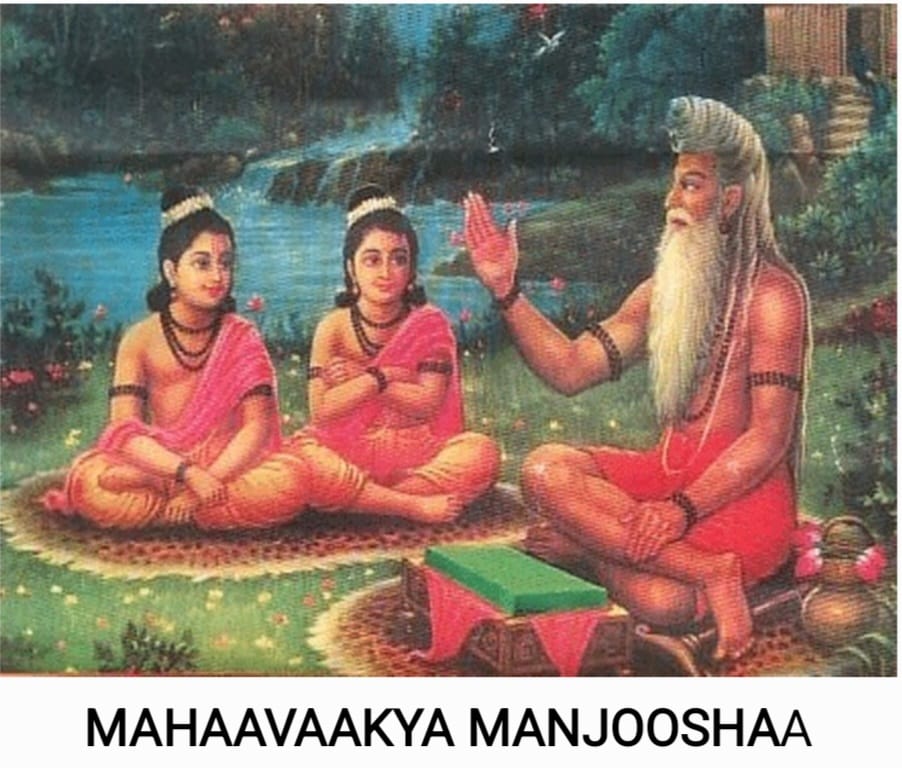
VAJRA SOOCHIKAA UPANISHAD
ॐ श्री गुरुभ्यो नमः। ॐ श्री भवानिशङ्कराय नमः।
ॐ श्री मात्रे नमः।
JAI SHANKAR VAJRA SOOCHIKAA UPANISHAD
This is a small Upanishad belonging to Saama Veda. Except for the first Mantra, rest is prose. It asks: Who is a BraahmaNa and answers it. Its Shaanti Mantra is आप्यायन्तु ममाङ्गानि वाक्प्राणश्चक्षुः श्रोत्रमथो बलमिन्द्रियाणि च सर्वाणि
…(already explained in an earlier series. The name of the Upanishad means a diamond needle. This needle tears asunder ignorance about the concept of Brahminhood
(ब्राह्मण्य).
VAJRA SOOCHIKAA UPANISHAD
ॐ श्री गुरुभ्यो नमः। ॐ श्री भवानिशङ्कराय नमः।
ॐ श्री मात्रे नमः।
JAI SHANKAR VAJRA SOOCHIKAA UPANISHAD
This is a small Upanishad belonging to Saama Veda. Except for the first Mantra, rest is prose. It asks: Who is a BraahmaNa and answers it. Its Shaanti Mantra is आप्यायन्तु ममाङ्गानि वाक्प्राणश्चक्षुः श्रोत्रमथो बलमिन्द्रियाणि च सर्वाणि
…(already explained in an earlier series. The name of the Upanishad means a diamond needle. This needle tears asunder ignorance about the concept of Brahminhood ब्राह्मण्य).
01. वज्रसूचीं प्रवक्ष्यामि शास्त्र्मज्ञानभेदनम्। दूषणं ज्ञानहीनानां
भूषणं ज्ञानचक्षुषाम्।।
01. I will expound the scripture called Vajrasoochi. It tears asunder ignorance. It deplores the ignorant and is an ornament for those with the eyes of Knowledge.
02. ब्रह्म क्षत्रिय वैश्य शूद्रा इति चत्वारो वर्णाः, तेषां वर्णानां ब्राह्मण एव प्रधान इति वेदवचनानुरूपं स्मृतिभिरप्युक्तम्। तत्र
चोद्यमस्ति को वा ब्राम्हणो नाम किं जीवः किं देहः किं जातिः
किं ज्ञानं किं कर्म किं धार्मिक इति।
02. There are four VarNa-s namely BraahmaNa, Kshatriya, Vaishya and Shoodra. It is said by
Veda-s as well as Smriti(Dharma-shaastra) that
BraahmaNa is the chief amongst them. Now it is to be enquired as to who is entitled to be called a BraahmaNa – is he the soul, the body, the caste, the knowledge, actions or being religious?
03. तत्र प्रथमो जीवो ब्राह्मण इति चेत् न। अतीत अनागत अनेक देहानां जीवस्य एकरूपत्वात् एकस्यापि कर्मवशादनेकदेह
संभवात् सर्वशरीराणां जीवस्य एकरूपत्वात् च। तस्मात् जीवो न
ब्राह्मण इति।
03. The JEEVA(soul) cannot be called a BraahmaNa because it is same in the bodies that are past and those that will come in future.
One and the same soul gets many bodies thanks to their Karma and the soul is the same in all such bodies . Therefore, the JEEVA cannot be BraahmaNa.(His Karma may cause him to be born in a वर्ण other than ब्राह्मण).
04. तर्हि देहो ब्राह्मण इति चेत् न। आचाण्डालादिपर्यन्तानां
मनुष्याणां पाञ्चभौतिकत्वेन देहस्य एकरूपत्वात् जरामरणधर्माधर्मादि साम्यदर्शनात् ब्राह्मणः श्वेत्वर्णः क्षत्रियो
रक्तवर्णो वैश्यः पीतवर्णः शूद्रः कृष्णवर्णः इति नियमाभावात्।
तस्मात् न देहो ब्राह्मण इति।
04. Then, shall we say the BODY is BraahmaNa? No. All human beings upto the depressed classes have the same type of body, composed of the same five elements. They are also subject to the same vagaries of body like old age, death etc alike. There is no such rule in nature that the complexion of BraahmaNa is fair, of Kshatriya it is red, of Vaishya it is yellow and of Shoodra it is black. Therefore, the BODY is not BraahmaNa.
05. तर्हि जाति ब्राह्मण इति चेत् न। तत्र जात्यन्तर जन्तुषु अनेक जातिसम्भवा महर्षयो बहवः सन्ति। ऋष्यशृङ्गो मृग्याः,
कौशिकः कुशात्, जाम्बूको जम्बूकात्, वाल्मीको वल्मीकात्,
व्यासः कैवर्तकन्यकायां, शशपृष्ठात् गौतमः, वसिष्ठ उर्वश्यां,
अगस्त्यः कलशे जात इति श्रुतत्वात्। तस्मात् न जातिर्ब्राम्हण
इति।
05. Then, let it be that CASTE decides who is a
BraahmaNa. No. There are many great sages born of cross-breeding. Sage Rishyashringa was born of a female deer, Koushika from a blade of दर्भा grass, sage Jaambooka from a fox, Vaalmiki from an anthill, Vyaasa from a
daughter of a boatman, Gautama from a rabbit,
Vasishtha from Urvashi and Agastya in a pot – thus have we heard(in the पुराण-s). So, CASTE can’t be the deciding factor as to who is a
BraahmaNa.
06. तर्हि ज्ञानं ब्राह्मण इति चेत् न। क्षत्रियादयोऽपि परमार्थदर्शिनोऽभिज्ञा बहवः सन्ति। तस्मात् न ज्ञानं ब्राह्मण इति।
06. Then, may be that KNOWLEDGE decides who a BraahmaNa is. No. There are many born in royal(Kshatriya) families, who were spiritually
advanced and very knowledgeable.(like King Janaka). Therefore, KNOWLEDGE does not entitle one to be called a BraahmaNa.
07. तर्हि कर्म ब्राह्मण इति चेत् न। सर्वेषां प्राणिनां प्रारब्ध सञ्चित आगामिकर्मसाधर्म्य दर्शनात् कर्माभिप्रेरिताः सन्तो जनाः
क्रियाः कुर्वन्ति इति। तस्मात् न कर्म ब्राह्मण इति।
07. Then, shall we say KARMA decides who a BraahmaNa is? No. All beings are alike subject to the three-fold Karma – that which has already begun to fructify(praarabdha), that which is in store, but, yet to fructify(sanchita) and that is waiting to fructify(आगामि) – and they all act impelled by this Karma. So, KARMA is ruled out as the deciding factor as to who is a BraahmaNa.
08. तर्हि धार्मिको ब्राह्मण इति चेत् न। क्षत्रियादयो हिरण्यदातारो बहवः सन्ति। तस्मात् न धार्मिको ब्राह्मण इति।
08. Then, let us grant that a RELIGIOUS person is a BraahmaNa. No, there are many royals etc known for gifting away gold. So, to be charitable(दानधर्म) is not to say he is a BraahmaNa.
NOTE: During philosophical debates in the royal courts, kings like Janaka gifted away hundreds of cows with gold tied to their horns – this is
described in Upanishads. In the above passage, Dharma is equated with charity.
09. तर्हि को वा ब्राह्मणो नाम। यः कश्चिद् आत्मानम् अद्वितीयं
षडूर्मिषड्भाव इत्यादि सर्वदोषरहितं सत्यज्ञानानन्दानन्तस्वरूपं
स्वयं निर्विकल्पम् अशेषकल्पनाधारम् अशेष भूतान्तर्यामित्वेन
वर्तमानम् अन्तर्बहिश्च आकाशवदनुस्यूतम् अखण्डानन्दस्वभावम्
अप्रमेयम् अनुभवैकवेद्यम् अपरोक्षतया करतलामलकवत्
साक्षाद् अपरोक्षीकृत्य कृतार्थतया कामरागादिदोषरहितः
शमदमादिसम्पन्नो मात्सर्य तृष्णा आशा मोहादिरहितो दम्भाहङ्कारादिभिः असंस्पृष्टचेता वर्तत एवमुक्तलक्षणो यः स एव ब्राह्मण इति श्रुतिस्मृतिपुराणेतिहासानामभिप्रायः। अन्यथा हि ब्राह्मणत्वसिद्धिर्नास्त्येव। सच्चिदानन्दमात्मानमद्वितीयं ब्रह्म
भावयेदात्मानं सच्चिदानन्दं ब्रह्म भावयेदित्युपनिषत्।
09. Then, who is a BraahmaNa? (His portrait now follows): One, who REALISES the Self(Atman)(Brahman) is a BraahmaNa. How is this Self?
1. One without a second(अद्वितीयम्)
2. Free from the six waves(षडूर्मिरहितम्) – the six
waves are hunger, thirst,sorrow, infatuation
old age, death(क्षुधा तृषा शोक मोह जरा मृत्यु).
3. Free from the six modifications(षड् भाव) –
Comes into being, birth, growth, organic
changes like puberty, physical and mental
decline, death(अस्ति(in mother’s womb),
जायते, वर्धते, विपरिणमते, क्षीयते, नश्यति).
4. Free from all sorts of blemishes (सर्वदोषरहितम्)
5. Self is Truth, Knowledge, bliss and infinite.
6. Self is beyond conceptual thought(स्वयं
निर्विकल्पम्).
7. Self is the ground and the basis on which all
thought is imposed(अशेष कल्पनाधारम्).
8. Self is the indweller of all beings
(अशेषभृतान्तर्यामित्वेन वर्तमानम्).
9. Pervasive within and without like the sky
(अन्तर्बहिश्च आकाशवदनुस्यूतम्)
10.Self is totally – no parts – blissful by nature.
(अखण्डानन्दस्वभावम्).
11. Self is beyond the means of proof (accepted
in logic like Pratyaksha, Anumaana etc).
(अप्रमेयम्).
12. Self is amenable only to one’s direct
realisation (अनुभवैकवेद्यम् अपरोक्षतया भासमानम्)
13. One becomes content and fulfilled when he/
she realises the Self vividly and directly as
though seeing a berry on a palm
(करतलामलकवत् साक्षादपरोक्षीकृत्य कृतार्थता).
09. .We were told what Atman/Brahman
is. Now is the turn to know about the qualifications of the साधक who aspires for
Self-Realization. Here’s his profile:
1. He is free from blemishes like lust,
attachment etc(कामरागादिदोषरहितः).
2. He is endowed with a peaceful mind,
control over senses etc(शमदमादिसम्पन्नः).
3. He is free from envy, craving, desire,
infatuation etc(मात्सर्य, तृष्णा, आशा, मोहादिरहितः)
4. He is untouched by arrogance, egoism etc.
(दम्भाहंकारादिभिः असंस्पृष्टचेता).
य एवमुक्तलक्षणो वर्तेत स एव ब्राह्मण इति श्रुति स्मृति पुराण
इतिहासानाम् अभिप्रायः। अन्यथा हि ब्राह्मणत्वसिद्धिः नास्त्येव।
He, who is as above, is alone a BraahmaNa –
this is the verdict of Veda, Dharmashaastra,
PuraaNa and Historical chronicles (like
रामायण, महाभारत etc). There is no other way to
define and establish who a BraahmaNa is.
10. सच्चिदानन्दमात्मानम् अद्वितीयं ब्रह्म भावयेद्। आत्मानं
सच्चिदानन्दं ब्रह्म भावयेदित्युपनिषत्।
10. One should look upon himself/herself as the
non-dual Brahman, who is existence,
consciousness and bliss. This is the instruction of this Upanishad.
GLEANINGS FROM VAJRA SOOCHIKAA UPANISHAD CONCLUDED