MAHAAVAAKYA MANJOOSHA
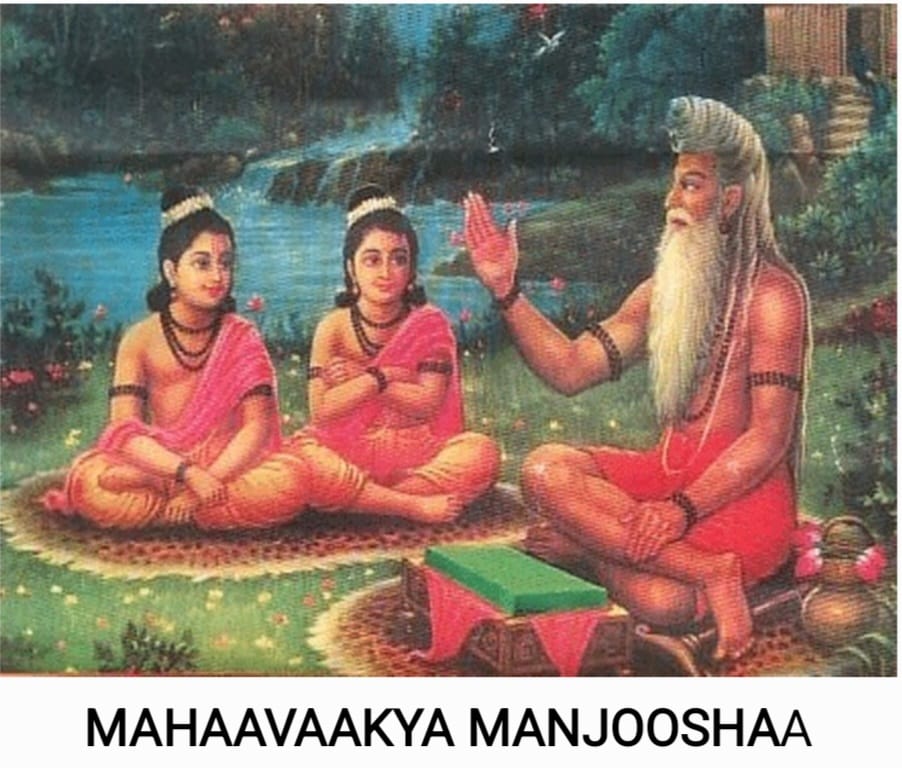
JAABAALI UPANISHAD
ॐ श्री गुरुभ्यो नमः। ॐ श्री भवानिशङ्कराय नमः।
ॐ श्री मात्रे नमः।
JAI SHANKAR JAABAALI UPANISHAD
The Shaanti Mantra is ॐ आप्यायन्तु ममाङ्गानि वाक्प्राणश्चक्षुः श्रोत्रमथो बलमिन्द्रियाणि….(already explained in an earlier series).
This Upanishad, though small in compass, gives many valuable insights. It is a dialogue between JAABAALI and Paippalaada. We saw earlier Jaabaala Upanishad. Now this is JAABAALI (जाबाली) Upanishad.
JAABAALI UPANISHAD
किं तत्त्वम्? तमुवाच भगवान् कृपया. पशुपतिरिति.
What is the Truth? The Compassinate Lord replied: Pashupati is the Truth.
को जीवः? को पशुः?अहंकाराविष्टः संसारी जीवः, स एव पशुः।
Who is the Jeeva(individual soul)? Who is the beast? The worldly entity, full of egoism, is the Jeeva and he alone is the beast.
क ईशः? सर्वज्ञः पञ्चकृत्यसंपन्नः सर्वेश्वरः ईशः पशुपतिः।
Who is the Lord? The All-Knowing, Lord of all and the performer of five functions, is the
Lord of Beasts.
NOTE: The five functions of God are Creation
(सृष्टिः), Sustenance (स्थितिः), Dissolution(लयः),
Control (निग्रहः) and Benediction (अनुग्रहः). Devi
Lalitaa is praised in Her Sahasranaama as
पञ्चकृत्य परायणा – Engrossed in the five functions.
के पशवः इति पुनः पप्रच्छ। तमुवाच जीवाःपशवः, तत्पतित्वात्
पशुपतिः।
Again JAABAALI asked: Who are the beasts?
God said: The souls are the beasts and because He lords over them, God is called
Pashupati.
कथं जीवाः पशवः? How do the souls pass as beasts? कथं तत्पतिरिति? How is He their Master?
तमुवाच यथा तृणाशिनो विवेकहीनाः परप्रेष्याः कृष्यादिकर्मसु
नियुक्ताः सकलदुःखसहा स्वस्वामिबध्यमाना गवादयः पशवः ।
तथा तत्स्वामिन इव सर्वज्ञ ईशः पशुपतिः।
The Lord said: the beasts like cattle etc, grass-eaters, devoid of discrimination, controlled by others,are engaged by their masters in functions like cultivation etc. They suffer all sorts of sorrow and are chained by their masters. Likewise are the Jeeva-s and the All-Knowing God, their Lord, is called as
Pashupati.
NOW FOLLOWS THE SYMBOLISM OF THE THREE HORIZONTAL VIBHOOTI LINES – TRIPUNDHRA DHAARANAM.
या अस्य प्रथमा रेखा सा गार्हपत्यश्च अकारो रजो भूलोकः स्वात्मा क्रियाशक्तिः ऋग्वेदः प्रातःसवनं प्रजापतिर्देवो देवतेति।
The first horizontal line stands for:
Gaarhapatya fire,A-kaara, RajoguNa, the earth,
oneself, क्रियाशक्ति(ability to be active and to perform), RgVeda, the morning fire-sacrifice and Prajaapati as the ruling deity.
NOTE: Our Vedic ancestors had three hearths
(fireplaces) in their homes. This is refered to as Tretaagni – गार्हपत्य , आहवनीय, दक्षिणा – Gaarhapatya Agni kept in the east was for domestic (गृह) use(like cooking). Aahavaneeya Agni kept in the West was for offerings to gods and DakshiNaagni, kept in the south, was to be used for पितृ-related rituals like various kinds of श्राद्ध etc. If there was a death in the family, this fire was to be used for cremation.
The symbolism of Vibhooti lines continues.
या अस्य द्वितीया रेखा सा दक्षिणाग्निः, उकारः, सत्वगुणः, अन्तरिक्षम्, अन्तरात्मा च इच्छाशक्तिः, यजुर्वेदो माध्यन्दिनसवनं
विष्णुर्देवो देवतेति।
The second horizontal line represents DakshiNaagni(meant for पितृकार्यं), u-kaara, SatvaguNa, mid-air, the inner self, will-power,
Yajurveda, mid-day fire sacrifice and the deity is VishNu.
या अस्य तृतीया रेखा सा आहवनीयः मकारः तमोगुणः
द्यौर्लोकः परमात्मा ज्ञानशक्तिः सामवेद: तृतीयसवनं महादेवो
देवता इति।
The third horizontal line stands for Aahavaneeya fire(meant for Devakaarya),
म-kaara, TamoguNa, the sky, Paramaatmaa,
intellectual ability, SaamaVeda, the evening sacrifice and the deity is Mahaadeva.
एवं भस्मना त्रिपुण्ड्रं करोति यो विद्वान् ब्रम्हचारी गृही विनप्रास्थो यतिर्वा स महापातकोपपातकैर्पूतो भवति। सःसर्वेषु तीर्थेषु स्नातो भवति। न स पुनरावर्तते न स पुनरावर्तते। इत्युपनिषत्।
With this understanding of its rich symbolism
he who applies त्रिपुण्ड्र (three horizontal lines of Vibhooti) – be he a Brahmachaari, householder,
forest-dweller or a monk – is redeemed from
all major and minor sins. He bathes in all holy
तिर्थ-s as it were. He does not return! He does not return! (This is the conventional Phalashruti).
GLEANINGS FROM JAABAALI UPANISHAD CONCLUDED