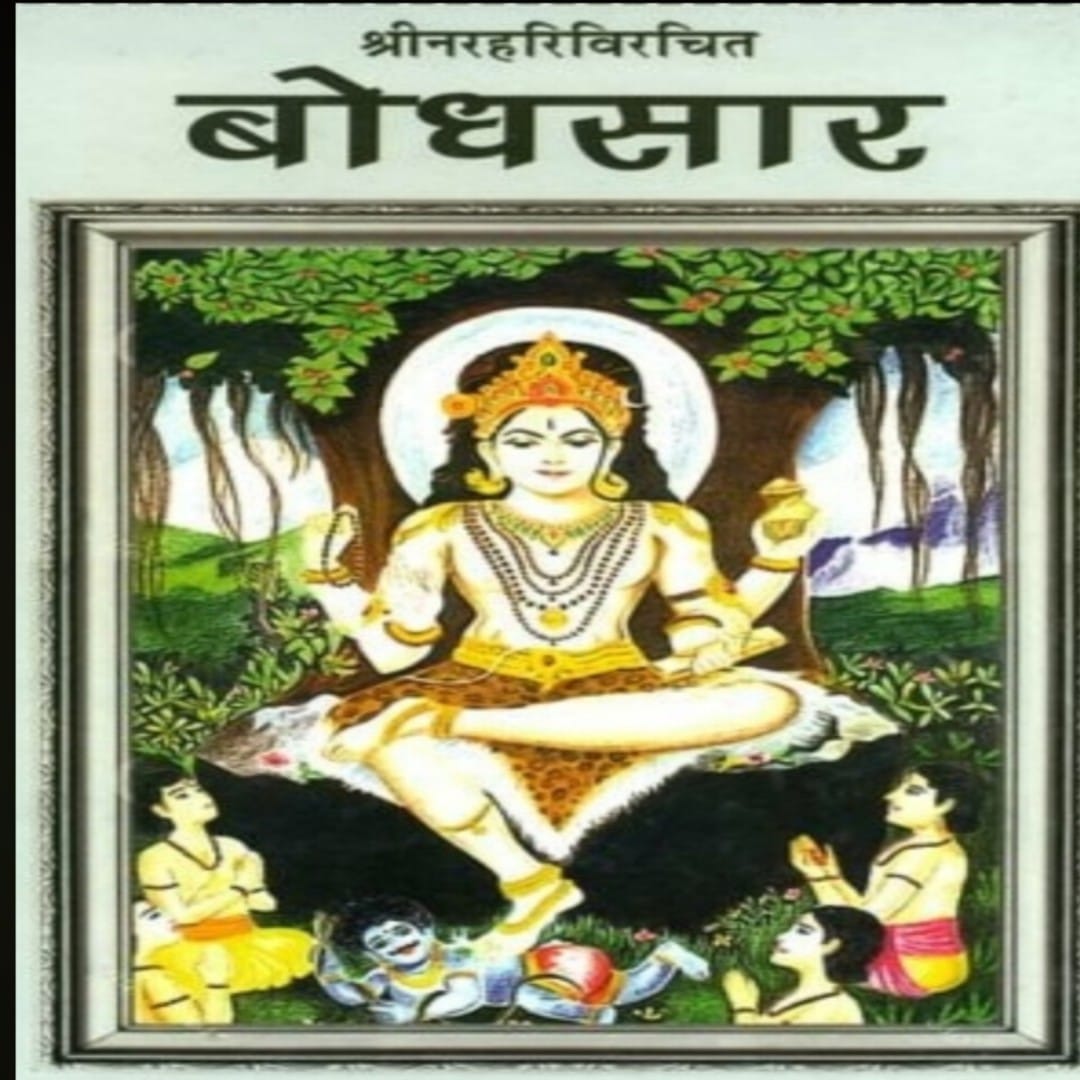
GLEANINGS FROM BODHASAARA 


ॐ नमो भगवते परिज्ञानाश्रमाय ॐ (Let Bodhasaara remind us daily of our Parama Guru. )


ॐ सद्योजातं प्रपद्यामि सद्योजाताय वै नमो नमः ॐ 


JAI SHANKAR 


Not much is known about Acharya Narahari. It is believed he hailed from Varanasi and had a Guru

called Shri Anandabodha. Scholars place him between 1725 and 1825 A.D.  BODHASAARA 

has 1350 verses. It has a Sanskrit gloss, अर्थदीप, by his disciple called Divakara Pandit.


 I will try to compile simple verses which are straightforward in meaning.  Serial numbers are mine.


GLEANINGS FROM BODHASAARA

GLEANINGS FROM BODHASAARA-1

ॐ नमो भगवते परिज्ञानाश्रमाय ॐ 

ॐ सद्योजातं प्रपद्यामि सद्योजाताय वै नमो नमः ॐ 

JAI SHANKAR

Today is an auspicious day. It is the Janma Tithi of our Sadguru Shrimat Sadyojat Shankarashram Swamiji.  He is entering the sixtieth year and it gives me great pleasure to start a new series – GLEANINGS FROM BODHASAARA.  This launch serves two ends:

 1. It is my homage to our Parama Guru, who gave me an opportunity to be of some service to Him on the pretext of getting this book. 

2. This bouquet of Gleanings is my way of celebrating the entry into sixtieth year by our reigning Gurudev Shrimat Sadyojat Shankarashram Swamiji.

Sometime in 1970s I received a call in my office from late Shri Nalkur Shripadmam, the then President of the Standing Committee. He said: “Swamiji wants a book called बोधसार and He has told me to speak to you.”. I told him I will try to borrow the book from Bhavan’s Library, if it is there, since I am a member.  Posthaste, I rushed to the library at Chowpaty. Luckily, a copy was there. I borrowed it for a month and hastened to Khar Anandashram. After customary salutations, I handed over the book to our beloved Parama Guru. . I can never forget His joyous reaction. It was as though I had accomplished a Herculean task and brought a rare treasure for Him!  Later, while in Varanasi, HE  secured the book from Chowkhamba Vidya Bhavan, the renowned booksellers there. Much later, my curiosity about the book made me to order a copy from Varanasi.

This book, बोधसार, by Acharya Narahari

was a favourite of our P.P. Swami  Shrimat PARIJNANASHRAM-III.  In Shree Chitrapura Guruparampara Charitra we read:

बोधसार नरहरि आचार्य लिखित। उपदेशिलें भक्तांसी बेंगळूरात।

आनन्द जाहला भक्तां अमित। श्रवण करितां गुरुवाणी।।२५।।

(Ch.६२). Again,चातुर्मासामाजी नित्य। नरहरिकृत बोधसार

स्तुत्य। कोंकणी व संस्कृतातूनी नित्य। उपदेशिती भक्तांसी।।७०।।

BODHASAARA was the theme of His discourses

at Bangalore, Khar Anandashram and in Canada.

Devotees who do पारायण of Shree CGPC may be

wondering what बोधसार is all about. So, I will try 

to give the readers just a nodding acquaintance of it.   In doing so, my strength and inspiration will be our P.P.Parama Guru whose favourite it was.       

JAI SHANKAR 

  V. RAJAGOPAL BHAT   21-11-2023

1. ॐ किञ्चित् कुतूहलेनैव विदुषां प्रियकाम्यया। मङ्गलाचरणं कृत्वा बोधसारो निरूप्यते।।


1. Being a bit curious and to please the learned, after the customary benedictory invocation, I will  elucidate my work called Bodhasaara.


2. अनन्तशक्तिसन्दोहपूर्णस्य परमात्मनः। विघ्नविध्वंसिनीं शक्तिं गणराजमुपास्महे।।


2. We adore Shri GaNesha, who represents the power to ward off all obstacles, the power of  God, who is full, perfect and is a repository of infinite powers.


3. I remember with devotion Saraswati, the Knowledge-Power of God, Saraswati who abides in Her natural state by employing Her twin powers of प्रकाश and विमर्श. (The Hindi commentator translates these twin powers as

Knowledge and Viveka).


NOTE: These two words प्रकाश and विमर्श have been interpreted variously by scholars. They are key concepts in Kashmir Shaivism. An example: 

प्रकाश is synthesis while विमर्श is analysis.

A ray of sunlight is प्रकाश and its dispersion into its constituent colours (VIBGYOR) when passed through a prism is विमर्श.  माया is the prism, the creation of this variegated universe is His विमर्श  and He is प्रकाश, the Sunray.)


गुरुस्तव (IN PRAISE OF GURU)


4. श्री गुरून् परमानन्दस्वरूपान् अभिवादये। तापत्रयापहा येषां कृपा ब्रह्मामृतप्रपा।। 


4.I bow down to my Sadguru, whose nature is

supreme bliss, whose grace wards off three-fold affliction and is like a fountain of nectar that is Brahman.


5. मदमोहाभिदक्रूरमधुकैटभजिष्णवे। मोक्षलक्ष्मीनिवासाय

नमः श्री गुरुविष्णवे।।


5.Salutations to VishNu in the form of Guru, who has conquered the cruel demons Madhu and Kaitabha in the form of arrogance and delusive attachment and who is home to Moksha Lakshmi(Lakshmi in the  form of Liberation).


6. गुणै गौरवमायाता हरि ब्रह्म हरास्त्रयः। गुणातीततयाऽस्माकं

गुरवो गुरुताङ्गताः।।


6.The three gods Hari, Brahmaa and Hara have attained eminence due to their association with the guNa-s(सत्व रजस् तमस्). But, our Sadguru-s have become eminent because they have gone beyond the guNa-s!  (Associated with the triple guNa-s, Brahmaa etc  perform their functions respectively. The Guru, however, is unique since He has transcended them and is गुणातीत. Thus, He excels the trinity.


7. पुरान्तकहरो रुद्रः कंसकेशिहरो हरिः। चण्डमुण्डहरा चण्डी

सर्वद्वन्द्वहरो गुरुः।।


7 .Rudra has quelled Tripuraasura and Yama.

VishNu wiped out Kamsa and Keshi. Devi ChaNDi 

killed ChaNDa and MuNDa. The Sadguru, however, wipes out all pairs of opposites.


 8. यच्छन्ति देवतास्तुष्टाः धनमायुः सुतं यशः। ज्ञानं के नाम दास्यन्ति विना श्री गुरुपादुकाम्।।

 
8. The gods and goddesses, when pleased, confer wealth, long life, progeny and fame.
Who else but Sadguru’s पादुका confers Jnaana?


9. जयति श्री गुरूणां हि चरणाब्जरजोगुणः। हतास्त्रयो यदेकेन

रजः सत्व तमो गुणाः।।


9. Hail the excellence of the dust of the lotus-feet of the Sadguru. By it alone, the three qualities – satva rajas and tamas – have been

transcended(There is pun on the word रजस्. It means dust as well as RajoguNa.)


10. तार्या वयं तरिर्बोधः तरणीयो भवार्णवः। तत्कर्णधाररूपेण

तारकं श्री गुरुं भजे।।


10. We are to be ferried across, the boat is enlightenment, what is to be crossed is the sea of Samsaara. The Sadguru as the boatman is our saviour. I serve him with devotion. (भज सेवायाम्).


 11. It is by becoming Guru that Ishvara(Lord Vishwanath) bestows Moksha in Kaashi,

by imparting the Upadesh of AUM. So, it means the Guru is even superior to God. (It is said that 
Shiva whispers ॐ into the ears of those on the verge of death at Kaashi).


12. गुरोरनुग्रहादीश ईश्वरानुग्रहाद्गुरुः।  श्रीगुरोर्दर्शनं हेतुः परं

त्वीश्वरदर्शने।।


12. By the grace of Guru, we come to God. By the grace of God, we get the Guru. The sight

(meeting) of the Guru is the prime cause for beholding God.


13. ईश्वर: सर्वहेतुत्वाद् हेतुः संसारमोक्षयोः। मोक्षस्यैव गुरुः तस्मान्नास्ति तत्त्वं गुरोः परम्।।


13. Being the universal cause, God is the cause of both Samsara and Moksha. But, the Guru is the cause of Moksha only. Hence, there is no 

entity higher than the Guru.


 14. विनापि क्षेत्रमाहात्म्यं गुरुमाहात्म्यतः किल। विमुक्तिर्यत्र कुत्रापि न काश्यां गुरुणा विना।।


14. By the glory of the Guru, liberation is possible anywhere even if that place is not a recognised holy spot. Liberation is not possible in

Kaashi without the grace of the Guru.(This means that even in Kashi, the holiest of the holy cities, the Guru is still needed. Howsoever holy a place, there is no waiver for the rule that Guru is a ‘must’).


15. क्षम्यतामिति किं वाच्यं प्रसीदेति किमुच्यताम्। क्षमाप्रसादसम्पूर्णः स्वभावादेव मे गुरुः।।


15. What need is there to say: pray forgive me?

Why say: be gracious unto me? By his very nature, my Guru is full of forgiveness and grace.


16. बीजं गुरूपदेशो हि जिज्ञासुः क्षेत्रमुच्यते। विवेकाङ्कुरजो बोधो द्रुमो मोक्षस्तु तत्फलम्।।

16. The instruction by the Guru is the seed;  the disciple eager to learn is the field; the ability to discriminate(between real and unreal, eternal and transient etc) is the germinated shoot;  enlightenment is the tree and Liberation is the fruit.


 17. यद्यपि क्षेत्रबीजाभ्यां विना न द्रुमसम्भवः। किन्तु बीजम् उपादानं निमित्तं क्षेत्रमुच्यते।।


17. Though it is true that a tree cannot come to be without the seed and the field, the seed is the material cause. The field is only the instrumental cause.(The seed is more important than the field. Likewise, primacy goes to the Guru-Upadesha).


18. द्रुमो बीजपरीणामो न क्षेत्रपरिणामकः। बोधो गुरुपरीणामो न शिष्यपरिणामकः।।


18. The tree is the transformation of the seed, not of the field. Enlightenment results from the Guru(from his Upadesh) and not from the disciple.


19. बीजेन बीजजातीयः तरुः क्षेत्रे समर्पितः। गुरुणा स्वात्मजातीयो बोध: शिष्ये समर्पितः।।


19. The seed offers to the field a tree like itself(qualitywise). The Guru bestows upon the disciple knowledge(wisdom),  same as what he has.(Tukaram आपणा सारिखे करिती तत्काळ).


 20. वह्निप्रभा हि वर्तिस्था तमो हन्ति प्रकाशते। तमोहन्त्री प्रकाशात्मा प्रभैव न तु वर्तिका।।


20. The flame in the wick dispels darkness and glows. The dispeller of darkness is the luminous flame and not the wick.(Wick is necessary, but, we don’t say in common parlance that the wick removes the darkness).


21. गुरुप्रभा हि शिष्यस्था तमो हन्ति प्रकाशते। तमोहन्ता

प्रकाशात्मा गुरुरेव न शिष्यकः।।


21.The effulgence of the Guru lights up the disciple and removes darkness(of अज्ञान) and sheds light. The dispeller of darkness(of अज्ञान)

is the Guru alone and not the disciple.

(In the Gita, the Lord says that luminaries like the sun, moon and the fire are luminous because of Him. They are luminous courtesy the Lord.

Likewise, a disciple may turn into a Guru in due course and command a good following, but, he should not forget that it is the Guru in him who inspires him to dispel the darkness of ignorance in his disciples. He should be humble always).


22. यदग्नि: काष्ठमारुह्य भस्मसात् कुरुते पुरीम्।  भस्मसात् कारणं तत्र गुणो वह्नेः न काष्ठगः।।


22. Fire ‘ascends’  the wood and reduces even a city to ash. It is the property of fire that did this and not of the firewood.


 23. बोधात्मना गुरुः शिष्यम् आविश्य दहति क्षणात्। यद् द्वैतं सा गुरोः शक्तिः न शिष्यस्येति निर्णयः।।


23. In the form of knowledge (wisdom, enlightenment) the Guru takes possession of the disciple and burns  to ash in a trice his sense of duality. This is the glory of Gurushakti. We do not say it is due to Shishya Shakti. This is the conclusion.


24. पद्मस्य उदितो भानुः यथा भवति विकासकः।  न काशन्ते तथा पद्माः काष्ठपाषाणमृण्मयाः ।।


24.The rising sun makes the lotus bloom. Artificial lotuses made of wood, stone or clay do not  bloom upon sunrise.


25. प्रकाशको रविर्यद्वत् पद्ममेव विकासयेत्। गुरुस्तथा बोधकः सन् शिष्यमेव प्रबोधयेत्।।


25. The luminous sun makes only the lotus to bloom. Likewise, being the preceptor, the Guru 

will awaken only the disciple.


 26. प्रकाशकस्य महिमा प्रकाश्याद् अधिक: किल। सूक्ष्मं विशेषं  वक्ष्यामि गुरुसूर्यस्य तं शृणु।।


26. The glory of the illuminator is surely more than that of the illumined. Is it not? Pray listen, I will tell some subtle excellences of the Guru-Sun.


27. तत्तद्विवेकवैराग्ययुक्त वेदान्तयुक्तिभिः। शिष्यं नयति गुर्वर्कः स्वैक्यं स्वाद्भिन्नमप्यहो।।


27. Oh, The Guru-Sun(Guru, like sun) makes Shishya,though different from him, one with him by Vedantic reasonings marked by discrimination and dispassion.


28. विकासकोऽपि तपनो न पद्मं स्वैकतां नयेत्। तस्मात् सर्वात्मभावेन सेव्या श्री गुरुपादुका।।
 
28.Though the sun makes the lotus bloom, the sun  cannot make the lotus one with it(sun). Therefore, by all means, wholeheartedly, one should serve the Guru-paadukaa.


29. तत्सत्यं दातृपात्राभ्यां विना दानं न सिध्यति। तथापि पात्रं पात्रं
स्याद् दाता परमकारणम्।।


29.It is true that the act of giving a charity(gift)
cannot take place unless both the donor and the donee are there. Nevertheless, the primacy goes to the donor, who is the main cause.


30. भवेत् स्पर्शमणिस्पर्शात् लोहं स्वर्णं न तन्मणिः। गुरुस्पर्शमणिस्पर्शात् सः एव भवति क्षणात्।।
 
30. The iron turns into gold, not into the
Philosopher’s Stone, when touched by the latter.
But, touched by the Philosopher’s Stone called the Guru, the disciple turns, verily, into Guru Himself! (Tukaram लोहपरीसाची नसा ही उपमा। सद्गुरु महिमा अगाधची।)


 31. एवं विचारयेत् धीमान् उपयोगं द्वयोरपि। शिष्यो निमित्तमात्रं स्याद् गरिष्ठा गुरुपादुका।।
 
31. Thus should the wise ponder over the usefulness of both.. The disciple is just an excuse(a pretext), it is the Guru-paadukaa that truly matters.
 
ENQUIRY INTO BRAHMAN


32. अथातो ब्रह्मजिज्ञासा जिज्ञास्यं ब्रह्म केवलम्। तटस्थलक्षणेनाथ स्वरूपस्य च लक्षणात्।।
 
32.Now, thus, the enquiry into Brahman. What is to be known and ascertained is Brahman alone. We have to know its तटस्थ लक्षण as well as its स्वरूप लक्षण.


33.. उत्पत्ति स्थिति नाशानां मूलकारणमीश्वरः। सर्वज्ञः सत्यसङ्कल्पः इत्यादिषु तटस्थता।।
 
33. When we say God is the rootcause of the origin, preservation and dissolution of the world, He is All-knowing(o mniscient) and of True Will – we define Him by His तटस्थ characteristics.


 34. सच्चिदानन्दरूपं तत् स्वप्रकाशं परात्परम्। अनण्वित्यादि
वेदोक्तं स्वरूपस्य तु लक्षणम्।।
 
34. He is existence, consciousness and bliss.
He is self-luminous, higher than the highest and neither atomic etc as said in the Veda. This is the स्वरूप लक्षण of Brahman.
 
On DISPASSION(VAIRAAGYA)


35. न शूद्रे वेदसंस्कारः तैलं च सिकतासु न। न स्यात् करतले रोम
तथा मुक्तिर्न रागिणि।।
 
35. There is no Vedic sacrament for one debarred from the Veda; sand will not yield oil;
hair will not grow on the palm of the hand. Likewise, there is no liberation for  the unduly attached (to the sensory pleasures).


36. वैराग्यं द्विविधम्, सूक्ष्मं तद्भेदमवधारय । जिज्ञासामुख्यमेकं
स्यात् जिहासामुख्यमेव च।।
 
36. Dispassion is two-fold. Pay sttention to the subtle difference. One is inspired by the eagerness to learn; the other is inspired by the
desire to let go.


 37. राज्यभृष्टाः दीर्घरोगाः पराधीनाः हतश्रियः। ये विरक्ताः तपस्यन्ति जिहासामुख्यमेव तत्।।
 
37. Those dispossessed of their kingdom, those ailing on account of a chronic longdrawn disease, those who are utterly dependent on  others and those whose wealth has been robbed etc – if such persons become sick of Samsara and want to do penance, such Vairaagya is called dispassion centred in जिहासा (the wish to give up). Here there is NO eagerness to know and learn. GIVING UP is more important here.(हातुम् इच्छा जिहासा – the desire to renounce).


38. आधिव्याधि भयोद्वेगपारतन्त्र्यादिवर्जिताः। ये धीराः
मुक्तिमिच्छन्ति जिज्ञासामुख्यमेव तत्।।
 
38. Those brave aspirants, not having any of the
above disabilities, yearn for liberation – that
Vairaagya is centred in जिज्ञासा (ज्ञातुम् इच्छा जिज्ञासा – – the desire to know). 


39. मानुष्यं दुर्लभं प्राप्तं सत्शास्त्रैः संस्कृता मतिः। यदि न ब्रह्मविश्रान्ति: तदस्माभिः किमर्जितम्।।
 
39. Having secured the rare human birth and having a mind chastened by the study of 
spiritual texts, if one does not seek rest and repose in Brahman, what have we gained?


  40. यं भूषयन्ति कनकैः वसनैः चन्दनैरपि। अविचारत एवायं
 कायो रम्यत्वमागतः।।
 
40. The body which we beautify with gold(ornaments), clothes and sandalpaste etc
looks attractive due to paucity of our understanding 


41. अस्य क्रव्याद भक्ष्यस्य कृशानोरिन्धनस्य च। परिणामकृशस्यैव केन कायस्य रम्यता?
 
41. This body is food to the wild beasts of prey,
It is fuel to the fire(on the funeral pyre). It turns
lean with the ravages of age. What enchantment is there in the body?


42. कारागृहं गर्भवासो बाल्यं केवलमूढता। तत्रापि दुःसहात्यन्तं
पराधीनतया स्थितिः।।
 
42. Being in the womb(of the mother) is an imprisonment; Childhood is ignorance(wanting in worldly knowledge and wisdom). Its state of utter dependence  is  unbearable.


  43. कामबाणहता पीडा कामिनीविरहज्वरः। पुष्कला पापसम्पत्तिः यौवनं विपदां वनम्. 
 
43. The pangs of pain inflicted by the arrows ofCupid, the fever of separation from the beloved,  incurring a pile of sins(to satisfy unbridled desires) – indeed, youth is a forest of calamities.


44.उन्नतानततां यातो जराक्षारविधूसरः। पुराण कूष्माण्डसमः‌  कायो वृद्धस्य गर्हितः।।
 
44. With its unbalanced gait, blighted by senility, the body of an old man, like an old pumpkin, becomes contemptible (in his own eyes). (He becomes sick of himself and wishes he had not lasted that long, leaning on others’ indulgence).


45. मरणस्य तु किं वाच्यं मृत्युदूतभयं ततः। नरके तु महादु:खं स्वर्गे पतनजं भयम्।।
 
45. What to say of the fearful death and of the minions of Yama!  In hell it is great torment and, in heaven, there is the fear of fall.(क्षीणे पुण्ये मर्त्यलोकं विशन्ति says Gita. When the stock of our पुण्य is exhausted, we tumble down into this mortal world.)


  46. उत्तमाधमभावेन तत्राप्यस्ति विडम्बना। यदि पश्वादियोनिः स्यात् तदा दुःखस्य का कथा।।
 
46. There(in heaven) also there is discrimination in terms of superior and inferior. If, perchance, 
one is consigned to an animal birth, what to say of the pain and sorrow in store for the soul!


47. पुनर्जन्म पुनर्मृत्यु: पूनार्दु:खं पुनर्भयम्। न जानाति गतिं जन्तुः निर्मग्नो मोहसागरे।।
 
47. Birth again, death again, again sorrow and fear. Sunk in the sea of मोह (over-attachment to things and persons), alas, the soul fails to see its aim(of life).


ON SENSORY PLEASURES 
 
48. कण्डूयनेन यत्कण्डूसुखं तत्किं भवेत्सुखम्। पश्चाद्यत्र महापीडा तथा वैषयिकं सुखम्।।
 
48. Scratching an itch may be pleasurable, but, can it really be called pleasure because it is followed by severe agony. Sensory pleasure is like that.


  ON ANGER
 
49. रुधिरं पिबति स्वीयं दिवा तमसि नृत्यति। भीषयत्यात्मनात्मानं क्रूरः क्रोधी न राक्षसः।।
 
49. Unlike a demon, a person possessed of rage, drinks(drains away) his own blood. A demon will dance in darkness, but, one mad with rage dances in daytime. A demon frightens others, but, a person consumed by rage is fearful to himself!
 
ON GREED
 
50. न पिशाचा न डाकिन्य: न भूजङ्गाः न वृश्चिकाः। संभ्रान्तयन्ति मनुजं यथा लोभो धियं रिपुः।।
 
50.  Greed is our enemy. It deludes our Buddhi in a way that even ghosts, goblins, snakes and  scorpions will not.(The poison of serpent and scorpion harms us in this birth alone unlike greed which will poison us birth after birth.)


51. मेरवो घृतबिन्द्वाभाः दुराशादाव पावके। कथं सहस्रलक्षाद्यैः तर्हि तृप्यतु लोभवान्।।
 
51. Unbridled greed is like a forest fire and even mountains like Meru will be like drops of ghee in it. How will a greedy person be content with thousands and lakhs?


  52. आनिद्रं प्रातरारभ्य जाग्रति स्वप्नपूर्ष्वपि। भ्रमन् नो लभते शान्तिं स लोभस्य पराक्रमः।।
 
52.  From morn till he dozes off to sleep, during waking hours as well as while building castles in dream, he(his mind)  wanders, but, gets no respite. This is the prowess of greed!


53. निधानं यक्षसर्पाद्या यदाक्रामन्ति यत्नतः। न पिबन्ति न खादन्ति तेषां हि गुरवः शठाः।।
 
53. The Yaksha-s(a class of demigods) and serpents guard zealously the hidden treasure, forgoing food and drink. These greedy misers are verily their (Yaksha and serpents) teachers.(they are worse than serpents and Yaksha-s).


54. मूढस्ताम्रमये पात्रे संस्थापयति किं धनम्। पात्रे स्थितं धनं भद्रं किन्तु पात्रं परीक्षय।।
 
54.. The fool deposits his wealth in a copper vessel(and buries it). It is true that wealth kept in a ‘paatra’ is safe and secure, but, pray examine  the ‘vessel’ first. 
 
Note: Acharya Narahari(AN) wants to say that the saying: “wealth kept in a vessel, पात्र, is safe” is true, but, the पात्र really means not a vessel but a deserving recipient(सत्पात्र). Wealth is meant to be givenaway in charity.


  55. काकविष्ठाधनस्यार्थे कायक्लेशेन भूयसा। मदान्धाः धनिनः सेव्याः महतीयं विडम्बना।।
 
55. For the sake of wealth as worthless(in the eyes of saints) as the droppings of a crow, one serves the wealthy, arrogant in their wealth,  straining themselves a lot. What a great irony is this!


56. न लोभस्योपचाराय मणिमन्त्रौषधादयः। मणिमन्त्रौषधश्लाघी सोऽपि लोभभपरायणः।।
 
56. To cure this greed, no amulets, incantations or drugs are there. Were they effective in ridding one of greed, why will the peddler of these drugs etc be himself so greedy?


57. किञ्चित् धनकणं ध्यात्वा मुखमाढ्यस्य पश्यसि। करोषि  श्वेव चाटूनि लोभेनापकृतं स्मर।।
 
57.. Visualising a few crumbs of wealth, you keep  glaring at the face of a wealthy man. You keep cringing and fawning like a dog. Pray remember the evil-effect of wealth.


  On Greed(contd)
 
58. लोहार्गलो भद्रहरो लोलातङ्को भयप्रदः। लुनात्युभौ च यल्लोकौ तेन लोभः प्रकीर्तितः।।
 
58. (Narahari plays on the two letters of लोभ). लो stands for an iron bolt or latch(lohaargala) and भ stands for a robber of all that is good and auspicious(bhadrahara). लो also stands for too much restlessness(lolaatanka) and भ stands for giver of fear(bhayaprada). Third meaning is it destroys both the worlds 
(इह लोक and पर लोक).
59. सकामाः कामिनीलुब्धाः निष्कामा मोक्षलोभिनः। भावलुब्धो हि भगवान् निर्लोभोऽत्यन्तदुर्लभः।।
 
59.The desirous are enamoured of woman(and gold, कामिनी काञ्चन). The desireless desire मोक्ष.
God longs for our devotion. An utterly desireless is very rare indeed!


60. दुग्धफेनोज्ज्वला शय्या बाला चरणसेविनी। निद्रां न लभते भूपः परराष्ट्रजिगीषया।।
 
60.His bed glistens like the foam of milk. A maiden is in his service. Yet, the king gets no sleep because he wants to conquer a neighbouring kingdom. (The side-effect of greed).


  61. मार्गेषु मिलिता चोराः सख्यं तैः सह वर्धितम्। ते गता धनमादाय पश्चात् शोचति मन्दधीः।।
 
61. Friendship was struck with thieves, who met on the way. Lo, they ran away with his money and, the dullwit that he was, laments later. (Our life is a journey and काम क्रोध लोभ etc are the thieves who loot our treasure called peace of mind.)
 
 
62. न  शोभते तथैवायं लोभी वेदान्तवाचकः। चौर्येण निगडे दत्तो जटाभस्मधरो यथा।।
 
62. A greedy lecturer on Vedaanta does not   impress. .He is like a thief sporting long hair and stripes of holy ash(to fool the gullible), who lands behind bars.


63. यदि वित्तार्जनेनैव विद्वांसो यान्ति गौरवम्। कस्तर्हि वेश्या विदुषो विशेष इति वर्णय।।
 
63. If the learned gain eminence only by earning money, tell me what is the difference between a scholar and an woman of easy virtue. (Narahari lived in the 18th century and it is likely there were unscrupulous scholars around who made a business of their scholarship. He is very outspoken and can’t stand scholars to whom Vedanta was just a piece of  merchandise.)


  64.अनित्यमिति यो वक्ति सेवते नित्यमेव तत्। बहिर्मुखस्य तस्यास्यं मा दर्शय महेश्वर।।
 
64. He (socalled Vedantin) says this world is transient, but, is always immersed in worldliness nevertheless . O  Maheshvara, please do not show me the face of such a worldly scholar,
who is always outward-looking(worldly).
 
This prayer to Maheshvara reminds me of a similar prayer by Shri Pritvidharacharya to Devi
Bhuvaneshwari: येषां परं न कुलदैवतमम्बिके त्वं। तेषां गिरा मम गिरो न भवन्तु मिश्राः।। तैस्तु क्षणं परिचिते विषयेऽपि वासो।
मा भूत्कदाचिदपि सन्ततमर्थये त्वाम्।।
 
Tukaram:  बोले तैसा चाले, त्याची वन्दावी पाऊले।
Samarth Ramdas:  मुखें बोलिल्यासारिखें चालताहे। मना सद्गुरू तोचि शोधूनि पाहें।।
65. कामकिंकरतां प्राप्य सकामाः सर्वकिंकराः। कामेनैव परित्यक्तो निष्कामः कस्य किंकरः?।
 
65.. A slave to desire becomes a slave of all. Whose slave can he be, whom desire itself has given up?
 
(A highly evolved soul need not exert to give up desire; Desire itself will drop off effortlessly like a cucumber separating from its stalk on the creeper when its time is up
(उर्वारुकमिव बन्धनान्मृत्योर्मुक्षीय – मृत्युञ्जय मन्त्र).


66. वंशपात्रमिवापूर्णं पूर्णं घटशतैरपि। क्रियाजालं कथं साधो!  विरागाय न जायते।।
 
66. A bamboo basket remains always empty, though filled with potfuls in hundreds. O blessed soul! How is it you are not weary of this  tiresome web of mundane drudgery? 
 
(From morn till night we chase अर्थ and काम and feel unfulfilled at the end of the day. Why don’t we wake up, asks Narahari).


  67. यात्रा समागमसमे न तर्कित गतागते। पशु पुत्र कलत्रादौ ममता न मता समा।।
 
67. Wife, children, domestic animals etc are like the strangers we happen to meet on a journey.. Their being with us as well as their
leaving us – both are chance occurrences. So, too much attachment towards them is not proper.


68.. सुतरां गुरवोऽस्माकं वैयाकरणसत्तमा:। आदिश्य ममतास्थाने
समतां साधयन्ति ये।।
 
68. Indeed, our  preceptors are great ‘grammarians’.  They have taught us to substitute equal vision(समता ) in place of  ‘mine’ (ममता) – selfish vision.(Grammarians are adepts in shuffling and reshuffling nouns, verbs, prepositions etc in various ways.)


69. त्यक्ष्यन्त्यवश्यं च त्वां, त्वं च त्यक्ष्यसि तानपि। येषां त्यागे महत्सौख्यं तेषां त्यागेऽपि कः श्रमः।।
 
69.They(things or persons  dear to you)
will either leave you or you will leave them(when death happens). When we ourselves renounce them(mentally),  there is great joy and relief. Nor is it a very strenuous task. (Since separation from them either way is a certainty, we should train ourselves and be mentally prepared so that when things or persons – husband, wife, children etc – leave us, we will not feel devastated.)
 
There is a similar verse in Bhartrihari’s Vairagya Shataka: 
 
अवश्यं यातार: चिरतरमुषित्वापि विषया। वियोगे को 
भेदः त्यजति न जनो यत् स्वयम् अमून्।। 
व्रजन्तः स्वातंत्र्याद् अतुल परितापाय मनसः। स्वयं त्यक्ता ह्येते शमसुखमनन्तं विदधति।।


  70. व्यवहारविमूढानां स्तुतिनिन्दामयः क्रमः। सोऽपि तत्कायपर्यन्तः कायः कतिदिनान्वयी।।
 
70. Praise and censure are an important routine to those whose intellect has been dulled by worldly transactions. Praise and censure last till their bodies last. How many days will the body last?


71.. एकतः सकला लोका विकर्षन्ति यथा बलम्। पदार्थमालां बलवानेकः कालो गिलत्यसौ।।
 
71. On one side are the souls tugging towards them as forcefully as they can the garland of objects(saying they are mine, they are mine). On the other side is the mighty Time who  goes on gulping them down. 


72. लोला लक्ष्मीर्वयं लोला लोला विषयवृत्तयः। किं सुखं तत्र यत्राङ्ग जीवनस्यैव संशयः।।
 
72.Lakshmi is fickle. We are fickle. Sense objects and our ability to enjoy them are fickle. What joy is there, my dear, when our life itself is so uncertain?
 
This reminds me of the following verse by
Bhartrihari in his Vairaagya Shataka: चला लक्ष्मी चलाः प्राणाः चलं जीवितयौवनम्। चलाचले च संसारे धर्म एको हि निश्चलः।।
(“Lakshmi is transient, vital breaths are transient,  life and youth are transient; In this unsteady, transient Samsaara, only Dharma is steady and unwavering.”)


 73. शोकमोहौ भयं दैन्यं आधिर्व्याधिः क्षुधा तृषा। इत्यादि विविधं दुःखम् इति संक्षेपकीर्तनम्।।
 
73. Grief, over-attachment, fear, mental and bodily illness, hunger and thirst- in short, this   variety of pain is the summary of Samsara.


ON DHARMA
 
74. अथातो धर्मजिज्ञासा धर्मः प्रोक्तः चतुर्विध:। नित्यनैमित्तिकौ काम्यः प्रायश्चित्तमिति क्रमात्।।
 
74. Now is the enquiry into Dharma. Dharma is four-fold: Perpetual, Occasional, Desirous and Atonement.


75. वर्णाश्रमसमाचाराः शौच स्नानादयश्च ये। आवश्यकाः ते नित्या
स्युः अकृत्य प्रत्यवैति यान्।।
 
75. Hygiene(both external and internal), bath and duties enjoined to be performed daily as per one’s Class(वर्ण) and Station(आश्रम) are held to be Nitya. Non-compliance incurs sin.


 76. देशकालनिमित्ता ये ते तु नैमित्तिका स्मृताः। संक्रान्तिः ग्रहण स्नान दान श्राद्ध जपादयः।।
 
76. Those duties are called Occasional that have reference to place(तीर्थक्षेत्र, मठ etc) and time (Sankraanti, eclipse etc) such as  ritual bath, charity, special Japa, Shraaddha etc.


77.. प्रायश्चित्तात्मकाः धर्माः कृछ्र चान्द्रायणादयः। कामनापूर्वकं काम्यं मुमुक्षोर्न विधीयते।।
 
77. The penances like Kritchra and Chandrayana (involving fasting and bodily discomfort) are called Atonements(Praayaschitta). A seeker of Moksha should keep away from Desirous rituals (Kaamya Karma). and so, it is not mandated for him.(Satyanarayan Vrata, Laghu Rudra, GaNahoma etc performed for fulfilment of specific desires are examples of काम्यधर्म. However, these can be performed in a desireless (Nishkaama)  way, too, as Thanksgiving to God).


78.. हरिप्रसादकाम्या च चित्तशुद्धेश्च कामना। मोक्षस्य कामना चेति कामनेयं न कामना।।
 
78. That desire is not a desire at all – the desire to please the Lord, desire to purify the mind and the desire for Liberation( though the word desire,कामना, is used).


 79. तस्मात् तया कामनया स्नान दान जपादिकम्। तीर्थ व्रत तपो निष्ठा मोक्षकामै विधीयताम्।।
 
79.. Therefore, let the seekers of Moksha do
स्नान दान जप pilgrimage etc with pure desire(not seeking any ‘return gift’ from God) as said in the previous verse.


80. कर्मणां निर्णयं त्वेवं गीतायाम् आह माधवः। सर्वथा न परित्याज्यं नित्यकर्म मुमुक्षुणा।।
 
80. In Gita, Lord Shri Krishna has said categorically that the daily mandatory duties should never be given up by the seeker of  Moksha. 


81. ज्ञाने जातेऽपि न त्याज्यं लोकानुग्रहहेतुना। यो वासना परित्यागः कर्मत्यागः स एव हि।।
 
81.. Even after enlightenment, this observance should not be given up so as to set an example to other people. Renunciation of craving (वासना) is the true renunciation of Karma. (When one performs all duties selflessly to please the Lord, it is as if he has not done कर्म at all. That is the secret of inaction (अकर्म) in action (कर्म). It is what Shri KrishNa refers to as skill in action (योगः कर्मसु कौशलम्।).


 82.. न कर्मणां परित्यागः कर्मत्यागो मनोमयः। यज्ञो दानं तपश्चैव पावनानि मनीषिणाम्।।
 
82. Giving up duties(ordained by scriptures) is NOT real Renunciation of Karma. Karma Tyaaga  is mental(mentally giving up craving for fruit, फलाभिसंधि). The Lord has declared in Gita that Yajna, Daana and Tapas are the purifiers for the  thoughtful(मनीषिणाम्).
 
83. कर्मणा चित्तशुद्धि: स्यात् तया तीव्रा मुमुक्षुता। ततो विवेकान्मुक्ति: स्यात् कर्म त्याज्यं कथं खलु।।
 
83.. By performance of Karma, our mind gets cleansed. As a result, a very keen aspiration for Liberation will arise. This, in turn, will give rise to Viveka(discrimination) and thence Mukti will be attained. This being so, how can Karma be abandoned?


84. ये तु बोधेन सम्प्राप्तास्तात कर्मातिगां दशां। न विधेः किंकराः. तस्मात् स्वच्छन्दं विहरन्तु ते।।
 
84. My dear, those enlightened ones who have reached a state beyond the compulsion of Karma (the Avadhoota-s) are not subservient to any injunctions. Let them move around as they please.(The majority of us cannot and should not give up ordained duties.)


 ON TAPASYAA
 
85.. कृता कपटभावेन दम्भलोभपरायणैः। हट्टे नगरमध्ये वा सा तपस्याऽधमा स्मृताः।।
 
85. Penance(austerity) done in public  (as a publicity stunt)  in the marketplace or middle of the town by arrogant and greedy persons to fool the public is deemed as the worst (adhama) TAPASYAA.
 
(Any type of austerity like fasting etc is a purely private affair. It should not be turned into a public spectacle to impress the populace. Thus says AN.)
 
86. वेदशास्त्रोक्तविधिना शीतोष्णादिसहिष्णुना। या कृता कामना
पूर्वं सा तपस्या तु मध्यमा।।
 
86.. Penance, as prescribed in Veda and scriptures, performed with a specific objective in mind, putting up with heat, cold etc is TAPASYAA
of medium(madhyama)  kind.


87. मनसो निग्रहार्थाय परमार्थपरायणा। अकामा तत्वजिज्ञासोः सा तपस्योत्तमा मता।।
 
 
 87.. That TAPASYAA is the best(uttama)  which is done by the spiritually inclined to control the mind and  ascertain the Truth, free from any selfish motive.


 88. आगते स्वागतं कुर्यात् गच्छन्तं न निवारयेत्। यथाप्राप्तं सहेत् सर्वं सा तपस्योत्तमोत्तमा।।
 
88. One should welcome whatever falls to one’s 
lot; Whatever is destined to leave you, don’t block it; One should endure all that happens
from time to time positively. This is the best of all Tapasyaa-s.
 
Saint Vidura gave the same advice to the king Dhritarashtra: प्राप्तं प्राप्तम् उपासीत हृदयेनापराजितः।
(“Being undefeated at heart, one should take
positively all that happens from time to time”.)
आलिया भोगासी असावे सादर। देवावरी भार घालूनियां। said the saint Tukaram This advice has been the butt of much uncharitable criticism. We are NOT told to refrain from taking corrective steps when something untoward happens. We have to face the situation boldly, without losing heart, making it an opportunity to remember Him more and imploring Him to strengthen our nerves sothat we don’t crumble and collapse(दुःख दे देवा, परन्तु सोसण्याची शक्ति दे, सोसण्याचें धैर्यं दे).  
 
ON VRATA(व्रत)
 
89.. परदार परद्रव्य परद्रोहविवर्जनम्। रागद्वेषपरित्यागो व्रतानाम् उत्तमं व्रतम्।।
 
89.. Giving up wishfull thinking for another’s wife,  wealth and property, giving up illwill against others as also attachment, hatred and enemity – this is deemed the best of vows(Vrata).
 
As I have said in these columns earlier, सत्यनारायण व्रत is a presentation of the axiom: TRUTH IS GOD, SATYA IS NARAYANA in a story-telling mode.


90.परदार परद्रव्यपरद्रोहपराङ्मुखः। गंगाप्याह कदागत्य मामयं पावयिष्यति।।
 
90.. In respect of such a virtuous man, even the sacred Gangaa says: 
 
oh, when will he come and sanctify me! (He is holier than Gangaa).
 
The renowned saint Basaveshvara says: ಕಳಬೇಡ ಕೊಲಬೇಡ, ಹುಸಿಯ ನುಡಿಯಲು ಬೇಡ, ಮುನಿಯ ಬೇಡ,  ಅನ್ಯರಿಗೆ ಅಸಹ್ಯ ಪಡಬೇಡ, ತನ್ನ ಬಣ್ಣಿಸಬೇಡ, ಇತರ ಹಳಿಯಲು ಬೇಡ – ಇದೇ ಅಂತರಂಗ ಶುದ್ಧಿ, ಇದೇ ಬಹಿರಂಗ ಶುದ್ಧಿ, ಇದೇ ನಮ್ಮ ಕೂಡಲ ಸಂಗಮದೇವನ ವೊಲಿಸುವ ಪರಿ.
 
(“Steal not , kill not, tell no lies, be not angry, don’t show disgust towards others, praise not yourself, don’t run down others – this,
indeed, is purification within and this, indeed, is purification without. This is, verily, the way to please our Lord Koodala Sangama Deva!”.


ON ATTIRE(DRESS)
 
91. मुक्तिर्नास्ति जटाजूटे, न काषाये न मुण्डने। न भस्मनि न 
कन्थायां तिलके वा कमण्डलौ।।
 
91.. Liberation does not consist in matted hair,
ochre robes or shaven head; it does not consist in sacred ash, the patched quilt, holy mark on forehead or the mendicant’s bowl.  
92. द्वेषेन ताड्यते सर्पो वृथा वल्मीक ताडनम्। मनसो निग्रहो नास्ति वृथा कायस्य मुण्डनम्।।
 
92. Hitting the anthill is in vain. It is the serpent which should be hit. If there is no control of mind; of what avail is the tonsure?


93.. चित्तविक्षेपशान्त्यर्थं जटाकन्थादि धारणम्। कुरुते वीतरागश्चेद् उत्तमोत्तममेव तत्।।
 
93.. If one is free from attachment and, so, has  matted hair, patched quilt etc for pacification of the mind, it is best indeed. (External insignia alone are of no avail if 
राग द्वेष lurk in the mind).


ON SILENCE(मौनम्)
 
94.. मौनं चतुर्विधं प्रोक्तं वाङ्मौनं वाग्विनिग्रहः। ज्ञानेन्द्रियाणां संरोधः अक्षमौनम् उदाहृतम्।।
 
94.. Silence is of four kinds. Control of speech is 
called silence of speech(वाक् मौनम्). Control of sensory organs is silence of senses(eyes, ears, nose, skin and tongue)(अक्ष मौनम्)


95. The control of motor organs(hands, feet,
tongue, excretory and generative organs) is 
called काष्ठमौन. It is being immobile like a log of wood. These three kinds of मौन are secondary. The best मौन is of the mind – it is merger(लय) (in God during meditation). 
 
Tongue is both a sensory and a motor organ. (While doing रसग्रहण it is ज्ञानेन्द्रिय. While speaking, it is कर्मेंन्द्रिय.)


96. न मौनी मूकतां यातो न मौनी दुग्धबालकः। न मौनी व्रतनिष्ठोऽपि मौनी संलीनमानसः।।
 
96. Being dumb is not the true मौनी; the toddler
fed on milk(milk-baby) is not मौनी; one keeping the vow of silence is also not मौनी; He is, indeed,
मौनी whose mind has merged in the Supreme.


97. मुनेर्भावस्तु मौनं स्यात् शब्दशास्त्रव्यवस्थया। मुनेर्भावो यर्हि  नास्ति तर्हि मौनं निरर्थकम्।।
 
97.. According to the science of words (philology), मौन is the state of being a sage(मुनि).. If one is not like a मुनि (in thought, speech and deed), then observing only silence of speech is useless.


ON CHARITY(दान)
 
98.. कीर्तिदानं कामदानं दयादानमिति त्रिधा। उत्तरादुत्तरं श्रेष्ठं तेभ्यः कृष्णार्पणं परम्।।
 
98.. Charity done for fame, done with an ulterior motive and done out of compassion – thus charity is of three kinds, each succeeding one better than the preceding one. The best charity is that which is done as an offering to Shri KrishNa(because it is egoless).


ON TEERTHA(PILGRIM SPOTS)
 
99.. इदं तीर्थमदस्तीर्थम् इतस्तीर्थमतः परम्। इतो दूरतरं तीर्थं मया दृष्टं न तु त्वया।।
 
100. तव तीर्थफलं स्वल्पं मम तीर्थफलं महत्। इति भ्रमन्ति ये तीर्थं ते भ्रान्ता न तु तैर्थिकाः।।
 
99/100.. This is a pilgrim spot, yes, that one ,too, is a pilgrim spot. Better than this spot is that pilgrim spot. Faraway from here there is another तीर्थक्षेत्र; I have seen it, but, not you! The  merit(पुण्य) earned by you on your pilgrimage  is very meagre in comparison to mine. Thus do they wander, the deluded ones. They do not qualify to be called ‘seekers of तीर्थ ‘ (तैर्थिकाः). They are not true pilgrims.
 
We have completed 100 verses and so, it is now celebration time. Let us listen to a soulful rendering of a Kabir Bhajan by late Smt Seetham Basrur(सत गुरु मिले मोरे सारे दुःख बिसरे, अन्तरके पट खुल गयोरे)


सत गुरु मिले मोरे सारे दुःख बिसरे……
ON TEERTHA  (तीर्थ)
 
101. तीर्थं सत्कर्म दानादि तीर्थं साधुसमागम: । तीर्थं वैराग्यचर्चा स्यात् तीर्थमीश्वरपूजनम्।।
 
101.. Virtuous deeds like charity constitute तीर्थ.
Meeting the good and the pious is तीर्थ.  Discussing as to what is true वैराग्य is तीर्थ. Worship of God is तीर्थ.


102. तीर्थं शीतोष्णसहनं तीर्थं निःसंगचारिता। इति जानन्ति ये तीर्थं तीर्थतत्वविदो हि ते।।
 
102. Enduring with equanimity cold and heat is तीर्थ. Moving about unattached (giving up अहं मम) is तीर्थ. Those who know thus are, indeed, the Knowers of the Principle of Teertha.


ON सदाचार (GOOD CONDUCT)
 
103. अनाचारस्तु मालिन्यम् अत्याचारस्तु मूर्खता। विचाराचारसंयोगः सदाचारस्य लक्षणम्।।
 
103. Non-observance of prescribed conduct is a  stain. Overdoing it is foolishness. Observance rationally (giving up both extremes) is the mark of good conduct. (अति सर्वत्र वर्जयेत्).


ON RAAGA AND TYAAGA (राग त्याग निर्णयः)
 
104. न विरक्ता: धनैस्त्यक्ताः न विरक्ता दिगम्बरा:। विशेषरक्ताः  स्वपदे  विरक्ता मता मम।।
 
104. A pauper is not to be taken as a renunciate.
One who moves around nude is not a renunciate.
They, indeed, are renunciates who are intensely
(वि विशेष) devoted(रक्ता )to their true nature(स्व पद)
(as sacchidananda). This is my view.


105. चौरास्त्यजन्ति गेहं स्वं भयेनैव न बोधतः। जारास्त्यजन्ति गेहं स्वं कामेनैव न बोधतः।।
 
105. Thieves give up their home out of fear(lest they are caught) and not out of understanding .The lustful philanderers leave their home out of lust and not out of understanding.


106. क्रुद्धः त्यजति गेहं स्वं प्रतिवादिविरोधतः। रुद्धस्त्यजति गेहं स्वं रोधेनैव न बोधतः।।
 
106. A person, angry at his opponents, goes away from his home. One, constantly facing 
opposition or arrest, gives up home, not out of any understanding.


107. निःसंगतासुखंप्राप्ताः कयाचिद्बोधलीलया। गृहं त्यजन्ति मुनयो गृहस्थाः वा वनेस्थिताः।।
 
107. They who rejoice in the bliss of non-attachment, thanks to the ‘play’ of their true
understanding, give up their home, be they. 
anchorites, householders or forest-dwellers.
 
(AN has put the ascetics, householders and the forest-dwellers(वानप्रस्थ) in the same slot and hints that ther  ‘giving up home’ should come  out of their बोध लीला ‘  play of mature  understanding ‘ and not just a stray momentary impulse(स्मशान वैराग्य). There is a beautiful verse: भयं प्रमत्तस्य वनेश्वपि स्यात्। यतः स आस्ते सहषट् सपत्नः। 
जितेन्द्रियस्यात्मरते: बुधस्य गृहाश्रमः किं न भवेत् तपोवनम्?
(Fear will haunt a deluded person even in the
forest groves as he has the company of the
six enemies (काम क्रोध लोभ मोह मद मत्सर). To a wise person, who has mastered his senses and has no attachment  and who rejoices in his own Self, will not  his own home be a hermitage!)


राग त्याग (contd)
 
108. मूढः किं त्यजतु, प्रमत्तमनसः त्यागेन वा किं फलम्।
विज्ञः कर्म करोतु वा न कुरुतां त्यागेऽवलिप्तो न यः।
इत्येवं कृतनिश्चयः प्रवचनैः अद्वैतविद्यावतां।
रागत्यागनिरादरो मुनिजनः पारे गिरां खेलति।।
 
108. What can an ignorant renounce? Of what use is renunciation by an infatuated person? Let a Knower(ज्ञानी ) perform actions or not, it matters not. His renunciation does not make him proud. Thus determined on listening to discourses by the  adepts in the philosophy of Advaita,and being  equally unconcerned about both राग and त्याग, he reaches a state too deep for words and revels there.


108 continued …
 
NOTE: 
 
There is a well-known verse occuring in Hitopadesha: 
 
वनेऽपि दोषाः प्रभवन्ति रागिणां, गृहेऽपि पञ्चेन्द्रियनिग्रहस्तपः।
अकुत्सिते कर्मणि यः प्रवर्तते, निवृत्तरागस्य गृहं तपोवनम्।।
 
(“To those, full of attachment, there will be pitfalls even in a forest. If one can rein in his five senses at home, that is Tapas (penance, austerity) indeed. To him, who acts righteously, refraining from acts that deserve condemnation, his home itself becomes a hermitage.”)
 
To Santa Tukaram it did not matter whether he was in a crowd, a forest or a bustling town. He enjoyed inner solitude everywhere. जन विजन जाले आम्हां। विठ्ठलनामा  प्रमाणें।। वन पट्टण एक भावः। अवघा ठाव सरता झाला।।…. If we practise silent remembrance of a divine name or a Mantra like ॐ नमः शिवाय or श्री राम जय राम जय जय राम etc continuously as far as our daily chores permit, we, too, can get this capacity to be unaffected by noise around us,
howsoever loud it may be.


109. इत्ययं योगयुक्तानां रागत्यागविनिर्णयः। त्यजतैव हि तत् ज्ञेयम् इति वेदान्तनिर्णयः।।
 
109. Thus we have determined the nature of राग and त्याग as befits the practitioners of Yoga. That
(तत्) i.e. Brahman can be ‘known’ (realised, experienced) only by him, who knows true
renunciation. This is the settled conclusion of Vedanta.
 
ON YEARNING FOR MOKSHA (मुमुक्षा)
 
110.ज्योतिष्टोमे स्वर्गकामो विवाहे पुत्रकामवान्। वाणिज्ये लोभवान् मोक्षे मुमुक्षरधिकारवान्।।
 
110. One who aspires for heaven is the अधिकारि 
(eligible, qualified) for performing sacrifices like Jyotishtoma. One, desirous of progeny, is
eligible for marriage. One, desirous of making a lot of money, is eligible to do business. One, with a longing for liberation, is the अधिकारि for मोक्ष.


111.. तीव्रा मुमुक्षा यद्यस्ति प्रज्ञामान्द्यं च वर्तते। सच्छास्त्रविद्वच्चर्चाभिः प्रथमं तन्निवारयेत्।।
 
111.. If there is a keen longing for Moksha, but,alas, there is a paucity of understanding (dullness of Buddhi), that drawback should first be remedied by study of spiritual books and interaction with the learned.


Mumukshaa (Yearning for Liberation)(contd)
 
112. वेदे नास्त्यधिकारोऽस्य मुमक्षा यदि वर्तते। विचारस्तेन कर्तव्यः पुराणश्रवणादिना।।
 
112. If there is aspiration for Moksha, but, he is not qualified or competent to study Veda-s, he should begin spiritual enquiry by listening to PuraaNa-s.


113.. यदेव वेदे कथितं पुराणेऽपि तदेव हि। न तु वेदाक्षरं श्राव्यमिति भाष्ये विनिर्णयः।।
 
113.. Whatever has been said in the Veda, same has been said in the PuraaNa-s too. Acharya Shankara has said in his (Brahma Sootra)  Bhaashya that the unqualified should not listen to Veda.


114. यथाधिकारविहितं कर्म सिध्यति चान्यथा। कार्यसिद्धिर्न जायेत प्रत्यवायो महान् भवेत्।।
 
114. An act becomes fruitful if undertaken by the competent and the qualified. Otherwise, what we do will not be fruitful and we may have to face odds. 


ON SATSANG (COMPANY OF THE GOOD AND THE GODLY)
 
115. सत्सङ्गसुधया तात मन आनन्दितं यदा। निश्चेतव्यं तदा मोहात् मम मुक्तिर्भविष्यति।।
 
115.. My dear, when you feel delighted  by imbibing the nectarlike company of the good and the godly, know for certain that your freedom from मोह (delusion, over- attachment etc) is imminent.


116. साधनानां हि सर्वेषां वरिष्ठा साधुसङ्गतिः। एतया सिद्धया सिद्धं सर्वमेव हि साधनम्।।
 
116.. Of all means of साधना, the best is the company of the good and the godly. If this
(such holy company) is assured, then everything else is achieved too.


117.. शश्वदीश्वरभक्ता ये विरक्ताः समदर्शनाः। साधवः सेवितव्यास्ते मोक्षशास्त्रविशारदाः।।
 
117.. Those who are always devoted to God, who are full of detachment and are of equal vision – these good and the godly should be served, for they are well-versed in the Science of Liberation.


ON SATSANG(COMPANY OF THE GOOD AND THE GODLY)
 
118. येषां दर्शनमात्रेण मोक्षे श्रद्धा विवर्धते। येषां च वाग्विलासेन
संशयो विनिवर्तते।।
 
119. संप्रदायपरिज्ञानं येषां वाक्यादवाप्यते। ज्ञानिनः कर्णधारास्ते
सेवितव्या हि साधवः।।
 
118,119. They, whose very sight inspires faith in the  sure attainment of Moksha, they, by whose eloquent exposition, doubt and disbelief beat a retreat, they by whose words one gets knowledge of true tradition, such Knowers (enlightened ones) should be served. They, the good and the godly, are the boatmen(who will reach us the shore of Moksha).


120. तद्विद्धि प्रणिपातेन परिप्रश्नेन सेवया। उपदेक्ष्यन्ति ते ज्ञानं ज्ञानिनः तत्वदर्शिनः।।
 
120.. Know the Truth by falling prostrate at their feet, by questioning and serving them. They, the Knowers, who have envisioned Truth, will teach 
you(impart knowledge to you). This verse is from Gita(4-34).


ON RECONCILIATION (समन्वय सरस्वती)
 
121.. प्रसंगाद् अविरोधस्य बोधोऽप्यत्र निरूप्यते। व्यवहारे द्वैतसत्यं  द्वैताद्वैतमते समम्।।
 
121. Now will be told that basically there is no
conflict of interest. Both the followers of Dvaita and Advaita accept the reality of Difference on the mundane (व्यावहारिक) level.


122.. अद्वैतकल्पितत्वं च अविरोधोऽतोमतद्वये। विवदन्तु मुहुर्वादरसैस्तद्विवदन्तु ते।।
 
122.. For Dvaitins, Advaita is a mental concept 
(for Advaitins, Dvaita is a concept). There is thus no opposition(all socalled systems of philosophy are games of concepts. अनुभव is the main thing, not juggling with concepts). Let those who delight in disputation again and again do so.
(Leave them alone; don’t get trapped in wordy duels).
 
 
123..लये मन्त्रे हठे राज्नि भक्तौ सांख्ये हरेर्मते। मतैक्यमस्ति सर्वेषां ये बुधाः मोक्षमार्गगाः।।
 
123. There is identity(of purpose) in the various  pathways to God – the Yoga-s of Laya, Mantra, Hatha, Raaja, Bhakti, Saankhya and Bhaagavata Dharma. 
All these are one sofar as their ultimate goal is concerned. They are wise who know this and they, indeed, are the travellers on the path to Moksha.


ON RECONCILIATION(समन्वय सरस्वती)
 
124. Therefore, there is no difference among various teachers of liberation. Some shade of difference is there even among Vedantins.
 
(What Acharya Narahari wants to highlight is that we should focus on what is common in various systems of philosophy rather than the points of difference. As he says there are points of difference even among Vedantins. दृष्टि सृष्टि वाद, एक जीव वाद, नाना जीव वाद, अवच्छेद वाद, बिम्ब प्रतिबिम्ब वाद, आभास वाद  are some examples of such मत भेद. Brahma Sootra of BadaraayaNa (1-1-4) reads तत् तु समन्वयात्। The various Upanishadic utterances strewn in our Upanishads should be harmonised and reconciled – this is the message of this सूत्र.


 ON SAANKHYA (सांख्य)
 
125. नेत्रयोरञ्जनम् कार्यं साङ्ख्याञ्जन शलाकया। ततस्तिमिर
नाशेन सूक्ष्मवस्तु विलोक्यते।।
 
125. One should apply the collyrium of सांख्य wisdom to the eyes sothat the darkness(of ignorance) is wiped out and subtle entities are 
seen(subtle principles are understood).
 
126. कपिलेन मुकुन्देन देवहूती प्रबोधिता। सर्वतत्वविवेकेन तत्
साङ्ख्यमभिधीयते।।
 
126. Kapila, an incarnation of Mukunda(VishNu), instructed his mother Devahooti on all principles of philosophy. It is called Saankhya.


ON SAANKHYA (contd)
 
127. सर्वा विकृतयो यस्याः स्थूलसूक्ष्माः चराचराः। अस्ति काचिद्
अनिर्देश्या प्रकृति: त्रिगुणात्मिका।।
 
127. There is an indefinable Nature, consisting of three guNa-s(त्रिगुण), from whom have emanated all modifications – gross and subtle, moving and unmoving.


 128.. व्योमादि पञ्च भूतानि पञ्च ज्ञानेन्द्रियाणि च। कर्मेन्द्रियाणि
पञ्चैव मनसा सह षोडश।।
 
128. Five elements like sky etc, five sensory organs, five motor organs and mind – these are sixteen modifications.
 
 
129. खंवायुरग्निस्तोयं भूः भूतपञ्चकमुच्यते। शब्दस्पर्शो रूप रसौ 
गन्धस्तेषां गुणाः क्रमात्।।
 
129.. The sky, air, fire, water and earth – these five together are called Bhoota Panchaka. Sound, touch, form, taste and smell are their respective  qualities.


ON SAANKHYA (contd)
 
130. श्रोत्रं त्वक् चक्षुरसनं घ्राणं ज्ञानेन्द्रियाणि च। वाक् पाणि पाद
पाय्वादि पञ्च कर्मेन्द्रियाणि च।।
 
130. The ears, skin, eyes, tongue and nose – these are five sensory organs. Speech, hands, feet, excretory and generative organs are the five motor organs.(Tongue is both sensory and motor organ – while tasting, it is sensory; as an
instrument of speech, it is a motor organ.


 131.. प्रकृते: त्रिगुणात्मत्वात् सर्वं हि त्रिगुणात्मकम्। रक्त श्वेत श्यामरूपाः रज: सत्व तमोगुणाः।।
 
131.. Since Prakriti consists of three guNa-s, all  creation is a composite of these three Qualities. Red, white and dark are respectively qualities of Rajas, Satva and Tamas.
132.. सङ्कल्प विकल्पाभ्यां चञ्चलं हि मनः स्मृतम्। विकारः 
पूर्वतत्त्वानां सर्वं चैव जगत् त्रयम्।।
 
132.. The mind is, indeed, very restless, swinging between affirmation and negation. The entire
universe comprising the three worlds is an interplay of the entities spoken of earlier.


133.रजश्चलं तमस्तब्धं प्रकाशः सात्विको मतः। तमोऽधमं रजोमध्यं सत्वमुत्तममेव हि।।
 
133.. RajoguNa is restless; TamoguNa is dull and lazy; SatvaguNa is luminous. TamoguNa is most inferior; RajoguNa is middling and  SatvaguNa is most superior.


 134. लोभादयो रजोभावाः तमसो जडतादयः। सुखप्रसादबोधाद्याः भावाः सत्वस्य कीर्तिताः।।
 
134.. Greed, lust, anger etc emanate from RajoguNa; Dullness, stupidity are the offshoots of TamoguNa; Happiness, clarity of mind and knowledge emanate from SatvaguNa.
135. देवादयः सात्विकाः स्युः नराद्याः राजसा: स्मृताः। तामसा: पशुभूताद्या एवं सर्वं विविच्यताम्।।
 
135.. Gods and goddesses etc are (predominantly) Saatvik; Human beings etc are (predominantly) Raajasik;  Animals, birds, insects and ghosts etc are Taamasik – thus should you differentiate.


136. विश्वं गुणात्मकं सर्वं आत्मा निर्गुण एव हि। प्रकाशकतया तत्र प्रविष्ट इव भासते।।
 
136. The whole universe is an interplay of the three guNa-s. The soul is devoid of guNa-s. He is luminous and appears as if He has entered into it(the universe).


137.. The soul (called आत्मा, पुरुष etc) is the sole 
Lord of Prakriti, also called माया. She plays with him, turning him into an actor sporting many roles.


138.अपृथग्भावरूपेण मिलित्वा पुरुषेण हि। विचित्राकाररूपैस्तं  सन्नर्तयति नर्तकी।।
 
138.. Identifying herself with him(the soul) , she, the clever danseuse that she is,  makes him dance to her tune in wonderful ways.


SAANKHYA (CONTD)
 
139.पृथक्त्वेन परिज्ञाता दुष्टरूपतयापि च। न मुखं दर्शयत्येषा सलज्जा म्रियतेऽपि च।।
 
139.. When the soul becomes aware that he is पुरुष and प्रकृति is distinct and different from him and learns her cunning ways to trap him, she quietly retires and will not show her face again, being ashamed and she ceases to be for him.
(A rhetorical (अलङ्कारिक) way of illustrating 
आत्मानात्म विवेकः).


140. प्रकृतिर्विकृतिर्नापि पुरुषो निश्चलात्मकः। शूद्धबुद्धस्वरूपोऽसाविति सांख्यविनिर्णयः।।
 
140. The soul is neither a cause nor an effect. He is unwavering. He is pure and awake – this is his true nature. Thus is outlined the philosophy of Saankhya in a nutshell.
 
NOTE: Kapila, the originator of Saankhya Darshana(philosophy) visualises Nature as an eternal Temptress, bent upon winning over the passive Purusha with her guiles and wiles. If he is firmly established in Viveka – his being distinct from her in his स्वरूप – she fails miserably to bind him. As in Vedaanta, आत्म अनात्म विवेक is its core message to the aspirants. Kapila taught this to his mother, Devahooti. Saankhya means knowledge. That’s why the second chapter of Gita is called Saankhya Yoga. Sankhyaa(सङ्ख्या ) means number and Saankhya is counting, enumerating. After counting, enumerating all the evolutes of Prakriti, sage Kapila wants us to know that we are distinct from Nature in our स्वरूप.  In Gita, the Lord hails Kapila as His Vibhooti. Kapilopadesha is a part of Bhaagavatam. Late Swami AkhaNDaananda Saraswati has annotated on this in Hindi and our Parama Guru  said in one of His discourses  that P.P.Swami Anandashram recommended that book to Him to study.
 
 
ON PAATANJALA YOGA
 
141.महायोगेश्वरः शम्भुः महायोगेष्वरः हरिः। महायोगेश्वरो ब्रह्मा
भवानी सिद्ध्योगिनी।।
 
141. Shiva, VishNu and Bhavani are all adepts in Yoga.


142.. सनकाद्या वशिष्ठाद्या दत्तात्रेय शुकादयः। अरुन्धती प्रभृतयॊ
योगात् सिद्धिम् उपागताः।।
 
142.. The sages like Sanaka, Vashishtha, Dattaatreya, Shuka and Arundhati etc attained
the fulfilment of life by Yoga.


143. आत्मज्ञानेन यो योगो जीवात्म परमात्मनोः। तत्प्राप्त्याऽबोध
दारिद्र्यं सर्वमेव विनश्यति।।
 
143. By knowing the Self, the individual soul(जीवात्मन् ) and  God(परमात्मन्) come together. With this unitive experience, the penury(daaridrya ) of ignorance will be totally 
eliminated.
 
(What a beautiful phrase is अबोध दारिद्र्य्!  Not
knowing oneself, lack of Self-Knowledge, is indeed  a state of penury. There are various shades of poverty – of money, health, goodwill,
parental affection etc. The worst poverty(daaridrya) says Acharya Narahari, is not knowing oneself(अबोध), being a stranger to oneself.)
 
PAATANJALA YOGA (contd)
 
144. सर्वदुःखवियोगस्तु योग इत्याह केशवः। योगस्य तस्य हेतुत्वाद् योगाः बहुविधा मताः।।
 
144. In the Gita, the Lord Keshava has derived the word Yoga as viyoga – separation – from
sorrow. There are many approaches to this
Yoga. (There are many ways to reach the state beyond sorrow. SRI Ramakrishna used to say “as many paths as there are men””Jato mat tato path”)
 
Note: AN refers to Gita verse(6-23): 
तं विद्याद् दुःख संयोगवियोगं योगसंज्ञितम्। स निश्चयेन योक्तव्यो योगोऽनिर्विण्णचेतसा।।


146. चित्तवृत्तिनिरोधस्तु मुख्यः पातञ्जलो मतः। प्राणवृत्तिनिरोधस्तु गौणः तत्साधनत्वतः।।
 
146. According to sage Patanjali, the principal
mark of Yoga is stoppage of the continuous
thought waves; Control of the vital breath is a
secondary means.


145. अत्यन्त चपलस्यापि मनसो योगशक्तितः। निश्चलत्त्वं प्रजायेत विन्ध्यस्यैव महागिरेः।।
 
145.. Through the power of Yoga, it is possible to make even the very restless mind steady as in the case of the great Vindhya mountain.(The story goes that Vindhya mountain was continuously growing, causing problems and sage Agastya put a stop to its unbridled growth by his Yogic power.)


146. चित्तवृत्तिनिरोधस्तु मुख्यः पातञ्जलो मतः। प्राणवृत्तिनिरोधस्तु गौणः तत्साधनत्वतः।।
 
146. According to sage Patanjali, the principal mark of Yoga is stoppage of the continuous thought waves; Control of the vital breath is a secondary means.
147.. तत्र सूत्रम् – यम नियमासन प्राणायाम प्रत्याहार धारणा ध्यान समाधयोऽष्टावङ्गानि।।
 
147. Don’ts, do’s, postures, breath control, withdrawal of mind, concentration, meditation
and Samaadhi(superconscious state) – these are the eight limbs of Yoga.


148. यमोऽस्तेऋताहिंसाब्रह्मचर्यापरिग्रहाः। नियमः शौचं सन्तोष तपः पाठेश्वरार्पणम्।।
 
148. The don’ts are: non-stealing, non-speaking falsehood, non-violence, non-sensuousness and non-acceptance. The do’s are: personal hygiene (cleanliness), contentment, penance(enduring hardship willingly), scriptural study and offering (surrender) to the Almighty. (Instead of the word स्वाध्याय used by Patanjali, the word पाठ is used here.)


149. आसनं स्थिररूपेण शरीरस्थिरता मता। प्राणायामः प्राणदण्डः कुम्भपूरकरेचकैः।।
 
149. That is said to be posture which ensures steadiness of the body. Breath control consists of Kumbhaka(retention of breath),  Pooraka (Inhalation) and Rechaka(Exhalation).
 
150. प्रत्याहारस्त्विन्द्रियाणां चलानां प्रतिरोधनम्। क्वचित्प्रदेशे चित्तस्य स्थापनं धारणा मता।।
 
150.. Turning inward the restless senses is called Pratyaahaara or Withdrawal. Centering the mind steadily at one spot anywhere(convenient ) is called DhaaraNaa or Concentration.


151. निरन्तरस्चित्प्रवाहो ध्येयस्य ध्यानमीरितम्। समाधिरष्टमो ज्ञेयस्तदात्मकतया स्थितिः।।
 
151.  Uninterrupted flow of consciousness towards the object chosen for meditation is
Dhyaana. The eighth limb, Samaadhi, is to abide being one with the object of meditation(unitive experience).


152.. उक्तं व्युत्थितचित्तानां समाधानमभीप्सताम्। तपश्च वेदपाठश्च सर्वकर्मार्पणं हरौ।।
 
152.. It is said that, for those with a restless mind,  to ensure an unwavering state of mind, they should practise Tapas(austerity), Vedic study and the  attitude of dedicating to Hari all that one does.
 
153. क्लेश कर्म विपाकैश्च चित्ररूपैः तदाशयैः। अपरामृष्ट एवैकः कश्चित्पुरुष ईश्वरः।।
 
153. God is a Supreme Purusha(Self), ever untouched by afflictions, actions and their various astonishing results.
 
NOTE: This refers to Yoga Sootra of Patanjali, reading क्लेश कर्म विपाकाशयैः अपरामृष्ठ: पुरुषविशेष ईश्वरः
(1-24). Swami Prabhavananda(of RKM) translates this: “Ishwara is a special kind of Being, untouched by ignorance and the products of ignorance, not subject to karma-s or samskara-s or the results of action.”(Patanjali Yoga Sutra-s,
Page 29).
 
This definition of God as a Supreme Person needs to be understood aright. The first word is क्लेश (obstacles). Patanjali lists five obstacles that are the bane of mortal life. अविद्या अस्मिता राग द्वेष अभिनिवेशाः क्लेशाः।(2-3). They are ignorance, egoism, attachment, aversion and the desire to cling to life(this desire is coupled with a fear of death). These five obstacles spur us to be ever
enmeshed in action(Karma). As we sow, so should we reap too – this is कर्म विपाक. This aftermath of Karma gives rise to countless
cravings(आशय). Ishwara is untouched by these obstacles, says Acharya Narahari.


154. स सर्वज्ञ: स्वभावेन प्रणवः तस्य वाचकः। तदयं भावनापूर्वं तज्जपो मोक्षसाधनम्।।
 
154.. HE is all-knowing by very nature. AUM 
signifies Him. Japa of ॐ with devotion and faith is a means to Moksha.
 
This also refers to two Yoga Sootra-s of Patanjali तस्य वाचकः प्रणवः and तज्जपः तदर्थभावनम् (1-28,29).


155.यथा रोगः तन्निदानं भेषजं चाप्यरोगता। विवेचनीयं भेदेन चिकित्साऽस्ति चतुर्विधा।।
 
155. There are four steps in medical treatment: disease, its cause, medicine and freedom from illness. This distinction should be understood.
156. जन्म दुःखं तथा मोहो विज्ञानं च विमुक्तिता। विवेचनीयं भेदेन योगशास्त्रं चतुर्विधम्।।
 
156. Like the above, the science of Yoga, too, has four steps: birth, sorrow, delusive attachment and freedom (freedom from the earlier triad).


157.. अविवेकः पुं प्रकृत्योः स मोहो मूलकारणम्। समत्व पुरुषान्यत्वख्याति: बोधेन नश्यति।।
 
157. Non-discrimination between Purusha and Prakriti is मोह and it is the rootcause (of sorrow). True understanding of this distinction is बोध,  wisdom, and it results in wiping out Moha.
  
(In this verse Prakriti is refered to समत्व. According to Saankhya philosophy, Nature or Prakriti is the state of equipoise (समत्व) between the three गुण -s. When this समत्व is disturbed, creation begins.)


158. योगाभ्यास प्रसक्तस्य सिद्धयो भोगदायिकाः। आयान्तनादरः 
कार्यो ह्यन्तरायाः मता यतः।।
 
158. Accession of Yogic powers, miraculous in nature, by practitioners of Yoga is, indeed,
an obstacle and should be disdained. These सिद्धि-s confer material enjoyments(भोग)(but, don’t bestow Moksha).


159. धारणा ध्यान वैचित्र्यात् सिद्धिभेदो य ईरितः ।
 अत्यन्तानपयोगित्वात् सः तु नात्र निरूपितः।।
 
159. Variety of techniques of concentration and meditation gives rise to a variety of miraculous powers(सिद्धि). All this, told (in the Yoga-books), has been skipped by me because they are utterly useless(to a seeker of Moksha).
 
NOTE: P.P.Swami PARIJNANASHRAM-III acquired some siddhi-s like materialising विभूति, कुङ्कुम and flowers. 
 
गुरुकृपे साध्य जाहली अभिनव। मन एकाग्रता उग्र
साधनेस्तव। विविध सिद्धींचा जाहला उद्भव। स्वामी
परिज्ञानाश्रमांनी।।७२।। 
सिद्धियोगे उदी कुंकुम पुष्पे निर्मिली।
सद्गुरुचरणीं अर्पिली। भक्तिभावे गुरुचरणे वंदिली। स्वामी परिज्ञानाश्रमांनी।।७३।। 
 
आनन्दाश्राम स्वामी वदती शिष्यासी। नच
उपयुक्त सिद्धिफळे आम्हांसी। भूलूनये सिद्धी प्रलोभनांसी। संन्याशाने सन्मार्गावरी।।७६।। 
सिद्धी देते असीम कीर्ती। परि नच
व्हावे वश तिज जगती। ध्यान ठेवावे सतत चित्ती। अध्यात्मस्वरूप जाणण्या।।७७।।(Chapter 60 of CGPC).


160. नारायणाष्टाक्षर वासुदेव द्वादशाक्षरी। नृसिंह रामगोपाल मन्त्रास्ते तापिनी स्तुताः।।
 
160. There is the eight-lettered mantra of NarayaNa(ॐ नमो नाराणाय ॐ), 12-lettered Mantra of Vaasudeva(ॐ नमो भगवते वासुदेवाय ॐ). Similar Mantra-s of Narasimha, Rama and  Gopal have been given in their respective तापिनी Upanishads
(Narasimha Taapini, Raamataapini and Gopala Taapinee).


161. शिवपंचाक्षरी श्रेष्ठा दक्षिणामूर्तिरुत्तमा। यतीनां तु महावाक्यं केवलः प्रणवस्तथा।।
 
161. The five-lettered Shiva Mantra (ॐ नमः शिवाय ॐ) is an excellent Mantra. So too is the worship of Shri DakshiNaamoorti excellent. For Sanyaasins, a Mahaavaakya (like तत्त्वमसि) is prescribed for Japa as also just ॐ.


162. इत्यादयो महामन्त्राः पुरश्चर्यादिभिः क्रमैः। सिद्धा देवप्रसादेन सद्यो मुक्तिप्रदाः मताः।।
 
162. Mantra-s such as these, if chanted in
conformity with the rules of PurascharaNa etc become very fruitful by the grace of God .
They are held as  instantaneous bestowers of Moksha.


AJAPAAJAPA GAYATRI 
 
163. अजपानाम गायत्री योगिनां मोक्षदायिनी। तस्याः सङ्कल्प मात्रेण सर्वपापैः प्रमुच्यते।।
 
163. The Gayatri called Ajapaa is the bestower of Moksha to the Yogi-s. Mere will to do it absolves one of all sins. ( It is said the natural acts of Inhalation and Exhalation give rise to सोऽहम् sound  and this spontaneous chant goes on incessantly without anyone’s conscious effort).


SHAAMBHAVI MUDRAA
 
164. अन्तर्लक्ष्यविलीनचित्तपवनो योगी यदा वर्तते।
दृष्ट्या निश्चलतारया बहिरिदं पश्यन्नपश्यन्नपि।।
मुद्रेयं किल शाम्भवी भगवती या स्यात् प्रसादात् गुरोः।
शून्याशून्यविलक्षणं मृगयते तत्त्वं पदं शाम्भवम्।।
 
164.. When the Yogi’s attention is inward(on the Lord within) and both his mind and breath have come to standstill, and he looks outside unwinkingly, this is known as SHAAMBHAVI MUDRAA. In this gaze, he sees and yet he  sees not. One learns this Mudraa only by the grace of the Sadguru. Armed with this Mudraa, the Yogi explores the eternal seat of Lord Shambhu, who is above  and, yet,is not.(yes, no, affirmation,  negation and such pairs – Sankalpa and Vikalpa – are the pastime of the mind. The Yogi goes beyond the rough and tumble of mind. He reaches a state of No-Mind (अमनीभाव)(मनोनिवृत्तिः परमोपशान्ति : सा तीर्थवर्या मणिकर्णिका च।). 
Bhagavan RamaNa Maharshi’s celebrated silent gaze is an example of SHAAMBHAVI MUDRAA.


165. तां द्वैतरूपिणीमेव द्वैताद्वैतस्वरूपिणीम्। अद्वैतरूपिणीं शक्तिं स्मरामि परमात्मनः।।
 
165. I remember that power of God who wears all the three masks of Duality, Duality-cum-Non Duality and Non-Duality. (During our mundane give and take daily life, She, Shakti, is in the form of the visible world, full of duality, diversity and
multiplicity. During the tenure of साधना, the
distance lessens and we feel a sense of kinship with Her(वृक्ष वल्ली आम्हां सोयरी वनचरी of Tukaram) and in the state of Samaadhi, we feel one with Her(Advaita).
 
166. केयं कस्य कुतः केन कस्मै कं प्रति कुत्र वा। कथं
कदेत्यनिर्णीता तां वन्दे शक्तिमद्भूताम्।।
 
166. My salutations to that wonderful power about whom we cannot decide as to who is She, whose is She, whence comes She, by whom is She  inspired, for whom does She work, where, how and when….


166. केयं कस्य कुतः केन कस्मै कं प्रति कुत्र वा। कथं कदेत्यनिर्णीता तां वन्दे शक्तिमद्भूताम्।।
 
166. My salutations to that wonderful power about whom we cannot decide as to who is She, whose is She, whence comes She, by whom is She  inspired, for whom does She work, where, how and when….


167. शिवः कर्ता शिवो भोक्ता शिवो वेत्ता शिवः प्रभुः। उपसर्जन
मात्रं या तां वन्दे शक्तिमद्भुताम्।।
 
167. Shiva is the doer, Shiva the Enjoyer, Shiva is the Knower and Shiva the Lord. Shakti is an invaluable partner. To that wonderful Power, my salutations 
 
168. स्वयं कर्त्री स्वयं भोक्त्री स्वयं वेत्री स्वयं प्रभुः। साक्षिमात्रं शिवो यस्याः तां वन्दे शक्तिमद्भुतां।।
 
168. She is Herself the doer, enjoyer(experiencer), knower and the supreme ruler. Shiva is just Her witness. My salutations to that astounding Power!  (In the preceding verse no.167, all the above adjectives were lavished on Shiva and, now, Shakti is the recipient of these adjectives. This means there is अभेद between both. Just as fire and its heat, flower and its fragrance, sun and sunshine are identical with each other, so, too, are Shiva and His Shakti.


169. स्वलक्षणे महादेवे स्वलक्षणतया स्थिताम्। वित्तां स्वलक्षणैरेव तां वन्दे शक्तिमद्भुताम्।।
 
169. She inheres in Mahadeva with the same distinguishing features (like सत् चित् आनन्द etc,) as His. She is ‘known’ I.e. experienced by Her devotees with these very same characteristics. To that wonderful Power(of God), my salutations.


170. सलक्षणे महादेवे सलक्षणताया स्थिताम्। वित्तां सलक्षणैरेव तां वन्दे शक्तिमद्भुतां।।
 
170. When Mahadeva( to bless graciously His devotees) assumes a Form with its unique features, She, too, does likewise and is ‘known’ by Her devotees likewise.  I bow down to that astounding Power(of God).
 
Note: Whether we adore God as Shri Bhavani Shankar or as Bhuvaneshwari, Durga Parameshwari, Rajarajeshwari etc, it makes no difference. All our devotion and salutations reach Him alone. 
 
171. शक्तिरेव न यस्यास्ति सोऽशक्तः किं करिष्यति। शक्त्या यया शिवः शक्तः तां वन्दे शक्तिमद्भुताम्।।
 
171. If He is bereft of Shakti, He becomes incapable(अशक्त). In such a condition, what can He do? Shiva is capable, thanks to Her. My. salutations to that wonderful Shakti!
 
AS(Acharys Shankara) says in His Soundaryalahari same sentiments as above.  “He is capable of creation etc when united with Her. If not, He cannot even stir a wee bit” 
(शिवः शक्त्यायुक्तो यदि भवति शक्तः प्रभवितुम्। न चेदेवं देवो न खलु कुशल: स्पन्दितुमपि।।)


172. शक्ता नूनं हि कार्येषु शक्तिः शक्तिमति स्थिता। शिवाश्रयाद् ऋतेऽशक्ता तां वन्दे शक्तिमद्भुताम्।।
 
172. Shakti is capable of performing Her tasks because She is in Shaktimaan. Without the shelter of Shiva, She, Shakti, is powerless indeed! To that wonderful Shakti, my salutations.
 
Note: This is the reverse of no.171. The long and short of all this is to affirm अभेद between the Shakti and Shaktimaan.


 173. When the loving devotees of God contemplate on this inscrutable ‘prowess’  of Shiva and Shakti in this manner, there surges up in them the ocean of unitive consciousness.
(Mark the beautiful word used by AN – सामरस्य.
The Shiva-Sayujya, our goal, is not an insipid
(नीरस) state, dry and dessicated. God, said the sage in Taittiriya Upanishad, is the Supreme Rasa (रसो वै सः). Says late DVG(D.V.Gundappa), the renowned Kannada man of letters: ರಸವೇ ಜನನ, ವಿರಸವೇ ಮರಣ, ಸಮರಸವೇ ಜೀವನ.  Santa Tukaram gives utterance to this सामरस्य as follows:
 लवण मेळवितां जळें, काय उरलें निराळें। तैसा समरस जालों, तुजमाजी हरपलों।।).
 ON SHAKTI
 
174. भक्ते भक्तिमयीं पशौ पशुमयीं विद्वत्सु विद्यामयीं। सृष्टौ ब्रह्ममयीं स्थितौ हरिमयीं कल्पान्तकाले शिवाम्।।
जीवे वृत्तिमयीं जडे जडमयीं शक्तिं शिवस्याद्भुतां।
तां ध्यायामि पदे परात्परतरे स्वानन्दलीलामयीम्।।
 
174. In the devotee, She is devotion; in the animal, She is the animality; in the learned, She is the learning; during creation, She is one with Brahmaa; during the state of preservation, She is identical with Hari; at the end of the epoch, She is Shiva’s; in the soul, She is the surging thought-waves; in the inert, She is its inertness;
Thus does She sport blissfully, the amazing Power of Shiva. I meditate on Her, who is farther than the farthest, higher than the highest!


175. आनन्दानपि संविहाय विषयानन्दानमन्दादरात्।
आदानार्थिभिरर्थितानपि जडैरानन्दलेशानमून्।।
आनन्दोपनिषत् प्रमाणपठितामानन्दसीमाशिखां।
आनन्दामृतवाहिनीं भगवतीं आनन्दरूपां भजे।।
 
175. I adore devotedly that blissful Shakti of God,  She, who is the bearer of the nectar called bliss, She, who is the ultimate limit of bliss expounded in the Upanishads, and She, to attain whom, the wise spurn scornfully the sensory pleasure, which is but a tiny particle of Her bliss, but, which(sensory pleasure) is yearned for by the dim-witted worldly. (Mark the repetition of the  word Ananda and the letter आ।).


 WORSHIP OF GOD(ईश्वर पूजन)
 
176. यथा शिथिलतां याति भारत्यागेन भारिकः। तथा शिथिलतां याति चित्तम् ईश्वरपूजनात्।।
 
176. A heavy-load-bearer feels very light and
relaxed upon putting down the load. Likewise, the  mind feels light and relaxed by worshipping Shiva.(Worship enables us to unload our cares and worries).
 
 177. यदा यदा शिथिलतां याति चित्तं तदा तदा । चिन्तनीयो महेशानः तदेव ईश्वरपूजनम्।।
 
177. As and when the mind feels light and relaxed, then and then Lord BhavaniShankar
should be contemplated upon. That itself is the worship of Shiva.


178. सर्वेष्टानिष्टभावानां इष्टत्वेनैव भावनात्। नीरागद्वेषता चित्ते 
या सैव शिवपूजनम्।।
 
178. Looking upon all pleasant and unpleasant
happenings as pleasant and, thereby, cleansing the mind of attachment and aversion – that itself is worship of Shiva.(We have to cultivate a 
positive outlook whatever happens – this is the moral.
 
NOTE:
(Samarth Ramdas: देहेदुःख तें सूख मानीत जावें।
विवेकें सदा सत्स्वरूपीं भरावें।। Manaache Shloka no.10.
 
Tukaram: आलीया भोगासी असावे सादर। देवावरी भार घालूनियां।)


 परा पूजा (HIGHEST WORSHIP)
 
Now follow a number of verses – and I have skipped many – the moral or the lesson being our quiet acceptance of all opposites(द्वन्द्व) with a positive frame of mind. AN (Acharya Narahari) elevates everything that falls to our lot to Worship of God. To him,  even a loss is a gain. Such is his spiritual alchemy.
 
179. पीडैव परमा पूजा यथा चरणपीडनम्। दुःखमेव परा पूजा  रूक्षमुद्वर्तनं यथा।।
 
179. We should look upon (acceptance of) pain as highest worship. Massaging the feet though  initially painful is beneficial in the end, so is all pain. (Acceptance of)  sorrow is highest worship. Look upon sorrow as a cleansing dry unguent (उटणें in Marathi). 
 
 180. दानं तु परमा पूजा दीयते परमात्मने। आरोग्यं परमा पूजा
नैरोग्यं मुक्तिसाधनम्।।
 
180. Charity is highest worship. It is God(in the donee, who is) the true recipient. Sound health is highest worship;  Being free from illness is a means to liberation.(That’s why we pray सर्वे सन्तु निरामयाः।).


181. क्रिया तु परमा पूजा शिवार्थम् क्रियतेऽखिलम्। सत्संगः परमा पूजा सत्संगो मोक्षसाधनम्।। 
 
181. Work is highest worship; whatever we do, it is for Shiva.(ಕಾಯಕವೇ ಕೈಲಾಸ says saint Basaveshvara.  यद्यत् कर्मं करोमि तत्तदखिलं शंभो तवाराधनम् says AS).. Company of the good and the godly is highest worship; Such company is a means to Moksha.( सत्सङ्गत्वे निस्सङ्गत्वं निस्सङ्गत्वे निर्मोहत्वं निर्मोहत्वे निश्चलतत्त्वं निश्चलतत्वे जीवन्मुक्तिःsays AS
 
Samarth Ramdas extols सत्संग in verses no.203 and 204. मना सर्वही संग सोडूनि द्यावा। अती आदरें सज्जनांचां धरावा।। जयाचेनि संगें महादु़:ख भंगे। जनें साधनेंवीण
सन्मार्ग लागे।।२०३।।


परा पूजा (contd)
 
182.  धैर्यं तु परमा पूजा धीरो ह्यमृतमश्नुते। स्तुतिरेव परा पूजा स्तुतौ देवः प्रसीदति।।
 
182. Courage is highest worship. It is the brave who realize the Immortal. Praise is highest worship. God is pleased with our praise.
 
 
 183. तृष्णैव परमा पूजा देवार्थं बहु कांक्षते। सन्तोषः परमा पूजा देवः सन्तोषलक्षणः।।
 
183. Yearning is highest worship; it is(should be) directed for the sake of God. Contentment is  highest worship. Contentment is a mark of God.
 
NOTE:. A Subhashita says: सन्तोष एव पुरुषस्य परं निधानम्।(Contentment alone is the supreme treasure of man. सदा सन्तुष्ट मनसः सर्वा सुखमयाः दिशः।
(For him, who is contented, all directions radiate happiness). There is a दोहा of सन्त कबीर: गोधन गजधन वाजिधन और रतनधनखान। जब आवै सन्तोष धन, सब धन धूरि समान।।(Cattle wealth, wealth in the form of elephants and horses and many a mines of gems
– all these kinds of wealth are like a heap of dust to him, who has the wealth of contentment).
 
In समयोचित पद्यमालिका there is a Subhashita: येन केन प्रकारेण यस्य कस्यापि देहिनः। सन्तोषं जनयेत् प्राज्ञः तदेवेश्वरपूजनम्। (By any means whatsoever, a wise person should give satisfaction to whosoever he
may be – this itself is worship of God.)


184. यात्रा हि परमा पूजा देवस्यैतत् प्रदक्षिणम्। भोजनं परमा पूजा देवनैवेद्यरूपतः।।
 
184. Journey is  highest worship; Journey is a circamambulation(प्रदक्षिणा) of God. Having food (भोजन)  is highest worship; it is a ritual offering to the God within.
 
NOTE: 
AS says in Shiva Maanasa Poojaa: सञ्चारः पदयोः प्रदक्षिणविधिः स्तोत्राणि सर्वा गिरः।(My walk is Thy pradakshiNa and all my talk is like hymns in praise of Thee!).
 
The Bhojana shloka वदनिं कवळ घेतां concludes  उदर भरण नोहें जाणिजे यज्ञकर्म।).(Having food is not to be trivialised as just filling the belly. Know that it is a Yajna.)


परा पूजा (CONTD)
 
185. स्थितत्वं परमा पूजा तदुपस्थानमात्मनः। पतनं परमा पूजा नमस्कारस्वरूपिणी।।
 
185. Standing still is  highest worship; it is being close to Atman within. Fall is a highest worship; it is a salutation to God.
 
 
186. भाषणं परमा पूजा सर्वं स्तुतिमयं हरेः। मौनं तु परमा पूजा मौनं व्याख्यानमस्य तत्।।
 
186. Speech (talk) is highest worship; it is all  praise of Hari. Silence is highest worship; silence is a commentary on God.


187. चेष्टैव परमा पूजा चेष्टते तत्प्रकाशतः। अचेष्टा हि परा पूजा जोषमास्वेति वेदवाक्।।
 
187. All activity(of body, senses, mind etc) is  highest worship; Activity takes place in His light (He inspires all our activity.डोळ्यानी बघतो…..ही ईश्वराची दया). Non-doing is also highest worship; The Veda enjoins: Be still.
 
The Bible says: Be still and know that I am God (Psalm 46-10). 
 
Tukaram counsels: बैसोनी निवांत शुद्धकरी चित्त।
 
Life nowadays has become a marathon(धान्व्डबली in KonkaNi). Since morn till night we keep running!  As Swami Rama(not Ramatirth) says in his book LIVING WITH HIMALAYAN MASTERS
“hurry, worry and curry” have become the bane of our lives. It is now time we heed the call of the Veda-s: Be still(जोषमास्व).


परा पूजा (CONTD)
 
188. जन्मैव परमा पूजा सोऽवतारो हरेः सतः। जीवनं परमा पूजा जीवन्कार्याणि साधयेत्।।
 
188. Birth itself is highest worship; Birth is the descent of Hari(God). Life is the highest worship;  by living, one should accomplish deeds fruitfully.
 
NOTE:  Every birth, says Yajurveda(31-19), is the birth of Prajapati(God). It is He, the Birthless One, who moves in the womb of the mother.(प्रजापतिश्चरति गर्भे अजायमानो बहुधा विजायते।)(अजन्मा जन्मासि आला).
 
Jeevana, life, is a precious gift of God. It is said in Sundara KaaNDa of Valmiki Ramayana that Hanuman slips into dejection, finding no clue about Sita in Lanka initially. He plans a suicide.
Then, he gets an inner prompting which tells him अनिर्वेदः श्रियो मूलं, जीवन् भद्राणि पश्यति(12-10)(Being not dejected or disheartened is at the root of prosperity. If only one lives, he can see happy days ahead). Needless to say it was Shri Rama who thus prompted him.
 
There is a beautiful poem by Shri Mangesh
Padgaonkar: 
ह्या जन्मावर ह्या जगण्यावर शतदा प्रेम करावे।
 
 
 189. दीर्घायुः परमा पूजा योगिनो दीर्घजीविनः। स्वल्पायुः परमा पूजा सद्यो ह्यस्माद् विमुच्यते।।
 
189. A long span of life is highest worship; The Yogi-s live long; A short span of life is highest worship; he/she is released now itself (from the bonds of material life).


190. मरणं परमा पूजा निर्माल्यत्यागरूपिणी। शोको हि परमा पूजा शोको वैराग्यसाधनम्।।
 
190. Death is highest worship; death is like removal of flowers, Tulsi etc offered yesterday. Sorrow is highest worship; sorrow is a means to dispassion.
 
NOTE: Death is a great benediction. It signals a renewal of life with a brand new body. Arjuna’s mind was clouded with शोक (शोकसंविग्नमानसः as Sanjaya says: Gita 2-47). Thanks to this शोक and विषाद, we could get Gita as Lord’s प्रसाद. Likewise, thanks to the शोक of the king Suratha and the merchant Samaadhi, we are the blessed recipients of Shree Durgaa Saptashati!


परा पूजा (CONTD)
 
191. हर्ष एव परा पूजा हृष्टरूपः सदा हरिः। पुष्टिस्तु परमा पूजा स्वस्थचित्तो हि पुष्टिमान्।।
 
191. Being glad is highest worship; Hari(God) is always happy. Being well nourished is highest worship; The well-nourished is, indeed, a man at ease.
 
 
192. धनं हि परमा पूजा धनं धर्मस्य साधनम्। निर्धनत्वं परा पूजा ब्रह्म प्राप्तम् अकिञ्चनैः।।

192. Wealth is highest worship; Wealth is a means to Dharma. Poverty is highest worship; It is the poor and the dispossessed who attain Brahman,.. Didn’t Jesus say: “Blessed are the poor for they shall inherit the earth”.?).

193. मान एव परा पूजा मान्यते परमेश्वरः। अपमानः परा पूजा योगी सिद्ध्येदमानतः।।
 
193. Respect and glorification is highest worship.
That respect is addressed to the Lord within. Disrespect and humiliation is highest worship; Disrespect to a Yogi hastens him in the pursuit of Yoga. Manu, the ancient lawgiver, says that an ascetic should welcome disrespect as nectar because adulation and respect actually prove to be hurdles as they nourish his ego.


194.कर्मयोगः परा पूजा कर्म ब्रह्मार्पणं हरौ। भक्तियोगः परा पूजा यो मद्भक्तः स मे प्रियः।।
 
194. Karma Yoga(Path of Action)  is highest worship; Karma(action) is an offering to Brahman, Shri Hari.  Bhakti Yoga(Path of Devotion) is highest worship; The Lord says: he is dear to Me, he, who is my devotee.
 
195. ज्ञानयोगः परा पूजा ज्ञानात् कैवल्यमश्नुते। तुरीयं परमा पूजा साक्षात्कारस्वरूपिणी।।
 
195. Jnaana Yoga (Path of Knowledge) is highest worship; By knowledge one attains Moksha. Tureeya(the ultimate dimension of Self, which, like a screen in a theatre, is the basis for the three states of wakefulness, dream and sleep to come and go) is the highest worship; it  is of the nature of Self-realization.


196. Attentive listening is highest worship; it is God about whom we listen. Reflective reasoning is highest worship; such reflection is an aid to 
meditation.


 परा पूजा (contd)
 
197. मद्गुरोः सदृशः कश्चिद् गुरुः कर्णे लगेद्यदि। सर्वमेव परा पूजा
देवस्य लयरूपिणी।।
 
197. If anyone were (so fortunate as) to get to
listen to a Guru like mine, then everything will turn to a highest worship of God, culminating in 
merger in Him.
 
 198. लयानामपि सर्वेषां विश्वविस्मृतिहेतुतः। श्रेष्ठं नादानुसन्धानं
नादो हि परमो लयः।।
 
198. The best means of merger of the mind, to be forgetful of the world around, is to be
attentive to the Sound ॐ.


199. मकरन्दं पिबन् भृङ्गो यथा गन्धं न कांक्षति। नादासक्तं तथा
चित्तं विषयान् नाभिकांक्षति।।
 
199. A butterfly, intent on imbibing honey(in a flower), does not care for its scent, likewise a mind immersed in sound(ॐ) does not hanker
after sensory attractions.
 
NOTE: AN has borrowed this verse from नाद
बिन्दूपनिषद् where this verse reads मकरन्दं पिबन् भृङ्गो गन्धान् नापेक्षते यथा। नादासक्तं तथा चित्तं विषयं न हि काङ्क्षति।। There are more verses in this Upanishad in praise of नाद, which signifies here
ॐ and not any other sound. It is अनाहत नाद.
 
There is a famous Kriti (composition) of saint Thyagaraja where he visualises Shankara as having a body(तनु) composed of नाद. To him, my(मे ) salutations always(अनिशम् )with mind as well as head bowed down, says he.(नादतनुमनिशं शङ्करम्। नमामि मे मनसा शिरसा।।).


 भक्ति रसायनम् (ELIXER OF BHAKTI)
 
200. अथ सिद्धान्त सर्वस्वं शृणु भक्तिरसायनम्। जन्म मृत्यु जरा व्याधि भेषजं तद्रसायानम्।।
 
200. Now, pray listen to this Elixer of Bhakti. This elixer is a sovereign remedy for all the ills of birth, death, old age and ill-health.
 
 
AI SHANKAR
WE HAVE CROSSED 200 AND SO, IT IS NOW CELEBRATION TIME. LET US LISTEN TO THIS GURU BHAJAN SUNG SOULFULLY BY SHRI SUDHIR PHADKE – ‘GURU EKA JAGI TRAATAA’.
 
 
 201. धर्मार्थकाममोक्षाणां ज्ञान वैराग्ययोरपि। अन्तःकरणशुद्धेश्च
भक्तिः परमसाधनम्।।
 
201. Bhakti or Devotion is an excellent means for acquiring the four Purushartha-s(धर्म अर्थ काम मोक्ष), Knowledge, Dispassion and Purity of Mind.


202.ययाऽत्र रक्त्या जीवोऽयं दधाति ब्रह्मरूपताम्। साधिता सनकाद्यै: सा भक्तिरित्यभिधीयते।।
 
202. That attachment(रक्ति) , cultivated by sages like Sanaka, and by which the soul(जीव) upholds(realises ) its true nature as Divine
(Brahman) , is called Bhakti.
 
NOTE: A true devotee is always aware that he is not VIBHAKTA (divided, alienated, separated) from God at  all at any time. If we feel we are separate, this separatist consciousness is AVIDYA, says AS.  Can a wave say it is separate from the ocean? God is one continuum of sacchidananda like an ocean. He appears AS IF(इव) parcelled out into innumerable separate  entities(अविभक्तं च भूतेषु विभक्तमिव च स्थितम्। गीता 13-17). Says Samarth Ramdas: भक्त म्हणिजे विभक्त नव्हे। आणि विभक्त म्हणिजे भक्त नव्हे।।(दासबोध 4-9-6). A true devotee is always aware that HE is watching over our thought(विचार), speech(उच्चार) and deed(आचार) with His three eyes(ॐ सोम सूर्याग्नि लोचनाय नमः ॐ).


भक्ति रसायनम् (Elixer of Devotion)(contd)
 
 
203. सर्व साधन सम्पत्तिरस्ति भक्तिस्तु नास्ति चेत्। तर्हि साधन
सम्पात: तुषकण्डणवद् वृथा।।
 
203. If all other means of  साधना are present, but, devotion is absent, then the possession of the other requisites is as futile as pounding of chaff bereft of grain.
 
 204. यद्यन्यत् साधनं नास्ति भक्तिरस्ति महेश्वरे। तदा क्रमेण
सिध्यन्ति विरक्तिर्ज्ञानमुक्तयः।।
 
204. If other requisites are not there, but, Bhakti  is there in Lord BhavaniShankar, then, slowly  other qualifications will come, leading to dispassion, knowledge and Moksha.


205. नहि कश्चिद् भवेन्मुक्त ईश्वरानुग्रहं विना। ईश्वरानुग्रहादेव
मुक्तिरित्येष निश्चयः।।
 
205. None will attain Moksha without the Grace of God. Mukti is by His grace only – this is the settled conclusion..


भक्ति रसायनम् (Elixer of Bhakti)(contd)
 
206. ईश्वरः परिपूर्णत्वात् न तु किञ्चिदपेक्षते। प्रीत्यैवाशु प्रसन्नः सन् परं कुर्यादनुग्रहम्।।
 
206. God is full and perfect and hence, expects
nothing. Being quickly pleased with just our
love, He will bestow His Grace upon us. (भावाचा भुखेला भगवन्त say the Maharashtra saints).
 
 
207. May that attachment never leave me when I remember Thee, that unwavering attachment which the unwise cherish for the objects of the senses.
 
This verse is in  VishNu PuraaN(1-20-19) and is part of स्तुति of Prahlada to Lord Narasimha when
He emerged from the pillar for killing HiraNyakashyapa.


208. तथा च शाण्डिल्य सूत्रम् “सा परानुरक्तिरीश्वरे”.
 
208. There is an aphorism by sage ShaaNDilya:
“Bhakti is overwheming love for God”.
 
Like Naarada Bhakti Sootra-s, there is also a book called shaaNDiilya Bhakti Sootra-s.
 
209. परमात्मनि विश्वेशे भक्तिश्चेत् प्रेमलक्षणा। सर्वमेव तदा सिद्धं कर्तव्यम् नावशिष्यते।।


209. If one has devotion for God, the Lord of the Universe, devotion full of love, then everything is
accomplished; there remains nothing more to be done.
 
 
भक्ति रसायनम् (Elixer of Bhakti)(contd)
 
210. अपरोक्षानुभूतिर्या वेदान्तेषु निरूपिता। प्रेमलक्षण भक्तेस्तु
परिणामः स एव हि।।
 
210. That Experience described in Vedanta as direct and immediate (अपरोक्षानुभूति) realisation of
God is the result of devotion full of Love for Him.


211. शास्त्रार्थः संपरिज्ञातो जातं प्रेम महेश्वरे। प्रेमानन्दप्रकारेण द्वैतं विस्मरणं गतम्।।
 
211. As a result of knowing full well the purport of the scriptures, when love wells up for Lord BhavaniShankar, all sense of duality disappears in the flush of the bliss of that love.


212. वासुदेवमयं सर्वं वासुदेवात्मकं जगत्। इत्थं द्वैतरसाढ्यस्य ज्ञानं किमवशिष्यते।।
 
212. Everything is pervaded by Vaasudeva. The
world has Vaasudeva as its inner Core. When one enjoys thus the duality of the world sentimentally(with Advaitic vision), what more is there for him to know?
 
In this verse the word वासुदेव is used; in the preceding no. 211 महेश्वर is used. This is to show God is One, by whatever name we invoke Him.
 
The world is there outside with all its mind-
boggling diversity. I am here as a see-r(दृक्,
a spectator). Thus, there is Dualism;  but, when I look at the universe, out there, as Vaasudeva in disguise, Dvaita becomes enjoyable, something to be relished. This vision, says AN, is aesthetic, रसात्मक।  God is the Supreme Rasa, proclaimed the sage in
Taittiriya Upanishad. AN echoes the same sentiment. साधना is not a dry-as-dust discipline to AN. It is  रसात्मक, to be savoured and relished at every step. तन्मय हो जा मेरे मन, रसमय हॊ जा मधुकर मन as says the song.
 
 
भक्ति रसायनम् (Elixer of Bhakti)(contd)
 
213. वासुदेवः परं ब्रह्म, परमात्मा परात्परः। अन्तः बहिश्च तत्सर्वं व्याप्य नारायणः स्थितः।।
 
213. Vaasudeva is the supreme Reality. He is designated as Paramaatmaa, Higher than the Highest(परात् परः). Also called Narayana, He stands pervading everything within and without.
 
The second line in the above verse is in महानारायणोपनिषत् (and forms part of the Mantra-Pushpanjali chanted in our Maths during noon Pooja. That original verse is: यच्च किञ्चित् जगत् सर्वं दृश्यते श्रूयतेऽपि वा। अन्तर्बहिश्च तत्सर्वं व्याप्य नारायणः स्थितः।।


214. अणुर्बृहत् कृशः स्थूलो गुणभृन्निर्गुणो महान्। इत्यादि वचनैर्भक्तो वैष्णवः स्तौति केशवम्।।
 
214. The votary of VishNu praises Him, the Keshava, by saying He is smaller than the smallest, bigger than the biggest, He is very thin, He is very fat, He is full of attributes and He is devoid of attributes etc.( Employing such opposites is a literary device to imply He is
indescribable.)(नाम जयाचें मनबुद्धीपर वाचें अगोचरू).


215. शिवः कर्ता शिवो भोक्ता शिवः सर्वेश्वरेश्वरः। शिव आत्मा शिवो जीवः शिवादन्यत् न विद्यते।।
 
215. Shiva is the Doer, Shiva the Enjoyer; Shiva is the Ruler of all rulers; Shiva is the Self, Shiva is Jeeva(soul). There is nothing else besides Him.
 
AN was using names like Vaasudeva, NarayaNa and Keshava uptil now and he suddenly invokes Shiva. Thus, he has shown that he is not a narrow sectarean and believes that God is One, no matter how many names we apply to Him.
 
 
भक्ति रसायनम् (Elixer of Bhakti)(contd)
 
216 खवायुतेजोजलभूक्षेत्रज्ञार्केन्दुमूर्तिभिः। अष्टाभिरष्टमूर्तिं च  शांभवः स्तौति शंकरम्।।
 
216. The sky, wind, fire, water, earth, soul, sun and the moon – with these as the eight forms of Shankara, the devotee of Shambhu worships Him.


217.  इदं यदा परिणतं प्रेम तत् ज्ञानमेव हि। 
217.  This contemplation (of God as the
visible eight manifestations) ripens into Prema (Love). That Love itself is Jnaana. 
 
ज्ञान, devoid of Bhakti and Prema, is only vain scholarship. In its ultimate stage, ज्ञान and प्रेम become one. The former without the latter is disdained by the saints because it just pampers the ego. 
भक्ति प्रेमाविण ज्ञान नको देवा।
अभिमान नित्य नवा तया माजीं।। प्रेमसुख देई प्रेमसुख देई प्रेमाविण नाहीं समाधान।। says Eknath. Sant Tukaram
also vetoes mere ज्ञान. He says: मज नाहीं तुझ्या ज्ञानाची ते चाड। घेतां वाटे गोड नाम तुझें।।


218. The boy addresses his father as तात तात ,
but, he does not really know the full significance of that word. (Why he alone is addressed as ‘father, father’ and not anyone else – all this
is beyond the comprehension of the small boy).

भक्ति रसायनम् (Elixer of Bhakti)(contd)
 
219. यदा तात पदार्थस्य व्युत्पत्तिं यात्यसौ क्रमात्। तदा तु सत्यमेवायं तात इत्येति निश्चयम्।
 
219. In due course(with increasing maturity) when he(the small boy)  comes to know how the word तात is derived(its full significance), the indubitable certainty will dawn on him that so & so is really his तात (father).


220. तथा भक्तो भजन् देवं वेदशास्त्रोदितक्रमैः। व्युत्पत्तिं परमां प्राप्य मुक्तो भवति हि क्रमात्।।
 
220. Likewise, initially, the devotee serves God devotedly  as prescribed in the Veda and other scriptures (without knowing the why and the wherefore of such practices,). In due course (with awakened Buddhi as a result of such devotion) he will  attain Jnaana and thereafter Mukti. ( Shri Gaurang Mahaaprabhu says,  devotional practice like chanting His names renders one’s mind-mirror ‘dust free’. चेतो दर्पण मार्जनं… विजयते श्री कृष्ण संकीर्तनम्.  This purity paves the way to ज्ञान and thence मुक्ति.)


221. किञ्च लक्षणभेदो हि वस्तुभेदस्य कारणम्। न भक्त ज्ञानिनो
दृष्टा शास्त्रे लक्ष्णभिन्नता।।
 
221. When two things differ in their distinguishing marks, it  implies they are quite
different from each other in nature. But, we don’t
find in the scriptures difference in the
distinguishing marks of a devotee and a Jnaani.
 
भक्ति रसायनम् (Elixer of Bhakti)(contd)
 
222. विरागश्च विचारश्च शौचमिन्द्रियनिग्रहः। वेदे च परमा प्रीतिः तदेकं लक्षणं द्वयोः।।
 
222. Dispassion, spirit of enquiry, cleanliness (hygiene), control of senses and a fondness for Vedic scriptures – this is the one characteristic common to both, the devotee and the man of knowledge(ज्ञानी).


223. अध्याये भक्तियोगाख्ये गीतायां भक्तलक्षणम्। यदुक्तम् अष्टभिः श्लोकैः दृष्टं ज्ञानिषु तन्मया।।
 
223.The characteristics of a devotee given in  Gita(in the 12th chapter in eight verses) have been also told about the Jnaani-s(in five verses in the 13th chapter).
 
Note: Characteristics of a Bhakta like freedom from enemity and goodwill towards all(अद्वेष्टा सर्व भूतानाम्….) given in 12th chapter of Gita, in eight verses, 13 to 20, are also given in 13th chapter in five verses, 7 to 11(अमानित्वम् अदम्भित्वम्….). So, says AN, there is no qualitative difference between the two Yoga-s. 


224. तवास्मीति भजत्येकः त्वमेवास्मीति चापरः। इति किञ्चित्
विशेषेऽपि परिणामः समो द्वयोः।।
 
224. “I am Yours” says one(Bhakta) while ” I am
You” says another(Jnaani). Granted this little 
distinguishing mark, the ultimate result(I.e. realisation) is same.
 
Note: AS(Acharya Shankara), though a sworn Advaitin, says in His VishNu Shatpadi: सत्यपि भेदापगमे नाथ तवाहं न मामकीनस्त्वम्। सामुद्रो हि तरङ्गः न क्वचन तारङ्गो हि समुद्रः।।(“O Lord, though there is 
no substantive difference between us, I am Yours rather than You are mine. Indeed, the wave belongs to the sea rather than vice versa”). Notice how AS, a ज्ञानी, speaks in the accents of Bhakta.
 
Our revered Parama Guru discoursed on this theme quite often, taking up the text भक्ति रसायनम् of Shri Madhusudan Saraswati (this book was another of His favourites).
 
 
भक्ति रसायनम् (Elixer of Bhakti)(contd)
 
225. अन्तर्बहिर्यदा देवं देवभक्तः प्रपश्यति। दासोऽहं भावयन्नेव
दाकारं विस्मरत्यसौ।।
 
225. When the devotee beholds God within and without(with the attitude of a servant दास), दा will fade out of his memory! (As a result, he will now say सोऽहम्.,which is Advaitic instead of दासोऽहम् ).
 
Note: The Bhakta needs Dvaita, Dualism, servant -master relationship. He cannot at once leap to the Advaitic सोऽहम्(He, I am). He begins with दासोऽहम्.(I am the servant). As he goes on cultivating this भावना, AN says, God Himself will wipe out दा from the devotee’s mind and leave him chanting सोऽहम् instead. A rhetorical (अलङ्कारिक) way of saying Dvaita will lead to Advaita and Bhakti and Jnana will coincide.
 
There is a witty सुभाषित, taunting KrishNa, the purport of which is same as above. दासोऽहमिति या बुद्धिः परमात्मन्यनामयी। दकारोऽपहृतस्तेन गोपीवस्त्रापहारिणा।। (“There was that pure feeling for God that ‘I am Thy servant’. But, lo, that naughty fellow, who spirited away the clothes of  Gopi-s, stole my द-कार also!”.)
 
Says Sant Tukaram: ” देव पाहावया मी गेलो, तेथें देवची  होऊन ठेलों!”(“I went to see God, but,lo, I stood there transfixed, being God myself !”).
 
Dvaita(दासोऽहम्) is a prelude to Advaita (सोऽहम्) – 
this is the teaching of AN.


भक्ति रसायनम् (Elixer of Bhakti,)(contd)
 
226. दृष्टमेकान्तभक्तेषु नारदप्रमुखेषु तत्। किञ्चिद् विशेषं
वक्ष्यामि त्वमेकाग्रमना श्रणु।।
 
226. Though the devotee and the Jnaani are same as far as the ultimate goal is concerned, there is something ‘extra’ in devotees like Narada with their unwavering Bhakti. I will tell you this special feature. Pray listen attentively.


227. यदीश्वररसो भक्तः तदीश्वररसो बुधः। उभौ यद्यप्येेकरसौ तथापीषद् विलक्षणौ।।
 
227. To the Bhakta, God is a supreme रस to be enjoyed. Same is the case for the Knower(बुध). But, there is a shade of difference nevertheless.
 
228. बुधा: बोधरसादन्यरसे नीरसतां गताः। तथाधिकप्रेमरसान्न तु 
भक्तिः कदाचन।।
 
228. To the Knowers(ज्ञानी), everything other than
the joy of Knowledge is insipid and tasteless. But, this is not the case for Bhakta, whose प्रेमरस scores over बोधरस।
 
Note: AN weighs more on the side of a Bhakta. A Jnaani with his weapon of ‘not this, not this’ (नेति नेति) goes on brushing aside names and forms(नाम रूप) and hastens to their very core, their ground and substratum, Brahman. To the Bhakta, however, names and forms are expressive of the play of Brahman. It is the overflow of His exuberance, His richness. It is the spillover of His Soundarya, सत्यं शिवं सुन्दरम् that He is. It is चिद् विलास in the words of Santa Jnaneshwar. जें जें दृष्टि दिसे, तें तें हरिरूप – this  is how a  Bhakta looks at the panorama of नाम रूप. The Bhakta exclaims: नमो भगवते तस्मै कृष्णायाद्भुतकर्मणे। नामरूपविभेदेन जगत्क्रीडति यो यतः। (“The world is KrishNa’s playground. He sports with names and forms. Salutations to Him, whose workmanship is astounding.”)


भक्ति रसायनम् (Elixer of Bhakti)
 
229. ननु ज्ञानं विना मुक्ति: नास्ति युक्तिशतैरपि। तथा भक्तिं विना
ज्ञानं नास्त्युपायशतैरपि।।
 
229. Liberation is impossible without ज्ञान, howsoever we try in innumerable ways. By the same token, ज्ञान is impossible without Bhakti,
howsoever we try in innumerable ways.


230. भक्तेर्ज्ञानं ततो मुक्तिरिति साधारणः क्रमः। ज्ञानिनस्तु वसिष्ठाद्याः भक्ता वै नारदादयः।।
 
230. Bhakti leads to ज्ञान and then comes Mukti – this is the general sequence. Vasishtha etc are counted as Jnaani-s and Narada etc as Bhakta-s.
 
231. एवमादि व्यवस्थायाः कारणं किं निरूप्यताम्। अत्रोच्यते विचित्रं यत्कारणं तन्निशामय।। कथयामि सदृष्टान्तं येनार्थः स्फुटतां  व्रजेत्।।
 
231. The disciple asks as to why Vasishtha etc are identified with ज्ञान and Narada etc with Bhakti when both are endowed with ज्ञान as well as Bhakti,. So, the Guru replies: There is a ‘wonderful’ reason. Pray listen. I will explain with example sothat the meaning will be clear to you.


 भक्ति रसायनम् (Elixer of Bhakti)(contd)
 
232. स्यात् तापस्य च पापस्य गंगास्नानेन हि क्षयः। यस्तु स्यात्
तापशान्त्यर्थी तस्यापि स्यादघक्षयः। यस्तु स्यादघशान्त्यर्थी
तापस्तस्यापि नश्यति।।
 
232. Bathing in Gangaa relieves heat as well as sin. One who bathes for relief from sweltering heat, he, too, gets relief from sin. He, who bathes for wiping out sins, he, too, gets relief
from heat.


233. तापपापक्षयौ स्नानं त्रयमेतद् समं द्वयोः। तथाप्येकस्तु शैत्यार्थी शुध्यर्थी तु द्वितीयक:।
 
233. Relief from heat, relief from sin and bath (as  a means of bodily cleanliness) – 
these three are common to both the bathers.
Even then, the fact remains that one sought relief from heat and the other, relief from sin.
 
234.  यथैव भावभेदेन नामभेदस्तयोरभूत्। एवमेव बुधैर्यस्तु देवो
मुक्त्यर्थमाश्रितः।। 235. भक्त्या ज्ञानमवाप्यैव ये मुक्ता ज्ञानिनो हि ते।
 
234/235. The two bathers in Ganga got different names owing to the predominant motive of the bathers. Likewise, the Knowers sought God for Mukti and they attained it through ज्ञान, which 
was a result of Bhakti. They are named as 
ज्ञानी. (To this class, भक्ति is the means, ज्ञान is the  end and मुक्ति the result.
 
(Of the bathers, one is ताप क्षयार्थी and the other, पाप क्षयार्थी. This distinction is based on their main motive for taking a dip in Gangaa. However, both will reap all the three benefits – cleanliness,
relief from heat and relief from sin.)


 भक्ति रसायनम् (Elixer of Bhakti)(contd)
 
236. यैस्तु संसारविरसैः भक्त्यर्थं हरिराश्रितः। ततो भक्तिप्रभावेन
स्वभावात् ज्ञानमुद्गतम्। तत् ज्ञानं प्राप्य मुक्ता ये ते भक्ता इति वर्णिताः।।
 
236. By those, disinterested in Samsara, Hari was resorted to, for the sake of Bhakti. In due course, owing to the influence of Bhakti, the ज्ञान, natural property of the soul, arises and as a
result they attain Mukti. They are described as Bhakta-s.


237. विरक्ति भक्ति विज्ञान मुक्तयस्तु समा द्वयोः। तथापि भावभेदेन नामभेदस्तयोरभूत्।।
 
237. Dispassion(वैराग्य), devotion, knowledge and Mukti – these are common to both(the ज्ञानी and भक्त). Nevertheless, they are identified as ज्ञानी and भक्त depending on their PREDOMINANT MOTIVE.
 
238. मुक्तिर्मुख्यफलं ज्ञस्य भक्तिस्तत्साधनात्वतः। भक्तस्य 
भक्तिर्मुख्यैव मुक्तिः स्यादानुशङ्गिकी।।
 
238. To the Jnaani, Mukti is more important and Bhakti is just a means thereto. To the devotee
(Bhakta), भक्ति is more important and not मुक्ति, which he considers just subsidiary.


 भक्ति रसायनम् (Elixer of Bhakti)(contd)
 
239. परमानन्दरूपोऽसौ परमात्मा स्वयं हरिः। शिवभक्तिं
पुरस्कृत्य भुङ्क्ते भक्तिरसायनम्।।
 
239. Hari, God almighty, is Himself supremely  blissful. But, even He, on the strength of His devotion to Shiva, enjoys this elixer(रसायनम्) of
Bhakti.


240. सनकाद्या वसिष्ठाद्या नन्दि स्कन्द शुकादयः। भुञ्जते तत् पदं प्राप्ता अपि भक्तिरसायनम्।।
 
240. Sages like Sanaka, Vasishtha etc, Nandi, Subrahmanya (स्कन्द), Shuka (son of Veda Vyasa) etc, though they have attained non-dual Advaitic experience, still enjoy this elixer of devotion (which necessitates Dvaita, Duality, of the Worshipper and the Worshipped).
 
241. द्वैतं विना कथं भक्तिरिति तत्रोत्तरं शृणु।।
 
241. You may ask: How can there be Bhakti 
without Dvaita? Pray listen to my reply,.


 भक्ति रसायनम् (Elixer of Bhakti)(contd)
 
242. द्वैतं मोहाय बोधात् प्राक् प्राप्ते बोधे मनीषया। भक्त्यर्थं  कल्पितं द्वैतम् अद्वैतादपि सुन्दरम्।।
 
242. Before Enlightenment, Duality deludes. But, after Enlightenment, if Duality is conceived   mindfully for the sake of Bhakti, that DVAITA IS MORE ENCHANTING THAN EVEN ADVAITA.
 
THIS VERSE WAS A FAVOURITE OF OUR REVERED PARAMA GURU AND HE OFTEN QUOTED IT IN HIS DISCOURSES. 


243. आत्मारामाश्च मुनयो निर्ग्रन्था अप्युरुक्रमे। कुर्वन्त्यहैतुकीं भक्तिमित्थं भूतगुणो हरिः।।
 
243. This verse is in Bhagavatam(1-7-10)
Sages who revel in the bliss of their own Self and whose knots(ग्रन्थि) of heart(like काम क्रोध लोभ etc) have been torn asunder – even they cherish a motiveless devotion for Hari. Such are His excellences. (In the verse, उरुक्रम stands for the dwarf(वामन) incarnation of VishNu).
 
244. जाते समरसानन्दे द्वैतमप्यमृतोपमम्। मित्रयोरिव दंपत्योर्जीवात्म परमात्मनोः।।
 
244. Once one has enjoyed the bliss of merger in Brahman, Dvaita(bheda, duality) knowingly  accepted thereafter, tastes sweet like nectar like the bond between two bosom-friends or between a wedded couple.


 भक्ति रसायनम् (Elixer of Bhakti)(contd)
 
245. पारमार्थिकमद्वैतं द्वैतं भजनहेतवे। तादृशी यदि भक्तिश्चेत् सा तु मुक्तिशताधिका।।
 
245. At a transcendental level, Advaita holds good. But, if Dvaita(Duality, two-ness) is accepted for deepening the joy of devotion, then such Bhakti excels even a hundred  Mukti-s. 
 
NOTE:
(Love implies two-ness, the lover and
his beloved. Devotee is the lover and God is his beloved. Remember Santa Tukaram’s famous
quip that he would rather be an ant than be a 
mound of sugar himself. This Bhakti is known as ज्ञानोत्तर भक्ति. All saints have spoken about it and have practised it themselves. 


243. आत्मारामाश्च मुनयो निर्ग्रन्था अप्युरुक्रमे। कुर्वन्त्यहैतुकीं भक्तिमित्थं भूतगुणो हरिः।।
 
243. This verse is in Bhagavatam(1-7-10)
Sages who revel in the bliss of their own Self and whose knots(ग्रन्थि) of heart(like काम क्रोध लोभ etc) have been torn asunder – even they cherish a motiveless devotion for Hari. Such are His excellences. (In the verse, उरुक्रम stands for the dwarf(वामन) incarnation of VishNu).
 
244. जाते समरसानन्दे द्वैतमप्यमृतोपमम्। मित्रयोरिव दंपत्योर्जीवात्म परमात्मनोः।।
 
244. Once one has enjoyed the bliss of merger in Brahman, Dvaita(bheda, duality) knowingly  accepted thereafter, tastes sweet like nectar like the bond between two bosom-friends or between a wedded couple.


 भक्ति रसायनम् (Elixer of Bhakti)(contd)
 
245. पारमार्थिकमद्वैतं द्वैतं भजनहेतवे। तादृशी यदि भक्तिश्चेत् सा तु मुक्तिशताधिका।।
 
245. At a transcendental level, Advaita holds good. But, if Dvaita(Duality, two-ness) is accepted for deepening the joy of devotion, then such Bhakti excels even a hundred  Mukti-s. 
 
NOTE:
(Love implies two-ness, the lover and
his beloved. Devotee is the lover and God is his beloved. Remember Santa Tukaram’s famous
quip that he would rather be an ant than be a 
mound of sugar himself. This Bhakti is known as ज्ञानोत्तर भक्ति. All saints have spoken about it and have practised it themselves. 


246. प्रियतमहृदये वा खेलतु प्रेमरीत्या, पदयुगपरिचर्यां प्रेयसी वा विधत्ताम्। विहरतु विदितार्थो निर्विकल्पे समाधौ, ननु भजनविधौ वा तद् द्वयं तुल्यमेव।।
 
246. Let the beloved sport playfully in his(lover’s)  heart or let her serve at his feet ; both are equally delightful. Likewise, let the Knower revel in Nirvikalpa Samaadhi or in the  various modes of devotion, both are equally blissful. 
 
 247. विश्वेश्वरस्तु  सुधिया गलितेऽपि भेदे, भावेन भक्तिसहितेन समर्चनीयः। 
प्राणेश्वरः चतुरया मिलितेऽपि चित्ते, चैलाञ्लव्यवहितेन निरीक्षणीयः।।
247. The Lord of the Universe should be worshipped with devotion even if duality has melted away for a साधक. It behoves the skillful wife to look at her husband(lord of her प्राण), screening him with her veil even though he is a captive in her heart. (Prevalent etiquette and protocol should not be given up).


  भक्ति रसायनम् (Elixer of Bhakti)(contd)
 
248. योगे नास्ति गतिर्न निर्गुणविधौ सम्भावनादुर्गमे। नित्यं नीरसया धिया परिहृते द्वे ऐहिकामुष्मिके।। गोपः कोऽपि सखाकृतः स तु पुनर्नानाङ्गनासङ्गवान्। अस्माकं पदमर्थयन्ति मुनयः चित्रं किमस्मात् परम्।।
 
248. A Bhakta says: I have no aptitude for the eight-fold Yoga(of Patanjali); Devotion to formless Brahman is impossible too. Thoughtfully I have brushed aside the transient delights of this world and the next. Now I have made Him, an unknown cowherd, my friend, who  keeps company with many many dames(गोपी-s). Oh what a wonder! Now the great sages, too,  yearn for this  state of ours! (They, too, want to be devotees of KrishNa!).


249. रोमाञ्चेन चमत्कृता तनुरियं भक्त्या मनो नन्दितम्। प्रेमाश्रूणि विभूषयन्ति वदनं कण्ठं गिरो गद्गदाः।। नास्माकं क्षणमात्रमप्यवसरः कृष्णार्चनं कुर्वतां। मुक्तिर्द्वारि चतुर्विधापि
किमियं दास्याय लोलायते।।
 
249. For us, worshippers of KrishNa, happen
the following: our hairs stand on end, mind is full of joy, tears of love adorn our face, our voice is choked. To us, rapt in His worship,  there is no time to think of anything else. Oh, the four-fold(सालोक्य सामीप्य सारूप्य सायुज्य) Mukti stands at our door and prays to be of service to us!
 
 250. घनः कामोऽस्माकं तव तु भजनेऽन्यत्र न रुचिः। तवैवांघ्रिद्वन्द्वे नतिषु रतिरस्माकमतुला।। सकामे निष्कामा सपदि तु सकामा पदगता। सकामास्मान्मुक्तिर्भजति महिमायं तव हरेः।।
 
250. We have intense love to serve Thee. We have no other inclination. We have incomparable love for falling at Thy  Lotus Feet. Liberation normally turns away from the desirous. Surprisingly, here Mukti comes looking for the desirous, desirous for Thee! This is Thy glory, O Hari!


भूमिका भेद भास्कर (Spotlight on Degrees of Ignorance and Knowledge).
 
251. अथायम् हृदि कर्तव्यो भूमिका भेद भास्करः। यस्य प्रसाद मात्रेण तमो हार्दं विलीयते।।
 
251. This section entitled ‘Bhoomikaa Bheda Bhaaskarah ‘ (Sun Revealing Degrees of Difference) should be assimilated well whereby the darkness enveloping the heart will be
dispelled.


252.,253. अज्ञान भूमिका सप्त, सप्तैव ज्ञान भूमिकाः। बीज जागृत् तथा जाग्रत् महा जाग्रत् तथैव च।। जाग्रत् स्वप्न तथा स्वप्नः स्वप्न जाग्रत् सुषुप्तकम्। इति सप्तविधो मोहः तेषां विवरणं शृणु।।
 
252 & 253. There are seven degrees of ignorance.  Beeja Jaagrit, Jaagrit, Mahaa Jaagrit, Jaagrit Svapna,Svapna, Svapna, Svapna Jaagrit and Sushupta – these are the seven degrees of Moha. Listen to their detailed  description.
 
NOTE: Here the word अज्ञान and मोह are interchangeable and are used for माया.   How माया slowly envelopes her creation is given here. Ignorance and delusion (अज्ञान and मोह) are offshoots of माया in our personal life.
 
 DEGREES OF IGNORANCE & MOHA (DELUSION)(CONTD)
 
254, 255. कुसूले संस्थितं बीजं तत्र सर्वो यथा द्रुमः। तथा यत्र स्थितं विश्वं न तु व्यक्तिमुपागतम्।। बीजरूपं स्थितं जाग्रत् बीज-जागृत् तदुच्यते।। संसार प्रथमावस्था महामोहः स एव हि।
तदेवाज्ञानमित्युक्तं सावधानमना शृणु।।
 
254,255. The seed stored in the granary has in it the entire tree in a subtle ,latent form. Likewise, when the waking state remains unmanifest in a seed form, that FIRST step  is called beeja-jaagrit. It is also called महा मोह (Great Delusion) and अज्ञान. Listen carefully.


256. कुसूले संस्थितं बीजं क्षेत्रे निक्षिप्यते यदा। अङ्कुरोन्मुखतां याति सावस्था जागृदुच्यते।।
 
256. When the seed stored in the granary is sown in the field and is ready to sprout. This SECOND stage is called Jaagrit.


DEGREES OF IGNORANCE & MOHA (CONTD)
 
258. विशेषाहंकृतिः सूक्ष्मांकुरवद् व्यावहारिकी। महाजाग्रद् बुधैः
प्रोक्ता व्यष्ट्यवस्थात्रये तु सा।।
 
258. Like one sprout giving rise to a bunch of sprouts, when ego distinguishes itself variously on a mundane level(व्यवहार ), it is महाजाग्रत्. (Here the ego is no longer simple as in the earlier state, but, says I am a Brahmin etc in terms of Varna or I am a Brahmachari etc in terms of Ashrama or I am blind, I am deaf etc. This is विशेषाहंकृति.). This individualisation is in the three states of consciousness (अवस्था त्रय) also. (waking, dream, sleep).
 
 259. जाग्रदेव यदा जीवो मनोराज्यं करॊति हि।  जाग्रतः स्वप्न इव
यत् स जाग्रत् स्वप्न उच्यते।।
 
259. While we are wide awake and indulge in 
day-dreaming (spinning fantasies, building castles in the air), this stage is called Jaagrat
Swapna(Waking dream). This is the FOURTH
stage.


260. लोकप्रसिद्धो यः स्वप्नः स स्वप्न इति कथ्यते।।
 
260. The well-known state of consciousness called dream is the FIFTH statge called Swapna.


DEGREES OF IGNORANCE & DELUSION (contd)
 
261. जातेऽपी जागरे जन्तोः स्वप्नदृष्टार्थ भासनम्। प्रत्यक्षमिव संस्कारात् स्वप्नजाग्रत् तदुच्यते।।
 
261. Even upon waking, if one is obsessed with things experienced in dream (and keeps ruminating upon them), this stage is called Svapna Jaagrat. This is the SIXTH stage.
 
 
 262. षडवस्था परित्यागे सुषुप्तिः सप्तमी मता। अज्ञानभूमिकास्त्वेताः शृणु विज्ञानभूमिकाः।।
 
262.  When these six stages are left behind, the seventh stage is सुषुप्ति(the Great Sleep of Ignorance). These are the seven degrees of ignorance. Now, listen to the steps of Knowledge(in an ascending order).
 
(Here,in this last stage of अज्ञान called as सुषुप्ति, the disorientation is total and the dividing line between dream and reality is wiped out. This state of utter stupidity is सुषुप्ति, the terminal stage of ignorance.
 
This सुषुप्ति(Sleep) is अविद्या. As sage Patanjali says in his Yoga-Sootra(2-5), अविद्या is अनित्याशुचि दुःखानात्मसु नित्यशुचिसुखात्मख्यातिः अविद्या। (“To regard the non-eternal as eternal, the impure as pure, the painful as pleasant and the non-Atman (i.e. body) as Atman – this is Ignorance, Avidyaa”).
This is विपरीत दर्शन, perverse vision. Everything is viewed topsy turvy, upside-down.  This, AN says, is the last (worst) stage of ignorance called सुषुप्ति.  Here, our faculties of विवेक and विचार literally  go to sleep as it were.
 
AN has borrowed these degrees of अज्ञान as well as the next topic of degrees of ज्ञान from the well-known book called योगवासिष्ठ with minor changes.


अथ ज्ञान भूमिकाः (NOW THE DEGREES OF KNOWLEDGE)
 
263. जिज्ञासाथ विचाराख्या ततस्तु तनुमानसा। सत्वापत्तिरसंसक्तिः पदार्थाभावनी तथा।। सप्तमी तुर्यमित्युक्ता तुर्यातीतमतः परम्।।
 
263. Desire to know, reflection, thinning of the mind, conviction about Truth(Brahman), detachment, non-ideation of objects and the seventh is Turiiyaa(fourth state, highest). Beyond these seven is the state called Turiyaateeta (beyond Turiyaa).  AN has borrowed the above from Yoga Vassishtha(उत्पत्तिः प्रकरण, chapter 118) with just one change: There the first step is शुभेच्छा, here it is जिज्ञासा।


AN has additionally coined his own words to signify the above as follows:
 
264. मुमूक्षा च समक्षा च परीक्षा च परोक्षकाः। अपरोक्षा महादीक्षा पराकक्षेति सप्त ताः।।
265. प्रथमा त्वधिकाराख्या द्वितीया श्रवणात्मिका। तृतीया
मननप्राया निदिध्यासश्चतुर्थिका।। साक्षात्कारः पंचमी स्यात् षष्ठी
परिणतिः स्मृता।। सप्तमी तु पराकाष्ठा सैव तुर्यमितीर्यता।।
 
264, 265ः The first मुमूक्षा stands for अधिकार or competence, second समक्षा is listening, श्रवण;  third परीक्षा is मनन, reflection; fourth परोक्षा is निदिध्यासन; fifth अपरोक्षा is साक्षात्कार, direct immediate realisation; sixth परिणति is mastery over साक्षात्कार, the ability to hold on to that experience for long; the seventh पराकाष्ठा is same as तुरीया.
 
 
SEVEN DEGREES OF KNOWLEDGE(ज्ञान भूमिकाः)(contd)
 
266. प्रथमायां तु विद्यार्थी द्वितीयायां पदार्थवित्। निःसंशयः तृतीयायां चतुर्थ्यां पण्डितो भवेत्।
267.  प्राप्तानुभूतिः पञ्चम्यां षष्ठ्यामानन्दघूर्णितः। सप्तमी सहजा
तुर्या तुर्यातीतमतःपरम्।।
 
266, 267. One who is on the first step called जिज्ञासा is a विद्यार्थी (student). On the second step called विचार, he is called पदार्थवित् (knower of an object)(श्रवण मनन निदिध्यासन are comprised in this step). On the third step of तनुमानसा, he is called 
निःसंशय( one without doubt). On the fourth step of सत्वापत्ति  he is called a Pandit. (Here, he has a true unwavering awareness of what IS(सत्). On the fifth step of असंसक्ति(detachment), he is called प्राप्तानुभूति(one who has attained Experience).. On the sixth step of पदार्थाभावनी(all entities look illusory and insubstantial), he becomes आनंदघूर्णित (intoxicated with bliss). On the seventh step of तुर्या, bliss becomes his very nature(सहज ).Beyond this is तुर्यातीत, a stage beyond words and concepts.
 
NOTE:
The word Vidyaarthi, first step on the ladder, makes  me go down the memory lane. It reminds me of our Parameshti Guru(Pujya Swami Anandashram), whose Kannada notes on the five major schools of Vedanta, prepared when He was under the tutelage of Pujya Shri Krishnacharya Saraswati, were compiled and published by His सहपाठी, late Shri Vittal Subraya Bhat(Mhaantu of our dear ‘Sudhatanaya’ Vittal Vijayakumar Bhat) as ಪಂಚಮತ ದಿಗ್ದರ್ಶನ (Pancha-mata-digdarshana), the author being named as VIDYAARTHI. Swami Anandashram was the Vidyaarthi, Vidyaarthi being His pen-name.
 
Pujya Swami Anandashram remained a Vidyarthi unto the last. During His last few months at 
Bengaluru, He had invited late Prof. Ananta Shastri Phadke from Varanasi(Shastri-ji’s Tribute in Sanskrit entitled आदर्श गुरुः is in the book Fifty Years of Bliss) to pursue His स्वाध्याय ! Shri Phadke Shastri, as he was popularly known then, was Head of the Department of इतिहास and पुराण at BHU.  He was there when Pujya Swamiji attained Mahasamadhi(ref.page 11 of Anandi-Ananda by late Shri Gopal S.Hattiangdi).


अथ ज्ञान भूमिकाः (NOW THE DEGREES OF KNOWLEDGE)
 
263. जिज्ञासाथ विचाराख्या ततस्तु तनुमानसा। सत्वापत्तिरसंसक्तिः पदार्थाभावनी तथा।। सप्तमी तुर्यमित्युक्ता तुर्यातीतमतः परम्।।
 
263. Desire to know, reflection, thinning of the mind, conviction about Truth(Brahman), detachment, non-ideation of objects and the seventh is Turiiyaa(fourth state, highest). Beyond these seven is the state called Turiyaateeta (beyond Turiyaa).  AN has borrowed the above from Yoga Vassishtha(उत्पत्तिः प्रकरण, chapter 118) with just one change: There the first step is शुभेच्छा, here it is जिज्ञासा।


ON MUMUKSHAA(DESIRE FOR LIBERATION)
 
अथ प्रश्नः –
268. संसारमेव यो वेत्ति मोक्षमार्गं न वेत्ति यः। तस्य संसारिणः पूर्वं मुमुक्षा जायते कथम्?
 
QUESTION:
268. Yearning for मोक्ष is at the beginning पूर्वम् of साधना. But, how can yearning arise in him who knows only all about Samsara and knows nothing about the way to Moksha?
 
 
269. यादृशो यस्य संस्कारः तादृशी तस्य वासना। संसारसंस्कारवतो मुमुक्षा जायते कथम्?
 
QUESTION:
269.,One’s cravings are shaped by his संस्कार (childhood grooming). If he imbibed nothing but संसार (had no ethical and spiritual grooming worth the name), how on earth can desire for Moksha arise in him?


270. मोक्षे तु विषयो नास्ति सुखं न विषयैर्विना। इति मूढधियां
पूर्वं मुमुक्षैव कथं भवेत्?
 
QUESTION:
270.  “In Moksha there is no gratification of senses by sense-objects(विषय) and there is no happiness without sensory enjoyment.” – to
the dullards who think like this before(पूर्वं) starting साधना,, how can desire for मोक्ष arise at all?


ON MUMUKSHAA (contd)
 
REPLY BY THE GURU:
271. निष्कामा वा सकामा वा भक्तिर्विष्णोः शिवस्य वा। सप्रेम हृदये जाता मुमुक्षाकारणं हि तत्।।
 
271. Devotion to VishNu or Shiva, desireless or desirous, imbued with love,  gives rise to the desire for liberation. (AN is not a sectarean and favours devotion to one’s इष्ट देव(chosen deity), his only stipulation being it should be with love. Desirous or desireless, it does not matter as long as it is not  mechanical and dry.)
 
272. If some austerity was done sometime with a pure heart on the banks of Gangaa, as a result of the fruition of that पुण्य, there can be the dawn of मुमुक्षा. (The word कदाचिद् implies the austerity
may have been in this life or earlier ones.


273. विदुषां वीतरागाणाम् अन्न पानादिसेवया। सङ्गत्या प्रणयेनापि  मुमुक्षाऽकस्मिकी भवेत्।।
 
273. Service rendered lovingly to the learned, who are free from attachment and aversion, by taking care of their physical needs of food and drink etc can give rise to मुमुक्षा, all of a sudden.


274. मनुष्याणां सहस्रेषु कश्चिद्यतति सिद्धये। यतताम् अपि सिद्धानां कश्चिन्मां वेत्ति तत्त्वतः।।
 
274. Among thousands of men, a rare one strives for fruition (of the primary goal of life). Of these who so strive, one perchance knows Me in truth.
 
THIS VERSE IS TAKEN FROM GITA(7-3).
 
275. अनेक जन्मनाम् अन्ते विवेकी जायते पुमान्। सोपास्तीनां
कर्मणां तु चित्तशुद्धिः फलं मतम्। वेदनेच्छा वेदनं वा चित्रा  सत्कर्मणाम् गतिः।।
 
275. After a series of births and rebirths, a man (or woman) acquires Viveka(capacity to discriminate between the real and the unreal etc). The fruit of worship(उपास्ती) and observance of duties  (mandatory for one’s varNa and Ashrama) is purity of mind. This paves the way for desire for experience(of Self, God) and, ultimately, attaining the Experience itself. Wonderful, indeed, is the outcome of good and righteous Karma.
 
(VarNa means Brahmin, Kshatriya, Vaishya and Shoodra; Aashrama means Brahmachari, Grihastha, Vaanaprastha, Sanyaasi).


276. श्रद्धा चित्तस्य शान्तिश्च दान्तिश्चोपरमस्तथा। वैरस्यं साधनानां तु सम्पत् प्रथम भूमिका।।
 
276. Faith, pacification of the mind(शम),control of the sense organs(also called दम), withdrawal of outgoing senses(also called प्रत्याहार ), disinclination for sensory pleasure and acquisition of all accessories of साधना – this is the first stage.


277. गुरूपसदनं पूर्वं कर्तव्यं हि मुमुक्षुणा। गुरुमेवाभिगच्छेच्च विज्ञानार्थमिति श्रुतिः।।
 
277. The seeker of Moksha should first approach the Guru. The Upanishad enjoins that the Guru alone should be approached for acquiring Knowledge.(Ref here is to the मुण्डकोपनिषत् quote: तद्विज्ञानार्थं सः गुरुमेवाभिगच्चेत्। समित्पाणिः श्रोत्रियं ब्रह्मनिष्ठम्।। “To know Brahman, the aspirant should approach the Guru alone, the Guru, well-versed in Veda-s and established in Brahman,with fuel sticks in hand”(1-2-12).
 
278. मोक्ष एव ममास्त्वीश माऽस्तु संसारदर्शनम्। इति यः सुदृढो भावः मुमुक्षालक्षणं हि तत्।।
 
278. O Lord, may there be only Moksha for me.
May I not see (experience)  Samsara – this firm conviction is the mark of Mumukshaa (longing for Liberation).


279. पुण्यक्षेत्रेषु या बुद्धिः पुण्यतीर्थेषु या रुचिः। मोक्षधर्मेषु या
श्रद्धा मुमुक्षालक्षणं हि तत्।।
 
279. An intellect inclined favourably towards holy places, a ‘taste’ for the water in such sacred spots, faith in the pursuit of acts conducive to Moksha – these are the marks of Mumukshaa.


280. यतः कुतश्चिद् आनीय ज्ञानशास्त्राण्यवेक्षते। चिन्तयन् तस्य 
तात्पर्यं मुमुक्षालक्षणं हि तत्।।
 
280. From wherever available, he, the साधक,
brings (सत् साहित्य), spiritual lbooks and  reflects on their purport – this, verily, is the characteristic of Mumukshaa.
 
 
281., 282. महतापि प्रयत्नेन कुर्यात् पण्डितसङ्गतिम्। संस्थापयित्वा मूर्धानं तेषां चरणपङ्कजे।। प्रश्नान् मनोगतान् प्रच्छेत् स्वाज्ञानं च प्रकाशयेत्। तेषाम् उत्तरवाक्यानां तात्पर्यं हृदि भावयेत्।।
 
281., 282. Unmindful of the huge effort involved, one should cultivate the company of the learned.  Placing one’s head on their Lotus Feet, one should lay before them the questions that are in mind, express one’s ignorance and cherish devoutly the answers they give.
 
NOTE: This reminds us of the verse in Gita(4-34):
 
तद्विद्धि प्रणिपातेन परिप्रश्नेन सेवया। उपदेक्ष्यन्ति ते ज्ञानं ज्ञानिनः तत्वदर्शिनः।। (Know That through prostration, inquiry and service. The Knowers who have realised the Truth will impart the Knowledge to you.)


 283. नाधर्मो रोचते यस्य यस्य धर्मे सदा रुचिः। काम्यधर्मे न च श्रद्धा मुमुक्षालक्षणं हि तत्।।
 
283. Irreligious acts don’t appeal to him. He has always interest in religious observances.  He has no faith in rites and rituals meant for fulfilment of desires – this is a mark of Mumukshaa.


284. राग द्वेष मद क्रोध लोभ मत्सरवृत्तिषु। स्वभावात् ग्लानिमाप्नोति मुमुक्षा लक्षणं हि तत्।।
 
284. When the mind naturally turns away from attachment and aversion, arrogance and anger
and greed and jealousy – this is the mark of 
MUMUKSHAA (longing for liberation).
 
 
ON VICHAARA(विचार)
 
285. प्रकृतेर्लक्षणं त्वेतद् इदं विकृतिलक्षणम्। स्वरूपं पुरुषस्येदं
तद्विचारस्य लक्षणम्।।
 
285. This is natural and this is unnatural – ability to distinguish thus, is called VICHAARA. This is the true nature of Atman  and this is not its true nature – this sort of discriminative reflection is VICHAARA.


 286. इदं सत्यमिदं मिथ्या इदं चेत्यमियं हि चित्। इदं ब्रह्म त्वियं
माया तद्विचारस्य लक्षणम्।।
 
286. This is true and this is false; 
This is an object(the observed) and this is the
subject(the observing consciousness);  This is
Brahman(the underlying Reality) and this is
just an illusory appearance –  thinking on these lines is VICHAARA.


287. कस्मिन् इदं कुतश्चेदं किमिदं केन वा कृतम्। कथमेतद्
विलीयेत तद्विचारस्य लक्षणम्।।
 
287. Wherein is this creation resting? Whence has it come? What is this? By whom has it been
done? How will this come to an end – pondering thus, is VICHAARA. 
 
(This reminds us of कस्त्वं कोऽहं
कुत आयातः का मे जननी को मे तातः। इति परिभावय सर्वमसारम् विश्वं त्यक्त्वा वारंवारम्।। of भज गोविन्दम् of AS).
 
 
VICHAARA (CONTD)
 
288. क ईश्वरश्च को जीवः का मुक्तिः किन्तु बन्धनम्। किं द्वेतं
कथमद्वैतं तद्विचारस्य लक्षणम्।।
 
288. Who is God and who is the soul? What is
liberation and what is bondage? What is Dvaita
(Dualism) and how to attain Advaita(unitive experience)? – thinking thus, is VICHAARA.


 289. नित्यानित्यविवेकेन नित्यवस्तुनि वस्तुता। अनित्ये तुच्छता
बुद्धिः तद्विचारस्य लक्षणम्।।
 
289. By winnowing  the real from the unreal, knowing that the eternal alone is the real
and dismissing as trifling the unreal – this is the mark of VICHAARA.


290. एवमभ्यासयोगेन विदुषां मनसा सह। जायते ब्रह्मवादो यः 
सा तु प्रौढविचारणा।।
 
290. By assiduous practice of enquiry as thus explained, by associating with the learned minds, firm unwavering conviction about Brahman takes root – this is mature VICHAARA. 
 
 
VICHAARA (CONTD)
 
291. स्वयंप्रकाशरूपोऽयं पृष्टः कोऽसीति संवदेत्। अहमज्ञो न जानामि मामहं कोऽहमित्युत।।
 
291. Atman is self-luminous. When one (seeker, जिज्ञासु) is asked: “Who are you?”, he should reply
(in all humility) “I am ignorant and I do not really know who am I”.


 292. निष्प्रकारो निराकारो निर्विकारः स निश्चलः। सच्चिदानन्द
रूपेण जिज्ञास्य: इति तं वदेत्।।
 
292. Then he must be told(by the Guru)  that Atman is without any mode or form or modification and  is unwavering. His nature as existence, consciousness and bliss should be investigated.


293. साच्चिदानन्दरूपेण ज्ञात एवायमेव हि। अयमात्मा स्वमात्मानं सद्रूपेण न वेत्ति किम्?
 
293. One, in fact, knows (instinctively) that he is सच्चिदानन्द. Does he not know that he IS? 
(Everyone says I AM;  Nobody says I AM NOT.
This is our instinctive awareness of सत् aspect of Atman).
 
Note: The verses that follow will elaborate the above.
 
VICHAARA (CONTD)
 
294. 295. अहमस्मीति जानाति नाहमस्मीति तद्वद। अहमस्मीति
जानाति पश्चाद् विज्ञेय आत्मनः।। धर्मे चार्थे च कामे च मोक्षे च
यतते स्वयम्। तस्मात् सद्रूपतायां तु नास्त्येवाज्ञानमात्मनः।।
 
294, 295. Everyone knows and says: I am. None says: I am not. Having affirmed his ‘isness'(सत्), he then proceeds to  strive on his own for realising the four goals of Dharma, Artha(wealth and the goods wealth can buy), Kaama (legitimate desires) and Liberation(Moksha). Thus, as far as his(Jeeva’s) aspect of being or existence or सत् is concerned, he is not ignorant.


 296. चेतनोऽहं विजानामि घटादीनीति यो वदेत्। स्वस्य चिद्रूपतायां तु तस्याज्ञानं न विद्यते।।
 
296. Everyone says: I am conscious and I am aware of objects outside like pots etc. Thus, as far as the aspect of चित् is concerned, he is not ignorant.


297. सर्वं प्रियं स्वकामाय तस्मात् प्रियतमः स्वयम्। तेनात्मनस्तु सा युक्ता स्पष्टैवानन्दरूपता।।
 
297. Everything is dear for the sake of oneself and so, the self is the dearest. Thus, it is very  clear that आनंद – happiness, bliss – is his(Jeeva’s) very nature.
 
NOTE: In the famous dialogue between sage
Yajnavalkya and his wife Maitreyi in the
बृहदारण्यकोपनिषत्, the former gives a lengthy
discourse to establish that everything is dear  not for its (the object’s)  sake, but, for the sake of the self(आत्मनस्तु कामाय सर्वं प्रियं भवति। 2-4-5).
 VICHAARA (CONTD)
 
 
298. तस्मात् स्वयं प्रकाशेऽस्मिन् सच्चिदानन्दरूपिणि। आकाशे
नीलिमा यद्वत् तोयं मरुमरीचिषु। अज्ञानं चित्स्वरूपेण स्वयं स्वस्मिन् प्रकल्पितम्।।
 
298. The self-luminous Atman, of the nature of sacchidananda, conjures up in himself अज्ञान like blueness in the sky or water in the mirage in a  desert.
 
NOTE:  Moss that covers water originates in water only. The cataract that clouds our vision originates in the eye only.  Likewise, the locus of ignorance is the Atman only.  This अज्ञान or अविद्या deludes the Atman to forget his pristine nature as sacchidananda and makes him  mistake the body-mind complex as himself(देहात्मबुद्धि).


299. मोहस्यापि स्वभावोऽयं विश्वरूपेण भासनम्। विद्यया नाशिते
मोहे तत्स्वभावो न भासते।।
 
299. It is the nature of Moha (delusion) to make the self identify with the names and forms of the world.  With the extinction of मोह, this tendency does not appear again.


300. तत्पुनर्जीव चैतन्यं यथा पूर्वं  हि वर्तते। मोह एव निवर्तेत यथापूर्वं लसत्यसौ।।
 
300. The soul recovers its pure, pristine nature; Only मोह makes its exit and the soul shines in its original splendour.
 
301. दीपप्रभायाम् आयातौ श्वेतकृष्णपटौ यथा। तौ तया काशितौ पश्चात् तन्नाशे सा यथास्थिता।।
 
302. आत्मभायां समायातौ मोहबोधौ यथाक्रमात्। तया प्रकाशितौ पश्चात् तन्नाशे सा यथास्थिता।।
 
301, 302. Two pieces of cloth, one white and the other black, are placed before a lamp. The light of the lamp illumines both and, when the cloth- pieces are removed, the lamp-light remains as it is.(The coming and going of the पट (cloth piece) does not affect the light, प्रभा, of the lamp.)
 
Likewise, delusive ignorance and knowledge, both come before the Light of the Self(Atman).
They are illumined by it(आत्मभा) and, when they aren’t there, the witnessing consciousness 
alone remains (this is called संवित्). It transcends both and is unaffected by either.
 
NOTE:  I say “I know” and I also say “I do not know” – now what is the faculty that views both objectively? That is Samvit, the real ‘I”. It is like a नन्दादीप, glowing brightly within the sanctum of our heart. It has no rise; nor does it set(नोऽदेति 
नास्तमेत्येषा आत्मज्योतिः स्वयंप्रभा।).
 
It is not ज्ञान and अज्ञान alone that are objects(विषय) to the संवित्, the साक्षी चैतन्य. The Lord tells Arjuna(our proxy) to view all opposites (द्वन्द्व) in life OBJECTIVELY(Gita: मात्रास्पर्शास्तु कौन्तेय शीतोष्णसुखदुःखदाः। आगमापायिनोऽनित्याः तान् तितिक्षस्व भारत।। 2-14). HE wants us to be द्वन्द्वातीत, to rise above the opposites. A Guru is described as द्वन्द्वातीत. द्वन्द्वातीतं गगनसदृशं (detached like the sky)…. सद्गुरुं तन्नमामि।
 
We use a thorn to pluck out a thorn and then both are thrown away. We use a boat to reach the shore. Then we leave the boat and proceed. 
As Sri RamakrishNa used to say we don’t drag the boat along with us on the shore. We need a  bus ticket to reach our destination. After getting drown the bus, we fling aside the ticket. Vedanta tells us that we should use the thorn called ज्ञान(विद्या) to pluck out the thorn called अज्ञान(अविद्या)and then rise above both. At that level they both become objects(विषय) to the witnessing Samvit. They become दृश्य (seen, observed) to  Samvit who is the unwinking, unblinking दृक्, the see-r, the Observer.


303. वेदान्त सम्प्रदायेन एवं विचारितेऽन्वहम्। आसंभावनया युक्ता विपरीतत्व भावना। 
304. सा नश्यति द्वितीयायां प्रज्ञातैक्ष्ण्यं च वर्धते। ‘दृश्यते त्वग्रया बुद्ध्या’ सा बुद्धिस्तस्य जायते।।
 
303., 304. When philosophical enquiry is done constantly in this way, contrary thought and the negative thought(that ज्ञान is impossible, असंभावना) beat a retreat. This second step, विचार, sharpens discerning intelligence, as has been said(in Kathopanishad): “it is perceived by the sharp intelligence”. (Yama said this to Nachiketa in Kathopanishad).


305. सक्षारैरग्निसंस्कारै: विहिते हेमशोधने । श्यामिका क्षयमायाति केवलं हेम तिष्ठति।।
306.  सतर्कैः बोधसंस्कारैः विहिते ब्रह्मशोधने। अविद्या क्षयमायाति केवलं ब्रह्म तिष्ठति।।
 
305, 306. When raw gold is heated in the crucible along with appropriate alkalis, the black colour disappears and only the pure gold remains. Likewise, when enquiry into Brahman is pursued with reasonings approved by Upanishads(श्रुत्यनुग्रहीत तर्क as AS(Acharya Shankara calls it), ignorance, अविद्या disappears  and only Brahman remains.
 
Note: Thus is concluded the second step on the ladder, Vichaara,. the first step being जिज्ञासा, earnest desire to know Brahman, coupled with मुमुक्षुत्व, yearning for liberation.
 
Next section is on third step called तनुमानसा।
This is ‘slimming of the mind’ – the progressive withering away of desires etc.
 
TANU MAANASAA (SLIMMING OF THE MIND)
 
307. भूमिका द्वितयाभ्यासात् तृतीया तनुमानसा। मननापरपर्याया भवेत् तल्लक्षणं शृणु।।
 
307. After assiduous practice of two earlier steps
(जिज्ञासा and विचार), now comes the third step called Tanumaanssaa. It is also called मनन.
Listen to its characteristics.


308. सान्धकारगृहस्थस्य पर्यालोचनया चिरम्। सूक्ष्मोऽर्थो भासते
यद्वत् तृतीयायां तथा मुनेः।।
 
308. A person, looking for some articles in his home in utter darkness, succeeds after a long time to  find even minute things. The third step
Tanumaanasaa is like that.


309. बालस्य शूद्रकल्पस्य गायत्र्या उपदेशतः। यथा द्विजत्वमायाति तथा जात्यन्तरं मुनेः।।
 
309. A boy is considered as शूद्र untill his initiation into Gayatri Upadesh. Once initiated, he is called द्विज, the twice-born. Likewise, ascent to the third step, marks a rebirth for the aspirant.
 
Note: This third step, though equated with मनन in verse no.307 above, is unlike मनन as we usually know.
 
310. दृष्ट्वा लोकस्थितिं लोलां सविस्मय इव स्थितः। अन्तरेव विषीदेत तृतीया लक्षणं हि तत्।।
 
310. Looking at the restless nature of worldly goings-on, he stands  bewildered and, deep within,  he feels distress(seeing how the multitudes are wasting their precious lives.). This is a characteristic of the third step, Tanumaanasaa.


311. दिनं गतं गता रात्रिः गतमायुर्गतं वयः। कदा स्थास्यामि
निष्ठायां यत्र मोहो न बाधते।।
 
311. The day is over, the night,too, is over. The life is getting spent;  so, too, has fled the youth. Oh, when will I abide in that state, where मोह (delusive attachment)  no longer troubles! (This is the anguish of the साधक  in the third stage. The awareness that time is precious, that the gift of life is precious, possesses him.).
 
NOTE:  AS in His prefatory भाष्य on VSN quotes an ancient verse: 
एकस्मिन् अप्यतिक्रान्ते मुहूर्ते ध्यानवर्जिते।
दस्युभिः मुषितेनेव युक्तम् आक्रन्दितुं नृणाम्।।(“Even if one मुहूर्त is past without ध्यान, it behoves men to weep and wail as though they have been victims of a highway robbery”). Moral: Time is too precious  and should not be whiled away in frivolous pursuits.


312. When the day is over, he is in sorrow, thinking what have I earned during the day.
When the night passes away, he is again in sorrow, saying what have I earned during the
night.
 
NOTE: This is what marks off the साधक in this third stage from others – his overwhelming realisation of the sanctity of time, his awareness of the irreversible nature of the past moment.
 
There is a Subhashita which says: “One should  take stock of his conduct daily:  did I behave like the animals  or was I trying to be like the noble souls?(प्रत्यहं पर्यवेक्षेत नरश्चरितमात्मनः। किं नु मे पशुभिस्तुल्यं किं नु तुल्यं महात्मभिः?)
 
Sri RamakrishNa in his early days used to shed copious tears every evening when the temple bell rang, cursing himself: Alas, one more day is over and  Mother has not yet blessed me with Her vision!
 
313. अनिषिद्धेषु भोगेषु प्राप्तेष्वपि यदृच्छया। निषिद्धानिव तान्पश्येत् सा स्थितिस्तनुमानसा।।
 
313.  Unexpectedly, when even pleasures, not  forbidden in the scriptures, come to him, he(the साधक) looks at them as though forbidden – this state of mind is तनुमानसा। (He is progressing towards Vairagya).


314. बहिर्मुखजनस्तुत्या लज्जते निन्दितो यथा। परमार्थीजनस्तुत्या प्रसादमधिगच्छति।।
 
314. When worldly people(‘outward looking’ बहिर्मुख) praise him, he is abashed as though he is  censured.  When spiritually inclined people praise him, he is immensely pleased.


SATVAAPATTI(सत्वापत्ति)(Fourth stage)
 
315. तृतीय भूमिकाभ्यासान्नाशमेति रजस्तमः। सत्वापत्तिश्चतुर्थी स्यात् निदिध्यासनरूपिणी।।
 
315. When RajoguNa and TamoguNa are eliminated by the diligent practice of the third step(तनुमानसा), there is then the dawn of the fourth step called SATVAAPATTI. This corresponds to निदिध्यासन.
 
316. भोगार्थमेव देवत्वं प्राप्ता देवा न मुक्तये। मुमुक्षाविरहात् तेषां सत्वापत्तिर्न मुक्तिकृत्।।
 
316. Though the gods are well endowed with सत्वगुण (this is सत्वापत्ति), this possession of सत्व does not conduce to मोक्ष in their case because they lack  umukshaa, the yearning for Mukti. They attained देवत्व, the status of being देव -s only for enjoyment, and not for Liberation.


317. देवेष्वपि तथा शक्र कुबेर वरुणादयः। ये मुमुक्षां गताः तेषां 
मुक्तिप्राप्तिः किमद्भुतम्।।
 
317. Even among gods, Indra, Kubera, VaruNa etc had cultivated Mumukshaa and so, if they  attained liberation, what’s there to be surprised?


318. एकान्ते मुक्तिगाथानां गानं रोदनमेव च। रोमाञ्चो गद्गदः कण्ठे सत्वापत्तेस्तु लक्षणम्।।
 
318. Singing the songs of liberation in seclusion, shedding tears, horripilation(रोमाञ्च)) and  a choked voice – these are the signs of this SATVAAPATTI.
 
Note: Sri RamakrishNa used to sing songs of Ramprasad and other bards and dance in the ecstasy of devotion. The eight marks of सत्व (अष्टभाव) used to manifest in Him. 
 
The songs composed by saints in various
languages were their outpourings in this state of Satvaapatti.
 
319. वेदान्ता सम्यगभ्यस्ता अथ ध्येयो महेश्वरः। प्राप्तेऽति सौरभे भृंगे रसपानं गुणाधिकम्।।
 
319. (The साधक in this state says to himself:) I have studied well the Vedanta texts(like Upanishads); now I have to meditate on Maheshvara; the honeybee has smelt enough the fragrance, now it is more rewarding for it to imbibe the honey!
 
NOTE: A moment comes in the life of a साधक when he says ‘enough is enough’ and grows weary of bookish learning.  As AS says in Viveka ChoodamaNi(no.60): शब्दजालं महारण्यं चित्तभ्रमणकारणम् (the labyrinth of words is a thick jungle and makes the mind dizzy). Samarth Ramdas says: Mere scholarship pampers the ego and makes the Pandits ब्रह्म राक्षस.(जनीं हीत पंडीत सांडीत गेले। अहंतागुणें ब्रह्मराक्षस जाले।। Manaache Shloka 113). In the Gita, too, the Lord speaks of a weariness about what is to be heard and what has been heard.(तदा गन्तासि निर्वेदं श्रोतव्यस्य श्रुतस्य च।
2-52).


320. नित्योऽस्मि शुद्ध एवास्मि क्वाज्ञानं क्व च बन्धनम्।
एवमादि चमत्कारः सत्वापत्तेस्तु लक्षणम्।।
 
320. “I am eternal; I am pure and immaculate only;  where is the ignorance and where, the bondage? ” – Realisation of this nature, which is a miracle indeed, is a distinguishing mark of SATVAAPATTI.


321. यथा निजकथास्तद्वत् शृणोत्युपनिषत्कथाः। यथान्यस्य कथाः तद्वत् शृणोति जनसंकथाः।।
 
321. Just as worldly folks are pleased to hear their own praise, the साधक in this fourth stage listens to the tales and parables from the Upanishads with relish. Just as worldly people  treat scornfully narrations about others(who are ill-disposed towards them), he makes light of  his own praise by the people around.
 
322. देहेन्द्रिय मनः प्राण बुद्ध्यहंकार चेतसाम्। निरीक्ष्य विविधाः चेष्टा आस्ते विस्मितवन्मुनिः।
 
322. He – the साधक in this fourth stage – remains like a silent sage, an amused onlooker, of the myriad activities of body, senses, mind, vital breath, intellect and ego. (He now has drik-drishya viveka, he is the see-r and all the rest is the seen,).


323. ज्ञत्व कर्तृत्व भोक्तृत्व जन्म मृत्यु जरादिकान्। भावान् अन्यस्य जानाति तदन्यं भावमात्मनः।।
 
323. Knowership, doership, enjoyership, birth, death, old age – he views such modifications with a sense of aloofness and is certain that he is a distinct entity.(साक्षीभाव blooms in him. Remember AS’ मनोबुध्यहंकार चित्तानि नाहम्…..).


324. मोहजालाद्विनिर्गत्य जालादिव विहङ्गमः। खेचरत्वमनुप्राप्तो धन्यतामनुविन्दति।।
 
324. After stepping out from the net of delusion, he now feels blessed and fortunate like a bird which soars to the sky, high above, after escaping from the ensnaring net.
 
325. दरिद्र इव संप्राप्य निधानं विस्मयं गतः। ईश्वरानुग्रहो जात
इति नृत्यति हृष्यति।।
 
325. Like a pauper’s astonishment upon hitting a treasure, the साधक in this stage dances gleefully   saying the Lord’s grace has been showered on him.


326. विषयैः शब्द संस्पर्श गन्धरूपरसैर्न यः। प्रियैरपि भवेत् तादृक् सात्विकानन्दमागतः।।
 
326. The bliss accruing to the साधक in this fourth  stage is such that it excels the joy from the sense objects even if they are his dearest.


327. व्यतिरिक्तमिवात्मानं पश्यन् भावेषु सन्नपि। चाण्डालीमिव यो मायां न स्पृशन् दूरवत् स्थितः।।
 
327. Though he engages in (unavoidable ) mundane activities, he is keenly mindful of his distinctive nature (as Atman). He shies away from माया like a man of virtue distancing himself from an uncultured woman (literally, an ‘untouchable’).
 
328. औदासीन्येन यः पश्येत् स्वप्नाभं जागरे जगत्। सत्वापत्तिपरीपाकलक्षणं तदुदाहृतम्।।
 
328. He looks at the world as one views the dream on waking up dispassionately. When a साधक arrives at this state of mind, it signals the ripe maturity of his Satvaapatti.
 
NOTE: In the Gita, the Lord uses this very word उदासीन in verse 23, chapter 14: उदासीनवदासीनो गुणैः यॊ न विचाल्यते। 
गुणा वर्तन्त इत्येव योऽवतिष्ठति नेङ्गते।।
(He, who, sitting like one INDIFFERENT, is not distracted by the three qualities(गुण);  who, thinking that the qualities alone act, remains firm and does not move.)(Trs by Swami Gambhirananda of RKM).
 
Santa Tukaram says: 
साधकाची दशा उदास असावी। 
उपाधी नसावी अन्तर्बाह्य।।


329. गुञ्जद् भृङ्गिध्वनिं श्रुत्वा गुञ्जन् कीटो यथा बिले। ब्रह्मास्मीति तथैवायं भवितुं ब्रह्म गुञ्जति।।
 
329. The worm in the hole(of a wall etc), intently listening to the hum of the female bee(or a wasp) hovering around it, learns to hum likewise and, lo, one day transforms itself into the bee(or the wasp); likewise, the साधक listens to the hum of the Sadguru in the form of the महावाक्य “I am Brahman” and repeats it to realise his true nature (निजस्वरूप) as Brahman.(The Guru transforms him into his likeness आपणा सारिखे करिती तात्काळ, नाहीं काळवेळ तया लागीं। – Tukaram).
 
NOTE: The allusion here is to a maxim called भ्रमर कीट न्याय. It was believed that a big black bee or a wasp picks up any insect-worm and deposits it into  a crevice( hole) and keeps humming around it, day in and day out, until one fine morning, the worm’s metamorphosis is complete and it comes out as a bee (or a wasp). This maxim is often used in Vedantic discourse.  Says Santa Kabir: जैसे भृंग कीटके पासा, शब्दघातकर महितिहि डारे। भृंगिशब्द कीट जो माना। वरण फेर आपनकर जाना।।  (The wasp goes near a worm, subjects it to its constant hum and places it somewhere securely,. If the worm were to accept and absorb the hum, one day,lo,its colour will change (वरण फेर) and it will itself turn into a wasp!). AS also says likewise in विवेक चूडामणि, verse 358: सति सक्तो नरो याति सद्भावं ह्येकनिष्ठया। कीटको भ्रमरं ध्यायन् भ्रमरत्वाय कल्पते।।


ASAMSAKTI (NON-ATTACHMENT)(FIFTH STAGE,)
 
330. दशाचतुष्टयाभ्यासाद् असंसक्तिस्तु पंचमी।   साक्षात्कारनवाङ्कुरा सा, शृणु तस्यास्तु लक्षणम्।।
 
330. After an assiduous practice of four earlier stages, the fifth one is called NON-ATTACHMENT. It is the fresh new sprout (अङ्कुर) of साक्षात्कार. Pray listen to its
characteristics. 
 
331. ब्रह्मत्वसंस्मृतिः सैव सैव जीवत्वविस्मृतिः। तदेवाज्ञानमरणम् अमृतत्वं तदेव हि।।
 
331. Unwavering awareness of one’s nature as Brahman and forgetfulness that he is only an embodied being(जीव) –  this is the ‘death’ of ignorance; this itself is immortality.


332. आविर्भूता तु सा नैव नाविर्भूतत्वभाक् पुनः। कथं भूयो
भ्रमत्येष भ्रान्तिरेव गता यदि।।
 
332. Once manifested,  this stage will never fade away. How will he(who is on this stage) be deluded again when delusion itself has fled away!
 
NOTE: The Lord says in Gita: यद् गत्वा न निवर्तन्ते तद्धाम परमं मम।।(Once reached, whence there is no return, that is My supreme abode)(15-6). The
last Brahma Sootra reads: 
अनावृत्तिः शब्दात् अनावृत्तिः
शब्दात्(4-4-22). Commenting on this, AS says: 
सम्यग्दर्शनविध्वस्ततमसां तु नित्यसिद्धनिर्वाणपरायणानां
सिद्धैव अनावृत्तिः। (This non-return(to Samsara) is an assured certainty for them, whose darkness of  ignorance has been totally destroyed by the right vision of Reality and who are perpetually devoted to attainment of निर्वाण (मोक्ष). Says 
Tukaram: 
मन हा मोगरा अर्पूनी ईश्वरा पुनरपि संसारा येणें  नाहीं।


NON-ATTACHMENT (असंसक्तिः)(contd)
 
333. यथा वर्तुल पाषाणा गिरेः शिखरतश्च्युताः। ध्वंसन्त्येव न तिष्ठन्ति विकारास्तद्वदत्र हि।।
 
333. Round well-shaped rocks, tumbling down the top of a mountain, don’t halt anywhere and  get crumbled once they touch the earth. Likewise, the various aberrations(विकार like काम क्रोध etc) just drop off(never to rear their heads again) for the साधक in this fifth stage. 
 
NOTE: In मृत्युञ्जय मन्त्र, the prayer is to be released 
from the noose of death as easily, naturally and effortlessly as a cucumber, when fully mature, separates from the stalk(उर्वारुकमिव बन्धनान्मृत्योर्मुक्षीय). Mrityu does not mean death alone; it means blunder(प्रमादो वै मृत्युः said Sage Sanatsujata to  Dhritarashtra). Pramaada happens when काम, क्रोध and such other विकार-s rule over us. As we go nearer and nearer to God in spirit, these विकार -s drop off on their own, says AN. The cucumber  gets detached on its own; no need to tear it off forcefully. )
 
 
 334. मुनिरर्धकटाक्षेण यं विकारमवेक्षते। सद्यः पतत्यसौ पृथ्व्यां नोत्तिष्ठति यथा पुनः।।
 
334. The sage(reference to the साधक in this fifth stage) casts just half-a-glance at a विकार (were it to show up even little) and, lo, it falls off to the ground, never to rise up again.


335. अविगीते न तुष्येत्तु विगीते न विषीदति। विस्मरत्यखिलं कार्यं रमते स्वात्मनात्मनि।।
 
335. His praise does not make him rejoice;  he is not depressed if people talk ill of him. Worldly chores fade out of his memory; he revels and rejoices in himself.


SATVAAPATTI (CONTD)
 
336. यथैव लौकिकेज्ञाने प्रमाणं चक्षुरादयः। ब्रह्मज्ञानस्य विषये
तथैवोऽपनिषन्मता।।
 
336. For ordinary worldly knowledge, the senses like eyes are the valid means;  Likewise, for knowledge of Brahman, the valid means (प्रमाण) are the Upanishads. This is the attitude of the
aspirants on the fifth step called SATVAAPATTI.
 
 
 337. यत्साक्षित्वात् प्रमाणानि तानि कस्तत्र संशयः। विधिकिङ्करतां त्यकत्वा अकिञ्चित्करतां गतः।
अकिञनत्वमापन्नो न चिन्तयति किञ्चन।।
 
337. The साधक in this stage is aware of himself as a witness, a साक्षि, who lights up all the so-called प्रमाण (validating canons of knowledge). He is now aware of his transcendental nature as surpassing  all do’s(and don’ts). Having realised this aspect(his nature as pure awareness), he does not think of anything else.(Gita आत्मसंस्थं मनः कृत्वा न किञ्चिदपि चिन्तयेत्  6-25).
 
NOTE: When the sun shines, various people avail his sunlight for various purposes, some noble, some ignoble, some meritorious and some very unworthy. But, the sun is untouched by these
goings-on. Same applies to, say a tubelight in a room. The sun or the tubelight is just a साक्षि. 
Vedanta teaches us to abide as साक्षि and not to demean ourselves by identifying with senses etc.
(Gita नादत्ते कस्यचित् पापं न चैव सुकृतं विभुः। 5-15).


338.संलग्नेप्यातपे भानोः हिमाचल शिलेव यः। बहिरन्तश्च संपूर्णः शीतलत्वं न मुञ्चति।।
 
338. A Himalayan rock does not give up its cold nature though exposed to the scorching sun.Within and without, it remains cold always. (The साधक in this stage is like the Himalaya.
He is a स्थितप्रज्ञ portrayed in Gita).


SATVAAPATTI (CONTD)
 
339. स्फटिकः स्फटिकत्वज्ञः सलिलं सलिलत्ववित् । गगनं गगनत्वज्ञं यदि स्यात् सा दशा चितः।।
 
339. Imagine a crystal is aware of itself as a
(transparent) crystal; imagine water as self-aware as (pure) water;  imagine the sky as self-aware as the sky(untouched, aloof and infinite). Thus is the state of consciousness of the साधक in this fifth stage.
 
 
 340. बुधो यथा न मुह्येत नानारङ्ग गृहेष्वपि। तथा मुह्यति नात्मायं नानारङ्ग ग्रहेष्वपि।।
 
340. A wise person does not get deluded though he may stay in various colourful houses. Likewise, the साधक in this stage is not deluded by the variegated senses.(गृह means house and ग्रह here means senses which do विषय ग्रहण.)


341. योगी क्रीडति निद्राति हसत्यपि वदत्यपि। बहिर्मुखैरपि जनैः पिशाचैरिव शंकरः।।
 
341. Lord BhavaniShankar engages Himself with malevolent beings like goblins (पिशाच), but, never swerves from His divine status;  likewise, Yogi I.e. the साधक, engages himself with the worldly extroverts(बहिर्मुख) – he plays, sleeps, laughs, talks etc with them – but, does not slip down from his true status as a साक्षि. (In Yoga Vaasishtha, sage Vasishtha advises prince Rama: अन्तस्त्यागी बहिस्सङ्गी लोके विहर राघव।(O Raghava, outwardly attached, inwardly detached – thus may you stroll(विहर) in the world).


342. न प्राप्तपरमार्थस्य तुलाम् अर्हति वासवः। वासवः तत्पदाकांक्षी न स वासवताप्रियः।।
 
342. Indra(god of celestials) cannot compare himself  with him, who has attained the highest(Self-Realization)..( Even Indra becomes envious of such a साधक.). Indra would love to be in that position(the state of a साधक, full of सत्व);, but, such a साधक, full of सत्व, would not desire to be an Indra. (The साधक in this stage of Satvaapatti is so full of contentment – तृप्ति and समाधान – that, compared to it, the treasures of Indra pale into insignificance.)
 
 343. यस्मिन् देशे सिता नास्ति तद्देश्यो वेत्ति किं सिताम्। स एव वेद माधुर्यं येनैवास्वादितासिता।।
 
343. How can one know about sugar, if sugar is not there  where he stays?  He alone knows its sweetness, he, who has tasted sugar.


344.तृष्णां विहाय तुच्छेभ्यो मुनिः निःशल्यतां गतः। स्वरसायन तृप्तात्मा दिनानुदिनमेधते।।
 
344. The sage(the साधक in this stage qualifies as a मुनि) has become ‘thornless’ by giving up craving.  Self-satisfied by imbibing  the Elixer of his own Self, day by day,  he grows from strength to strength. 
 
Every craving is like a thorn(शल्य). It gnaws at the heart of man till it is satisfied. But, साधक on the fifth rung of the ladder has overcome all cravings for the trifles (तुच्छ), which enchant and enslave mere mortals.
 
The word तुच्छ reminds us of Manu, the ancient Lawgiver, who says in a memorable sentence: ब्राह्मणस्य हि देहोऽयं क्षुद्र कामाय नेष्यते। (The body of a  ब्राह्मण is not meant for pursuing trivial cravings).
तुच्छ and क्षुद्र are synonyms. Manu wants us to be सत्यकाम, आत्मकाम, देवकाम, मोक्षकाम and so on. काम, says Manu, is not an evil in itself. No action, whatsoever, is possible without 
काम(अकामस्य क्रिया
काचित् दृश्यते नेह कर्हिचित्।). 
“I am काम that is not in 
conflict with Dharma, says the Lord in Gita
(धर्माविरुद्धो भूतेषु कामोऽस्मि,भरतर्षभ)(7-11). Even creation is an offshoot of God’s काम. ” I am alone, let Me be many” (स अकामयत एकोऽहं बहु स्याम्).  What makes the काम noble or ignoble is its goal.


PADAARTHAABHAAVANEE(पदार्थाभावनी ) SIXTH STEP
 
345. भूमिका पञ्चकाभ्यासात् पदार्थाभावनी भवेत्।   महादीक्षेति सा प्रोक्ता यस्याम् आनन्दघूर्णिता।।
 
345. After practice of the five steps, the sixth step dawns. It is called पदार्थ अभावनी. It is also called महादीक्षा (Great initiation). In this stage, the aspirant is intoxicated with bliss.
 
NOTE: In this stage, the names and forms don’t matter for him; The aspirant’s gaze is rooted in that on which  the names and forms come and go. It is नाम रूप which constitute an entity, पदार्थ. This is not taken seriously by him at all(अभावना). Our condition is just the opposite: we are obsessed with पदार्थ alone and all our भावना spins around it. It is as if we look at the watch and never think that there may be a watch-maker., Sri RamakrishNa was in this state of पदार्थ अभावना always.  So was Bhagavan RamaNa Maharshi,,
to quote recent examples.
 
I will give an example to understand this दृष्टि of the saints towards सृष्टि.  A raddiwala (scrap-dealer, who buys old newspapers and books ) has no concern with the नाम रूप, what is printed on the paper. The paper is the उपादान. That is all that matters for him. The नाम रूप-s (रामायण or महाभारत printed on it) don’t interest him.  Likewise, Brahman is the उपादान, the ground and the basis of the panorama of names and forms appearing on it. The saint looks behind and beyond them to Brahman(God). जें जें दृष्टिदिसे तें तें हरिरूप – this is his vision..  When Sri RamkrishNa’s horse-carriage had to pass through Sonagachi, a redlight area,  He offered प्रणाम to even those fallen women, standing outside, because He saw the Universal Mother in them. He would mutter to Himself: “O Mother, are You revealing Yourself to me now in this form?”.  Our viewpoint, alas, is just the opposite. The उपादान hardly matters for us;  We are not even aware of it when we look at the world. The saint is always in joy because Brahman(God), the उपादान, with whom  he is aligned, is eternal; This is his fount of joy, that is  perpetually full. We are doomed to disappointments because we have aligned our joy with the everchanging नाम रूप, the transient पदार्थ, which may be either a व्यक्ति(individual) or a वस्तु(object), both of which are here today, gone tomorrow. 
 
 PADAARTHAABHAAVANEE (पदार्थाभावनी)- SIXTH STAGE(CONTD)
 
346. पदार्थविस्मृति: सैव प्रोक्ता परिणतिश्च सा। नरवाहनसंरूढाः सुप्ता एव यथा नृपाः। 
चलन्ति तद्वत् स्वानन्दे सुप्ता एव चलत्यसौ।।
 
346. This state is marked by forgetfulness of  पदार्थ (नाम रूप). It is a total transformation (परिणति) (since the aspirant is intent on seeing what lies behind the tantalising curtain of नाम रूप)..The kings carried in palanquins(by the attendants) 
are asleep, yet they move(without moving, they move as the attendants carry them to the destination). Likewise, immersed in the bliss of the Self, he, the साधक moves about ‘as though in sleep’. A sort of ‘spiritual somnambulism’ as it were.
 
NOTE: This state is so advanced for us that we can barely imagine it. Gita refers to it when it says गुणाः गुणेषु वर्तन्ते – the three qualities of सत्व रजस् and तमस् are interacting with each other and
“I am not in them” – this is the psychology of the  साधक. Bhagavan RamaNa Maharshi calls it जाग्रत् सुषुप्ति. Paul Brunton calls it waking sleep. I repeat, we can only imagine this state as we, generally speaking, are miles away from it – दिल्ली अभी बहुत दूर है as they say.


347. पूर्णे बोधे समुत्पन्ने मनोबुद्धीन्द्रियादयः। अपूर्णाः पूर्णतां यान्ति का वाच्या तस्य पूर्णता।।
 
347. With the dawn of total enlightenment,
even the finite mind, intellect and senses etc
get saturated( with bliss). What to say of his fullness, the fullness of his soul?


348. तत्सर्वममृतं तस्य यत्खादति पिबत्यपि। यत्र तिष्ठति सा काशी स जपो यत्प्रजल्पति।।
 
348. Whatever he eats or drinks  is ambrosia (अमृत) to him; Where he stands, that is Kaashi for him and his chatter is like जप.(स्तोत्राणि स्वेच्छा: गिरः ‘may my spontaneous utterances be Thy hymns’ says
AS in शिवमानस पूजा।).
 
 349. संचारः तीर्थसंचारः समाधिः शयनं मुनेः। यं यश्यति स विश्वेशः शृणोत्युपनिषत् च सा।।
 
349. Wherever he(the साधक in this sixth stage) goes, it is like a pilgrimage;  His sleep is a Samaadhi. Whomsoever he sees, is the Lord of the Universe. Whatever he listens sounds like Upanishad.
 
This reminds us of the verse in Shiva Maanasa Poojaa hymn of AS: आत्मा त्वं गिरिजा मतिः सहचराः प्राणाः शरीरं गृहम्। पूजाती विषयोपभोगरचना निद्रा समाधिस्थितिः। संचारः पदयोः प्रदक्षिणविधिः स्तोत्राणि स्वेच्छा गिरः। यद्यत् कर्म करोमि तत्तदखिलं शम्भो तवाराधनम्।।
Everything is divinised. The secular turns sacred.


350. पीयते प्रेमपीयूषं श्लिष्यते परमा कला। भुज्यते परमानन्दो योगिना न तु भोगिना।।
 
350. When he drinks, it is as though he drinks the nectar of love. When he hugs,  it is as though  he has  held the Lord(परमा कला) in an embrace. When he eats, it is as though he is ‘eating’ supreme bliss. Apparently he may look like a भोगी (a layman who drinks, eats etc), but, he remains at heart a Yogi. He is an Avadhoota.
 
NOTE: The supreme art(परमा कला) is God-Realisation or Self-Realization. Of what avail it is if we have mastered all the arts, but, God and our own Self remain alien to us?


351. संप्राप्ते परमानन्दे न शोचति गतं वयः। भूतभवद् भविष्यं च  सर्वमानन्दतां गतम्।।
 
351. Flush with this perpetual bliss, he has no regrets whatsoever about his bygone years . To him, his past, present and the future – all are full of आनंद. (आनन्दी आनन्दगडे इकडे तिकडे चोहिकडे!).
 
There is an ancient Subhashita celebrating this state: संपूर्णं जगदेव नन्दनवनं सर्वेऽपि कल्पद्रुमाः। गाङ्गं वारि समस्तवारिनिवहाः पुण्याः समस्ता क्रियाः।। वाचः प्राक्रतसंस्क्रृताः
श्रुतिगिरो वाराणसी मेदिनी। सर्वावस्थितिरस्य वस्तुविषया दृष्टे परब्रह्मणि।।(“Once Parabrahman has been ‘seen’, for him (the aspirant)  everything gets divinised:
The entire world becomes the heavenly Nandana  garden  of Indra, all the trees look like the wish-fullfilling Kalpataru-s, all water is Gangaajal, all acts are meritorious, all that he talks in Sanskrit or any  regional dialect is like the words of Upanishads and the entire earth is VaraNasi(वाराणसी) to him.”). सृष्टि is the same for him as for us, but, his दृष्टि stands transfigured and the word ‘sorrow’ disappears from his dictionary!    
 
TUREEYAM(तुरीयम्)  – THE FINALE, THE CULMINATION)
 
352. ततः षष्ठीमतिक्रम्य तुरीयां याति सप्तमीम्। महाकक्षेति सैवोक्ता सैव गूढ सुषुप्तिका।।
 
352. After surpassing the sixth stage, the aspirant goes to the seventh, known variously as Tureeyaa, Mahaakakshaa and GooDha Sushuptikaa.


353. योगनिद्रेति सा प्रोक्ता पराकाष्ठेति सा स्मृता। अनुत्तरं च सहजं स्वरूपस्थितिरित्यपि।।
 
353. Yoga-nidraa is another name for it, so is  Paraakaashthaa (the summit). There is nothing above it. It is the natural state of Atman.


354. मौनमेवालम्बन्ते यस्यां हरिहरादयः। सा तु वर्णयितुं शक्या न केनापि कदाचन।।
 
354. Even Hari and Hara resort to silence
only(if asked to drscribe this state). This state defies description by anybody.
 
NOTE:  Ashtavakra says in his Gita: अन्तर्यदनुभूयेत तत्कथं कस्य कथ्यते।।(How and to whom can be described what is experienced within?”(18-93). When the sage is blissful, silence becomes his language.Shri DakshiNamoorti illustrates this exalted state. Youthful, His exposition of Brahman, the Truth,  was by silence (मौनव्याख्याप्रकटित परब्रह्मतत्त्वं युवानम्). “The Guru’s commentary was by silence and, lo, the disciples had their doubts torn asunder(गुरोस्तु मौनं व्याख्यानं शिष्याः विच्छिन्नसंशयाः). “When the heart is full, words are few”- goes the saying.  Santa Kabir says in a song: 
मन मस्त हुवा तब क्यों बोले।।
हीरा पायो गांठ गठियायो, बारबार वाको क्यों खोले।।…..
हंसा पाये मानसरोवर, तालतलैया क्यों डोले।।…..(When the mind is intoxicated, then, why speak? When you have got the diamond and have securely tied it up, why loosen it again and again?….When the swan has found for it Maansarovar, why would it go to ponds and puddles?….British journalist Paul Brunton had “come to scoff”, but, “he remained to pray” at the feet of Bhagavan RamaNa Maharshi. To quote his own words: “I have no doubts to solve, they have dissolved by
themselves”. The eloquent silence of the sage of AruNachala did the trick!
 
TUREEYAAM (CONTD)
 
355. चिदङ्गे कोमले लग्नो दैवादज्ञान कण्टकः। तं बोधकण्टकेनायं  विनिवार्य सुखं स्थित:।।
 
355. The aspirant sits at ease now, very happy,  having plucked out the thorn of ignorance with the thorn of knowledge.
 
NOTE:
कण्टकेनैव कण्टकम् – This is a न्याय(maxim). ‘Employ a thorn to get rid of a thorn”.  “Set a thief to catch a thief” goes the saying. The aspirant should  transcend both ज्ञान and अज्ञान lest that consciousness of ज्ञान itself  turns out to be a halter around his neck. A shackle does not cease to be a shackle just because it is made of gold and not iron. In the 14th chapter of Gita, while describing the त्रिगुण-s, the Lord says that even SatvaguNa binds with ज्ञानसङ्ग(बध्नाति ज्ञानसङ्गेन) (14-6).
 
 Sri RamakrishNa gives a telling illustration: A boat is necessary to reach the shore, but, once reached, we leave it. Once we get down from a bus, do we still cling to the ticket?  Do we need a lamp even after sunrise? 
 
बृहदारण्यकोपनिषत् gives an analysis of the phenomenon of deep sleep wherein everything is transcended: अत्र पिता अपिता भवति, माता अमाता भवति, लोकाः अलोकाः भवन्ति, देवाः अदेवाः भवन्ति and finally VEDAAH AVEDAAH BHAVANTI. (4-3- 22). All differences and distinctions based on वर्ण, आश्रम and लिङ्ग(gender) are transcended. But, this deep sleep(सुषुप्ति) is, to quote Paul Bronton, an ‘unconscious immortality’ whereas the seventh step, the Tureeya, is Conscious Immortality. Whatever was said of deep sleep by the sage Yajnavalkya applies here, but on conscious plane. That is why AN calls it Yoga-nidraa,
Mahaanidraa and Mahaakakshaa.(This योगनिद्रा should not be confused with Patanjali’s Yoga-nidraa).
 
Says Swami Vivekananda: “We want to lead mankind to the place where there is neither the Veda-s nor the Bible nor the Koran;  Yet, this has to be done by harmonising the Veda-s, the Bible and the Koran”.(Complete Works, Volume 6, Epistles Second Series).
 
He says again: “It is very good to be born in a Church, but, it is very bad to die in a Church”. (Complete Works 2-39).


356. अमृतजलधौ यस्मिन् वार्ता न मीन तरंगयओः ।
न च परिचयः पारावार स्थितेरपि कुत्रचित्।।
समरस पर ब्रम्हानन्द प्रणुन्न विकल्पनः ।
सहजगलित द्वैतजालः स भाति महामुनिः।।
 
 (AN refers to the साधक in तुरीय stage as a great sage (महामुनिः). He is now a सिद्ध, and not a साधक). His state is described in glowing terms.
 
356. He shines, the great sage, with the enmeshing net of duality melted away. He himself becomes  an ocean of ambrosia. There are no fish nor waves in it(I.e. it is unique). It is a seamless ocean with no shore in sight. It is an expanse of 
ब्रह्मानन्द, homogenous and spreadout equally everywhere. It is a state beyond all concepts (because it is a state of अमनीभाव, transcendence  of mind.).


357. बन्धध्वंसमभीप्सुना सुमनसा जिज्ञासया तीव्रया।
ज्ञाते ब्रह्मणि, बाधिताक्षविषये बोधे चमत्कुर्वति।।
स्वान्तमन्तृविमानमान्य विवृति व्यावृत्तनिर्भङ्गको।
भाति ज्ञानसुखात्मकः स्वयमयं योगापगानां पतिः।।
 
357. Desirous of severing his bondage(बन्धध्वंसमभीप्सुना), cheerful(सुमनसा ) and inspired by a keen(तीव्र )desire to know (जिज्ञासा ), he realises Brahman; he overcomes(बाधित ) the lure of  the senses (अक्ष विषय); the miracle (चमत्कार ) of Enlightenment (बोध) happens;  in him(स्वान्त) there is now no  craving to be honoured and glorified (विमान मान्य); he stays unruffled (निर्भङ्ग); he shines (भाति) as the embodiment of knowledge and happiness(ज्ञान सुखात्मक); he is now himself(स्वयम्)  an ocean into which merge the rivers (आपगा) of various kinds of Yoga. 
 
358. अत्यन्तहीनो बलपौरुषाभ्याम् अकिञ्चनो यो गलिताभिमानः। तेनैव नीता रिपवो विनाशं न ये हतास्तात महेन्द्रमुख्यैः।।
 
 This verse glorifies the aspirant, now on the last rung of the ladder, Tureeya.
 
358. From the standpoint of physical strength and  manliness, he may be very inferior;  he may be very poor moneywise; but, his pride and ego have melted away and he has spelled the doom
of enemies whom even notable chieftains of gods like Indra could not quell. 
 
NOTE: The enemies refered to here are those  adversaries like 
काम क्रोध लोभ मोह मद मत्सर अहङ्कारः 
etc. Our mythology sometimes portrays gods like Indra as lustful. Sometimes they display violent anger etc. In the Gita, the Lord asks  Arjuna to slay these enemies born of RajoguNa (जहि शत्रुं महाबाहो कामरूपं दुरासदम्). Our saints attain this सिद्धि through भक्ति and they say काम क्रोधांचे न 
चलेचि कांही or काम क्रोध लोभ निमाले सम्पूर्ण or तुकाम्हणें देह भरिला विठ्ठलें। 
काम क्रोध केले घर रितें।।


359. ब्रह्मविद् ब्रह्मविद्यायां भवान्यां पुत्रतां गतः। निजाङ्गे लालयत्येनम् परमात्मा सदाशिवः।।
 
359. Brahmavidyaa(वेदान्त) is Bhavaani and the Knower of Brahman(in this तुरीय stage) is like Her son. Sadaashiva, our Lord BhavaniShankar, places him on His lap and fondles(लालयति) him!


360. नास्वादिता सिता यावत् तावत् नास्वादितैव सा। एकदास्वादिता चेत् सा नैव नास्वादिता भवेत्।।
 
360. Sugar remains untasted as long as one has not tasted it. But, once tasted, it will never remain untasted.
 
361. जाता चेत् सा तु जातैव जातु नाजाततां भजेत्। कथं भूयो  भ्रमत्येष भ्रान्तिरेव गता यदि।।
 
361. Likewise, once TUREEYA stage is attained, it will never be lost. His delusion has fled away, so how can he be deluded again?


 362. ईश्वरानुग्रहप्राप्ता अर्वाचीनाश्च केचन। स्वरूपानुभव प्राप्ता मुक्तास्ते सर्व एव हि।।
 
362. Even in recent times some have attained this Self-Realisation due to the grace of the Lord and all of them are liberated indeed.
 
NOTE: Self-Realization is not the monopoly of sages of a bygone era only. Even now, if – and this is an important IF – we readily submit ourselves to the necessary discipline, what was possible for great souls like Vaamadeva etc is possible for us now, mere mortals, too. Listen to this emphatic assertion of AS in His commentary on बृहदारण्यकोपनिषत्: ETASMIN API VARTAMAANE KAALE(even at present) यः कश्चित् व्यावृत्त बाह्यौत्सुक्यः आत्मानम् एवं वेद अहं ब्रह्मैवास्मि केवलम् इति…. सः अविद्याकृत असर्वत्वनिवृत्तेः  ब्रह्मविज्ञानात् इदं सर्वं भवति। न हि महावीर्येषु वामदेवादिषु हीनवीर्येषु वा वार्तमानिकेषु मनुष्येषु ब्रम्हणो विशेषः तद्विज्ञानस्य वा अस्ति।)(१-४-१०).


363.,The merger and melting away of the mind in God by assiduous practice of contemplation as laid down in Vedantic tradition is called as TUREEYA. Direct realisation of Brahman takes place there and the basic ignorance(responsible for all the ills of Samsara) gets destroyed.
 
. Now, AN raises an interesting question to highlight the true nature of Tureeyam.
 
364. ननु मूढ समाधौ च मूर्छा मृत्यु सुषुप्तिषु। तुरीये च न दृश्यश्री तर्हि तेषां भिदा कुतः।।
 
364. In all the following states, there is forgetfulness  of the world. If so, how does Tureeyam differ? The states are: trance, swoon (fainting), death, deep sleep and Tureeyam. (AN calls trance as मूढ समाधि because it is not an enlightened state).


 365. AN gives the answer:  व्युत्थानानन्तरं तेषां संसारोऽस्ति यथा स्थितः। यदात्मदर्शनं नास्ति संसारोऽबाधितस्ततः।।
 
365. When the person wakes up from the other four states, Samsara remains as it is because आत्म दर्शन has not taken place.(Self-Realization takes place in Tureeyam).


366. तुरीये बाधितं विश्वं तस्मात् मिथ्यात्वमागतम्। व्युत्थानेपि
मुनेस्तात तन्मिथ्यैव न वास्तवम्।।
 
NOTE: In trance etc there is forgetfulness
(विस्मरणम्) of the world, but not the realisation that the world is मिथ्या. मिथ्या, please note, does not mean we don’t see the world. We see as all others do, but, we know that it has no existence apart from Brahman. A wave has no existence INDEPENDENT of the ocean. Pottery has no existence independent of the clay. Golden ornaments have no existence independent of gold. 
 
366. When one is in Tureeyam, the independent reality of the world is sublated (बाधितम्) and its मिथ्यात्व is realised(please see the note above). Even when he scales down to a lower plane of व्यवहार (mundane activity), my dear disciple(affectionately addressed as तात), conviction of मिथ्यात्व of the world of नाम रूप (name and form) does not desert him. AN calls him a मुनि, a sage, a seer,.
 367. रज्जुसर्पं यथा दृष्ट्वा कश्चित् देशान्तरं गतः। यदा पुनः समायाति तदा तस्माद्भिभेत्यसौ।।
368. नायं सर्पः इति ज्ञात्वा यदि देशान्तरं गतः। यदा पुनः समायाति तदा तस्माद् बिभेति न।।
 
367,368. If one mistakes(in twilight) a rope as a serpent and (while he is still under this illusion)
goes elsewhere and returns, he will still be reeling with fright. But, if he knows it is a rope and not a serpent and (armed with this ज्ञान) goes elsewhere and returns, he will have no fright.


TUREEYAM (CONTD)
 
NOTE: AN  distinguishes two kinds of Samaadhi – one is मूढ समाधि and another is विद्वत् समाधि. Going into trance or a super-conscious state can happen to a spiritually ignorant(मूढ) also. Aldous Huxley wrote in his book THE DOORS OF PERCEPTION ecstatically about psychedelic drugs like mescaline and how they induce समाधि. This is मूढ समाधि – there is no turnaround in the way one looks at the world, no philosophical vision, no ब्रह्म दृष्टि while looking at सृष्टि. A fool that he was before Samaadhi will remain a fool even when he gets up(व्युत्थान). This may be kept in mind while reading the following:


.369. तथा मूढ़ समाधानाद्गतः संसारविस्मृतिम्। यदा व्युत्थानमाप्नोति तदा संसारजं भयम्।।
 
370. यदि विद्वत्समाधानाद्गतः संसारविस्मृतिम्। यदा व्युत्थानमाप्नोति बाधितत्वाद्बिभेति न।।
 
369. One who has the मूढ समाधि, forgets for a while Samsaara. But, as soon as he comes out of it, the fear of Samsaara will haunt him as before.
 
370. If one attains विद्वत् समाधि and forgets Samsara , no fear of Samsaara will haunt him when he comes out of it, because he has understood the unreality of it even during his waking moments. So Samsara will no longer be a bogey for him.
 
NOTE: In The Gospel of Shri RamakrishNa, RK narrates an amusing incident. A certain person was clamouring for some sweet. Before it could arrive, he tried some Hatha Yoga tricks and went into Samaadhi. After sometime when he woke up, his first reaction was to yell ” where is my sweet”!. This is MooDha Samaadhi.
The cravings(वासना-s) still persist as before. 
  371. यदि विस्मरणादेव मुक्तिर्भवति देहिनः। सुषुप्तिर्जायते नित्यं तया मुक्तो न किं भवेत्।। तस्मात् तुरीया सर्वासाम् उत्तमा च  विलक्षणा।।
 
371. If forgetfulness of the world alone were to  lead to Mukti (Liberation), then why doesn’t everyone become liberated since he forgets the world daily in deep sleep? Therefore, (everyone should endeavour to attain) TUREEYAM. It is the best of all states of consciousness. 
 
NOTE: Criterion of Mukti is not mere विस्मरण
(forgetfulness) of the world, but, स्मरण(unwavering mindfulness) of one’s true spiritual identity as a spark of God.  As AN says, mere forgetfulness happens in sleep, swoon(मूर्च्छा) etc too, but, this is an unintelligent (निर्बोध) forgetfulness(विस्मरण).


372. श्रद्धा यद्यस्ति वेदान्ते तीव्रा यदि मुमुक्षुता। ध्यानाभ्यास: तथा गाढः सर्वत्र सुलभैव सा।।
 
372. If one has faith in the teachings of Vedanta  and a keen desire for liberation along with diligent practice of meditation, then attainment of TUREEYAM is easy indeed.


373. विद्या विद्वत्समाधिस्तु तेन मोक्षप्रदो हि सः। अवस्थाभवनं
चित्तम् अवस्था साक्षिणी तु चित्।।
 
373. It is Brahmavidya(Adhyaatmavidya) that leads to विद्वत् समाधि (already covered in earlier posts) and it confers Moksha. The various states (waking dreaming, sleep, swoon(fainting) etc are the modifications of Chitta(mind stuff), but, TUREEYAM is चित्, pure awareness as a witness (साक्षी).
(संवित् is another name for it).
मुनीन्द्र दिनचर्या (DAILY ROUTINE OF THE SAGE)
 
NOTE: In the following verses, AN gives uncommon, unconventional, but spiritual interpretation to common words.
 
374. यस्मिन् जागरणे प्राप्ते पूनर्निद्रा न जायते। सुमङ्गलं मुनीन्द्राणां प्रातर्जागरणं हि तत्।।
 
374. That awakening, whereafter there will be no sleep at all and it will be all auspicious, that is the Morning Awakening for the great Muni-s.
 
NOTE: This refers to waking up from the long night of ignorance and delusion(मोहनिद्रा ). In the ordinary life, जाग्रत् and निद्रा follow each other. But, in this esoteric जाग्रत्, there is no निद्रा at all.
 
These verses remind us of spiritual  interpretations given to यम नियम आसन प्राणायाम etc  by AS in His अपरोक्षानुभूति.


375. देहेन्द्रिय मनः प्राण बुद्ध्यहंकार चेतसि।  अशुचावात्मभावो सा अशुचित्वस्य कारणम्।।
 
375. That is real uncleanliness – identifying oneself with the unclean body, senses, mind, vital breath, intellect and ego. 


376. साक्षित्वभावना तोयैः  वैराग्य मृत्तिकाकणैः। गन्धलेपक्षयकरं शौचं कुर्याद् अतन्द्रितः। एतदेव मुनीन्द्राणां प्रातः शौचं विशुद्धिकृत्।।
 
376. One should wash off the stains(of वासना-s, cravings) by the waters of साक्षीभाव (“I am the witnessing samvit”) and  particles of clay in the form of वैराग्य (used like soap).. The Muni should  practise शौच diligently in this way. This is the purifying MORNING SHOUCHA (शौचम्) of great sages
मुनीन्द्र दिनचर्या (DAILY ROUTINE OF THE SAGE)
 
377. ज्ञानयोग प्रसन्नानां मुमुक्षा मुखमुच्यते। श्रद्धाजलेन तत् शुद्धिः मुखप्रक्षालनं हि तत्।।
 
377. For those who are happy in their pursuit of  Yoga of Knowledge, their very keen desire for liberation is their face (मुख) and washing it with the waters of faith is called their MOUTH WASH or FACE WASH.
 
PRAATAH SMARANAM


378. प्रातः स्मरन्ति मुनयो देवस्य सवितुर्महः। वरेण्यं तद्धियः साक्षि तदेवास्मीति सन्ततम्।।
 
378. The sages remember in the morning the most adorable divine light of the sun, the witness of intellect(mind, senses etc) and  contemplate on it always as “I am that Light”.
 
(The sun is the visible symbol of God).


379. अन्वय व्यतिरेकाभ्यां जाग्रत्स्वप्नसुषुप्तिषु। यदेकं
केवलं ज्ञानं तदेवाहम् अहं हि तत्।।
 
379. By positive and negative assertions the Muni contemplates: “I am that Jnaana(here it means AWARENESS) underlying the passing states of waking, dreaming and deep sleep.
(Consciousness is the common underlying thread running through the three states). “That I am, I am that” – thus does the Muni contemplate.).
 
NOTE: Two words used in the above verse – Anvaya and Vyatireka – merit attention because they are frequently used in Vedanta. Gold is in the ornament. Gold is अनुगत(inherent )in it. This reasoning is ANVAYA. Apart from(Vyatireka)  gold, the ornament has no independent existence(स्वतन्त्र अस्तित्व). The gold  can remain as just gold without being fashioned into ornaments. but, the ornament cannot be without the gold. This reasoning is VYATIREKA.  
मुनीन्द्र दिनचर्या (DAILY ROUTINE OF THE SAGE)
 
PRAATAH SMARANAM 
 
380. ज्ञानाज्ञाने तद्विषयौ तदहंकार एव च। प्रकाश्यन्ते येन भूम्ना तदहं ह्यहमेव तत्।।
 
380. Knowledge and ignorance, their objects(विषय ) and the ego that identifies with them – – that Light within, which illumines these objectively, that I am, yes, I am, indeed, that.


381. I am not Vishwa, Taijasa or Praajna because I am pure ‘being’. I am that by which these three  are illumined. I am not anything else.
 
NOTE: Jeeva(self) identified with the world and the gross physical body(स्थूल शरीर) during waking hours is called Vishwa. Identified with the dream world and the astral body(लिङ्ग शरीर), he is called Taijasa. Identified with the basic ignorance and causal body(कारण शरीर) during deep sleep,he is Praajna.   “I am the Tureeya dimension. In my light these states come and go. In the waking state, dream world is absent. In the dream state, waking world is absent. In the state of deep sleep, both the waking world and the dream world are absent. But, running through this passing parade is my ‘being’, my सत् स्वरूप. I AM THAT – I AM THE WITNESSING SAMVIT, I AM SAAKSHI. THIS IS THE PRAATAH SMARANAM OF THE SAGE.
 
Praatah Smaranam Stotra of AS(प्रातः स्मरामि हृदि संस्फुरदात्मतत्वम्….and MaaNDookya Upanishad deal with this अवस्थात्रय प्रक्रिया.


मुनीन्द्र दिनचर्या (DAILY ROUTINE OF THE SAGE)
 
PRAATAH SMARANAM (CONTD)
 
382. ज्ञानाज्ञान प्रपञ्चेऽस्मिन् ज्ञानाज्ञाने च बाधिते। यत् सत् शिष्टं
परं ब्रह्म ह्यहं तन्नेतरत्स्मरेत्।।
 
382. This world is a compound of the known and the unknown. When both these are transcended,, what remains, that remainder, that ‘being’ , सत् , is Brahman and that I am. (The known and the unknown are both Objects, विषय, to me, the Subject  – this awareness is the प्रातः स्मरण of the sage).


ON SNAANA(BATH)
 
383. ज्ञानगङ्गाह्रदे शुद्धे मग्नो नखशिखावधि। यः स्नाति मूलमन्त्रेण सर्वदैव स निर्मलः।।
 
383. He is ever pure, who immerses himself in the Lake of ज्ञान, tip to toe, and bathes with मूल मन्त्र-s.(such as ॐ, सोऽहम्, अहं ब्रह्मास्मि, says the Commentator).


ON WEARING CLOTHES(वस्त्र धारणम्) AND आचमन.
 
384.अथ भक्तिप्रसादाख्ये परिधायांशुके मुनिः। जडं करतले कृत्वा समुद्रमिव कुंभजः। यदाचमति योगीन्द्रः तदाचमनमुत्तमम् ।।
 
384. He wears a pair of clothes called devotion and grace. Like the legendary Agastya (‘pot-born’ कुम्भज), who drank the entire ocean in one sip, he identifies the water in the palm with the inanimate universe and sips. This is the best आचमन.(He thus dissolves the world
Into himself.)(He identifies the जलम् in the palm with जडम्, the inanimate universe).
 
NOTE: In all the instances above, AN( Acharya Narahari) is giving unconventional offbeat meanings to known familiar words.


ARGHYA DAANAM(OFFERING ARGHYA)
 
385. पूर्णाञ्जलिमयाः त्र्यर्घ्याःभावनागाङ्गवारिणा। सर्वपापविशुद्ध्यर्थं प्रदेयाः कर्मसाक्षिणे।।
 
385. For wiping out all sins, three Arghya -s should be offered with joined palms full of Gangaa water in the form of भावना (attitude,
feeling, faith etc) to Him, who is the witness of our actions.
 
386. इदं दृश्यमहं द्रष्टा प्रथमार्घ्यं मनीषिणाम्। ब्रह्म सत्यं जगन्मिथ्या द्वितीयार्घ्यं ततः परम्।।
 
386. All this is the OBSERVED and I am the 
 OBSERVER. This conviction is the first sacred
offering of the wise. BRAHMAN alone is REAL and the WORLD is an APPEARANCE – this conviction  is the second sacred offering of the wise.


387. नेदमस्त्यहमेवास्मि तृतीयार्घ्यं परात्परम्। एवं विधार्घ्य दानेन
चिदादित्यः प्रसीदति।।
 
387. There is no THIS. I alone AM all this. This conviction is the third sacred offering. By offering three such Arghya -s, the sun (within), the eternal Samvit(चित्), is pleased,.


ON GAYATRI JAPA
 
388. अखण्डमण्डलाकारं देवं ज्योतिर्मयं स्मरन्। उपदेशात् सदावृत्तिरिति वेदान्तसूत्रतः।।
 
389. तिष्ठेत् जपेत् च गायत्रीं अष्टोत्तरशतत्रयम्। गायन्तं त्रायते यस्माद् गायत्री तेन सा स्मृता।।
 
388. The Brahma Sootra ‘आवृत्तिः असकृत् उपदेशात् ‘ (4-1-1)  enjoins that in conformity with the advice of the Guru, one should contemplate again and again upon God as luminous and pervading the entire universe. (The sun is the visible symbol of this  God).
 
389. (Facing the rising sun) one should stand and repeat Gayatri 324 times. This Mantra is  called Gayatri because it protects (त्रायते) him, who chants it(गायन्तम्).
 
 
390. अन्तर्यामि स्वरूपेण सर्वधीवृत्तिनोदकम्। सवितृमण्डले
ध्येयं गायत्र्यर्थः परं महः।।
 
390. That God, who should be visualised in the solar orb, is present in me as my inner monitor and is the inspirer of all the activities of the intellect(mind, senses etc). Gayatri represents that supreme (परम्) Light(महः) of God. This is the overall purport of Gayatri Mantra.


GAYATRI JAPA(CONTD)
 
391. नमः सवित्रे जगदेकचक्षुषे। जगत्प्रसूति स्थिति नाश हेतवे।।
त्रयीमयाय त्रिगुणात्मधारिणे। विरिञ्चि नारायणशंकरात्मने।।
 
391. Salutations to God(symbolised by the sun),the Cosmic Eye, the cause of origin,
maintenance and dissolution of the world. HE, the purport of the three Veda-s, He, who sports the three गुण -s(for the purpose of creation etc), HE, who is Himself Brahma, NarayaNa and Shankara.


 THE ATONEMENTS(प्रायश्चित्त)
 
392. क्षमयैव जयेत् क्रोधं सत्येनैवानृतं जयेत् अश्रद्धां श्रद्धया
जित्वा दानैः कृपणतां जयेत्।
 
392. One should conquer anger with forgiveness;
untruth with truth, lack of faith with faith and 
miserliness with charity.
393. इतीमे सेतु सामोक्ताः चत्वारः सेतवो दृढाः। उपलक्षणमेवैतदन्यानपि तथा जयेत्।।
 
393. These four are the strong and sturdy ‘bridges’ narrated in the Saama Veda. These
four are just illustrative. Same way, one should conquer  other bad qualities (with their opposites).
 
NOTE: In Patanjali’s Yoga Sootra-s we have two  Aphorisms(सूत्र) that prescribe how to overcome such weaknesses. One is: वितर्करोधने प्रतिपक्षभावनम्
(2-33).(“To overcome distracting impulses in our mind, we should positively think , भावनम्, about their opposites,प्रतिपक्ष.”).. वितर्काः हिंसादयः कृत कारित अनुमोदिता: लोभ क्रोध मोहपूर्वकाः मृदु मध्याधिमात्राः दु:खाज्ञानानन्तफला इति प्रतिपक्षभावनम्।(2-34). In this Sootra, Patanjali says: The वितर्क-s like violence, हिंसा, may be actually commited by oneself, कृत or caused by proxy, कारित or consented to, अनुमोदित. They may be the outcome of greed, लोभ ,anger, क्रोध or over-attachment, मोह.  In intensity they may be mild, मृदु ,moderate, मध्य or too much, अधिमात्र. Howsoever they may be, they never cease to recoil and rebound on oneself by giving rise to results, फल, like sorrow,दुःख, ignorance, अज्ञान and such other infinite, अनन्त, ways. We should ponder over this inescapable law of Karma again and again and thus overcome our bad qualities, says Patanjali.


ATONEMENTS(प्रायश्चित्त)(CONTD)
 
394. उत्थानेन जयेत् निद्रां कामं संकल्पवर्जनात्। सन्तोषेण
जयेल्लोभं मोहं बोधदृशा जयेत्।।
 
395. मदमत्सरमुख्यान् च सर्वभूतात्मभावनात्। अन्यानपि जयेत्
दोषान् नित्यानित्यविचारणात्।।
 
394/395. One should conquer sleep by getting up, desire by giving up its thought, greed by
cultivating contentment, over-attachment by
Knowledge, and arrogance, envy etc by the vision of same Atman in all. In this way, one should conquer other faults and foibles by
cultivating the faculty of discrimination (विवेक, विचार), the ability to know what is eternal and what is transient.


 396.लये सम्बोधयेत् चित्तं विक्षिप्तं शमयेत् पुनः। सकषायं
विजानीयात् समप्राप्तं न चालयेत्।।
 
396. When sleepiness overtakes, one should make it awake, when mind gets distracted, one should try to calm it down, one should be mindful lest cravings arise and once equanimity is attained, the mind should be left undisturbed.
 
NOTE: Reference to sleep and desire remind me of two couplets of Kabir. They are simple, so I am not translating them. नींद निशानी मौतकी, उठ कबीरा जाग। और रसायन छांडिके(give up), 
नाम रसायन लाग।। न माया मरी न मन मरा, मरमर गया शरीर। आशा तृष्णा न मरी, कह गये दास कबीर।।
 
 In His book UPADESHA SAAHASRI(गद्य भाग) AS says: शिष्यस्य ज्ञानाग्रहणं च लिंगैर्बुध्वा अग्रहणे हेतून् ……. प्रतिपक्षैः श्रुतिस्मृतिविहितैः अपनयेत्, अक्रोधादिभिः  अहिंसादिभिश्च यमैः ज्ञानाविरुद्धैश्च नियमैः। अमानित्वादिगुणं च ज्ञानोपायं च सम्यक् ग्राहयेत् (“When the Teacher finds from signs that knowledge has not been grasped(or has been wrongly grasped) by the disciple, he should remove the causes of 
non-comprehension by means contrary to those causes, enjoined by Shruti and Smriti viz, avoidance of anger, vows(यम) such as non-injury etc and rules of conduct(नियम) that are not inconsistent with knowledge. He should thoroughly impress upon the disciple qualities like humility etc which are means to knowledge.”) (TRS by Swami Jagadananda of RKM). Mark the word प्रतिपक्ष – same as used by Patanjali.
SPIRITUAL AGNIHOTRA 
 
397. सत्यरूप: स्वयं यज्वा श्रद्धा पत्नी पतिव्रता। गृहं देहः पतिर्जीवः छादितो मोहभस्मना।। 
 
398.. द्वे आहुती जुहोत्येते अग्निहोत्रविधानतः। ममतां प्रथमं हुत्वा अहन्तां जुहुयात् ततः।
 
399. हुते चेदाहुती एते सर्वमेतद् हुतं भवेत्। श्रद्धापत्नी समेतानां मुमुक्षागृहवासिनाम्। अग्निहोत्रमिदं नित्यम् अकृत्य प्रत्यवैति यत्।।
 
397-399. The householder (the sacrificer) is Truth, his devoted wife represents Faith. His body is the home. The soul is the householder. (The soul is the sacrificer, यज्वा, as well as the owner, पति, of the house). The sacred Ash stands for Moha (over-attachment) reduced to Ash.  
 
Two oblations(आहुती) are offered in this spiritual Agnihotra – the first oblation is the sense of mine(ममता) and the second is 
Iness(अहन्ता).
 
If these two oblations are offered, it is as if 
all has been offered. To those who reside in the home called Mumukshaa (aspiration for मोक्ष) and have wife in the form of Faith, this Agnihotra  should be performed always. If the Knowers don’t do it, it will invite impediments.


SPIRITUAL BRAHMA YAJNA
 
400.अहिंसा सत्यमस्तेयं ब्रह्मचर्यापरिग्रहौ। इति पञ्चाङ्गुलिमयो
यमनामा तु सत्करः।।
 
401. शौचं सन्तोषः स्वाध्यायः तपः ईश्वरधारणा । 
इति पञ्चाङ्गुलिमयो नियमो नाम सत्कर‌।।
 
402. सम्पुटीकृत्य हस्तौ द्वौ मुनिर्नियम संयमी।
ब्रह्मस्तुतिमयं साक्षाद् ब्रह्मयज्ञं समाचरेत्।।
 
400-402. Abstention from harming others,  falsehood, theft,  incontinence and  greed – these five don’ts constitute one good (सत्) hand.
(The adjective सत् is to emphasize that the hands are to be used for doing good).
 
Purity, contentment, penance, study of spiritual literature and devotion to God – these five do’s constitute another good hand.
 
Conjoining these two hands, the self-possessed sage should chant hymns in praise of Brahman and thus perform the Brahma Yajna
 
NOTE: A seer or a sage has to be an assiduous  practitioner of these do’s and don’ts – the ten commandments of Yoga. Then and then only he is eligible to meaningfully recite Upanishadic
‘great utterances'(महावाक्य) like अहं ब्रह्मास्मि, तत् त्वम् असि, अयम् आत्मा ब्रह्म, सर्वं खलु इदं ब्रह्म etc. The capacity to identify oneself – one’s true Self – with Brahman is not a chance occurrence. It is the coveted reward of a lifetime devotion to the Yama-s and Niyama -s of Yoga .


 WE HAVE COMPLETED 400 VERSES AND NOW IT IS CELEBRATION TIME. 
 
LET US WATCH THIS
MEMORABLE VIDEO WHICH REVIVES THE
GOLDEN MEMORIES OF SHISHYA SWEEKAR
ON 1ST MARCH,1959. 
 
HERE WE GET A BLISSFUL DARSHAN OF OUR P.P.PARAMESHTI GURU. IN THE INITIAL पादपूजा CLIP WE SEE LATE SHRI DEVIDAS NADKARNI OF S’CRUZ.  THE VOICE IS OF SHRI RAVINDRA BIJUR.

401. शौचं सन्तोषः स्वाध्यायः तपः ईश्वरधारणा ।
इति पञ्चाङ्गुलिमयो नियमो नाम सत्कर‌।।

402. सम्पुटीकृत्य हस्तौ द्वौ मुनिर्नियम संयमी।
ब्रह्मस्तुतिमयं साक्षाद् ब्रह्मयज्ञं समाचरेत्।।

400-402. Abstention from harming others, falsehood, theft, incontinence and greed – these five don’ts constitute one good (सत्) hand.
(The adjective सत् is to emphasize that the hands are to be used for doing good).

Purity, contentment, penance, study of spiritual
literature and devotion to God – these five do’s
constitute another good hand.

Conjoining these two hands, the self-possessed
sage should chant hymns in praise of Brahman
and thus perform the Brahma Yajna

NOTE: A seer or a sage has to be an assiduous
practitioner of these do’s and don’ts – the ten
commandments of Yoga. Then and then only
he is eligible to meaningfully recite Upanishadic
‘great utterances'(महावाक्य) like अहं ब्रह्मास्मि, तत् त्वम् असि, अयम् आत्मा ब्रह्म, सर्वं खलु इदं ब्रह्म etc

The capacity to identify oneself – one’s true Self
– with Brahman is not a chance occurrence. It is the coveted reward of a lifetime devotion to the Yama-s and Niyama -s of Yoga .

403. स्वाध्यायाद् योगमासीत योगात् स्वाध्यायमामनेत्। योग स्वाध्यायसम्पत्त्या परमात्मा प्रकाशते।।

403. After a session of scriptural study, one should turn to Yoga(to still the thought-waves, योगः चित्तवृत्ति निरोध:). After that, one should again go back to scriptural study. By a judicious combination of स्वाध्याय and योग, there will be revelation of परमात्मन् (God).

 404. वेदशास्त्रपुराणेषु यद्यत् पुण्यफलं स्मृतम्। सर्वस्मादपि सम्प्रोक्तं ब्रह्मयज्ञफलं महत्।।
 
404. Whatever has been prescribed in  Veda-s, scriptures and पुराण -s as highly meritorious,  surpassing all that is the merit of Brahmayajna.
 
NOTE: It is said स्वाध्यायो ब्रह्मयज्ञः – scriptural study is Brahma Yajna. This is one of the mandatory Five Great Sacrifices(पञ्च महायज्ञ). The graduate (स्नातक) just about to make a rightabout turn (समावर्तन) to go home from the Gurukula, is given a memorable parting उपदेश by the आचार्य – vide Shikshaa Valli of Taittiriya Upanishad – and two gems are: स्वाध्यायो अध्येतव्यः and स्वाध्यायान्मा प्रमदः।
(Scriptural study is a must. Don’t falter in this respect). As we knw we have स्वाध्याय sessions during Pujya Swamiji’s visits to our Sabha-s.
ON TARPANAM(तर्पणम्)
 
405. देवर्षि पितृ भूतेभ्यो दत्तो येन जलाञ्जलि: । ब्रह्मैवास्मीति मन्त्रेण तर्पणं तत् सुतर्पणम्।।
 
405. If two palm-fulls of water are offered for gods, sages, departed ancestors, all beings and elements with the chant of Mantra “I am Brahman”(I am divine), this watery oblation is the best such offering.
 
NOTE: तर्पण (TARPANA) is a very simple act. It  reflects the global good wishes that
inspired our ancestors. Just as the prayer
सर्वे भवन्तु सुखिनः illustrates their large-heartedness, this most elementary act of TARPANAM speaks volumes about who all 
figured in their good wishes. Yes, this simple act is one of the glorious attributes of our Vedic religion, our सनातन धर्म, now popular as Hinduism.
 
As the above verse says, little water is all that we pour (with the word तृप्यतां (singular) or तृप्यन्ताम् (plural)) for the satisfaction and contentment of gods, sages, departed souls and all beings(animate and inanimate).
 
ॐ ब्रह्मा तृप्यताम्, ॐ विष्णु: तृप्यताम् etc May Brahmaa be satisfied(तृप्त); May Vishnu be satisfied! This is  DEVA TARPANA. ॐ मरीचिः तृप्यताम्, ॐ अत्रि: तृप्यताम् etc RISHI TARPANA. ॐ पुराणाचार्या: तृप्यन्ताम् May narrators of PuraaN be satisfied  PURAANAACHAARYA TARPANA ॐ पितरः तृप्यन्ताम् PITRA TARPANA. ॐ मनुष्याः तृप्यन्ताम् MANUSHYA TARPANA. ॐ भूतानि तृप्यन्ताम् BHOOTA (ELEMENTS) TARPANA. The list is long and you will be surprised whose all तृप्ति, satisfaction, is being prayed for – animals (पशवः), birds (सुपर्णाः), trees(वनस्पतय:), herbs(ओषधयः), Vedaa-s (वेदाः),
metres (छन्दांसि), ghosts and goblins (पिशाचाः), mountains(पर्वताः), rivers (सरितः) etc etc.  Mind you, our ancestors were performing this simple watery ritual everyday.  What an outreach of their large-heartedness! What a range!  No other religion can boast of such overarching prayerfulness. 
 
This is the glory of Hinduism.
 
गर्वसे कहो हम हिन्दू हैं!


देवपूजा चतुर्दशी (FOURTEEN VERSES ON WORSHIP OF GOD)
 
AN is fond of being unconventional. He is inclined to give unusual spiritual twists to the well-known rites and rituals. The Tarpanam, for example, given in the preceding verse no.405 is
not of the common variety. What follows in the verses 407 onwards on Worship of God is also  not customary.
 
406. मायाशक्तिविलासतोह्यगणित ब्रम्हाण्ड भाण्डोदरे।
क्रीडा कौतुकसंभ्रमात्मकमपि प्रत्यक्  काशात्मकम्।।
ध्यात्वा किञ्चिदचिन्त्य चिद्घनरसं स्वानन्दसत्ताद्वयं।
सिद्धान्तस्वरसेन पूजनविधिं वक्ष्यामि विश्वात्मन:।।
 
406.  With His power of  माया, He is sporting in the innumerable large vessels called universes. Despite being amazingly playful, He is the luminous Self within all. By contemplating on Him a little, Him who is unthinkable, who is a mass of blissful Consciousness, revelling in His own bliss and who is non-dual, I am going to speak about the procedure of His worship, His, who is the Universal Self,  in a way consistent with my Doctrine of Advaita.


 404. वेदशास्त्रपुराणेषु यद्यत् पुण्यफलं स्मृतम्। सर्वस्मादपि सम्प्रोक्तं ब्रह्मयज्ञफलं महत्।।
 
404. Whatever has been prescribed in  Veda-s, scriptures and पुराण -s as highly meritorious,  surpassing all that is the merit of Brahmayajna.
 
NOTE: It is said स्वाध्यायो ब्रह्मयज्ञः – scriptural study is Brahma Yajna. This is one of the mandatory Five Great Sacrifices(पञ्च महायज्ञ). The graduate (स्नातक) just about to make a rightabout turn (समावर्तन) to go home from the Gurukula, is given a memorable parting उपदेश by the आचार्य – vide Shikshaa Valli of Taittiriya Upanishad – and two gems are: स्वाध्यायो अध्येतव्यः and स्वाध्यायान्मा प्रमदः।
(Scriptural study is a must. Don’t falter in this respect). As we knw we have स्वाध्याय sessions during Pujya Swamiji’s visits to our Sabha-s.
ON TARPANAM(तर्पणम्)
 
405. देवर्षि पितृ भूतेभ्यो दत्तो येन जलाञ्जलि: । ब्रह्मैवास्मीति मन्त्रेण तर्पणं तत् सुतर्पणम्।।
 
405. If two palm-fulls of water are offered for gods, sages, departed ancestors, all beings and elements with the chant of Mantra “I am Brahman”(I am divine), this watery oblation is the best such offering.
 
NOTE: तर्पण (TARPANA) is a very simple act. It  reflects the global good wishes that
inspired our ancestors. Just as the prayer
सर्वे भवन्तु सुखिनः illustrates their large-heartedness, this most elementary act of TARPANAM speaks volumes about who all 
figured in their good wishes. Yes, this simple act is one of the glorious attributes of our Vedic religion, our सनातन धर्म, now popular as Hinduism.
 
As the above verse says, little water is all that we pour (with the word तृप्यतां (singular) or तृप्यन्ताम् (plural)) for the satisfaction and contentment of gods, sages, departed souls and all beings(animate and inanimate).
 
ॐ ब्रह्मा तृप्यताम्, ॐ विष्णु: तृप्यताम् etc May Brahmaa be satisfied(तृप्त); May Vishnu be satisfied! This is  DEVA TARPANA. ॐ मरीचिः तृप्यताम्, ॐ अत्रि: तृप्यताम् etc RISHI TARPANA. ॐ पुराणाचार्या: तृप्यन्ताम् May narrators of PuraaN be satisfied  PURAANAACHAARYA TARPANA ॐ पितरः तृप्यन्ताम् PITRA TARPANA. ॐ मनुष्याः तृप्यन्ताम् MANUSHYA TARPANA. ॐ भूतानि तृप्यन्ताम् BHOOTA (ELEMENTS) TARPANA. The list is long and you will be surprised whose all तृप्ति, satisfaction, is being prayed for – animals (पशवः), birds (सुपर्णाः), trees(वनस्पतय:), herbs(ओषधयः), Vedaa-s (वेदाः),
metres (छन्दांसि), ghosts and goblins (पिशाचाः), mountains(पर्वताः), rivers (सरितः) etc etc.  Mind you, our ancestors were performing this simple watery ritual everyday.  What an outreach of their large-heartedness! What a range!  No other religion can boast of such overarching prayerfulness. 
 
This is the glory of Hinduism.
 
गर्वसे कहो हम हिन्दू हैं!


देवपूजा चतुर्दशी (FOURTEEN VERSES ON WORSHIP OF GOD)
 
AN is fond of being unconventional. He is inclined to give unusual spiritual twists to the well-known rites and rituals. The Tarpanam, for example, given in the preceding verse no.405 is
not of the common variety. What follows in the verses 407 onwards on Worship of God is also  not customary.
 
406. मायाशक्तिविलासतोह्यगणित ब्रम्हाण्ड भाण्डोदरे।
क्रीडा कौतुकसंभ्रमात्मकमपि प्रत्यक्  काशात्मकम्।।
ध्यात्वा किञ्चिदचिन्त्य चिद्घनरसं स्वानन्दसत्ताद्वयं।
सिद्धान्तस्वरसेन पूजनविधिं वक्ष्यामि विश्वात्मन:।।
 
406.  With His power of  माया, He is sporting in the innumerable large vessels called universes. Despite being amazingly playful, He is the luminous Self within all. By contemplating on Him a little, Him who is unthinkable, who is a mass of blissful Consciousness, revelling in His own bliss and who is non-dual, I am going to speak about the procedure of His worship, His, who is the Universal Self,  in a way consistent with my Doctrine of Advaita.


 ON AAVAHAN, AASAN, PAADYA AND ARGHYA
 
407. सेव्यः श्री गुरुवेदवाक्यजनितश्चिद्बोध आवाहनं।
सर्व व्यापकता विनिश्चयमतिः पूर्णं पवित्रासनम्।।
त्वत्तो नान्यदवैमि किञ्चिदिति तत्पुण्याम्बु पादोदकं।
त्वय्येवास्त्वचला ममेश मतिरित्यर्घोऽस्तु ते सुन्दरः।।
 
407. The knowledge gained as a result of devout listening to the Upadesh of the Sadguru and the precepts of Veda-s that are imbibed(always) –  May this itself be Thy आवाहनम् (INVOCATION).
 
A definite and decisive understanding about the all-pervasiveness of God – May this itself be a  perfect and holy आसनम् (SEAT) for Thee.  
 
“Other than Thee I know not” (Thou art all,
Thou art everything) – May this conviction be the holy पाद्यम् (Water to wash Thy Feet).
 
“My Lord, may my unwavering mind rest in Thee” – may this prayerfulness be the beautiful अर्घ्य (devout offering) for Thee.
देवपूजा चतुर्दशी (FOURTEEN VERSES ON WORSHIP OF GOD)
 
ON MADHUPARKA
 
408. शीतोष्णं कटु तिक्तमम्ल मधुरं क्षारं विचित्रं रसैः।
यत् तस्यास्य समत्वभाव मधुना पर्कः कृतश्चेद्यदि।।
मुख्योऽयं मधुपर्क उत्तमरसस्तेनामुना सादरं।
पूज्यानामपि पूज्य एव परमो देवः सदा पूज्यताम्।।
 
408. The sentiment of equanimity as the honey (मधु) should be added to the mind affected by strange experiences – cold, hot, bitter, astringent,sour, sweet and salty. If this is done, this is, indeed, the best MADHUPARKA and should be offered respectfully to the Supreme God, worthy of reverence by even those who are themselves revered.
 
NOTE: Madhuparka is a special offering that is given to honourable guests. It is  a syrup of three ingredients: curd, ghee, honey.   During the wedding ceremony, the bridegroom is the  recipient of Madhuparka(honourable Prince
Charming that he is!), after इद्रगळ्सणि. The father-in-law performs पादपूजा of the bridegroom and gives the above drink  to him while the Bhatmam recites the Mantra -s ॐ मधुवाता ऋतायते मधु क्षरन्ति सिन्धवः, माध्वीर्न सन्त्वोषधीः…..
 
AN suggests that our life itself should become a Madhuparka. The principal ingredient मधु or honey is the sweet attitude of समत्व भाव, says AN. The pleasant and unpleasant experiences that fall to our lot in life are the six flavours – षड् रस।  When समत्वभाव – acceptance of all ups and downs in life  with equanimity – is cultivated, life itself becomes a Madhuparka!


देवपूजा चतुर्दशी (FOURTEEN VERSES ON WORSHIP OF GOD)
 
ON SNAANA AND AACHAMAN
 
409. सर्वाङ्गीण सुखावहं मुहुरहो यज्जन्मनो मज्जनं ।
शुद्धे बोध सुखाम्बुधौ शुचितरे स्नानं विशुद्धिप्रदम्।।
आभानं स्फुरति द्वितीयमिव यत् तत्सर्वंमाचम्यतां।
इत्युक्तो गुरुभिस्तदेष विधृतश्चित्ते स एवाचमः।।
 
409. Immersing oneself again and again in 
God-Consciousness – pure, awakened, utmost clean and an ocean of happiness – is the most coveted BATH(स्नानम्) of one’s life and is a great purifier. 
 
“When a thought that there is a second entity ((beside God) flickers in your mind, sip it(आचमन). Let it go  down(let not  this thought further pollute your mind)” – thus taught by the Guru, the disciple cherishes this advice in his mind (and acts likewise). This itself is the आचमन (Aachaman).


 ON AAVAHAN, AASAN, PAADYA AND ARGHYA
 
407. सेव्यः श्री गुरुवेदवाक्यजनितश्चिद्बोध आवाहनं।
सर्व व्यापकता विनिश्चयमतिः पूर्णं पवित्रासनम्।।
त्वत्तो नान्यदवैमि किञ्चिदिति तत्पुण्याम्बु पादोदकं।
त्वय्येवास्त्वचला ममेश मतिरित्यर्घोऽस्तु ते सुन्दरः।।
 
407. The knowledge gained as a result of devout listening to the Upadesh of the Sadguru and the precepts of Veda-s that are imbibed(always) –  May this itself be Thy आवाहनम् (INVOCATION).
 
A definite and decisive understanding about the all-pervasiveness of God – May this itself be a  perfect and holy आसनम् (SEAT) for Thee.  
 
“Other than Thee I know not” (Thou art all,
Thou art everything) – May this conviction be the holy पाद्यम् (Water to wash Thy Feet).
 
“My Lord, may my unwavering mind rest in Thee” – may this prayerfulness be the beautiful अर्घ्य (devout offering) for Thee.
देवपूजा चतुर्दशी (FOURTEEN VERSES ON WORSHIP OF GOD)
 
ON MADHUPARKA
 
408. शीतोष्णं कटु तिक्तमम्ल मधुरं क्षारं विचित्रं रसैः।
यत् तस्यास्य समत्वभाव मधुना पर्कः कृतश्चेद्यदि।।
मुख्योऽयं मधुपर्क उत्तमरसस्तेनामुना सादरं।
पूज्यानामपि पूज्य एव परमो देवः सदा पूज्यताम्।।
 
408. The sentiment of equanimity as the honey (मधु) should be added to the mind affected by strange experiences – cold, hot, bitter, astringent,sour, sweet and salty. If this is done, this is, indeed, the best MADHUPARKA and should be offered respectfully to the Supreme God, worthy of reverence by even those who are themselves revered.
 
NOTE: Madhuparka is a special offering that is given to honourable guests. It is  a syrup of three ingredients: curd, ghee, honey.   During the wedding ceremony, the bridegroom is the  recipient of Madhuparka(honourable Prince
Charming that he is!), after इद्रगळ्सणि. The father-in-law performs पादपूजा of the bridegroom and gives the above drink  to him while the Bhatmam recites the Mantra -s ॐ मधुवाता ऋतायते मधु क्षरन्ति सिन्धवः, माध्वीर्न सन्त्वोषधीः…..
 
AN suggests that our life itself should become a Madhuparka. The principal ingredient मधु or honey is the sweet attitude of समत्व भाव, says AN. The pleasant and unpleasant experiences that fall to our lot in life are the six flavours – षड् रस।  When समत्वभाव – acceptance of all ups and downs in life  with equanimity – is cultivated, life itself becomes a Madhuparka!


देवपूजा चतुर्दशी (FOURTEEN VERSES ON WORSHIP OF GOD)
 
ON SNAANA AND AACHAMAN
 
409. सर्वाङ्गीण सुखावहं मुहुरहो यज्जन्मनो मज्जनं ।
शुद्धे बोध सुखाम्बुधौ शुचितरे स्नानं विशुद्धिप्रदम्।।
आभानं स्फुरति द्वितीयमिव यत् तत्सर्वंमाचम्यतां।
इत्युक्तो गुरुभिस्तदेष विधृतश्चित्ते स एवाचमः।।
 
409. Immersing oneself again and again in 
God-Consciousness – pure, awakened, utmost clean and an ocean of happiness – is the most coveted BATH(स्नानम्) of one’s life and is a great purifier. 
 
“When a thought that there is a second entity ((beside God) flickers in your mind, sip it(आचमन). Let it go  down(let not  this thought further pollute your mind)” – thus taught by the Guru, the disciple cherishes this advice in his mind (and acts likewise). This itself is the आचमन (Aachaman).


 देवपूजा चतुर्दशी (FOURTEEN VERSES ON WORSHIP OF GOD)
 
वस्त्रालङ्कार समर्पणम् (Offering of Vastra and Ornaments)
 
410. श्रद्धा निर्ममता विरागशुचिता निःसङ्गता पूर्णता।
भक्ति प्रेमरसप्रसाद परमानन्दादयो ये गुणाः।।
वस्त्रालङ्करणानि तत्र विदुषा देयानि विश्वम्भरे।
सोऽहंभाव मनोहरेण विधिना यद्यद्यथा रोचते।।
 
410.  Faith(in the precepts of the Sadguru and the  Shaastra-s), shedding the feeling of mine-ness (possessiveness), dispassion, purity and cleanliness, detachment, contentment, devotion, love, cheerfulness and being highly joyous always –  these and such other qualities(of head and heart) are the clothing and ornaments the wise साधक should offer to God, the Provider for the World with the beautiful attitude of सोऽहम्। (Feeling of oneness with Him). 
 
NOTE: Our cultivation of the above virtues is the best समर्पण God would appreciate rather than our trying to tempt Him with the lure of gold. We, puny mortals, may fall for the allure of ornaments, but not He, whose fervent wish would be to see us ourselves becoming ornaments ethically and spiritually.
 
In our present state of mind we are नाग -like,
fuming with the poison of the six enemies(काम क्रोध लोभ मोह मद मत्सर ). When Bhakti removes the  poisonous fangs from us, we become His ornaments
(ॐ नागभूषणाय नमः ॐ).
देवपूजा चतुर्दशी (FOURTEEN VERSES ON WORSHIP OF GOD)
 
ON CHANDAN(SANDAL PASTE) AND AKSHATA-S)
 
411. अद्वैत प्रतिपत्तिरात्मविषया सा सामरस्याञ्चिता।
गात्रालेपन चारुचन्दनमिदं देवस्य देयं प्रियम्।।
शान्तिः क्षान्तिरलोलता सरलता निर्मत्सरत्वादयः।
शास्त्रार्था यदि न क्षताश्च वितुषाः शुद्धास्त एवाक्षताः।।
 
411. An Advaitic conviction about oneself(अहं ब्रह्मास्मि) and feeling of absolute oneness with all – this is the charming CHANDANA(sandalwood)  paste for applying on God and this paste is very dear to Him.
 
Serenity, fortitude and forgiveness, steady mind,  simplicity and straightforwardness, absence of  jealousy and such other virtues extolled in the  sacred books – if these are not ‘hurt'(क्षताः) I.e. not violated (but, kept intact), they are, indeed, the pure AKSHATA-S, without husk(वितुषा), worthy of समर्पण to God).
 
NOTE: The word AKSHATA has two meanings: one is the whole rice grains(not broken, क्षत).  Second meaning is: not hurt or injured(अ+क्षत). The prayer underlying offering them to God is that we may be blessed to sail through life  unhurt, unscathed. We shower the newly wedded couple with AKSHATA because it is our fervent prayer that they should sail through life unhurt. 
 
When we receive PHALA MANTRAKSHAT from our Sadguru, the underlying blessing is that we may cope with our Karma-phala unhurt and unscathed, thanks to the Mantra-s wherewith  the Akshata-s have been sanctified. You may please look up my book FROM PAADA PRAKSHAALAN TO PHALA MANTRAKSHAT in this regard.


देवपूजा चतुर्दशी (FOURTEEN VERSES ON WORSHIP OF GOD)
 
ON FLOWERS AND DHOOP
 
412. सम्फुल्लै: निजभावशुद्धिकुसुमैः सद्वासनासुन्दरैः।
सम्पूज्यो हि महेश्वरः सुमनसां सा धन्यता वर्णिता।।
कर्मज्ञानमयो यदिन्द्रियगणः क्षिप्तो विरागानले।
देवस्यास्य दशाङ्गदाहसुरभिः धूपः सदा वल्लभः।।
 
412. The Lord should be worshipped with FLOWERS in full bloom in the form of pure feelings and  healthy,  legitimate(सत्) desires(वासना). Such flowers are, indeed, beautiful(सुन्दर) and devotees with chaste minds(सुमनसः) feel blessed (धन्य) and fortunate with such offering. Such blessedness is hailed and praised(वर्णिता)( in the sacred books).
 
The cluster(गण ) of our organs(इन्द्रिय ), both sensory(ज्ञान) and motor(कर्म), should be purified in the fire(अनल) of dispassion (विराग). The fragrance (सुरभिः) of such consecrated activity of our ten organs is dear(वल्लभ) to God as though it is DHOOPA comprising of ten ingredients (दशाङ्ग).
 
NOTE: सुमन (vide 2nd line of above verse) 
means a flower as well as a good mind
(सु+मन). A pure, loving mind, imbued with faith and devotion, is itself a charming flower that God is fond of. “Give Me thy mind;  Give Me thy intellect” – this is all our dear Lord expects from us(मन्मना भव, मय्येव मन आधत्स्व, मयिबुद्धिं निवेशय – गीता). In one of his songs in हरिपाठ, Tukaram speaks of his mind itself as the flowers मोगरा, सेवन्ती and Tulsi(मन हा मोगरा अर्पूनी ईश्वरा पुनरपि संसारा येणें नाहीं, मन हें सेवन्ती अर्पूनी भगवन्तीं पुनरपि संस्रृति येणें नाहीं। ……).
Santa Ramavallabhdas says: 
रमावल्लभदासें अहं धूप जाळिला। एकारतीचा मग आरंभु केला।।
(Burnt egoism is the incense. With ego gone, we become one,एक, with God and this is Ekaarati!)
 
Dhoop is fragrant when burnt; likewise, our senses should be ‘burnt’ in the crucible 
 of dispassionate(विराग) action, in desireless (नि:ष्काम) action, in कर्म as an offering(यज्ञायाचरतः कर्म). Then, it ceases to bind us (यज्ञार्थात् कर्मणोऽन्यत्र लोकोऽयं कर्मबन्धनः – गीता).


 देवपूजा चतुर्दशी (FOURTEEN VERSES ON THE WORSHIP OF GOD).
 
ON DEEPA AND NAIVEDYA
 
413. यस्मिन् उज्वलिते न तिष्ठति तमो बाह्यं न चाभ्यन्तरं।
सोऽयंं ज्ञानमय: प्रकाश परमो दीपः समुज्वाल्यताम्।।
यद्भक्ष्यं प्रियमस्य यस्य परमा तृप्तिर्भवेद्भक्षणे।
द्वैतं तत्तु निवेदनीयममितं नैवेद्यमत्युत्तमम्।।
 
413. “Let that DEEPA(Lamp) be kindled which, once lit, does not let darkness, both within and without, to linger. Let such excellent lamp be lit, whose light is the light of knowledge and wisdom,”
 
(Santa Ramavallabhdas says: अहं हा धूप नि:शेष जाळूं। सोहं हा ओवाळूं दीप मग ।।)
 
“Let that NAIVEDYA be offered which is dear to Him and which, being ‘eaten’ by Him, leads to His utter contentment. The sense of Duality(Dvaita) should be offered – surrendered – to Him and this is the best Naivedya He would relish.”
 
NOTE: We, on our own, can hardly light up the LAMP of knowledge. God Himself does it for us as assured by Him in Gita: “Out of compassion for them(the devotees) alone, I, residing in their hearts, will destroy the darkness born of ignorance, with the luminous Lamp of Knowledge.”(तेषामेवानुकम्पार्थम् अहमज्ञानजं 
तमः। नाशयाम्यात्मभावस्थो ज्ञानदीपेन भास्वता।। X-11).  But, for Him to do it, we should have loving devotion towards Him always.(तेषां सततयुक्तानां भजतां प्रीतिपूर्वकम्। ददामि बुद्धियोगं तं येन माम् उपयान्ति ते।। X-10).
 
Saint Kabir says: जव मैं था तब हरि नहीं, अब हरि है मैं नाहीं। सब अंधियारा मिटि गया, जब दीपक देख्या माहीं।।
(“When I(ego) was there, Hari was not. Now, Hari is there, but, I(ego) am not there. All the darkness is no more, since now I have seen the Lamp within.”)
 
NAIVEDYA comes out of NIVEDANA – आत्म निवेदन – surrender, which is the summit of Nine-fold (नवविध) Bhakti. 
देवपूजा चतुर्दशी (FOURTEEN VERSES ON WORSHIP OF GOD)
 
AACHAMANA AFTER NAIVEDYA AND TAAMBOOLA
 
414. पश्चादाचमनीयमत्र विहितं सद्यो विशुद्धिप्रदं। सन्तोषामृतमेव
पूजनविधौ पानीयमानीयताम्।। यन्मैत्र्यादि चतुष्टयं मुनिमते पातंजले वर्णितं। ताम्बूलं वदनप्रसादजनकं देवाग्रतः स्थाप्यताम्।।
 
414. For AACHAMANA (for God) after Naivedya, a drink has been prescribed in the Pooja procedure which is an instant-purifier. It is the NECTAR OF CONTENTMENT. May that drink be brought forthwith.
 
As for TAAMBOOLA(पान सुपारी), it is signified by the four ATTITUDES prescribed by sage Patanjali for undisturbed calmness of mind(योग सूत्र 2-33) – friendliness towards the happy, compassion for the unhappy, delight in (the company of) the
virtuous and indifference towards the wicked. (मैत्री करुणा मुदिता उपेक्षाणां सुखदुःख पुण्यापुण्यविषयाणां भावनातः चित्तप्रसाधनम्।). May this TAAMBOOLA, a (true) mouth-freshner, be placed before the Lord.
 
NOTE: Sipping water in small measure in one’s palm is called AACHAMAN. AN prescribes the intake of the nectar of Santosha in small sips. For one content with this nectar, all directions radiate happiness, says a Subhashita (सन्तोषामृततृप्तस्य सर्वा सुखमयाः दिश:).
 
TAAMBOOLA is an age-old mouth-freshner. If we don’t mouth foul words such as abuses and  swear-words, that is a true spiritual  Tamboola, mouth-freshner. Says Namadev: बोलूं ऐसें बोल, जेणें बोले विठ्ठल डोले। This can be accomplished, says AN, by cultivating the four attitudes recommended by sage Patanjali.


देवपूजा चतुर्दशी (FOURTEEN VERSES ON THE WORSHIP OF GOD)
 
ON PHALA AND DAKSHINAA
 
415. निष्कामोत्तम धर्मसंभ्रमजुषां जन्मावलीनां फलं। 
भक्तिः सा परमेश्वरस्य पदयोः आवेदनीया मया।।
सर्वस्वं मम तत्किलेति स मया क्लृप्तस्य पूजाविधेः।
पूर्णत्वाय निवेदिता निजमनश्चिन्तामणिर्दक्षिणा।।
 
415. As a FRUIT(फल) of my performance of  good (उत्तम) Dharma in the form of desireless actions 
over a series of births, I have got devotion(भक्ति) and it is to be offered at the Lotus Feet of God .
(This is my फल समर्पण).
 
At the end of my worship, to ensure its successful conclusion and to make good any deficiency, I am offering as DAKSHINAA the ChintaamaNi called my mind.
 
NOTE: Our life becomes fruitful, सफल, when we are blessed with भक्ति and we begin to pine for His company. So, AN views Bhakti as the best fruit worthy of समर्पण at His Feet. AN says भक्ति
is the fruit obtained after series of births(जन्मावलीनां फलम्). Says Tukaram likewise:
बहुत सुकृताची जोडी। म्हणुनी विठ्ठलीं आवडी।।
 
Worship is considered flawed if DakshiNaa is missing. हतो यज्ञ: अदक्षिणः goes the saying.  It is a symbol of humility, दाक्षिण्य. Best DakshiNaa  that God likes is the offering of our mind. It is mind that God asks from us in Gita: मन्मना भव, मय्येव मन आधत्स्व etc. 
 
AN rightly calls mind as the Wish-fullfilling gem, ChintaamaNi. It is mind that is the cause of our bondage as well as liberation(मन एव मनुष्याणां कारणं बन्धमोक्षयोः). Heaven and Hell are of mind’s making, said Milton, the poet.  This gem, मणि,
should not be wasted by us in spinning endless worry, चिन्ता or building castles in the air.  We should use it for चिन्तन, for  thoughtful enquiry(कस्त्वं कोऽहं कुत आयातः का मे जननी को मे तातः….).


 देवपूजा चतुर्दशी (FOURTEEN VERSES ON THE WORSHIP OF GOD)
 
ON  IMPOSSIBILITY OF STUTI
 
416. 
यावन्त्येव भुवां रजांस्यगणित ब्रम्हाण्डकोटिस्पृशां। 
तावद्भूरजसां गणैर्गणयितुं शक्या गुणा यस्य न।।
त्वं तादृग्गुणवान् तथापि मुनिभिः यन्निर्गुणस्तूयसे।
तत्किं स्तौमि महेश हे शिव भवद्रूपं विदूरं धियाम्।।
 
416. O Mahesha, Thy qualities are more than the cumulative dust particles of all the crores of  universes and are hence countless. Even then the sages praise The as निर्गुण (attributeless). O Shiva, Thy form is farther from all intellects (beyond their reach). Then, how shall I praise  Thee?
 
NOTE: The Upanishads assert that He is beyond the reach of mind and speech etc(यतो वाचो निवर्तन्ते अप्राप्य मनसा सह – Taittiriya Upanishad). शिवमहिम्न स्तोत्र of Pushpadanta also despairs of even
Saraswati’s competence to describe
 Shiva
(लिखति यदि गृहीत्वा शारदा सर्वकालम्। तदपि तव गुणानामीश पारं न याति।।).
 
Santa Kabir gives a similar couplet: सब धरती कागज करूं, लेखनि सब वनराय। सात समद्रकी मसि करूं, हरिगुन लिखा न जाय।। ( Even if I make the whole earth  into paper, all trees of jungles into pens and  water of seven seas into ink, the qualities of Hari cannot be written about!).
ON NAMASKAAR
 
417. श्वेतं श्याममिति प्रकाशयति चेदर्कः स किं श्यामतां।
श्वेतत्वं च दधाति तद्वदितरो मुग्धेषु बुद्धेषु यः।।
द्वैताद्वैतविकल्प जालकलनातीताय शुद्धात्मने।
जाग्रत्स्वानुभव प्रकाशमहसे देवाय तस्मै नमः।।
 
417. The sun illumines, sheds his light on both the white and dark objects. In so doing, is the sun affected by these colours? Does he become dark or white because the objects are so? (He is the unaffected witness). 
 
Likewise, the pure Self illumines objectively both the naive and the unintelligent(मुग्ध)  and the awakened (बुद्ध). He, this pure Immaculate Self(शुद्ध आत्मन्), is above (अतीत ) this conceptual net (विकल्प जाल) of Duality and Non-Duality. For Him it is perpetual wakefulness (जाग्रत् ). He radiates the effulgence (महस्) of the Light(प्रकाश) of  Self-Experience (स्वानुभव )(as Existence, सत्,
Consciousness, चित् and Bliss, आनन्द). 
 
To Him, the Supreme God, my SALUTATIONS!
 
NOTE: The last line in the above verse has five adjectives for Atman,Self(not ego, self), the real I within. For Him, there is no स्वप्न and सुषुप्ति. He is perpetually awake(जाग्रत्), a नन्दादीप that He is. The second adjective is स्वानुभव. He is complete by Himself and He is His own recreation(आत्म क्रीड, आत्माराम, आत्म मिथुन as the Upanishads portray Him). The third adjective is प्रकाश. He is the Light of lights. He is the illuminator of our body-mind apparatus. The fourth adjective is महस् which means brilliance. He is not a mild light like moon. He is the Sun of suns. Lastly, He is Deva, He is Divine.


ON KSHAMAAPAN(SEEKING FORGIVENESS)
 
418.
 संप्राप्यापि पदारविन्दपदवीम् अद्वैतविद्यावताम्।
एतावन्तमनेहसं न तु वयं लीनाः सदा ब्रह्मणि।
मुक्तानामपि मोहतः समरसत्वद्भाव पूर्णात्मनाम्।
अस्माकं ह्यपराध एष परमः क्षन्तव्य एवं प्रभो।।
 
418. We have sat at the feet of the masters of  Advaita for so long,  and we are free (मुक्ता) from Moha (over-attachment and delusion). Heart and soul(पूर्णात्मनां)(कायेन वाचा मनसा) we have cherished our wish to be one with Thee( समरस त्वद्भाव).Despite all this, we have not been able to merge in Thee always. This is our great अपराध (lapse). Pray FORGIVE  us, O Lord!


 देवपूजा चतुर्दशी (FOURTEEN VERSES ON THE WORSHIP OF GOD)
 
ON  IMPOSSIBILITY OF STUTI
 
416. 
यावन्त्येव भुवां रजांस्यगणित ब्रम्हाण्डकोटिस्पृशां। 
तावद्भूरजसां गणैर्गणयितुं शक्या गुणा यस्य न।।
त्वं तादृग्गुणवान् तथापि मुनिभिः यन्निर्गुणस्तूयसे।
तत्किं स्तौमि महेश हे शिव भवद्रूपं विदूरं धियाम्।।
 
416. O Mahesha, Thy qualities are more than the cumulative dust particles of all the crores of  universes and are hence countless. Even then the sages praise The as निर्गुण (attributeless). O Shiva, Thy form is farther from all intellects (beyond their reach). Then, how shall I praise  Thee?
 
NOTE: The Upanishads assert that He is beyond the reach of mind and speech etc(यतो वाचो निवर्तन्ते अप्राप्य मनसा सह – Taittiriya Upanishad). शिवमहिम्न स्तोत्र of Pushpadanta also despairs of even
Saraswati’s competence to describe
 Shiva
(लिखति यदि गृहीत्वा शारदा सर्वकालम्। तदपि तव गुणानामीश पारं न याति।।).
 
Santa Kabir gives a similar couplet: सब धरती कागज करूं, लेखनि सब वनराय। सात समद्रकी मसि करूं, हरिगुन लिखा न जाय।। ( Even if I make the whole earth  into paper, all trees of jungles into pens and  water of seven seas into ink, the qualities of Hari cannot be written about!).
ON NAMASKAAR
 
417. श्वेतं श्याममिति प्रकाशयति चेदर्कः स किं श्यामतां।
श्वेतत्वं च दधाति तद्वदितरो मुग्धेषु बुद्धेषु यः।।
द्वैताद्वैतविकल्प जालकलनातीताय शुद्धात्मने।
जाग्रत्स्वानुभव प्रकाशमहसे देवाय तस्मै नमः।।
 
417. The sun illumines, sheds his light on both the white and dark objects. In so doing, is the sun affected by these colours? Does he become dark or white because the objects are so? (He is the unaffected witness). 
 
Likewise, the pure Self illumines objectively both the naive and the unintelligent(मुग्ध)  and the awakened (बुद्ध). He, this pure Immaculate Self(शुद्ध आत्मन्), is above (अतीत ) this conceptual net (विकल्प जाल) of Duality and Non-Duality. For Him it is perpetual wakefulness (जाग्रत् ). He radiates the effulgence (महस्) of the Light(प्रकाश) of  Self-Experience (स्वानुभव )(as Existence, सत्,
Consciousness, चित् and Bliss, आनन्द). 
 
To Him, the Supreme God, my SALUTATIONS!
 
NOTE: The last line in the above verse has five adjectives for Atman,Self(not ego, self), the real I within. For Him, there is no स्वप्न and सुषुप्ति. He is perpetually awake(जाग्रत्), a नन्दादीप that He is. The second adjective is स्वानुभव. He is complete by Himself and He is His own recreation(आत्म क्रीड, आत्माराम, आत्म मिथुन as the Upanishads portray Him). The third adjective is प्रकाश. He is the Light of lights. He is the illuminator of our body-mind apparatus. The fourth adjective is महस् which means brilliance. He is not a mild light like moon. He is the Sun of suns. Lastly, He is Deva, He is Divine.


ON KSHAMAAPAN(SEEKING FORGIVENESS)
 
418.
 संप्राप्यापि पदारविन्दपदवीम् अद्वैतविद्यावताम्।
एतावन्तमनेहसं न तु वयं लीनाः सदा ब्रह्मणि।
मुक्तानामपि मोहतः समरसत्वद्भाव पूर्णात्मनाम्।
अस्माकं ह्यपराध एष परमः क्षन्तव्य एवं प्रभो।।
 
418. We have sat at the feet of the masters of  Advaita for so long,  and we are free (मुक्ता) from Moha (over-attachment and delusion). Heart and soul(पूर्णात्मनां)(कायेन वाचा मनसा) we have cherished our wish to be one with Thee( समरस त्वद्भाव).Despite all this, we have not been able to merge in Thee always. This is our great अपराध (lapse). Pray FORGIVE  us, O Lord!


ON PUSHPAANJALI
 
419. आत्मैवायमनन्त चिद्घनरसो नित्यं विमुक्तः स्वयं।
को बन्धः किमु बन्धनं कथमसौ बद्धो विमुक्तः कथम्।
सानन्दाश्रु सगद्गदं सपुलकं चिद्बोध पूजाविधौ।
देवस्यास्तु मदीय विस्मयमयः संपूर्ण पुष्पाञ्जलिः।।
 
419. My Self is infinite and is a mass of consciousness. He is (by nature) ever free.
This being the truth, how come this bondage?
How come I am bound? When I perform this
(unique) पूजा by way of self-introspection, tears of joy roll down, my throat gets choked and my hairs stand on end(सपुलकम्). May this overwhelming sense of bewilderment (विस्मय) be  my complete PUSHPAANJALI for God!
 
NOTE: In the last chapter of अष्टावक्र गीता, Janaka, spiritually awakened by the sage Ashtavakra, wonders, too, like AN in the first two lines above.
(क्व बन्धः क्व च वा मोक्षः, क्व बद्धः क्व च वा मुक्तः, क्व माया क्व च संसारः etc etc).
RIDDLE OF POOJAA
 
420. परिचीय पुरा देवं देवपूजापरो भव। देवे परीचयो नास्ति  वद पूजा कथं भवेत्।।
 
420. First, get acquainted with God and then proceed to do पूजा. You are not even acquainted with God; tell me how can पूजा happen?


421. तावत् पूजां न मनुते यावत् परिचयो न हि। जाते परिचये देवः पूजामपि न काङ्क्षति।।
 
421. Until He gets acquainted, He will not be mindful of the पूजा. Once acquainted, He will not even wish for the पूजा. 
 
NOTE: God needs our recognition, our acceptance of His being. That recognition, that acquaintance(परिचय), should mature into Love.  If this is there, He needs nothing more. 


422. पक्षद्वयेऽपि पश्यामि पूजां देवस्य दुर्घटां। पूज्य पूजकता न  ज्ञे मूर्खस्त्वज्ञान सूतकी।।
 
422. In either case I feel worship is impossible –  in the case of the ज्ञानी, there is no duality of  worshipper and the worshipped and, in the case of the stupid, he is defiled by the pollution (सूतक) called अज्ञान!
 
RIDDLE OF POOJAA(CONTD)
 
423. न जाने क्व पलायन्ते धूपदीपाक्षतादयः। अस्माकं देवपूजायां देव एवावशिष्यते।।
 
423. I don’t know where have fled Dhoopa, Deepa and Akshata-s etc. In our पूजा now, only God is the remainder!


424. देवानुसन्धानधिया विस्मृते पूजनक्रमे। पूजायां जायते विघ्नः पूर्णं पूजाफलं हि तत्।।
 
424. Being engrossed in contemplation of God, it sometimes happens that I forget the proper procedure of worship. This amounts to an obstacle in worship generally speaking, but, to  me it signals fulfilment of my Poojaa.
 
NOTE: Transcending body-consciousness is not a विघ्न, but a rare boon though it may result in derailing the prescribed process of worship. But, such a happening is very very rare indeed. It may take place involuntarily with Sri RamakrishNa and His likes. They are exceptional. RK was engaged as a priest in the Kali Temple at Dakshineshwar in 1855 by RaNi RashmoNi after the demise of Ramkumar, the original priest. But, so complete was RK’s identification with the Mother Kali that He would often offer flowers to Himself! RK as a separate entity was not there!  To the ordinary onlookers,  RK’s act was  a sacrilege, but, not to  RaNi RaashmoNi, and certainly not to Mother Kali whose darling RK was!


425. आनन्दघनगोविन्द पूजनारम्भकर्मणि।  बोधे स्फुरति  मोहात्मा यजमानः पलायितः।।
 
425. After commencing the पूजा of God(Govinda), who is a mass of undiluted bliss, if one perchance gets awakened(बोध) spiritually, the deluded यजमान will himself take to his heels! 
 
NOTE: This is a rhetorical way of pointing out that   द्वैत – पूज्य पूजक भाव – so essential for meaningful worship will wither away on its own.
 
FIVE GREAT SACRIFICES(पञ्च महायज्ञाः)
 
426. ज्ञाननिष्ठा क्षमा सत्यं विवेकः परिपूर्णता।  एते पञ्च महायज्ञाः संमता ब्रह्मवादिनाम्।।
 
426. Being rooted in ज्ञान, forgiveness, truthfulness, discrimination and contentment
(experiencing fullness) – these are the five ‘great 
sacrifices’ accepted by the votaries of Brahman
(God).
 
NOTE: The five ‘great sacrifices’ conventionally
accepted are: 
 
DEVA YAJNA: Worship of God. By this, we try to repay our debt to God(देव ऋण).
 
BRAHMA YAJNA: Swadhyaya (स्वाध्यायः) of spiritual literature(ऋषि ऋण) – We are indebted to sages like Valmiki, Vyasa etc who have bequeathed to us their spiritual legacy in the form of books.
 
PITRA YAJNA: Serving our parents and other elders with love during their lifetime and, by way of remembrance and expression of gratitude,
performing their annual श्राद्ध etc when they are no more. Thus, we try to pay off our पितृ ऋण.
 
MANUSHYA YAJNA: Sharing and caring for fellow beings and social service in various ways enables us to repay the debt we owe to society (मनुष्य ऋण). No man is an island. We are all  inter-dependent and life is a daily give and take.
 
BHOOTA YAJNA: Serving the cow( गो ग्रास), crows (वायस), dogs( कुक्कुर बलि), ants (पिपीलिका बलि) etc.
 
The above are the orthodox  five ‘great sacrifices’ that are mandatory for a householder. Our Parameshti Guru, Pujya Swami Anandashram, used to advise us to observe the above as much as possible in the prevailing circumstances. It is the attitude of gratitude underlining them that is to be felt by us. We are what we are because of them.
 
AN(Acharya Narahari), as is usual with him, has given an abstract spiritual interpretation here. 


BHOJANAM (भोजनम्)
 
427. गुरुभिश्च सतीर्थ्यैश्च शिष्यैश्च सहितस्तथा। सुरसं चारु भोक्तव्यं ज्ञानपीयूषमुत्तमम्।।
 
427. Along with the Guru, other fellow आचार्य -s and disciples, one should enjoy the ambrosia of  Knowledge, luscious ( सुरसं) and attractive (चारु).
 
This is the BHOJANA of the Knower. The knowledge that he imbibes is not dry and dreary. The Guru makes it lively and enjoyable with a liberal sprinkling of tales, parables, similes etc.
 
Yoga Vaasishtha, Tripuraa Rahasya, Panchaadashi – these are philosophical, but are equally charming as poetry. The minor works (प्रकरण) of AS like Viveka ChoodamaNi, Shatashloki etc and Gospel of Sri RamakrishNa are also examples. They impart wisdom in a way that is at once सुरस and चारु.  Jnaneshwari and Daasbodh also fall in this category. BODHASAARA of AN is also of the same variety. Nearer home,our devotional classic, Shree Chitrapura Guruparampara Charitra of Pujya Arur Umabai Maavuli, is another example where we are served ज्ञान भोजनम् in a सुरस and चारु manner.


ON TAAMBOOLAM
 
428. सत्यं प्रियं च पथ्यं च ब्रह्मचर्चात्मकम् वचः। ताम्बूलग्रहणं कार्यं वदनं येन राजते।।
 
Taamboola (वीडा, पान सूपारी) is a mouth-
freshner. A hearty meal is rounded off with
this item. It is a courtesy(उपचार) offered even to God in our Poojan-s. Here, AN interprets it   spiritually:  
 
428. “The true mouth-freshner is speech which is truthful, pleasant and beneficial. It should dwell on God and His attributes. Our mouth(वदनम् ) looks beautiful (राजते) with such TAAMBOOLA.”
 
Sant Kabir says: 
 
ऐसी बाणी बोलिये, मन का आपा खोय।
औरन को शीतल करे, आपहु शीतल होय।।
(Let thy speech be  such  that thy mind lets go its ego.  Thy  words should give solace to others. They should give composure to thyself too.). बोलूं ऐसे बोल, जेणें बोले विठ्ठल डोले says Namdev. 
In the Gita, the Lord glorifies such a chaste and sober speech as a penance(तपस्). (अनुद्वेगकरं वाक्यं सत्यं प्रियहितं च यत्। स्वाध्यायाभ्यसनं चैव वाङ्मयं तप उच्यते।। 17-15).
 
NOTE: As we have seen, AN gives figurative spiritual interpretations to well-known courtesies(उपचार) offered in पूजा. Most of the saints also do so.  Santa Ramavallabhdas looks upon the experience of God-Realisation as Vida(स्वानुभवाचा विडा समर्पिला। रङ्गासि तो आला श्रीरङ्गावो।।).This reminds me of Pujya Lalita Mavuli (nee Smt. Lalita Deorao Hattangadi in Poorvaashram) of Nityanand Nilaya Gurukul, Panvel. She has composed a very interesting song which I wish to share with you. It partly reads:
 
निरञ्जन ताटी ठेविले ब्रह्मान्न। 
शुद्ध सत्वगुण घृत पाजून।।
षड् संपत्तीचे पिवळे वरण। 
यम नियमादिचे भाजी कालवण।।
वैराग्य फुलवराची(cauliflower) भजी तळून।
भक्तीची मधुर खीर अर्पीन।।
वासना खोबरे(coconut)किसून चटणी। 
मत्सर पापड, मद वडे तळूनी।।
कामक्रोधाची कोबी (cabbage) कोशिंबीर। 
त्यांत ओल्या मिर्च्या मिळवुनि सुंदर।।
राग द्वेशाची आमटी करूनि। तुजला वाडीन हृदयनिवासिनी।।
स्वीकार करी गे मम नैवेद्याते। गौरी पार्वती विश्व विख्याते।।
 
AFTER-LUNCH NAP(वाम कुक्षि निर्णय)
 
429. यावत्शरीरपतनं प्राचीनैः कर्मभिः कृतौ।
योगक्षेमौ न चिन्त्यौ हि निर्योगक्षेम आत्मवान्।।
 
430. समाधिशयने शुभ्रे सुखनिद्रां विधाय च।
क्षणं विश्रम्य तत्पश्चात् पुराणश्रवणं चरेत्।।
 
429/430. As long as the body, the outcome of our past Karma, remains, he(the Knower) does not bother about योग क्षेम (which are normally done, कृतौ). He abides as Atman, regardless of योग क्षेम।  This समाधि is his bed. After resting in this
bed for a while, he does पुराण श्रवण.
 
NOTE: As long as the body lasts, the inexorable  law of Karma takes its toll. To stave off the same, a layman tries to acquire what he does not have. This is called Yoga (अप्राप्तस्य प्राप्तिः योगः).
Endeavour to cherish and preserve what has been so acquired is क्षेम (प्राप्तस्य संरक्षणं क्षेम:). A sage bothers not about his योग क्षेम. His attitude, धी, is one of equanimity, समा. He accepts with this समा+धी whatever the past Karma doles out. आलीया भोगासी असावे सादर  – this is his philosophy. 
 
The word समाधि here should not be equated with Samaadhi of Patanjali. In Gita, too, this word is used often in the above समा+धी sense. The
समाधि of Patanjali is an अवस्था and an अवस्था comes and goes. Not so the Gitaic समाधि.
Not so is the समाधि spoken about by AS(आचार्य शङ्कर) and AN(आचार्य नरहरि) 
ON MAHABHARAT(महाभारतम्)
 
430. अष्टादशाध्यायमयी यत्र गीता निरूपिता। सर्वोपनिषदां
तत्वं तन्महाभारतं शृणु।।
 
430. Listen about महाभारत, wherein Gita, the essence of all Upanishads, has been set forth in 18 chapters.


431. भारते व्यासमुनिना कथानां विस्तरः कृतः।
कथामात्रमिदं विश्वमिति तेन प्रकाशितम्।।
 
431. In महाभारत the sage Vyasa has narrated in  detail many stories. He has enlightened us that 
creation of the universe is itself a tale(spun by God).


432. समाप्ते भारते ग्रन्थे शान्तिपर्वं निरूपितम्।
तदुक्तं सर्वशास्त्राणां शान्तौ परिसमापनम्।।
 
432. When the above epic has ended(the story of the Kurukshetra war has been concluded by sage Vyasa), he has composed a canto called शान्ति पर्व. By so doing he has indicated that the goal of all scriptures is ultimately the attainment of PEACE (शान्ति).
 
NOTE: शान्ति पर्व is a treasurehouse of golden  sayings(सुभाषित-s). After the Kurukshetra war, Dharmaraja is devastated in mind. He has no  peace. The patriarch Bhishma counsels him  with countless maxims on royal duties and governance and the result is  शान्ति पर्व. Thanks to this counselling session, the distraught Dharmaraja, bent upon renunciation, regains his peace of mind.
 
There is an Ekashloki 
(single verse) Mahabharat: 
आदौ पाण्डव धार्त्रराष्ट्र जननं लाक्षागृहे दाहनम्।
  द्यूते स्त्रीहरणं
वने विचरणं मात्स्यालये वर्तनम्।। 
लीलागोहरणं रणे विचरणं सन्धिक्रियावर्धनं। 
पश्चाद् भीष्म सुयोधनादि हननम् एतन्महाभारतम्।।(First, the birth of PaNDava-s and  the children of Dhritarashtra (Kaurava-s), then the attempt to kill the former in a house of lac, the loss of an woman in a game of dice(loss of Draupadi by Dharmaraja), exile in the forests, living incognito in Viratnagar, kidnap of  Virat’s cattle (by a rival king Susharma and their rescue by the disguised Arjuna), some warfare, renewed moves to bring about truce(संधि ) and,  (as a result of their failure, the Kurukshetra war breaks out) and Bhishma, Duryodhana etc are killed – this, in sum, is Mahabharata).
 
ON MAHABHARAT(महाभारतम्)(CONTD)
 
433.नानाख्यानैर्महारम्या मोक्षधर्मा निरूपिताः। तदुक्तं सर्वधर्माणां मोक्षधर्मा परा मताः।।
 
433. With various stories and anecdotes, sage Vyasa has described ‘moksha dharma-s’ in this Parva. Of all duties and obligations, मोक्ष धर्म-s rank as the highest.
 
NOTE: A  Gita Dhyaana Shloka beautifully says:
 
भीष्मद्रोणतटा जयद्रथजला गान्धारनीलोत्पला, शल्यग्राहवती कृपेण वहनी कर्णेन वेलाकुला। अश्वत्थामविकर्णघोरमकरा दुर्योधनावर्तिनी, सोत्तीर्णा खलु पाण्डवै रणनदी कैवर्तकः केशवः।।
 
(Bhishma and DroNa are the banks, Jayadratha  is the water, Shakuni is the blue lily, Shalya is the crocodile, Kripa is a tributary stream, KarNa is a huge wave, Ashvathhama and VikarNa are the formidable alligators and Duryodhana is the
treacherous whirlpool – even such a battle-river  was easily sailed across by the PaaNDava-s because Keshava was their boatman!
 
 The mega-epic Mahabharat consists of 
one lakh verses. It has 18 Cantos called पर्व.
Shanti Parva is the 12th Parva and consists of 15,000 verses.  Moksha Dharma is the third  sub-canto(उप पर्व) in Shanti Parva and has 8000 verses.
 
Moksha-dharma is the highest. Says Prahlada: 
एतावानेव लोकेऽस्मिन् पुंसां धर्मः परः स्मृतः। भक्तियोगो भगवति तन्नामग्रहणादिभिः।। 
(Man’s supreme duty is devotion to God by chanting His names etc)(6-3-22)
(BHAGAVATAM).
 
There is similarity between Bhagavad Geeta and  Moksha Dharma Parva. The former is BEFORE the Kurukshetra war and the latter is AFTER the war. In the former, the Lord slowly pulls out Arjuna from his  ‘slough of despond’ (विषाद) and readies him for war by motivating him in ever somany ways. In the latter, Moksha Dharma Parva(which is part of Shanti Parva), Bhishma motivates the depressed Dharmaraja to rule over the kingdom with detachment as a राजर्षि, but, keeping before him the goal of Moksha. 
 
We are reminded of sage Vaasishtha ‘s
counselling of Rama in Yoga Vaasishtha.(अन्तस्त्यागी बहिस्सङ्गी लोके विहर राघव – Inwardly detached, outwardly attached, O Raghava, move around in the world).


ON BHAGAVATAM (भागवतम्)
 
434. वृत्तिगोपीजनैः क्रीडन् ब्रह्मचर्यं न मुञ्चति। 
यत्रान्तरात्मा गोपालः तद्भागवतमुत्तमम्।।
 
434.  The Self within, अन्तरात्मा, 
is the true Gopal. 
He plays with the thought-modifications and they are the Gopi-s. In so doing, He does not lose His nature as Brahman. Exposition of this truth is the best भागवत पुराण.
 
NOTE: Our Self within, the inner monitor, the Eternal Charioteer (सनातन सारथि), the साक्षि, the witnessing Samvit is the true Conductor of  the Orchestra of our mind and senses. He  illuminates our mind. The waxing and the waning of our mind, the surge of unceasing thought- waves (चित्त वृत्ति) is all His play. He is the Supreme
Cowherd and the thought-waves are the
Cowherdesses, गोपी-s with whom He is said to have sported. While doing all this, the Self within, does not cease to be Divine.(ममैवांशो जीवलोके जीवभूतः सनातनः – Gita 15-7  ).
 
This equation of चित्तवृत्ति with Gopi is a recurring theme in the MhaNti-s(म्हण्ति) sung during Shree KrishNa Jayanti Vratotsav. Examples: सकळही वृत्तिगोपी श्री हरि-स्तोत्र गाती।। वृत्ति गोपि बहुत हर्षल्या।।
वृत्ति गोपिका भुलूनि गेल्या, त्या मोहक नादासी।। दोन दोन वृत्ति गोपि मध्यस्थ कृष्णसंगें,एकांतिं रासरंग भोगूंया ।।
 
There is an Ekashloki Bhagavatam: आदौ देवकि देवि गर्भजननं गोपीगृहेवर्धनम्। माया पूतनजीवितापहरणं गोवर्धनोद्धारणम्।। कंसच्छेदन कौरवादि हननं कुन्तीसुतापालनम्।
एतद् भागवतपुराणकथितं श्री कृष्णलीलामृतम्।।


BHAGAVATAM (CONTD)
 
435. बालानां भक्षिका भीमा पूतना दुष्टवासना।
कृष्णेन रुधिरं पीत्वा प्रापिता सापि तत्पदम्।।
 
435. The demoness Pootanaa, who preyed  on small children, is the wicked craving. krishNa drained away her blood and despatched her to  His abode.
 
NOTE: Pootanaa targeted the kids. The wicked Kamsa sent her to suckle the child-KrishNa sothat he would be no more. God that He was, even this ogress attained  Mukti at His hands.
 
Unhealthy cravings(वासना) are equated here with Pootanaa. Just as the demoness preyed on kids, वासना also strikes root in a child from its  very infancy. Devotion is the antidote. Says Prahlada: 
कौमार आचरेत् प्राज्ञः धर्मान् भागवतान् इह। 
दुर्लभं मानुषं जन्म तदप्यध्रुवम् अर्थदम्।।
(The wise one should cultivate devotion from early years. Human birth is rare,
transient and can make life fruitful.)(7-6-1 
BHAGAVATAM).
 
Santa Ramavallabhdas calls spiritual Ignorance, अविद्या, as the demoness. 
अविद्या थोर ती राक्षसी, बाई राक्षसी ।। 
KrishNa-Consciousness spells the death of this demoness.
 
436. अबलानां स्वनाथानाम् अमृतत्वाय विष्णुना। 
ताडितः कालसर्पोऽपि सर्वमानन्दितं जगत्।।
 
436. For confering immortality on the helpless, who look upon Him as their Lord, He beat up(ताडित) the Time-Serpent making the entire world was happy.
 
NOTE: कालिय मर्दन is a major exploit of KrishNa. He danced on Kaaliya’s hood and tamed him, bringing relief to the inhabitants around river Yamuna. भागवतम् is an allegory to saints and  philosophers who interpret KrishNa Leelaa symbolically. 
 
To AN, Kaaliya symbolises Time. Time is a great tormentor. An ardent devotee, however ,escapes the tyranny of time. He becomes timeless. That is the symbolism of KrishNa pounding and  pummelling (मर्दन) Kaaliya. To a devotee who is KrishNa-conscious ‘nitya and satata’ (नित्य and सतत in the words of Gita), time is just a tick on the canvas. Saturated as he is with the ecstacy of Bhakti, the three tenses – past, present and future – cease to be tense for him. Tension is the lot for them, who have veered away from  KrishNa.
 
A song(म्हण्ति) in the Bhajan-manual of KrishNa Jayanti Vratotsav says: 
अहं कालियाचे मस्तकी चरण।
ठेवुनी करिसी थैथै नर्तन।।  
 
Here, Kaaliya is the symbol of ego.


BHAGAVATAM(CONTD)
 
437. स मूर्तिमान् अहंकारः कंसो नाम महाबलः। 
स्वयम् उत्पत्य कृष्णेन धृत्वासौ विनिपातितः।।
 
437. The mighty Kamsa is the ego personified. KrishNa Himself jumped, held him and hurled him to the ground.
 
NOTE: To AN, Kamsa symbolises ego, अहंकार.  Ego says I, I.. अहम्, but, once KrishNa takes charge of us, we begin to say Thou, Thou. ‘Not I, but, Thou, O Lord’ as said Jesus. 
 
Santa Kabir says: 
जब मैं था तब हरि नहीं, अब हरि है मैं  नाहीं। 
सब अंधियारा मिटि गया जब दीपक देख्या माहीं।।
(When I was there, Hari was not; now Hari is there and I am not. All darkness was wiped out  when the lamp(of ज्ञान) was lit within).
 
Santa Ramavallabhdas says: कोहं कंसः मारिला, दंभ दर्प अभिमान, बाई अभिमान। त्याचा संहार केला।  As we come more and more nearer God in spirit, pride, arrogance and such other offshoots of अहंकार get ‘killed’ at His hand. This is Grace, Anugraha.
 
Shri KrishNadaas prays: 
अहं कंस बाधा मुक्त, याच जन्मीं होऊं या। 
मनमोहन हरिगुण गाऊं या, सच्चिदानन्द हरि पाहूं या।।
(vide the book of म्हण्ति-s).
 
Unlike the other पुराण-s or the epics रामायण and महाभारत,  Bhagavatam is a hard nut to crack. Its Sanskrit is cluttered with compounds and  its symbolism has been missed by many. 
Hence the saying: 
विद्यावतां भागवते परीक्षा। 
It means 
BHAGAVATAM is the touchstone of the learned. The symbolism of KrishNa’s dalliance with the Gopi-s has not gone down well with some great minds. They are uncomfortable with the tenth canto(दशम स्कन्ध) depicting रासलीला etc. Can you believe that the illustrious Swami Dayanand Saraswati, Founder of Arya Samaj, author of the famous  book SATYAARTHA PRAKAASHA  etc and the giver of the slogan: Back to the Veda-s, wrote a  pamphlet in Sanskrit called भागवत खण्डनम्?


ON RAMAYANAM
 
438. आभासरेणुभिः तद्वत् जडं देहादि चेतति। 
अहल्यापि शिला यद्वद् रामस्य पदपांसुभिः।।
 
438. Touched by the dust of Shri Rama’s feet, the rock-turned Ahalya sprang to life. 
Likewise, the body, inanimate in itself, turns
animate with the spray of particles of  the
soul within.
 
NOTE: As soon as the soul departs, the body  turns lifeless. It is the soul(जीव) who imparts life to the body which, by itself, is like lifeless stone. The soul is an आभास (appearance)(word used by AN above) of the Supreme.(
ममैवांशो जीवलोके जीवभूतः सनातनः – गीता 15-7). 
 
This is how AN interprets the episode of Ahalya Uddhaara in RamayaNa.
 
439A. वानरो यत्प्रसादेन संतीर्णः क्षारसागरम्। नरः किं तत्प्रसदेन न तरेद् भवसागरम्?।।
 
439. If the monkey(Hanuman) could cross the salty ocean by His(Rama’s) grace, can’t a man tide over the ocean of Samsara by His grace? (The answer: Yes, of course!).


439 B. प्राह रामस्तरन् सिन्धुं शिलारूपेण सेतुना। संसारसिन्धुतरणं निर्विकल्प समाधिना।।
 
440. After crossing the ocean on the rocky bridge, Shri Rama said: the ocean of Samsara can be bridged by ‘thought-less state of consciousness’.
 
NOTE: The thoughtless state reminds us of AS, who says (in His काशी पञ्चकम्):  मनोनिवृत्तिः परमोपशान्तिः सा तीर्थवर्या मणिकर्णिका च। ज्ञानप्रवाहा विमलादिगङ्गा सा काशिकाऽहं निजबोधरूपा।।
(I am myself Kashi; Transcendence of the mind  that confers ineffable peace is the Manikarnika Ghat; The flow of ज्ञान is the pure, pellucid stream  of Ganga. I am myself Kashi of the form of Self- Realisation).


ON RAMAYANAM(CONTD)
 
440 A. शान्ति सीता समानीता निहतो मोहरावणः। आत्मारामेण रामेण तद्रामायणमुत्तमम्।।
 
439. Rama, the Atman, killed RavaNa, the delusive attachment and brought back Sita,
representing peace. 
This is the best RamayaNa
(best interpretation of RamayaNa).
 
NOTE: Our saints and great Acharya-s have always looked upon our epics as allegories without, however, disputing their historical
veracity. RamayaNa is no  exception.
 
AS in His ATMABODHA(आत्मबोध) also gives us an allegorical interpretation. He says: तीर्त्वा मोहार्णवं हत्वा राग द्वेषादि राक्षसान्। योगी शान्तिसमायुक्तः आत्मारामॊ विराजते।।
(verse no.50). 
(The Yogi is the आत्माराम. He shines gloriously in the company of Sita, the Peace; He has crossed the ocean of delusive attachment (मोह) and wiped out the demons called राग द्वेष (attachment and aversion).
 
440 B. रमन्ते योगिनो यस्मिन् रमते योगिनां हृदि।  तारकं ब्रह्म रामाख्यं रमतां हृदये मम।।
 
440. Rama is Brahman(God) in whom all the  Yogi-s rejoice. Rama is Brahman who rejoices in the heart of Yogi-s. May that Brahman called  Rama, symbolised by AUM(तारक) rejoice within my heart.
 
NOTE: In the Gita, the Lord calls काम क्रोध and लोभ as the three gates of Hell
(त्रिविधं नरकस्येदं द्वारं नाशनमात्मनः। 
कामः क्रोधस्तथा लोभः तस्मादेतत् त्रयं त्यजेत्।।
 
16- 21).  RamayaNa depicts the evil of RavaNa’s काम;  Mahabharata depicts the evil of  Duryodhana’s लोभ;  Bhagavatam depicts the evil of क्रोध of Kamsa. 
 
There is a witty Subhashita: “In the forenoon, the wise are engaged in gambling; in the afternoon
with a woman and at night with a thief. In this way, the wise while away their time”.,(gambling refers to the game of dice in which Dharmaraja lost everything – महाभारत.  The woman refers to Sita and her kidnap by Ravana – रामायण.  The thief refers to our चित्तचोर, the butter-thief
नवनीतचोर Shri Krishna – BHAGAVATAM).
 
(प्रातः द्यूत प्रसङ्गेण मध्याह्ने स्त्रीप्रसङ्गतः रात्रौ चोरप्रसङ्गेण कालो गच्छति धीमताम्।).
 
There is an Ekashloki Ramayan: 
आदौ रामतपोवनादि
गमनं हत्वा मृगं काञ्चनम्। 
वैदेही हरणं जटायुमरणं सुग्रीवसम्भाषणं।। वालीनिग्रहणं समुद्रतरणं लङ्कापुरीदाहनम्।
पश्चाद् रावण कुम्भकर्णंहननम् एतद् हि रामायणम्।।


A BIT HUMOUROUS INTERPRETATION ON
पुराण ETC
 
PURAAN (पुराण)
 
441. न घना प्रीतिरुत्पन्ना पुराण पुरुषे यदि। 
तदाऽष्टादशभेदेन पुराणश्रवणेन किम्?
 
441. If strong and firm love has not arisen for the Most Ancient Self, then, of what avail is the listening to the eighteen PuraaNs?
 
NOTE: Mythology is called पुराण because it speaks of a hoary past(पुरा) with tales that
illustrate values that are not dated(नव)(पुरा अपि नवं पुराणम्). There are eighteen PuraaNs and an  equal number of minor(उप) पुराण-s – all ascribed to the illustrious Veda Vyaasa.
 
God is the most Ancient One; He is the पुराण
पुरुष.  Atman, too, as the Lord tells Arjuna, is
timeless. He is पुराण. “The body is liable to be killed, but, the resident soul is unborn, perpetually present, eternal and is most 
Ancient” says the Lord
 
(अजो नित्यः शाश्वतोऽयं पुराणो।
न हन्यते हन्यमाने शरीरे।।(गीता 2-20). 
 
Listening to पुराण is futile if it does not endear us to God, the Ancient, says AN.


442. पुराणोऽपि न जीर्णो यः स पुराणस्तु न श्रुतः। 
कायः पुराणतां प्राप्तः पुराणश्रवणेन किम्?
 
442. Body(of the listener)  has aged, but, alas, He, who, though Ancient, is beyond wear and tear, has not been heard. Of what avail then is the listening to  PuraaN?
 
ON NYAAYA SHAASTRA(INDIAN SYSTEM OF LOGIC) – (तर्क शास्त्र)
(propounded by Maharshi Gautama, 2nd century b.c)
 
443. यदात्मतत्वे विमले विश्रान्तिरचला भवेत्। 
स एव न्याय इत्युक्तः शेषं त्वन्यायलक्षणम्।।
 
443. If the study of न्याय paves the way to our lasting rest and repose in our own pure Self, that  is truly न्याय.  Rest is अन्याय! 


444. न तर्कितं परं ब्रह्म मेधया तीक्ष्णतर्कया। 
तदा कुतर्किकस्यास्य तर्ककर्कशता वृथा।।
 
444. If, by a sharp intellect, Brahman(God) has not been made subject to logic, then, futile indeed is the exertion of the misguided logician and his illogical gibberish.


442. पुराणोऽपि न जीर्णो यः स पुराणस्तु न श्रुतः। 
कायः पुराणतां प्राप्तः पुराणश्रवणेन किम्?
 
442. Body(of the listener)  has aged, but, alas, He, who, though Ancient, is beyond wear and tear, has not been heard. Of what avail then is the listening to  PuraaN?
 
ON NYAAYA SHAASTRA(INDIAN SYSTEM OF LOGIC) – (तर्क शास्त्र)
(propounded by Maharshi Gautama, 2nd century b.c)
 
443. यदात्मतत्वे विमले विश्रान्तिरचला भवेत्। 
स एव न्याय इत्युक्तः शेषं त्वन्यायलक्षणम्।।
 
443. If the study of न्याय paves the way to our lasting rest and repose in our own pure Self, that  is truly न्याय.  Rest is अन्याय! 


445. षोडशापि पदार्थास्ते त्वया तार्किक तर्किताः। 
तर्कोऽनवस्थितस्तर्हि तर्कातीते मनः कुरु।।
 
445-A  O Logician, you have dealt with sixteen categories(पदार्थ, topics) in your logic. But, as logic is unstable, pray rest your mind in Him, who is beyond logic.
 
445-B. कल्पनागौरवं दोषः कल्पना लाघवं गुणः। इति यत् तार्किकैरुक्तं तदेव मम रोचते।।
 
445-B. Multiplication of concepts is a defect. Having minimum concepts is a virtue. This saying of the logicians appeals to me.
 
(This principle of कल्पना लाघव is nowadays known as the Law of Parsimony and Occam’s razor principle. William of Occam, a philosoper who lived in the mid-fourteenth century, propounded the principle: “Plurality should not be posited without necessity.”  When a simple explanation is enough, why have needless roundabouts?
 
NOTE: Yama tells Nachiketa that a spiritual 
outlook cannot be got by logic(argument)
(नैषा तर्केण मतिरापनीया – कठोपनिषत् 1-2-9 ). Vedanta does not give much weightage to mere logic that is not substantiated by अनुभव or realisation. Logic  is a double-edged tool. It can prove or disprove anything. Its conclusions are not infallible. One’s logical conclusion of today is liable to be overturned by a more intelligent logician tomorrow.(केनचित् तार्किकेण इदमेव सम्यग् ज्ञानम् इति प्रतिपादितं तदपरेण व्युत्थाप्यते। तेनापि प्रतिष्ठापितं ततोऽपरेण व्युत्थाप्यते इति प्रसिद्धं लोके।।)(Brahma Sootra Bhaashya 2-1-11). So, AS avers that वेदान्त favours 
श्रुत्यनुग्रहीत तर्क, reasonings employed in the 
Veda-s and Upanishads.
(शुष्कतर्कस्य आत्मलाभः न संभवति। 
श्रुत्यनुग्रहीत एव हि अत्र तर्कः अनुभवाङ्गत्वेन आश्रीयते।
Brahma Sootra Bhaashya 2-1-6)


ON VAISHESHIKA DARSHANA
 
446. अथ तर्कप्रसङ्गेन निर्णयः क्रियतेऽधुना। वैशेषिकस्य सांख्यस्य तथा पातञ्जलस्य च।।
 
446. In the context of Tarka, it is as well if we eliberate on other systems like Vaisheshika, Saankhya and Paatanjala Yoga.
 
VAISHESHIKA DARSHANA
 
Maharshi KaNaada (6th to 2nd century b.c) is the originator of this school of Atomism and Naturalism. As has been acknowledged now even in the West, KaNaada anticipated Dalton  centuries ago by propounding the theory of atoms. The whole universe is an interplay of Atoms (परमाणु). The permutations and combinations of atoms in infinite ways gives rise to the distinct identity (विशेष) of each entity.
 
AN does not describe this school, but, rather takes satirical potshots at it by playing around the name Vaisheshika.
 
447. सविशेषाः पदार्था ये तत्र वैशेषिकः कृति। निर्विशेषं परं ब्रह्म तत्र वैशेषिकस्य किम्।।
 
447. The Vaisheshika  considers himself blessed (कृति) when he deals with distinct entities. But, Brahman is devoid of distinctions (being homogenous). What has he got to do there?


448. मुक्तं साधर्म्य वैधर्म्यैः तत्वज्ञानं हि मुक्तये।
साधर्म्य वैधर्म्यकृतं तत्त्वज्ञानं न मुक्तये।।
 
448. Knowledge of that entity, devoid of anything similar or dissimilar(Brahman) is conducive to Mukti. That knowledge centering around similarities and dissimilarities is not conducive to Mukti.


ON VAISHESHIKA(CONTD)
 
449. श्रुतिः सर्वपदार्थानां विस्मृत्या मुक्तिमाह यत्। 
तर्हि सर्वपदार्थानां चिन्तनैः किं प्रयोजनम्।।
 
449. Shruti (Veda-s and Upanishads) declares that liberation is the outcome of utter forgetfulness of all things(पदार्थ). So, what is the use of pondering over all the पदार्थ-s?
 
NOTE: Maharshi KaNaada classifies reality into six categories(पदार्थ) – द्रव्य गुण कर्म सामान्य विशेष and  समवाय. 
 
 
450. कथं साधर्म्य वैधर्म्ये तत्वज्ञानस्य कारणम्। 
न च साधर्म्य वैधर्म्यम् अद्वये परमात्मनि।।
 
450. How can (a discussion on) similarity and dissimilarities be the cause for knowledge of the Truth(Brahman)? 
The non-dual परमात्मन् is devoid 
of this polarity.


451. पदार्थानां विवेकेन परमात्मा प्रकाशते। 
इति चेद्वदसि प्राज्ञ तर्हीदं मम सम्मतम्।।
 
451. O  Vaisheshika, if you say that by discrimination of categories, परमात्मन् will stand revealed, then you have my concurrence.
 
NOTE: If analysis of the various पदार्थ-s leads to आत्म-अनात्म विवेक (discrimination between the Self and the Not-Self), then it is good, says AN. Physical Science should be a handmaid of spirituality.


ON SAANKHYA DARSHAN
 
452. असंख्याः सांख्यतत्त्वानां संख्याः संख्यातवानसि।
किं सांख्य सङ्ख्यया, ब्रह्म तत्त्वातीतं विचिन्तय।।
 
452. O Saankhya philosopher, you have counted (सङ्ख्या) innumerable principles in your system. Of what use is such enumeration? Ponder over Brahman who transcends all such principles.


453. तत्त्वज्ञानं त्वया प्रोक्तं तत्त्वज्ञानं मतं मम। तत्त्वातीतस्य विज्ञानं तत्त्वज्ञानं हि मुक्तये।।
 
453. You have presented a philosophy; I,too,
have a philosophy and, it is that real 
philosophical wisdom is realisation of THAT  which transcends all concepts and categories.


454. If the Saankhya philosopher says that his enumeration (counting) of various principles is with the sole purpose of making the Purusha (Atman) realise his distinctness from them, then
I agree with them.
 
NOTE: Like आत्म – अनात्म विवेक of Vedaanta, Saankhya system also stresses upon the पुरुष realising his distinctness from the eternal temptress called Prakriti. Saankhya visualises Prakriti as a danseuse (नर्तकी) who is hellbent on honey-trapping Purusha with her wiles and guiles. The Prakriti of Saankhya is माया of the Vedaantin. Whereas Vedaanta speaks of One Atman appearing as many due to Upaadhi-s like body, Saankhya asserts there are really many Purusha-s(पुरुष बहुत्व वाद). Vedanta says: Sky is one, but pots are many and in each pot there is ether. Pot is the conditioning adjunct (Upaadhi) which gives us the illusion of sky being parcelled as घटाकाश, मठाकाश( sky enclosed within a structure like मठ) etc. Are there really several skies, asks Vedaanta.


ON SAANKHYA(CONTD)
 
455. पुरुषान्न परं किञ्चित् सा काष्ठा सा परागतिः। पुरुषं पश्य रे सांख्य संख्यया किं प्रयोजनम्।।
 
455. O Saankhya, Behold the Supreme Purusha. Above Him there is nothing. He is the ultimate; He is the summit; He is the Supreme Destination. What is the use of your numbers?
 
NOTE: The first line above is from Kathopanishd(1-3-10). Yama teaches Nachiketa the sequential entities from senses upwards and says the highest rung of the ladder is Brahman. 
SAANKHYA philosophy speaks of innumerable Purusha-s, but, stops short of acknowledging the Parama Purusha. So it is dubbed as  निरीश्वर सांख्य. This lacuna was filled by Patanjali, who accommodated God as पुरुष विशेषः in his Yoga Sootra-s(1-24). “Ishvara is a special kind 
of Being, untouched by ignorance, the products of ignorance, not subject to Karma -s or Sanskaar -s or the results of action”(क्लेश कर्म विपाक आशयैः अपरामृष्टः पुरुषविशेषः ईश्वरः।।)
(Trs by Swami Prabhavananda). Patanjali not only acknowledged God, but, counselled devotion to Him for mastering  oncentration.(ईश्वर प्रणिधानाद्  वा)(1-23).
 
That’s why AN taunts the SAANKHYA philosopher as above. I am reminded of a story  of Sri Ramakrishna : two friends went into a mango orchard. One of them got friendly with the owner and had his fill of mangoes. The other, a botany-minded, whiled away all his time in the detailed study of the leaves and the branches.  It was closing time and the owner had to bid them goodbye. The botany-minded friend couldn’t relish a single mango! Likewise, the सांख्य philosopher, busy in counting(सङ्ख्या), left out of count what he should have counted first – the परम पुरुष, God Almighty!!!


ON PATANJALI’S YOGA
 
NOTE: In the estimation of AN, all other systems of philosophy(Darshana) other than Advaita Vedanta, don’t deserve much attention and he tilts at them in his characteristic sarcastic style.
 
456. योगसिद्धिप्रसक्तोऽयं पातंजलपरिश्रमः।
कलाकौशलमेवेदं न स्वरूपस्थिर्हि सा।।
 
456. All exertion of adherents of Patanjali is just for acquisition of miraculous powers. It is just a display of artistic dexterity. It is NOT abiding in one’s true nature(स्वरूप).


457. O Accomplished Yogi! For the souls, getting into many bodies is not rare. Real accomplishment(सिद्धि) is freedom from bondage to the body.
 
NOTE: Great Yogi-s are credited with appearing simultaneously in several bodies(काय व्यूह). AN dismisses such accomplishments as of no  spiritual value. Due to his कर्म, anyway the soul is condemned to repeated rebirths and the consequent assumption of several bodies(काय व्यूह). Real सिद्धि , however, is in living in such a way that the contingency of descending into a body does not arise at all.


458. हे योगसिद्ध! जानासि परकाय प्रवेशनम्।
परन्तु नैव जानासि पर कायप्रवेशनम्। 
 
458. Accomplished Yogi! You know how to enter into another’s body, but, you don’t know at all how to enter into the body, काय प्रवेश (here it means स्वरूप) of the Supreme(पर).


ON PATANJALI’S YOGA(CONTD)
 
459. भूतादयोऽपि जानन्ति परकाय प्रवेशनम्। 
सा सिद्धिर्नैव, बन्धः सा परकाय प्रवेशनम्।।
 
459. Spirit-possession shows how spirits haunt and take momentary charge of bodies (पर काय) of their victims 
(आन्गारि येंव्चें in KonkaNi). 
 
Likewise, most inferior beings(भूत) like viruses, bacteria, worms etc also know this परकायप्रवेश.
(We have still not recovered from the परकायप्रवेश of the Corona virus!). This is not सिद्धि at all. It is bondage.


460. अवश्यं मरणं तर्हि कीदृशी चिरजीविता। जन्म मृत्यु जराध्वंसि त्वं विज्ञानामृतं पिब।।
 
NOTE: In the above verse, AN’s target is the over-zealous Yogi who tries to stave off death indefinitely by consuming concoctions of mercury(पारद in Sanskrit)etc  and have physical immortality. He forgets the words of the Lord in 
Gita: जातस्य हि ध्रुवो मृत्यु: ध्रुवं जन्म मृतस्य च।
 
460. When death is inevitable, what sort of long life (are you aspiring for?).  Imbibe that Elixer of  Knowledge which puts an end to birth, senility and death. 
 
NOTE: A true Yogi endeavours to put off पुनरपि जननं पुनरपि मरणं पुनरपि जननी जठरे शयनम् rather than  try for physical deathlessness. When an intrpid 
journalist dared to seek Bhagavan RamaNa Maharshi’s views on Birth Control, He tersely said that one should so live that he will not be born again and that is the true Birth Control!


ON YOGA OF PATANJALI(CONTD)
 
461. परचित्तस्थितं वस्तु त्वया ज्ञातं ततश्च किम्?
स्वचित्तसंस्थितं वस्तु परब्रह्म विलोकय।।
 
461. As a mind-reader you  know what is in
another’s mind. So what? See Him(परब्रह्मन्), who is in your own mind. 
 
NOTE: Our own mind is so full of junk(with thoughts of काम क्रोध लोभ etc)  that it makes no sense for me to peep into another’s and  scoop some more rubbish. 


462. निकटस्थस्यात्मनश्वेन्न तव स्यात् श्रवण दर्शनम्। का सिद्धिः सा तु या सिद्धिः दूरश्रवण दर्शनम्।।
 
462. You don’t see Him nor listen to Him, who is closest to you. Then, of  what avail  is your gift  of being able to see and listen to what is faraway?(The siddhi-s of clairvoyance and Clairaudience).(सदा सर्वदा देव सन्नीध आहे – समर्थ रामदास, मनाचे श्लोक ३६. नमो नेदष्ठाय प्रियदव दविष्ठाय च नमो “Salutations to Him who is near as well as afar – Pushpadanta in शिवमहिम्न स्तोत्र. The pity is we are not mindful of His proximity. As far back as in Atharva Veda we find the sage lamenting: “so close and yet, he sees not”(10-8-32.अन्ति सन्तं न  पश्यति।).


463. भवन्ति वायसादीनामपि खेचरतादयः। 
हे योगसिद्ध, मां ब्रूहि सिद्धिभिः किँ प्रयोजनम्।।
 
463. Birds like crows are able to fly in the sky. O Yoga Expert, tell me of what use are these miraculous powers(like खेचरता, astral travel).
 
NOTE: When a हठयोगि was boasting of his सिद्धि of walking on water, saying it took him forty years of साधना to acquire it, Sri RamakrishNa made light  of it by saying:  “the poor boatman could have ferried you across for a few pice; Your साधना should have been  for a nobler purpose! You have wasted it on such trifles”. The story goes,
the Hatha Yogi fell at His feet, realised his folly and resolved to follow the Master.
 
Such feats are unpredictable. In 1966 Hatha Yogi L.S.Rao boasted that he will walk on water. A huge crowd was there including world press. But, alas, he flopped miserably. The words of the Lord uttered in another context are applicable to the Siddhi-s: आगमापायिनॊऽनित्याः (they come and go; they are not permanent).


ON YOGA OF PATANJALI(CONTD)
 
464.न सिद्धिर्योग सिद्धिर्हि बलवीर्यादि सिद्धिकृत्। एतेन योग: प्रत्युक्त इति वेदान्त भाषितम्।।
 
464. The Yoga of Patanjali(with its highly evolved system of आसन-s etc) confers strength, virility etc, but, does not bestow Mukti (Liberation).
That’s why, BadarayaNa in his Brahma Sootra  has given us a सूत्र which means: “thus the Yoga  has been countered”
(एतेन योग: प्रत्युक्तः 2-1-3).
 
NOTE: In His Bhaashya on above  Sootra, AS says: 
द्वैतिनो हि ते सांख्याः योगश्च न आत्मैकत्वदर्शिनः।
 
(सांख्य and योग schools are Dualists(Dvaitins) and don’t admit the unitary nature of Atman). Again, 
श्रुतिर्हि वैदिकादात्मैकत्वविज्ञानादन्यन्निःश्रेयससाधनं
वारयति। (Shruti – Vedaas and Upanishads – wards off any other means to our Ultimate Good than realisation of the unitary nature of Atman taught by it). सांख्य and योग are not sticklers to this view. What does the Shruti teach?  
“तमेव विदित्वा अतिमृत्युमेति नान्यः पन्था  विद्यतेऽयनाय”
(Only by realising Him, Brahman,  one goes beyond death. There is no other way to do so”. (श्वेाश्वतरोपनिषद् 6-15) 


465. सिद्धिरात्मपरिज्ञानम् अन्तरायास्तु सिद्धयः।
इति चेत् योगवित् प्राह मतमस्माकमेव तत्।।
 
465. The real Siddhi (attainment) is Self-Realisation. The socalled Siddhi-s(miraculous powers)  are hurdles on the path – if the Yoga exponent says like this, we  agree with him since our opinion is also same.
 
NOTE: Vedantins quote a maxim (often quoted by  AS too):  परमतम् अप्रतिषिद्धम् अनुमतं भवति(another’s doctrine, not inconsistent with ours, is acceptable to us”).  Vedanta is गुणग्राहि – it is open to the good points in other दर्शन-s.


ON POORVA  MIMAMSA (पूर्व मीमांसा)
 
This Darshana was propounded by Maharshi Jaimini. He composed Sootra-s, the first सूत्र  being अथातो धर्म जिज्ञासा (Now, therefore,an  enquiry into Dharma). Jaimini focused on the कर्म काण्ड of Veda and equated Dharma with ritualism. An elaborate literature grew up detailing several kinds of sacrifices, big and small.
 
मीमांसा means to think, to enquire says AS “मीमांसा विचारणा भवति” 
(तैत्तरीय उपनिषद् 2-8 “सैषा आनन्दस्य मीमासा भवति”).
 
466. कष्टं कर्मेत्ययं न्यायो मतो मीमांसकस्य चेत्। आत्मनः क्लेश भागित्वं तेनैवाङ्गीकृतं तदा।।
 
466. If the Ritualist believes that ritualism is hard and difficult, it means he has accepted our view that कर्म is bound up with क्लेश (difficulty). (Here, कर्म does not mean action, but कर्म काण्ड).


467. मीमांसकः सत्यमाह कष्टं कर्मेति कर्मवित्। तर्हि तस्यापि जिज्ञास्यं ब्रह्मानिष्टनिवृत्तये।।
 
467. The Ritualist KarmakaaNDin said truly that  ritualism is strenuous and difficult. 
Therefore, it behoves him to enquire about 
Brahman to ward off all the ills(of संसार)(अनिष्ट निवृत्ति)..


ON POORVA MIMAMSA 
(पूर्व मीमांसा) (CONTD)
 
468. कर्मणा सम्भवेत् जन्म जन्मना कर्म सम्भवः। तर्हि कर्मजडस्यास्य जन्ममुक्ति: कथं भवेत्।।
 
468. Ritualism gives rise to birth. Upon birth, the Ritualist again takes to rituals. If so, for such a soul deadened by rituals, how can there be  freedom from rebirth?(Karma here means कर्मकाण्ड).
 
NOTE: The Ritualist मीमांसक-s say that performance of याग,यज्ञ etc generates an unseen  merit called अपूर्व, which confers a stay in  स्वर्ग.  Neither the sacrificer nor the sacrifice can generate this Apoorva unless it is performed. As soon as it is performed, the याज्ञिक or the यजमान gets the eligibility (योग्यता) for a stint in heaven. Says the great Ritualist Kumarila Bhatta in his तन्त्र वार्तिक: कर्मभ्यः प्रागयोग्यस्य कर्मणः पुरुषस्य वा। योग्यता शास्त्र जन्या या सा पराऽपूर्वमुच्यते. But, as the Lord says in Gita, no sooner the stock of this पुण्य gets exhausted than the soul tumbles down again into the mortal world (क्षीणे पुण्ये मर्त्यलोकं विशन्ति). As  AN says, the repeated round of birth and rebirth will go on. ( पुनरपि जननं पुनरपि मरणं पुनरपि जननी जठरे शयनम् of AS).


469. मुक्तिप्राधान्यमेवास्ति बोधप्राधान्यवादिनाम्।
जन्मप्राधान्यमेवास्ति कर्मप्राधान्यवादिनाम्।।
 
469. For those who give primacy to Knowledge (ज्ञानाद् एव तु कैवल्यम्), मुक्ति is their dominant concern. For those who give primacy to कर्मकाण्ड, being born happens to be the main consequence. 


470. शुद्धिकृत् कामनिर्मुक्तं कर्म मीमांसितं वदेत्।
कर्मभिश्चेतसः शुद्धिः शुद्ध्या विज्ञानमाप्यते। 
इति चेत् कर्मठः प्राह तर्हीदं मम सम्मतम्।।
 
470. Upon thinking and enquiry (मीमांसितम्), if the Ritualist says that rituals(like यज्ञ) performed with no ulterior motive become cleansers and purifiers of our mind, I am in agreement, because the purity of mind (चित्तशुद्धि ) paves the way to Knowledge.
 
NOTE:  Gita is a great reconciler. It has room for Yajna,too,within its bosom. The gods shower us with so many bounties and, as a token of our gratitude, we, too, should offer them our  oblations. Thus, we should take care of each other mutually(परस्परं भावयन्तः। 3-11). In this way, the wheel moves on(एवं प्रवर्तितं चक्रम्। 3-16). While performing Yajna, what should be our attitude?
Answer is ब्रह्मदृष्टि. “The ladle is Brahman, the
oblation is Brahman, the fire is Brahman, the
sacrificer is Brahman and the destination is
Brahman. The whole Yajna is Brahma-karma.”
(ब्रह्मार्पणं ब्रह्म हविर्ब्रह्माग्नौ ब्रह्मणा हुतम्। ब्रह्मैव तेन गन्तव्यं ब्रह्मकर्मसमाधिना।। 4-24).
 
Lord KrishNa enlarged the meaning of the word Yajna too. Oblation of material substances (द्रव्य) is not the only Yajna. Austerity is a Yajna. Yoga is Yajna. Scriptural study (स्वाध्याय) is Yajna. Pursuit as well as propagation of ज्ञान is Yajna. (द्रव्य यज्ञाः तपोयज्ञाः…4-28). Doing Japa is Yajna too and the Lord says: “of all sacrifices, I am Japa Yajna”(यज्ञानां जपयज्ञोऽस्मि। 10-25). Our daily chores,too, get consecrated as Yajna if done in a spirit of offering(यज्ञायाचरतः कर्म। 4-23).
 
Thus, Shri KrishNa revolutionised the very concept of Yajna. He divinised पूर्व मीमांसा as it were!


ON DHARMA SHAASTRA(धर्मशास्त्र)
 
471. इज्याचार दमाहिंसा दानं स्वाध्याय धर्मणाम्। 
अयमेव परोधर्मः यद्योगेनात्मदर्शनम्।। 
इति याज्ञवल्क्यः।
 
471. Says sage Yajnavalkya: यज्ञ, pursuit of duties as per one’s VarNa and Ashrama, self-control, Non-violence, charity and scriptural study – all this is Dharma. Highest Dharma is Self-Realisation by Yoga.
 
NOTE: The first word, इज्या, means यज्ञ and is a  comprehensive word because it includes what are called the ‘five great sacrifices’ (पञ्च महायज्ञाः).
These are simple repayments, in howsoever small a  measure, of the debt we owe to the five great global  benefactors.
 
DEVA YAJNA: Worship of God.
 
BRAHMA YAJNA: 
Regular study of sacred books (स्वाध्याय).
 
PITRA YAJNA: Devoted service of parents and  dependent senior citizens. When our parents are no more, remembering them on their death anniversaries.(श्राद्ध).
 
MANUSHYA YAJNA: Sharing and caring for 
fellow human beings; social service in different ways.
 
BHOOTA YAJNA: Not forgetting the domestic animals(cattle, dogs, cats), crows (वायस), ants (पिपीलिका) etc.
 
P.P.Swami Anandashram, our Parameshti Guru, discoursed often on this subject. I had the good fortune of listening to Him at Vittal, my native place and elsewhere. HE would explain how even in our present difficult circumstances we can perform them in very simple ways. Devotion,  feeling of  gratitude and indebtedness – this is the essence. 
 
स्वाध्याय is among the five ‘great sacrifices’ and  it is again repeated by Yajnavalkya in his list. This shows its importance. “Don’t falter in the  pursuit of scriptural study”(स्वाध्यायान्मा प्रमदः। स्वाध्यायो अध्येतव्यः – thus exhorts the Acharya when the graduate (स्नातक) takes leave of the गुरुकुल to return home (समावर्तन). As I said in one of my 
earlier posts, Pujya Anandashram Swamiji was Himself a shining example.  Prof. Ananta Shastri Phadke was by His side till His last breath.


ON SHROUTA AND SMAARTA
 
Now onwards for many topics, AN gives up the usual meanings and offers unusual innovative interpretations. 
 
472. श्रवणं श्रौतमित्युक्तं स्मरणं स्मार्तमुच्यते। श्रवणं मननं चेति श्रौत स्मार्त विनिर्णयः।।
 
472. Devout listening(to Guru Upadesh) is
Shrouta. Retaining it in memory is Smaarta. Thus, श्रवण and मनन are श्रौत and स्मार्त respectively.
 
The conventional meaning is: what is taught in Shruti(Veda) is Shrouta and what is taught in Smriti(धर्मशास्त्र texts like Manusmriti, Yaajnavalkya  Smriti) is Smaarta. Gita also comes under Smriti.


473. श्रुतं श्रीगुरुवक्त्रेभ्यः स्मृतमेव न विस्मृतम्। श्रौत स्मार्तमिदं येषां श्रौतस्मार्तविदो हि ते।।
 
473. They heard from the lips of the Sadguru and retained it in memory, without forgotting-  they, indeed, are well-versed in Shruti and Smriti.


ON SIX VEDAANGA-S(वेदाङ्ग).
 
474.शिक्षा कल्पो व्याकरणं निरुक्तं छन्द एव च। ज्योतिषं च षडङ्गानि तेषामेव विनिर्णयः।।
 
474. Phonetics, manual of rituals, grammar,
etymology, prosody and astronomy – these are the six ancillary branches of Vedic learning. These six are called limbs of Veda. They facilitate fullest understanding of the Vedic chants. अङ्ग्यन्ते ज्ञायन्ते अमीभिः वेदाः इति अङ्गानि।
 
Characteristically AN  gives up the usual meanings and offers spiritually loaded 
interpretations playing on the name of the
Vedaanga.


ON SHIKSHAA(शिक्षा)(A Vedaanga)
 
475. शुद्धो विदेहभावेन शिक्षितः शिक्षया यया। सा शिक्षा यदि न प्राप्ता शिक्षया शिक्षितं च किम्।।
 
475. If one has not received that instruction
(महावाक्य उपदेश) whereby he realises his pure disembodied nature as Atman, what, then, has been taught to him by the वेदाङ्ग called Shikshaa?
 
NOTE: शिक्षा is the science of phonetics. It is an in-depth study of the articulation, pronunciation and intonation, the tonal pitch of उदात्त अनुदात्त and  स्वरित of vowels(स्वर) and consonants (व्यञ्जन). During pronunciation , what is the role of the various parts of the mouth? All these minute details were explored in शिक्षा . This science is considered as the nose  of the Veda Purusha (शिक्षा घ्राणं तु वेदस्य). Acharya SaayaNa in his introduction to commentary on RgVeda defines शिक्षा as: स्वर वर्णादि उच्चारण प्रकारो यत्र शिक्ष्यते उपदिश्यते सा शिक्षा। PaaNini says: “If a Mantra is deficient in the intonation as regards vowels and consonants,  it will convey incorrect meaning. This incorrect intonation then becomes a thunderbolt and injures the officiating person(यजमान) as happened to the demon Vritraasura”.
(मन्त्रो हीनः स्वरतो वर्णतो वा, मिथ्याप्रयुक्तो न  तमर्थमाह। 
स वाग्वज्रो यजमानं हिनस्ति, यथेन्द्रशत्रुः
स्वरतोऽपराधात्।।
(पाणिनि शिक्षा श्लोक ५२). Vritra, the demon, performed a मारण याग. He wanted to kill Indra. इन्द्रशत्रुर्वर्धस्व – this part of Mantra was to be intoned  अन्तोऽदात्त (acute accent at end), but, it turned out to be आदि उदात्त. The result was disastrous: instead of ‘the enemy Indra'(इन्द्रः शत्रुः), ‘the enemy of Indra ‘(इन्द्रः शत्रुः यस्य सः) – the यजमान, Vritra himself – was killed! ‌


ON KALPA SOOTRA (A Vedaanga)
 
476. कल्पानां प्रथम: कल्पो निर्विकल्पमिदं न चेत्। 
विकल्प सङ्कल्पमयैः कल्पसूत्रैः किमर्जितम्।।
 
476. Taking the word कल्प in its ordinary sense as an option or an alternative  (rather than its technical sense) AN says:  If Atman, who is beyond all concepts and is never an option, is not our primary concern,  of what use, then, are Kalpa Sootra-s which  prescribe many many alternative and optional rituals(like याग, यज्ञ, होम etc)?


477. कल्पको येन कल्पेन ब्रह्मभूयाय कल्पते।
स कल्पो नैव कऌप्तश्चेत् कल्पसूत्रं निरर्थकम्।।
 
477. if an adept in Kalpa Sootra(कल्पक) does not know the कल्प which raises him to a state where he abides as Brahman, Kalpa Sootra texts are  useless.
 
NOTE:  Kalpa is defined as the systematic and sequential arrangement of rituals enjoined in the Veda-s(कल्पो वेदविहितानां कर्मणाम् आनुपूर्व्येण कल्पनाशास्त्रम्). It consists of four classes: Shrouta Sootra, Grihya Sootra, Dharma Sootra  and Shulba Sootra. Sages like Ashvalayana, Shankhayana, Bodhayana, Apastamba have 
contributed to this literature. The last class,
Shulba Sootra, by Katyayana, deals in minute details about formation of altar etc. It describes ज्यामिति from which the word geometry has come. It anticipates many of Euclid’s theorems and  scholars are astonished with their scientific temper.
 
AN is over-zealous in playing on the names of  वेदाङ्ग-s to give them a spiritual spin. In the process, he appears satirical and dismissive on the surface. But, this is an illustration of the maxim called न हि निन्दा न्याय।  To highlight and praise one entity, another is belittled somewhat.
(न हि निन्दा निन्द्यं निन्दितुं प्रवर्तते, अपि तु विधेयं स्तोतुम्।).
In our पुराण-s named after different deities, we find this maxim in full play.  If the पुराण is of VishNu, He will be extolled as the Most High commanding allegiance from Brahma and Shiva and vice versa in other पुराण-s. We should bear this maxim in mind lest we misunderstood AN.


ON GRAMMAR(व्याकरणम्)(A वेदाङ्ग)
 
478. पद व्युत्पत्तिरन्वेष्या महावाक्यार्थबुद्धये। 
स एव यदि न ज्ञातः तर्हि व्याकरणेन किम्।।
 
478. Knowledge of the word and its etymology etc are to be explored for the sake of true understanding of the Great Sayings(महावाक्य) of the Upanishads.  If that understanding is not  there, of what use is Grammar?


479. येनेदं व्याकृतं विश्वं तदेव व्याकृतं न चेत्।
ब्रह्मन् नो वेत्ति यत् तर्हि तद् हि व्याकरणेन किम्।।
 
479. If He, Brahman, whose diversification is all this universe, has not been understood, then, of what avail is Grammar?
 
NOTE: In Sanskrit the word व्याकरण does not mean only Grammar. It means analysis. Grammar ,too,is analytical. It analyses speech in its various aspects such as noun, verb, adjective, adverb and so on. AN takes both the meanings of the word.


479A. यतस्तु परिनिष्पन्नैः शब्दैः शास्त्रान् मुहुर्मुहुः।
हेयादेयौ न विज्ञातौ तर्हि व्याकरणेन किम्।।
 
479 A. If, with the help of words sanctioned by  Grammar, one has not understood what to give up and what to take,  of what avail is Grammar?
 
NOTE: AN is not ridiculing Grammar, but, wants it to be a means to spiritual awakening rather than as an end in itself. In His famous Bhaja Govindam Stotra, AS poked fun at an old man, repeating by rote the aphorisms of Grammar, saying it will not save him when death  is round the corner(प्राप्ते सन्निहिते काले नहि नहि रक्षति
डुकृञ् करणे।). Surely, AS did not despise Grammar.  He wished us to know where lies our priority in  this transient life gifted by God.


ON GRAMMAR(CONTD)
 
Grammar is a वेदाङ्ग and is considered as the face of Veda Purusha(मुखं व्याकरणं स्मृतम्।). व्याकरण means  an analysis of the words in all their nuances 
(व्याक्रियन्ते शब्दा अनेन इति व्याकरणम्).
 
In the Chaandogya Upanishad, the story is told of Narada seeking instruction from Sanatkumara, who asks Narada to first tell what all he knows already. Narada gives a long list and a high place is given to Grammar and is praised as the Veda of the Veda-s. It is so called, says AS, because it is through Grammar that one understands the Veda-s by analysing the words.
(व्याकरणेन हि पदादि विभागशः ऋग्वेदादयः ज्ञायन्ते).
 
A humorous Subhashita warns about the perils of mispronunciation: “My dear son,
even if you don’t study a lot, do study grammar lest स्वजन becomes श्वजन, सकलम् becomes शकलम् and सकृत् becomes शकृत्!”.(यद्यपि बहुनाधीषे तथापि पठ पुत्र व्याकरणम्। स्वजनः श्वजनः मा भूत् सकलं शकलं सकृत् शकृत्।।).If difference between स and श is not learnt through grammar, the  result will be hilarious: स्वजन (kith and kin) will become श्वजन(a pack of dogs), सकल (whole) will become शकल (part) and सकृत् (once) will become शकृत् (excreta)!.
 
We associate Sanskrit Grammar with PaaNini, but, he himself refers to others before him, but, their works are lost. A story in कथासरित्सागर says that in  pataliputra (today’s Patna) there was a teacher called Varshopaadhyaaya under whom PaaNini and Vararuchi were students. PaaNini
was a slow learner and so was sent to Himalayas by the teacher to do तपस् and come back. As a boon, Shiva blessed him to see His ताण्डव नृत्यम् during which HE sounded His small drum(ढक्का) fourteen times(नवपञ्चवारम्). The fourteen sounds that emanated became the basis for PaaNini’s fourteen Sootra-s(called माहेश्वर सूत्र ) and he wrote his treatise called अष्टाध्यायी(it has eight chapters). PaaNini’s classmate Vararuchi  wrote an elaborate वृत्ति (gloss) on it. In some Shiva temples in South there is a small hall called व्याकरण दान मण्डपम् to commemorate the birth of व्याकरण as a result of Shiva’s dance, says late Paramacharya of Kanchi, Shri Chandrashekharendra Saraswati.
 
Fate is inexorable and it is a tragedy that 
PaaNini had a gruesome end. He was mauled by a lion and breathed his last. This is stated in Panchatantra (सिंहो व्याकरणस्य कर्तुरहरत् प्राणान् प्रियान् पाणिनेः। 2-33).


ON NIRUKTA (निरुक्त)(A Vedaanga).
 
479 B. निरुक्तं चिदवस्थानं निरुक्तं बोधनं चितः।
तन्निरुक्तं न चेद्वेद निरुक्तस्य किमुक्तिभिः।।
 
479 B. Abiding as oneSelf is NIRUKTA. Awakening one’s consciousness is Nirukta. If one does not know this state(how to attain this state), of what avail are the quotes from (the वेदाङ्ग called) 
Nirukta?
 
NOTE: Here AN interprets the word Nirukta as 
an unspeakable, ineffable, अनिर्वचनीय state of consciousness, too deep for words(उक्ति). If the 
Vedaanga Nirukta does not empower one to attain that state beyond words and concepts,
of what use is it, says AN with his characteristic 
sarcasm.
 
But, we need to know what this important ‘limb of the Veda’ is.  An unknown compiler compiled  
1770 difficult words from Veda-s and classified it 
in five chapters. It is called निघण्टु (dictionary). The first three chapters are called 
Naighuntaka KaaNDa, fourth chapter is called 
Naigama KaaNDa and the fifth as Daivata KaaNDa. Maharshi Yaaska took up this glossary
(निघण्टु) and gave etymology(derivation) of each word. He quoted Mantra-s and illustrated what they mean in the light of the etymology. His thesis was that each word should be construed 
in the light of the root, धातु. Such meaning is called यौगिकः in contrast to रूढ्यर्थ, the meaning in vogue in common parlance. Then only one can appreciate the splendour of Veda Mantra-s,he
said. This etymological approach is seen in Upanishads too. In Chhandogya Upanishad it is said the heart is called हृदय because He(अयम् God) is in the heart(हृदि) – हृदि अयम् हृदयम्।  A scholar called Durgacharya wrote a gloss (वृत्ति) on Nirukta. He says: “This is the most important limb(अङ्ग) and scores over all other शास्त्र -s for the sake of comprehension (of Veda). Meaning is primary and is conveyed by word. The word, शब्द,(and its variegated usage) is the subject of grammar etc. Likewise, the meaning, अर्थ, how it is derived, is learnt from Nirukta.” (प्रधानं चेदं इतरेभ्यो अङ्गेभ्यः सर्वशास्त्रेभ्यश्च अर्थपरिज्ञानाभिनिवेशात्। 
अर्थोऽहि प्रधानं तद्गुणः शब्दः च इतरेषु 
व्यकरणादिषु चिन्त्यते। यथा शब्दलक्षणपरिज्ञानं व्याकरणात् एवं शब्दार्थ निर्वचन परिज्ञानं निरुक्तात्।।).


ON CHANDAS (छन्दस्) (METRE)(A Vedaanga).
 
480. तच्छन्दो यदि न ज्ञातं स्वच्छन्दो येन खेलति। 
यरस्तजभ्नमोपेतैः छन्दोभिः किं प्रयोजनम्।।
 
480. If that free will has not been known(acquired ) whereby one sports as he pleases(आत्मक्रीड), of what use are the metres full of  measures like यगण, रगण, सगणः, तगण,जगण, भगण, नगण and मगण?
 
NOTE: Chhandas – the science of metres – is called Prosody in English.  PaaNini (in his शिक्षा) calls Chhandas as the feet of Veda(छन्दः पादौ तु वेदस्य). Maharshi Yaska, author of Nirukta, derives the word as छन्दांसि छादनात् (छन्दस् or metre is a protective cover of the Mantra). Every Mantra has a sage (to whom that Mantra is a revelation), a deity and a metre.  “If one gets a sacrifice performed with a Mantra from a BrahmaNa or engages him to teach the Mantra, and if such a BrahmaNa is   ignorant of the sage,metre and the deity(देवता) of that मन्त्र,  he (यजमान) incurs sin.” (यो ह वा अविदितार्षैयछन्दोदैवतब्राम्हणेन मन्त्रेण याजयति अध्यापयति वा पापियान्भवति।(सर्वानुक्रमणी 1-1).
 
In KrishNa Yajurveda and Atharva Veda there are occasional prose portions. Otherwise, all the Veda-s are in metres. Vedic metres, unlike  classical metres, are computed in terms of letters(and not in गुरु लघु). Says Katyayana: यदक्षरपरिमाणं तत् छन्द: vide his treatise सर्वानुक्रमणी.
Seven main Vedic metres are remembered daily as part of सन्ध्यावन्दन along with seven व्याहृति(भूः भुवः etc), seven sages and seven deities. They are Gayatri, UshNik, Anushtup, Brihati, Pankti, Trishtup and Jagati. The famous Gayatri Mantra is in Gayatri metre and has 24 letters in three feet of eight each. If a Gayatri metre has 23 letters(1 less), it is called Nichrit Gayatri . If it has 25(1 more), it is called Bhoorik Gayatri.
 
The यगण रगण etc AN refers to are not applicable to Vedic metres.


ON JYOTISHI (ज्योतिष) 
 
481. ज्योतिषा येन सूर्यादि ज्योतिर्भाति न वेत्ति तत्।
यदि येन तदा तेन ज्योतिर्ग्रन्थेन किं कृतम्।।
 
481. If that Light, by which all luminaries themselves are illumined, is not understood through the book on Jyotish, what purpose has that book served?
 
God is that Light of lights who makes sun, moon, Fire etc luminous. “That is My Light” says the  Lord in Gita. 
 
(यदादित्यगतं तेजो जगद्भासायतेऽखिलम्।
यच्चन्द्रमसि यच्चाग्नौ तत्तेजो विद्धि मामकम्।।
(15-12).
 
NOTE:  The author of वेदाङ्ग ज्योतिष is Acharya Lagadha about whom very little is known,. Here, Jyotisha does not mean predictive astrology. It tells when – the star, tithi, fortnight, month and season – specific sacrifices should be performed. Specific seasons(ऋतु) were set apart for specific Varna:. Spring for BraahmaNa,
summer for the royal class and autumn for the merchant class
(वसन्ते ब्राह्मणः अग्निम् आदधीत, ग्रीष्मे
राजन्यः आदधीत, शरदि वैश्यः आदधीत). 
This science is  glorified thus: 
यथा शिखा मयूराणां नागानां मणयो यथा।
तद्वद् वेदाङ्गशास्त्राणां गणितं मूर्धनि स्थितम्।। 
 
(“The mathematical Jyotish is at the head of all  Vedaanga scriptures like the crest in the peacock and the fabled gem in the hood of  the serpents”). Late Shri Bal Gangadhar Tilak, author of a book on this subject, calls it “Science of Chronology”. A verse in वेदाङ्ग ज्योतिष
says: “Veda-s came into being for the sake of  sacrifices, sacrifices have a timetable, and hence, this science of chronology. He, who knows Jyotish, knows Yajna.”
(वेदाः हि यज्ञार्थम् अभिप्रवृत्ताः, कालानि पूर्वा विहिताश्च यज्ञाः। 
तस्मादिदं कालविधान शास्त्रं, यो ज्योतिषं वेद स वेद यज्ञम्।।).
 In that distant past what we now call Yugaadi was on Maagha Shukla Pratipada in UttaraayaNa (तदादियुगं माघस्तपो शुक्लोऽयनं ह्युदक्). Vedaanga Jyotisha was based on 27 stars; The concept of 12 houses(राशि) was not yet known. Later, historucally there was an intellectual give and take between us and the Greeks and a scholar Sphujidhwaja wrote a treatise called यवन जातक (Yavana meaning Greek) in Sanskrit. The concept of 12 houses(Mesha Vrashabha etc) we owe to the Greek.


ON RG VEDA
 
482. यः परानन्ददः स्वात्मा तं त्वा वयं यजामहे।
इत्याहुतो न विश्वात्मा ऋचा हौत्रेण किं तदा ।।
 
482. If our own Self, the bestower of supreme bliss, is not given oblation(in the shape of our endless cravings and desires), of what avail are the Mantra-s chanted by the priest, Hotaa, to offier oblations? (होता is the giver of आहुति and he recited Rgveda).
 
NOTE: AN is apparently dismissive  with his trademark sarcasm. This is his style. To him, Self-Realization is the end and everything else, be they the six Darshana-s(Nyaaya, Vaisheshika etc) or वेदाङ्ग-s(like शिक्षा etc) or even Veda-s themselves are just the means. They are not to be treated as ends in themselves. This is the main point he wants to rub in. The RgVeda itself says: He, who does not know It(Brahman), what will he do with the Riks(मन्त्र-s)(यस्तन्न वेद किं ऋचा करिष्यति? 
1-164-59).
 
Veda, from the root to विद् (to know), means a Book of Knowledge. Bhatta Bhaskara says Veda is so called because we stand to gain by its study (विद्यते लभ्यते अनेन इति वेदः). Acharya Sarvananda says: We learn about Dharma etc from this(विदन्ति धर्मादिकं अनेन इति वेदः).  An ancient verse says: “When a means, उपाय, is not known  through direct perception or inference, it becomes available in the Veda. Hence it should be known(वेद्यता)” (प्रत्यक्षेणानुमित्या वा यस्तुपायो न बुध्यते। एनं विन्दन्ति वेदेन तस्मात् वेदस्य वेद्यता।).
 
KrishNa Dvaipayana classified the jumbled up Mantra-s systematically, hence his name
Veda Vyasa
(वेदान् विव्यास यस्मात् सः वेदव्यास इतीरितः).
Mantra -s of spiritual import, precepts for individual, family, societal and national welfare, many positive motivational, inspirational, maxims etc. were clubbed together by Vyasa as RgVeda. RgVeda is in poetry.  The word Rg means praise – ऋच् स्तुतौ( Praise of देवता-s). Hymns are called सूक्त, which means ‘well said'(सुष्टु उक्तम्). RgVeda has 1028 सूक्त-s totalling 10170 ऋक्-s. These are  distributed over 10 मण्डल-s and 8 अष्टक-s. The first सूक्त is an invocation to Agni. When Thomas Alva Edison invented his phonograph in 1877, he wanted the first recording to be from Veda.
At his request,  Prof. Max Mueller, the great
Indologist, who sanskritised his name as पण्डित मोक्षमूलर शर्मा(and Oxford into उक्ष पत्तन), recorded the Agni Sookta(ॐ अग्निमीळे पुरोहितं यज्ञस्य देवमृत्विजम्….)!  अग्नि सूक्त is the first hymn in RgVeda.  
This is a tribute to our Sanatana Dharma! 


ON YAJURVEDA
 
483. लोहिता धवला कृष्णा प्रजहेतुरजा यदि। 
नोपलुब्धा ब्रह्मसत्रे यजुषाध्वर्यवेण किम्।।
 
483. If माया ( also called Prakriti) comprising of the three strands – red(रजोगुण), white(सत्वगुण) and  
black(तमो गुण) – is not transcended in the 
Brahma-sacrifice, of what avail are the chants of Yajurveda by the Adhvaryu?
 
NOTE: In certain Vedic Yajna-s(called निरूढ पशु बन्ध) there was animal sacrifice(बलि). (,निरूढपशुबन्धात्मने अनामिकाभ्यां कवचाय हूं in रुद्र न्यास). This pernicious practice of बलि came to an end as a result of vehement denunciation by Buddha (अहिंसा परमो धर्मः) and Mahavira.  अजा means female goat as well as the unborn(अ+जा) प्रकृति. 
 
A Yajna had four main officiating priests called Ritvik-s. They were Hota, Adhvaryu, Udgata and  Brahma. Their chants respectively were from RgVeda, Yajurveda, Saama Veda and Atharva  Veda. The Adhvaryu oversaw the बलि प्रयोग, the
animal sacrifice, reciting Mantra-s from Yajurveda. (At other times his chants were from RgVeda).
 
A londrawn Yajna is called Satra. During such Satra, PauraaNikaas like Soota narrated tales from Itihaasa and PuraaNa.  AN says:  Let us focus on Brahma Satra – साधना for realisation of Brahman and let our sacrifice be not of female goat(अजा), but of temptations and traps laid by  माया or प्रकृति whose name also is अजा (unborn). Our बलि should be, not of an animal, but of animality within us. We should not succumb to माया and offer ourselves as a बलि to her.  What a beautiful name for साधना! ब्रह्मसत्र!  Our life must be a long Yajna in quest of Brahman, in quest of God.


NOTE ON YAJURVEDA(CONTD)
 
The chants of Adhvaryu were in prose. These are called यजुस्। It is defined as गद्यात्मको यजुः।  अनियताक्षरावसानो यजुः। The number of letters in a यजुस् is अनियत, not fixed. As ऋक् in RgVeda means praise, the word यजुस् itself indicates its relevance in यज्ञ.
 
There are two schools of Yajurveda – Shukla and  KrishNa. It is said that the former belongs to  Aaditya Sampradaya and the latter to Brahma Sampradaya. Shukla YV is a compilation of only the Mantra-s essential for Yaaga-s like दर्श पौर्णमास, सोम याग, राजसूय, वाजपेय etc. In this there is no admixture of ब्राह्मण portion(ब्राह्मण is a class of Vedic literature like आरण्यक, उपनिषद्). So, this is said to be pure and hence, Shukla(WHITE). In KrishNa YV, there is a mix-up of  ब्राह्मण portion. Thus, its purity is less, so it is  KrishNa (BLACK) YV. Shukla YV is also known as वाजसनेयि संहिता, वाजसनि meaning sun. Yajnavalkya propitiated the sun and learnt it from him, hence its name वाजसनेयि संहिता. Thereby hangs a tale(a bit funny and odious though!):. When Veda Vyasa classified the Veda-s, Yajurveda had only one version. Vyasa entrusted it to वैशम्पायन for its preservation and propagation through his disciples. Yajnavalkya 
became his disciple. Later, due to some rift 
 between both, Vaishampayan  ordered Yajnavalkya to return what he had learnt. He vomited it and the Guru Vaishampayan
ordered the other disciples to turn into Tittiri birds(Partridge in English) and consume the vomit and this शाखा thenceforth came to be known as Taittiriya Samhita. The disconsolate Yajnavalkya worshipped the Sun-god and reclaimed what he had unlearnt and it became Vaajasaneyi Samhita (वाजसनि means Sun). 
 
SRI RUDRAM(NAMAKA AND  CHAMAKA) chanted during Rudraabhisheka is a priceless gem in Yajurveda. Shukla YV is the  prevalent school in North India while KrishNa YV is prevalent in the south. Sri Rudram is in both versions.
 
In his Sanskrit-English dictionary, Shri V.S.Apte  says Tittiri is the name of a sage said to be the first teacher of KrishNa YV. (Hence its name as Taittiriya Samhita).


ON SAAMA VEDA
 
484.छान्दोग्योपनिषदा प्रेमगद्गदया गिरा।
साम्ना गीतं न चेद् ब्रह्म सामोद्गात्रेण किं तदा।।
 
484. What has been accomplished by Udgata, the singer in the Yajna, if God, Brahman, is not  sung with a voice choked with love as said in  Chhandogya Upanishad?
 
NOTE: SAAMA means music or song. It also means peace as in साम दान भेद दण्ड. Music is the pathway to God. HE loves music and hence, He says in Gita: “Of the Veda-s, I am the Saama Veda.” (वेदानां सामवेदोऽस्मि. X-22). A Mantra in RgVeda says: 
यो जागार तमु सामानि यन्ति।
(Songs come to him who is awake. 5-44-14).
 
बृहदाण्यकोपनिषत् defines the word साम as follows:
सा च आमश्चेति तत् साम्नः सामत्वम् । 
वाग्वै सा अम एष: प्राणः 1-3-22). 
So, Saama is a blend of voice and vital breath. Needless to say, a singer needs these two in abundance.
 
साम वेद consists of two parts: Poorvaarchika and Uttaraarchika. Some musical chants were for  singing aloud in public and they were called  Graama Gaana(ग्राम गान). Some were for singing in the solitude of the forest,. They constituted  AraNya Gaana(अरण्य गान). There were two more  varieties called Ooha Gaana and Oohya Gaana (ऊह गान, ऊह्य गान). Saama singing is the forerunner of later classical music. As in classical music, there were six kinds of modulations.
They were called साम विकार. The six are: विकार, विश्लेषण, विकर्षण, अभ्यास, विराम and स्तोभ. One can understand these variations from a trained  Saama Vedi. Like Lord KrishNa, Devi Lalitaa is also fond of music, hence Her name सामगानप्रिया in Her सहस्रनाम।
 
AN looks upon Music as a vehicle to reach God. Music should be an उपासना., That’s why Lord VishNu tells Naarada: “I abide neither in  VaikuNTha nor in the hearts of Yogi-s. O Naarada, I ‘stand’ there wherever sing my 
devotees”.
(नाहं वसामि वैकुण्ठे योगिनां हृदये न च ।
मद्भक्ता यत्र गायन्ति तत्र तिष्ठामि नारद।।).


ON ATHARVA VEDA
 
485.  आथर्वणी ब्रह्मविद्या पिप्पलाद मुखात् च्युता।
चमत्कृता न हृदये किं फलं तर्ह्यथर्वभिः।।
 
485. If Brahma-Vidyaa taught by Maharshi
Pippalaada has not evoked wonder in the heart, then, of what use are the various rites(प्रयोग) detailed in Atharva Veda?
 
NOTE: After classifying Veda-s, Vyasa entrusted each Veda to one of his disciples for study and propagation. Sumantu received Atharva Veda. In due course, this Veda branched into nine versions. “नवधा अथर्वणो वेदः” says  Patanjali(not of Yoga Sootra fame) in his  महाभाष्य(commentary on PaaNini’s अष्टाध्यायी). Now only two branches(शाखा) are extant – of
Shounaka and Pippalaada, the latter being 
more popular. AN refers to Pippalaada in the above verse. He was a great Teacher of Brahma Vidyaa. PrashNa Upanishad tells us about his six disciples and their questions(प्रश्न) to him.
 
Atharva Veda has 20 काण्ड and 731 सूक्त(hymns). In the Yaaga, among the four priests, it was Brahma, the supervisor who recited Atharva chants. Hence its name as Brahma Veda.  Unlike other three Veda-s which are more spiritually oriented than mundane, AV has a happy blend  of both प्रपञ्च and परमार्थ.  Its hymns deal with the following: भैषज्य (medicinal), आयुष्य (longevity), पौष्टिक (building a new house, agriculture, business, animal husbandry etc), अभिचारिकाणि(spells and rituals  of black magic), प्रायश्चित्तानि (atonements), स्त्रीकर्माणि (female related.conception, easy delivery, how to  winover a truant husband (वशीकरण), how to wean him away from another temptress etc), राजकर्माणि
(Royal coronation, special chants to win a war, Patriotism, famous भूमि सूक्त where we say माता भूमिः पुत्रोऽहं पृथिव्याः, etc), सौमनस्यानि (create goodwill, art of public speaking in an assembly etc), पाप निर्हरणानि(antidotes to sinfulness) and last but not the least ब्रह्मण्यानि(spiritual hymns relating to Brahman, God). 
The western  Indologists refer as white magic (शुक्ल इन्द्रजाल) all the above except अभिचारिकाणि which is black magic (कृष्ण इन्द्रजाल).


ON AAYURVEDA(आयुर्वेद)
 
The four Veda-s have four UpaVeda-s (minor, subsidiary): Ayurveda, Dhanurveda, Gaandharva Veda and Tantra are Upaveda-s respectively of  Rg, Yajus, Saama and Atharva Veda-s.(ऋग्यजुःसाम ,चाथर्व वेदा आयुर्धनुः क्रमात्। गान्धर्वश्चैव तन्त्राणि उपवेदाः 
प्रकीर्तिताः।।).
 
486. ज्ञानामृतं न चेत्पीतम् अमृतत्वं न साधितम्। 
मृत्युरेव पुनः प्राप्त आयुर्वेदो निरर्थकः।।
 
486. If the nectar of ज्ञान has not been imbibed and one’s immortal nature has not been realised, and death has once again visited him, then  Ayurveda is useless.
 
NOTE: AYURVEDA,an Upaveda of RgVeda, is our indigenous system of Medicine. It has a hoary past. Its seeds can be spotted in Atharva Veda.  As its very name signifies, Ayurveda endeavours to lengthen our  span of life, our आयुष्य.  This incremental span thus obtained should not be whiled away in merry-making and frivolous pursuits. AN wants to impress upon us in his characteristic style that we should acquire ज्ञान and realise our  deathlessness. Then Ayurveda has really fulfilled itself. 
 
There is a devotional dimension to Ayurveda. It prescribes sacred chants as its therapeutic tools. Chant of Dhanvantari Mantra by the sick and the ailing
(ॐ नमो भगवते वासुदेवाय धन्वन्तरये अमृत 
कलशहस्ताय सर्वामयविनाशनाय त्रैलोक्यनाथाय 
श्री महाविष्णवे  नमः) is recommended in Ayurveda. Charaka in his Charaka Samhita says that the recitation of  VishNu Sahasranama relieves one of all fevers
(विष्णुं सहस्रमूर्धानं चराचरपतिं विभुं। 
स्तुवन् नामसहस्रेण  ज्वरान् सर्वान् अपोहति।।). Veda Vyasa makes it more simple: He prescribes chanting of ॐ अच्युताय नमः 
ॐ अनन्ताय नमः ॐ गोविन्दाय नमः ॐ as a cure-all  (अच्युतानन्त गोविन्द नामोच्चारण भेषजात्। नश्यन्ति सकला: रोगाः सत्यं सत्यं वदाम्यहम्।).


ON DHANURVEDA(SCIENCE OF ARCHERY)
 
487. प्रणवेनैव धनुषा प्रबोधेन शरेण च।
लक्ष्यं ब्रह्म न चेद् विद्धं धनुर्वेदो निरर्थकः।।
 
487. With enlightenment as the arrow, mounted on the bow of AUM, if Brahman as the target has not been hit, the Science of Archery is useless.
 
NOTE: AN makes use of the analogy given in the  MuNDaka Upanishad (2-2-4) where it says: 
प्रणवो धनुः शरो ह्यात्मा ब्रह्म तल्लक्ष्यमुच्यते। 
अप्रमत्तेन वेद्धव्यं शरवत्तन्मयो भवेत्।।
(“AUM is the bow, the soul is the arrow and Brahman is the target. This Target is to be hit unerringly and mindfully. One should 
become one with Brahman like the arrow with its target,”).
 
How should be the hitman? He should be, says the Upanishad, अप्रमत्त. AS explains this word as follows: The votary of AUM should be “unerring, free from the error of desiring to enjoy external objects, detached from everything. He should have control over his senses and also total control of mind”.
 
Dhanurveda is an Upaveda of Yajurveda. This is what was taught by Dronacharya to his pupils –  the Kauravaas and the PaaNDavaas. AN takes it figuratively. In his view, वेदान्त IS THE SPIRITUAL DHANURVEDA – SCIENCE OF ARCHERY – THE TARGET BEING GOD.
 
Every साधक – represented by Arjuna – should be a wielder of the bow (धनुर्धर). Spiritual life is  visualised by Sanjaya as a coming together of  God (KrishNa), the goal of all pathways(yoga) and the aspiring soul, Arjuna, sporting the bow – यत्र योगेश्वरः कृष्णो यत्र पार्थो धनुर्धरः।  What is the धनु 
(bow) In Gita? It is Svadharma – the duties and responsibilities applicable to each in his/her  station in life. Come what may, we should not falter or flounder in the discharge of our Svadharma. If we do so, well, what awaits us, says Sanjaya, is a bounty, a windfall – तत्र श्री विजयो भूतिः ध्रुवा नीतिः- a shower of Divine Grace.


ON GAANDHARVA VEDA(MUSIC)(Upaveda of Saama Veda)
 
488. आत्मा कलेन गीतेन गान्धर्वेण स्वरेण हि।
न चेद् गन्धर्ववद्गीतो गान्धर्वेण कृतं नु किम्।।
 
488. If God(here called आत्मा) has not been sung melodiously as sung by the heavenly Gandharva-s, what has been accomplished by Music?
 
NOTE: Bharata Muni in his नाट्य शास्त्र defines the word GAANDHARVA as follows: गान्धर्वमिति तत् ज्ञेयं स्वर ताल पदाश्रयम्। 
अत्यर्थमिष्टं देवानां तथा प्रीतिकरं पुनः।
गन्धर्वाणां च यस्माद् हि तस्माद्गान्धर्वमुच्यते।।‌
(The music consisting of notes, rhythm and words(in the song) is pleasing to the gods and the semi-divine beings called Gandharva -s. It is,therefore, called Gaandharva).  Our Sanskrit books on music speak of classical(मार्ग) and folk
(देशी) music.   Says  Kallinatha,
Commentator of  Shaarngadeva’s सङ्गीतरत्नाकर: “गान्धर्वः मार्गः। अनादिसम्प्रदायमित्यनेन गान्धर्वस्य वेदवदपौरुषेयत्वमिति सूचितं भवति। 
(“Like the Veda, Gaandharva also has a hoary past and is of divine origin.”). मार्ग music was sacred and holy and the compositions were spiritual in content.
 
Music always had a divine connection during Vedic times. Saama Gaana – singing the Mantra-s melodiously, was a regular feature of याग and यज्ञ. This spiritual orientation continued in later times too. Dhrupad-singing became a mode of worship in temples. Goswami Vallabhacharya laid the foundation of Haveli Sangeet. His disciples Vitthalnath, Hariraay etc raised it to great heights. Late maestro Pandit Jasraj used to present Haveli Sangeet now and then during his concerts. Haveli Sangeet was  devotional and revolved around Shri Krishna and His various moods. Chaitanya Mahaprabhu and a host of saints speaking different languages fostered the Bhajan and नाम सङ्कीर्तन tradition,. This continues to this day. During our अष्टावधान सेवा, don’t we say to our Lord BhavaniShankar: सङ्गीतप्रिय, सङ्गीतसेवाम् अवधारय?
 
AN is very much concerned that this divine connection should continue. Music must glorify  Him. It should not be trivialised. It should not serve to inflame passions. Saints like Tyagaraja and Purandara Daasa were great  musicians and sang for God. Swami Haridas told Tansen: You are singing to please an earthly Emperor, but, I am singing for the Emperor of Emperors!. Shri Sadashiva Brahmendra sings: O tongue, imbibe the elixer of राम नाम: पिब रे रामरसं, रसने।  Purandaradasa says: if I were to sing, I will sing for my Master, if I were to beg, I will beg of my Master. (ಹಾಡಿದರೆ ಎನ್ನ ವೊಡೆಯನ ಹಾಡುವೆ, ಬೇಡಿದರೆ ಎನ್ನ ವೊಡೆಯನ ಬೇಡುವೆ). Tyagaraja says: O Mind, The science of music confers joy equal to, सारूप्य, the joy of Moksha.(सङ्गीतशास्त्रज्ञानमु सारुप्य सौख्यदमे, मनसा). He, however, wants devotion along with music. He says: O Mind, Can knowledge of music without Bhakti reveal to thee the true path?(सङ्गीतज्ञानमु भक्तिविना सन्मार्गमुगलदे, ओ मनसा!). If music forsakes God, what has it achieved, asks AN.


ON ARTHA SHAASTRA
(Upaveda of Atharva Veda according to AN)
 
489. अनर्थाः सर्व एवार्थाः सदर्थः परमार्थदृक्।
परमार्थो न लब्दश्चेदर्थशास्त्रं निरर्थकम्।।
 
489. सत्, Existence, Brahman is the true wealth  and one should be mindful of this true treasure. The rest – goods and wealth with which we acquire them – are all problematic. If one has not   gained’ (realised) Him, the supreme(परम)  meaning(अर्थ) of life, the supreme treasure(अर्थ), the Science of Wealth is useless. 
 
NOTE: Artha, wealth, is one of the four goals of our life (पुरुषार्थ) as enjoined in our sacred books, the others being Dharma, Kaama and Moksha. Goddess Laxmi symbolises wealth(धनलक्ष्मि). It is very appropriate that She is VishNu’s better half.
VishNu is in charge of universal  aintenance and money is vital for maintenance at all levels – individual, national and international. A ‘sick’  economy spells death.  कोशमूलाः सर्वारम्भाः 
(All enterprises hinge on the treasury) says Kautilya in his Artha Shaastra. 
 
The following aphorisms (सूत्र) of Chanakya deserve attention: यतः सर्वंप्रयोजनसिद्धिः स अर्थः।( That is Artha which is a means to all ends). अर्थार्थं प्रवर्तते लॊकः (All strive for gaining अर्थ). सुखस्य मूलं धर्मः, धर्मस्य मूलम् अर्थ:(Dharma is at the root of happiness and, at the root of Dharma is Artha). वृत्तिमूलम् अर्थः (Money comes out of livelihood). अर्थमूलौ धर्मकामौ (Pursuit of Dharma and desire depends on Artha).. दारिद्र्यं खलु पुरुषस्य मरणम् (Dire poverty is,indeed, death). 
 
Look at these two words: how alike they are! निर्धन and निधन!  Dire poverty(निर्धन) is living death(निधन).
 
In the parting Upadesh given by the
Acharya to the departing graduate ( in the
शिक्षावल्लि of Taittiriya Upanishad), he says: 
“Don’t neglect your welfare”
(कुशलान्न प्रमदितव्यम्),
“Don’t neglect prosperity”(भूत्यै न प्रमदितव्यम्).
Therefore, say the सुभाषित-s: “One should strive to acquire learning and wealth as if he is immortal”। (अजरामरवत् प्राज्ञो विद्यामर्थं च चिन्तयेत्).”Moment by moment, bit by bit, one should garner learning  and wealth”( क्षणशः कणशश्चैव विद्यामर्थं च साधयेत्). However, when wealth ceases to be a means and becomes an end in itself and we are enslaved by it, we get into trouble as AN rightly says. AS, too, cautions us in His Bhaja Govindam: अर्थमनर्थं भावय नित्यम्।….. मूढ जहीहि धनागमतृष्णाम्। 
यल्लभसे निजकर्मोपात्तं वित्तं तेन विनोदय चित्तम्।
(Entertain thyself with wealth earned by your own hard work. Give up insatiable craving for it. Remember, it can be problematic!).


FIFTY VERSES ON STAINLESS (निरञ्जन) ATMAN (निरञ्जन पञ्चाशत्कम्)
 
490. यत्र प्रमाणं वेदान्ता अनुभूतिस्तथा सताम्। 
देवो निरञ्जनः सॊऽयं बोधसारे निरूप्यते।।
 
490. Where Vedaanta and the Experience of the good and the godly are the valid proofs, that stainless, everpure God is now described in this book called BODHASAARA.
 
NOTE: Deva is the word used above. AN uses it to describe our Atman, our true Self.


491. अहमज्ञो न जानामि मामहं कोऽहमित्युत। अज्ञानप्रभवो भाव आत्मा शुद्धो निरञ्जनः।।
 
491. “I am ignorant, I don’t know myself as to who am I – such thoughts arise from ignorance. My Self is everpure and unsullied(no stain, no blemish).


492. यदियं ब्रह्मविषया जीवस्य ध्येयता मतिः।
 स हि भ्रान्तिमयो भाव आत्मा शुद्धो निरञ्जनः।।
 
492. “Brahman is the entity to be meditated upon” – this very thought in a soul (I now realise) is illusory. My Self is everpure and unsullied..(this line is repeated in every verse.)
 
NOTE: I now realise that I am myself Brahman.  Brahman is not an other. So, how could I  meditate on myself?  Can the Subject be an  Object? Can I be thou?


493. त्रिभिर्गुणैर्निबद्धोऽहं संसारे संसराम्यहम्। 
इत्याद्याः प्राकृताभावा आत्मा शुद्धो निरञ्जनः।।
 
493. “Bound by the three guNa-s(सत्व रजस् and तमस्), I am  transmigrating in Samsara” – such demeaning thoughts are of the ignorant. (They don’t apply to me). I am the Self, Atman,  everpure and unstained.


494. मनो बुद्धिरहंकारः चित्तं चेति चतुष्टयम्।
अन्तःकरणजा भावाः आत्मा शुद्धो निरञ्जनः।।
 
494. Mind, intellect, ego and Chitta(storehouse of  impressions) – this quartet is called ‘inner organ’ (I am not this).  I am the Self, Atman,  everpure and unstained.
 
NOTE:  Above verse reminds us of NirvaaNa Shatka of AS – मनो बुध्यहंकार चित्तानि नाहम्…. चिदानन्दरूपः शिवोऽहं शिवोऽहम्।


495. यच्च सङ्कल्प्यते पूर्वं सङ्कल्प्य च विकल्प्यते।
एते मनोभवा भावाः आत्मा शुद्धो निरञ्जनः।।
 
495. Resolve and giving up the resolve, affirmation and negation, yes and no – all these are vagaries of the mind. (I am not the mind). I am the Self, everpure and unstained.


496. इदमित्थमिदं नेत्थमिति निश्चीयते तु यत्।
स हि बुद्धिमयो भाव आत्मा शुद्धो निरञ्जनः।।
 
496. This is like this, this is not like this – this is the play of Buddhi, intellect. (I am not the 
intellect). I am the Self, everpure and unstained.


497. ज्ञत्व कर्तृत्व भोक्तृत्व वध्य घातकतादयः।
अहङ्कारभवा भावा आत्मा शुद्धो निरञ्जनः।।
 
497. Knowership, doership, enjoyership, being  killed or being a killer – all these originate from ego. (I am not the ego). I am the Self, everpure and unstained.


498. स्मृतिः पूर्वानुभूतस्य प्रत्यभिज्ञा च तादृशी।
एते चित्तभवा भावा आत्मा शुद्धो निरञ्जनः।।
 
498. Remembrance of earlier experience, power of recall and recognition – these originate from  Chiita (storehouse of memories). (I am not  Chitta).  I am Atman, everpure and unstained.


499. ये विश्व तैजस प्राज्ञाः जाग्रत् स्वप्न सुषुप्तिषु।
अवस्थाभेदजा भावा आत्मा शुद्धो निरञ्जनः।।
 
499. Corresponding to the three states of 
wakefulness, dream and deep sleep, Atman is refered to as Vishva, Taijasa and Praajna
(vide Maandookya Upanishad). (These states  come and go in me). I am Atman, everpure and unstained.
 
NOTE:  On the screen in a theatre, filmy images come and go, but, the screen remains unaffected.  Images of flood don’t drench it.  Images of volcano make no dent in it. The film, Towering Inferno, does not burn it.  Likewise, Atman is the screen on which the three shows (like morning, matinee and evening shows in a theatre) called waking, dreaming and sleep come and go, but, Atman abides as निरञ्जन only.
 
500. निद्रालस्यं प्रमादश्च परिमोहो विषादकः। 
एते तमोभवा भावा आत्मा शुद्धो निरञ्जनः।।
 
500. Sleep, laziness, blunder, delusion and 
being disheartened – all these are effects of  TamoguNa (principle of darkness). 
(I am beyond the गुण-s). 
 I am Atman, everpure and unstained.


WE HAVE COMPLETED 500 VERSES AND SO IT  IS NOW CELEBRATION TIME.. 
 LET US LISTEN TO THIS BEAUTIFUL GURU BHAJAN BY SHRI RAJAT KULKARNI.

FIFTY VERSES ON STAINLESS ATMAN
(निरञ्जन पञ्चाशत्कम्)
 
501. शमो विवेकः सौम्यत्वं प्रकाशश्च प्रसन्नता।
एते सत्वमया भावा आत्मा शुद्धो निरञ्जनः।।
 
501. Quetitude, discrimination, mildness,light
(ability to know) and cheerfulness – these are imbued with Satva GuNa. (I am गुणातीत, above the three modes of Prakriti). I am Atman, everpure and unstained.
 
502. लोभश्चञ्चलताक्षाणाम् आरम्भः कर्मणामपि। एते रजोभवा भावा आत्मा शुद्धो निरञ्जनः।।
 
502.. Greed, restlessness of the senses, activity   – all these emanate from RajoguNa.  (I am above the गुण-s). 
I am Atman, everpure and unstained.


503. विधिश्च प्रतिषेधश्च धर्माधर्मौ शुभाशुभम्। कर्तृत्वभाविता भावा आत्मा शुद्धो निरञ्जनः।।
 
503.. Commandments, both positive and
negative, Dharma and its opposite, auspicious and inauspicious – these relate to Doership. (कर्तृत्व, Doership is not my intrinsic nature).  
I am Atman, everpure and unstained.


504. कृति: कार्यं च करणं तत्र चेष्टा: पृथग्विधाः।
कर्तृत्वस्यानुगा भावा आत्मा शुद्धो निरञ्जनः।।
 
504. Activity, accomplished action, implements (needed for action) and various gestures and  gesticulations – these are ancillary to Doership. (कर्तृत्व भोक्तृत्व – doership and enjoyership – are not my स्वभाव). I am Atman, everpure and unstained.
505. शब्दः स्पर्शश्च रूपं च रसो गन्धश्च पञ्चमः। 
पञ्च्भूतोद्भवाः भावा आत्मा शुद्धो निरञ्जनः।।
 
505. Sound, touch, form, taste and smell, the fifth – these emanate from the five cosmic elements. (I am distinct from them). I am Atman, everpure and unstained. 


506. आकाश: अनिलस्तेजः तोयमुर्वी च पञ्चमी।
पञ्चभूतमया भावा आत्मा शुद्धो निरञ्जनः।।
 
506. Sky, air, fire, water and earth the fifth – 
these are the five cosmic elements. (I am not them). I am Atman, everpure and unstained.


507. श्रोत्रं त्वङ् नयनं जिव्हा गन्धग्राहश्च पंचमः।
ज्ञानेन्द्रियमया भावा आत्मा शुद्धो निरञ्जनः।।

507. Ears, skin, eyes, tongue and nose,the fifth
– these (words) relate to sensory organs. ( I am
distinct from these ज्ञानेन्द्रिय-s). I am Atman, everpure and unstained.

508. वाक् पाणि पादौ पायुश्च तथोऽपस्थश्च पंचमः।
कर्मेंन्द्रियमया भावा आत्मा शुद्धो निरञ्जनः।।
 
508. Speech, hands, feet, the excretory and
generative organs – these (words) refer to
motor organs, कर्मेंन्द्रिय-s. (I am distinct from them). I am Atman, everpure and unstained.


509. ध्वनिर्वर्णविभेदा य आहतानाहतादयः।
शब्दभेदमया भावा आत्मा शुद्धो निरञ्जनः।।
 
509. Sound, vowels and consonants, sounds
distinguished as आहत (struck sound) and अनाहत
(unstruck sound) – these are  different forms of sound. (I am distinct from them). I am Atman, everpure and unstained.
 
NOTE: In Ahobala’s SANGEETA PARIJATA we have these verses: 
 
नादस्तु द्विविध: प्रोक्तः पूर्व नादस्त्वनाहतः। कर्णरन्ध्रे तथा नद्यां निर्झरेऽपि भवेच्चयः।। (“Sound is of two kinds – the first variety is the ‘unstruck’ sound. The sound
audible when we close our ear-openings with 
fingers is the ‘unstruck’ अनाहत. The gurgling sound emanating from flowing river and streams 
is also अनाहत”). AUM is also अनाहत. It is the
‘sound of silence ‘.
 
आहतस्तु द्वितीयोऽसौ वाद्येष्वाघातकर्मणा। तेन गीतस्वरोत्पत्तिः
स नादो जयते भुवि।। (“The second ‘struck’ आहत sound is the result of strike(आहत) on musical instruments, वाद्य, and it gives rise to musical notes of songs, गीत). 
 
This ‘strike’ is by a bow, fingers, finger-picks, thimbles,slide, plectrum etc (violin, sitar, sarod,santoor etc)on an instrument(वाद्य ) and by fingers, palm of the hand(Tabla etc). The sound emanating from our vocal chords is also the ‘struck’ one.


510. निषादर्षभ गान्धार षड्ज मध्यम धैवताः। 

स्वरभेदमया भावा आत्मा शुद्धो निरञ्जनः।।


510. The musical notes नि, रे, ग, सा, म, ध,प्र – these are variations of notes(स्वर). (I am distinct from them).  I am Atman, everpure and unstained.


NOTE: A musical note is called स्वर because it, by itself, स्वतः,delights(रञ्जयति ) the listener. रञ्जयन्ति स्वतः स्वान्तं श्रोतृणामिति ते स्वराः।(सङ्गीत पारिजात of Ahobala). In a melodious voice, a single note is radiant(राजते) by itself(स्वयम्). स्वयं राजते इति स्वरः says Shaarngadeva in his Sangeeta Ratnakara.

It is earnestly sought after(by students of music),so it is स्वर.  सुष्टु व्रियते इति स्वरः।  The students take pains to strike the correct note in the correct pitch sothat they are not बेसुर. 


It is said:  Pandit Sureshbabu Mane, Smt Hirabai  Badodekar’s brother, used to make his students  practise only सा (षड्ज साधना) for months together  sothat this single note should sound so melodious that the listener is spellbound.


My music teacher Pandit Govindrao Agni ‘s

favourite maxims were: सुरांचे लाड करायला हवे(we should fondle the notes), ताल गया तो बाल(a single hair) गया, सुर गया तो सर(head) गया, स्वरीला(correct note) और सुरीला (pleasant to the ear, not aggressive but soft) – दोनों होना चाहिये। His other musical jokes were(may not be his original):  when you are in tune, you are सुर, god, when you are offkey, you are असुर, demon, and when you go out of ताल, you are बेताल, ghost!

511. शीतोष्ण मृदु काठिन्य तीक्ष्ण रूक्षादि भेदतः।
स्पर्शभेदमया भावा आत्मा शुद्धो निरञ्जनः।।
 
511. Cold, hot, soft, hard, sharp, dry etc – these are the variations of touch (स्पर्श). (I am distinct from them). I am Atman, everpure and unstained.


512. रक्तं पीतं सितं कृष्णं हरितं चित्रमित्यपि। 
रूपभेदमया भावा आत्मा शुद्धो निरञ्जनः।।
 
512. Red, yellow, white, black, green, speckled – all these are variations of रूप (form) (I am distinct from them).  I am Atman, everpure and unstained.


NOTE: AN is employing the strategy of ‘not this, not this'(नेति नेति) with a vengeance as it were. To some readers this repetition: “I am distinct from them. I am Atman, everpure and unstained” may sound tiresome. Why does he do it ? 


The first step in Vedantic Upadesh is आत्म-अनात्म  विवेक(आत्मानात्मविवेकः प्रथमनिगदितः as AS says) – 

Discrimination between Self and Not-Self comes first. Not-Self is Prakriti, Nature, the warp and the woof of which are the three गुण-s(सत्व रजस् तमस्) and the five cosmic elements (पञच महाभूत).

AN could have dismissed in one sentence: 

“I am distinct from Prakriti, I am Atman, the Self”. 

This would have been the WHOLESALE approach. But, a tyro, a raw initiate would have wondered what Prakriti is. So, AN is resorting to RETAIL approach. He is laying before the शिष्य the entire inventory of Creation, leaving no room for even a dullard to misunderstand. Let us bear this in mind as we go forward.

513. कटुः कषायो मधुरो लवणोऽम्लश्च तिक्तकः। 
रसभेदमया भावा आत्मा शुद्धो निरञ्जनः।।
 
513. Bitter, astringent, sweet, salty, sour and  pungent – these are variations of flavours(रसभेद). (I am distinct from them). I am Atman, everpure and unstained.


514. चित्राः परिमलामोद सौरभासौरभादयः। 
गन्धभेदमया भावा आत्मा शुद्धो निरञ्जनः।।
 
514. There are various perfumes, various smells, refered by various names in Sanskrit. These are  variations of smell(गन्ध भेद). (I am distinct from them). I am Atman, everpure and unstained.


515. जरायुजाण्डजस्वेद संभवोद्भिज्जकादयः। 

प्राणिभेदमया भावा आत्मा शुद्धो निरञ्जनः।।


515. Creatures are born in a variety of ways – some, born of womb, some, of egg, some, of sweat, some, of seeds that sprout out of the earth. (I am distinct from them). I am Atman,

everpure and unstained.

 
516. ससुरासुरगन्धर्व यक्षरक्षोनरादयः।
जीवजातिमया भावा आत्मा शुद्धो निरञ्जनः।।
 
516. Gods, demons, गन्धर्व-s, demigods like यक्ष-s and रक्ष-s(राक्षस) and human beings – these are variations in soul-class(जीवजातिभेद). ( I am distinct from them). I am Atman, everpure and unstained.


517. शैव वैष्णव सावित्र शाक्त गाणपतादयः। 
इष्टदैवतजा भावा आत्मा शुद्धो निरञ्जनः।।
 
517. There is variety in one’s favourite deities(इष्ट देव) – some have Shiva, some, VishNu, some, the Sun, some, Shakti and some, GaNapati etc as their chosen deities. (I am distinct from them). I am Atman, everpure and unstained.


518. वासिष्ठगार्ग्य शाण्डिल्य भार्गवाङ्गिरसादय: ।

गोत्र प्रवरजा भावा आत्मा शुद्धो निरञ्जनः।।


518. There are differences in Gotra and Pravara

– वसिष्ठ गार्ग्य शाण्डिल्य भार्गव आङ्गिरस etc. They don’t apply to me. I am Atman, everpure and unstained.


NOTE: Pravara refers to highly(प्र) eminent(वर) 

persons born in the past in one ‘s गोत्र. When

Bhatmam tells us(during Visarjan in SatyanarayaNa Pooja, for example) to say अहं भो अभिवादये – Revered Sir, I am offering salutations to Thee), he asks for our Gotra to identify the respective Pravara-s. If I say KauNDinya, he says forthwith वसिष्ठ मैत्रावरुण कौण्डिन्य गोत्रोत्पन्नः…. शर्मा अहं

भो…Vasishtha and MaitraavaruNa are the other notables who adorned my KauNDinya Gotra.

What is the purpose of this recall? It is to make me aware of those noble souls and inspire me to be worthy of them, to make me constantly mindful of this fact sothat they feel proud rather than embarrassed of me. This is the beauty of our rituals.

519. पौराणिकच्छान्दसिक ज्योतिर्विद् भिषगादयः।
विद्यावृत्तिभवा भावा आत्मा शुद्धो निरञ्जनः।।
 
519. Narrators of mythological tales, experts in  Prosody, Astrologers, Physicians – this reflects variety of livelihoods and professions. (I am  distinct from them). I am Atman, everpure and unstained.


520. प्राच्यौदीच्य प्रतीचाद्या दाक्षिणात्यादयः परे।
यागभेदोद्भवाः भावा आत्मा शुद्धो निरञ्जनः।।
 
NOTE: In the good old days when याग and यज्ञ were prevalent on a huge scale, the ‘halls of  sacrifices'(यज्ञशाला-s) were so large that every direction of the venue was given in charge to a separate custodian. One in charge of East was called प्राच्य etc).
 
520. प्राच्य, उदीच्य, प्रतीच्य, दाक्षिणात्य etc are custodians of eastern, northern, western and southern sides etc of the याग-venue. (I am  distinct from them). I am Atman, everpure and unstained.


521. चित्रकृत् लेखकस्तक्षः वाचकः पाठकः परे।

क्रियाभेदभवा भावा आत्मा शुद्धो निरञ्जनः।।


521. A painter, writer, carpenter, reader, one

imparting lessons(teacher) etc – this variety is  related to different kinds of क्रिया (acts, vocations). (I am  distinct from them). I am Atman, everpure and unstained.

522. हेम गौर विशालाक्ष सिंहसंहननादयः।
कायसौन्दर्यजा भावा आत्मा शुद्धो निरञ्जनः।।
 
522. Golden, fair(complexion), broad eyes,
wellbuilt leonine body etc – all such adjectives  refer to physical beauty. (I am distinct from them). I am Atman, everpure and unstained.


523. मूकान्ध पङ्गु बधिर काण कञ्जाक्षकादयः। 
कायवैरूप्यजा भावा आत्मा शुद्धो निरञ्जनः।।
 
523. Dumb, blind, lame, deaf, squint-eyed, 
cat-eyed etc – these refer to various physical deformities. (I am distinct from them). I am  Atman, everpure and unstained.


524. पाताल वसुधा स्वर्गो महस्तपो जनादयः। 

लोकभेदमया भावा आत्मा शुद्धो निरञ्जनः।।


524. Netherland, earth, heaven, upper worlds

called Maharloka, Tapoloka and Janarloka etc – these refer to different planes of existence. (I am distinct from them).

I am Atman, everpure and unstained.

525. सिंह व्याघ्र वराहर्क्ष हरिण प्लवगादयः। 
पशुभेदमया भावा आत्मा शुद्धो निरञ्जनः।।
 
525. Lion, tiger, boar, bear, deer, monkeys etc – all these are various species of animals. (I am distinct from them). 
 
I am Atman, everpure and unstained.


526. त्वग् असृङ् मांस मेदोऽस्ति मज्जा शुक्रादयः परे।
धातुभेदभवा भावा आत्मा शुद्धो निरञ्जनः।।
 
526. Skin, blood, flesh, membranes,bones, marrow, vital fluids etc – they reflect the variety of Dhaatu(physical  constituents). (I am distinct from them). I am Atman, everpure and unstained .


527. प्राणापानसमानाश्चोदानव्यानौ च पञ्च तें।

प्राणभेदभवा भावा आत्मा शुद्धो निरञ्जनः।।


527. PraaNa, Apaana, Samaana, Udaana and Vyaana – these are the principal vital breaths.

(I am distinct from them). I am Atman, everpure and unstained.

528. नागः कूर्मश्च कृकरो देवदत्तो धनञ्जयः।
उप प्राणभवा भावा आत्मा शुद्धो निरञ्जनः।।
 
528. Naaga, Koorma, Krikara, Devadatta and  Dhananjaya – these are subsidiary vital 
breaths. ( I am distinct from them). 
I am Atman, everpure and unstained.


529. ज्वरापस्मार कुष्ठानि वात पित्त कफादयः।
धातु वैषम्यजा भावा आत्मा शुद्धो निरञ्जनः।।
 
529. Fever, epilepsy, leprosy, flatulence, biliousness, phlegm etc – these result from 
the imbalance of bodily constituents(धातु).
(I am distinct from them). I am Atman, everpure and unstained.


530. पिङ्गलेडा सुषुम्ना च गान्धारी हस्तिकादयः।

नाडीभेदभवा भावा आत्मा शुद्धो निरञ्जनः।।


530. Pingalaa, IDaa, Sushumnaa, Gaandhaari and Hastikaa etc – these are various nerves .

(I am distinct from them). 

 am Atman, everpure and unstained.

531. उत्क्रान्ति गत्यागतयो याः स्वर्गनरकप्रदाः।
लिङ्गभेदोद्भवा भावा आत्मा शुद्धो निरञ्जनः।।
 
531. Exit of the soul, its coming and going that
lead to heaven or hell – these pertain to the subtle body(Linga deha, Sookshma Shareera).
(I am distinct from them). I am Atman , everpure and unstained.
 
NOTE: The Lord says in Gita: As the wind carries 
smells from their receptacles(flowers etc), so does the soul depart(उत्क्रामति )from the body, taking the faculties  along.(XV-7,8). This ‘going up’ (उत् क्रमण) is refered to by the word UTHAMNA – the condolence get-together observed in certain communities on the third day of death.
 
The soul is encased in three bodies. The gross  physical body(स्थूल शरीर) – Sri RamakrishNa calls it  
a ‘pillow case’ – subtle astral body (सूक्ष्म or लिङ्ग  शरीर) and causal body(कारण शरीर). At death, when the soul ‘rises up'(उत्क्रान्ति), the Linga and KaaraNa bodies accompany it. What is सूक्ष्म or लिङ्ग शरीर)? Says AS in TATVA BODHA:  सूक्ष्मशरीरं किम्? …सुखदुःखादिभोगसाधनं पञ्चज्ञानेन्द्रियाणि, पञ्च 
कर्मेन्द्रियाणि, पञ्च प्राणादयः, मनश्चैकं, बुद्धिश्चैका, एवं सप्तदश  कलाभिः सह यस्तिष्ठति तत् सूक्ष्मशरीरम्। ( The five organs of knowledge, five organs of action, five vital forces, the mind and the intellect – these seventeen constitute the subtle body, which is the instrument of experiencing pleasure and pain). What undergoes पुनरपि जननं पुनरपि मरणं पुनरपि जननी जठरे शयनम् is the soul strapped with सूक्ष्म and  कारण bodies. कारण शरीर actually means शरीरस्य कारणम् – that which makes us assume bodies in birth after birth – and it is the beginningless Ignorance.(अनादि अविद्यारूपं शरीरद्वयस्य कारणमात्रम् –  AS in TATTVABODHA). However, Vedanta – and here AN – teaches us that the Atman is distinct from them.  When Sri RamaNa Maharshi taught us to say: नाहं देहं, कोऽहं, सोऽहम्, the word देहम् refers to all the three bodies.


532. ब्राह्मणः क्षत्रियो वैश्यः शूद्र इत्येवमादयः। 
वर्णभेदभवा भावा आत्मा शुद्धो निरञ्जनः।।
 
532. Braahmin, Kshatriya, Vaishya and Shoodra  – these are VarNa(class)- related differences. (I am distinct from them). 
 
I am Atman, everpure and unstained.


533. Celibate, householder, recluse and the

renunciate – these are Aashrama(station in life)- related differences. 

(I am distinct from them).

I am Atman, everpure and unstained.

534. कापालिका क्षपणका: स्वेच्छाचारा दिगम्बरा:।
पाखण्डप्रभवा भावा आत्मा शुद्धो निरञ्जनः।।
 
534. Kaapaalikaa-s, Buddhists, libertines and  Digambara-Jains are all heretics. (I am distinct from them).
 I am Atman, everpure and unstained. 
NOTE: कापालिक-s claim to be devotees of Shiva. They always carry human skulls(कपाल) with them. They hang these around their necks like  garlands. They use them as begging bowls.  They practise often very gruesome rituals involving bloodshed. They were persuaded to give up their left-handed(वामाचार) practices and 
join the mainstream path of devotion by AS.
The word पाखण्ड means a heretic, a non-believer  in accepted religious doctrines. 


535. ममता संमता मूढैः नमता समतास्थितैः।
सोऽप्यहंताभवो भाव आत्मा शुद्धो निरञ्जनः।।
 
535. The dull-witted cherish the feeling of 
‘mine-ness'(ममता). Those established in the feeling of equanimity(समता) don’t approve it(न मता). However, both these pertain to ego(अहन्ता).
(I am distinct from them). I am Atman, everpure and unstained.
 
NOTE: I, अहम्, gives rise to मम, the feeling of mine. Therefore, those with equal-mindedness, Samadrishti, reject it because I and thou भेदभाव  is absent in समदर्शन. But, asks AN, who is having  Samadrishti? The answer is: I am having it and so, we are back to the ego!


536. अहन्ताममते धीमन् उभे मातृसुते अपि।

ते परस्पर कुट्टिन्यौ तदेकामपि मा स्पृश।।


536. O Intelligent One, The feelings of I and Mine  are like mother and daughter. Both are crooked  and misleading. Don’t touch even one of them.

537. सर्वे भावा पलायन्ते यस्मिन् भावे समुद्गते।
सोऽपि बोधमयो भाव आत्मा शुद्धो निरञ्जनः।।
 
537.  On the rise of which, all (राजसिक and तामसिक) feelings and  attitudes take to their heels, that (सात्विक) feeling(भाव) of Knowledge(बोधभाव) is also a भाव  after all. (I am distinct from it). I am Atman, everpure and unstained. (Atman is त्रिगुनातीत. Rise above three गुण-s , says the Lord to Arjuna (निस्त्रैगुण्यो भवार्जुन ) in गीता.


538. यत्र बोधमयो भावो नास्ति भावे समुद्गते।
स हि शून्यमयो भाव आत्मा शुद्धो निरञ्जनः।।
 
538. Upon the dawn of which भाव, even the भाव  ‘I know’ dissolves into शून्य (void), the witness of  this ‘silence’ is Atman, everpure and unstained.
 
NOTE: One of the names of VishNu in VSN, no.743, is ॐ शून्याय नमः ॐ. You may please look up Bhanapcorner.in for detailed annotation. In His small Vedantic hymn entitled विज्ञान नौका, AS says:
 
यदानन्दरूपं प्रकाशस्वरूपं, निरस्तप्रपञ्चं परिच्छेदशून्यम्।
अहं ब्रम्हवृत्त्यैकगम्यं तुरीयं, परं ब्रम्ह नित्यं तदेवाहमस्मि।।
The creation becomes शून्य in Him, all 
limitations (परिच्छेद) – limitations of space, देशगत, of time, कालगत and of entity, वस्तुगत – become शून्य in Him. Our speech turns dumb, so does our mind. Only silence – a pregnant silence – becomes our last resort,. In the flush of Bhakti, our cravings become शून्य. Says Tukaram: वासना 
निवाली जीवांतील।  Says Chokhamela: नाहीं उरली वासना, तुज पाहतां नारायणा।  The soul, जीव, should become  शून्य sothat God can fill him up. “Be thou empty so I can fill thee”, said Jesus.  We should turn into a reed(flute), utterly hollow, in His hands so  He can  blow music into it!
 
Once Swami Vivekananda was asked: What do you gain by prayer?  He said: “I gained nothing.
In fact, I lost anger, depression, jelousy, irritation and insecurity.”  God makes these negatives शून्य. 
 
Jnanadeva refers to God as शून्य in an Abhang.He asks: शून्य शोधिलें नाहीं जेणें, काय विवरण केले तेणें?


539. शून्याशून्ये समे यस्मिन् भावे च समतां गते। 

सः भावस्त्वमसि प्राज्ञ आत्मा शुद्धो निरञ्जनः।।


539. O Wise One, when both the concepts शून्य and अशून्य are transcended, a stage of seamless 

equality is reached.  Thou art That. Thou art

Atman, everpure and unstained.


PHALA SHRUTI
 
540. निरञ्जनस्य देवस्य पञ्चाशत्कविचारतः। 
निरञ्जनस्य देवस्य निरञ्जनपदं व्रजेत्।।
 
540. By reflecting over the fifty verses on the stainless Divine, one should attain for sure that stainless state!


YAMUNAA SHATKAM (यमुना षट्कम्)
(SIX VERSES ON DEVI, VISUALISED AS YAMUNAA)
 
NOTE: Chit-Devi, Goddess of Consciousness,
is likened to river Yamunaa which, though pure,
looks dark. Chit-Devi has the dark shadow of माया hovering over it, visualises AN.  She is Bhavani, Lakshmi and Saraswati.  She is Aatma-Shakti.  She is Chitswaroopaa Mahaamounaa sung by P.P.Shrimat Sadyojat Shankarashram Swamiji.  Actually, She is आत्मन् visualised as feminine.


YAMUNAA SHATKAM 

(Six verses on Devi visualised as Yamunaa)


543. यत् त्वं वदसि चिद्देवी नीरसा मधुरा कथम्।

आस्वादयन्ति तां नित्यं रसिकाः शङ्करादयः।।


543. If you say Chit-Devi is dry and insipid, and ask how can She be sweet, (my answer is) She is being relished by connoisseurs of good taste 

like Shankara.

544. यत् त्वं वदसि चिद्देवी निःस्पर्शा शीतला कथम्।
पश्य तस्याः प्रसादेन गतं तापत्रयं मम।।
 
544. If you say, Chit-Devi is not amenable to touch, so how can She be cool and comforting, (my  answer is) see, my three-fold scorchers (तापत्रय) are no more. (आधिभौतिक, आध्यात्मिक and  आधिदैविक ताप).
 
NOTE: A bus strike, auto strike, power blackout, dry taps, strike by Municipal conservancy staff (who take away our garbage) – these are examples of causes, outside us, leading to stress (आधिभौतिक ताप).  Illn ess of body(व्याधि) and 
mind (आधि), fears, anxiety, tension etc constitute  आध्यात्मिक ताप). Distress caused by  flash floods, storm, tsunami, earthquake, volcano etc – factors beyond human control – is आधिदैविक ताप.
Devotion, Bhakti, is a great stress-buster. Great saints could weather unimaginable ordeals calmly because they were granted immunity by Him/Her!


545. यत् त्वं वदसि चिद्देवी निर्गुणा पावनी कथम्।
तत्पवित्रीकृतान् पश्य कच दत्त शुकादिकान्।।
 
545. If you say, Chit-Devi being attributeless
(निर्गुणा), how can She be a Purifier, (my answer is) see them who have been purified by Her –  Kacha(son of Brihaspati), Dattaatreya and  Shuka(son of Veda Vyaasa).


546. पयस्यमल गम्भीरे श्यामिका भ्रान्तिरूपिणी।

ब्राह्मण्यमल गम्भीरेऽप्यविद्या भ्रान्तिरूपिणी।।


546. The dark look in a vast expanse of water that is pure and deep is deceptive and illusory. So is  अविद्या illusory in Brahman, who is pure and  unfathomable.


NOTE: The sky looks blue because it is infinite. So is the dark look of the surface of any  large expanse of water that is pure and deep. These looks are deceptive. They are just optical illusions.  Same is the case with Avidya, the dark look that God presents to the ignorant.   Really how can अविद्या, ignorance, inhere in Him? Can darkness be a property of the sun?  When we stand in sunlight, can we see darkness? 

Likewise, when we are anchored in Him, when  we have ब्रह्मदृष्टि, अविद्या is never felt. The farther we are from Him, the stronger will be the stranglehold of अविद्या, ignorance, upon us. The farther we move away from light, the more dark does it become. To quote an analogy of AS in His गीता भाष्य, a fireplace wards off the chill of those who come near  and not of those who stand faraway.  (God says: I am like fire. अग्निवद् अहम्, दूरस्थानां यथा अग्निः शीतं न अपनयति, समीपम् उपसर्पतां अपनयति, तथा अहं भक्तान् अनुगृह्णामि न इतरान्।IX-29).


AN loves to be unusual and offbeat. Here he has  compared Divine Power – ब्रह्मशक्ति, आत्मशक्ति –  to Yamunaa. Normally, it is Gangaa who comes handy for comparison. Says AS in His Kaashi  Panchakam: ज्ञानप्रवाहा विमलादिगङ्गा, सा काशिकाहं  निजबोधरूपा। (The flow of ज्ञान is the pure, pellucid 

Gangaa; I am काशि (Kaashi) of the form of 

Enlightenment). Then, why is AN enamoured of  Jamunaa? The answer is: Yamunaa, not गङ्गा, is credited  with a dark complexion.  Secondly, KrishNa, who is Brahman Incarnate, is depicted as gambolling on the banks of Yamunaa and not गङ्गा. His bowers of playful pastimes(लीला निकुञ्ज) where He sported with राधा and other गोपिका-s were on the banks of Yamunaa. You may  remember Pandit Narayanrao Vyas’

vintage tune: जमुनातट, श्याम खेले होरी जमुनातट.  It is Yamunaa and Yamunaa all the way  in Shrimad Bhagavatam, not Gangaa.

DHENU SHILAASHTAKAM (धेनु शिलाष्टकम्)
(EIGHT VERSES ON BRAHMAN, THE COW, UNSHAKABLE  LIKE ROCK)
 
NOTE: In this अष्टक, AN visualises God as a Cow (धेनु); Cow is very mobile, but this cow, however, called God,  is stationary like a rock(शिला). As I said in one of my previous posts, AN has a penchant for the quaint and the unusual in his choice of similes.  God is the Mother of the  Wish-fulfilling Cow(कामधेनु). Why only Kamadhenu, He is the celestial warehouse from where emanate कल्पवृक्ष and चिन्तामणि too. These three wish-fulfillers are, however, not mindful  whether the wishes are truly beneficial to the votary or not. They grant the wishes, nevermind they are harmful in the long run. Not so God. He is mindful  of us perpetually. Even His denial of our wishes turns out to be a blessing in disguise.  He is visualised as a Cow by AN in this अष्टक. There is a difference though. Unlike Kamadhenu , God is not fickle and mobile.


547. अनन्तकोटि चन्द्राणां चन्द्रिकाभिः कृता किम्।
आह्लादरूपिणी दृष्टा मया धेनुः शिलमयी।।
 
547. I have seen a cow, rocklike,very delightful!  It looks as if She is composed of moonlight of  crores of moons.
 
NOTE: In the Gita, speaking of अव्यक्त उपासना –  devotion to the Formless Brahman – the Lord  calls Him कूटस्थम् अचलं ध्रुवम् (12-3). AS says कूटस्थम् 
means राशि इव स्थितः (like a heap, unmoving). AN uses the simile of rock(शिला) to convey Brahman is 
कूटस्थम् अचलं ध्रुवम्.


548. न धावति न हन्त्येव न खादति पिबत्यपि।

स्वभाव निर्मला सेऽयं हृष्टिपुष्टिमती स्थिता।।


548. She runs not nor does She hurt(with Her horns); She eats not, drinks not; She is, however, hale and hearty!


NOTE: Being नित्य तृप्त, She needs no fodder like a  common cow. Eating, drinking etc characterise  the ordinary cow.

549. रोमरेखासु विभ्रान्ताः तस्या ब्रह्माण्डकोटयः।
अपर्यन्ता स्थिता धेनुः सा काश्मीर शिलामयी।।
 
549. Within each strand of Her hair are whirling crores of universes. She is limitless. She is like  a crystalline rock of Kashmir,.


550. आयान्ति यान्ति धावन्ति नृत्यन्ति च हसन्ति च।
प्रतिबिम्बा जीवरूपास्तस्याः सा तु यथा स्थिता।।
 
550. Individual souls, Her reflections as it were,  come and go, run around, dance and laugh. All this while, however, She remains unmoved, just  as She was.


551. नीरसापि सुधामिष्टा निर्गुणापि प्रिया सताम्।

नीरूपाप्यति कान्ता सा मया दृष्टा न तु श्रुता।।


551. Though lacking in six flavours(sour, salty, bitter etc), She is sweet like nectar. Though  attributeless, She is the beloved of the good and the godly. Though formless, She is very  beautiful. This is not hearsay – I have seen Her myself!

552. स्रवन्तीम् अमृतं नित्यं जिह्वया ब्रह्मविद्यया।
वत्स शिलामयो भूत्वा पिब धेनुं शिलामयीम्।।
 
552. My child, this rocklike(firm, unwavering)  cow(Brahman) is dripping nectar. Imbibe it  with Brahmavidyaa as your tongue. Be firm and rocklike yourself to do this.
 
NOTE: God is stable and unwavering and, to highlight this aspect, AN employs the simile of rock(शिला). Because She is unwavering like शिला, She responds to the unwavering devotion of Her devotees.  Cow is a very sacred icon for us. She is Cow the Mother(गोमाता). We invoke God as Mother first(त्वमेव माता) and only later as Father(पिता त्वमेव).  So, AN calls Him a cow(dhenu), from whom comes the perennial flow of nectar that confers अमृतत्व, Enlightenment, Realization of  immortality.(Verse 552).
 
She is the Supreme Rasa(रसो वै सः – Taittiriya  Upanishad). She is tasteless, insipid, नीरस to the multitudes because the six flavours(षड्रस) like salty, sour, bitter, astringent etc) are not Her  forte(Verse 551).The souls are the calves. They are Her reflections, Her images(Verse 550).
 
She is the fountain of Joy. All are welcome to drink deep at this fountain. To do so, our tongue(जिव्हा) should be Vedaanta or Brahma Vidyaa.(Verse 552). She lovingly calls each one of  us वत्स, Her child. Should we not then respond?


FIVE VERSES ON ‘SLEEP’ (निद्रा पञ्चकम्)
 
NOTE: The sleep AN is going to speak about is not ordinary sleep. It is a state of consciousness where, as in ordinary sleep, there is no room for ego, desire and aversion and all other pairs of opposites (द्वन्द्व). It is ‘waking sleep'(जाग्रत् सुषुप्ति) that Bhagavan RamaNa Maharshi spoke of. One is not aware in mundane sleep; but, here it is total awareness and mindfulness. Mundane sleep, said Paul Brunton, is “unconscious immortality”, but, this आत्म-निद्रा is ‘Conscious Immortality ‘.
 
When we enter a shrine, we keep our footwear out. Likewise, what do we do when we sleep?  When we enter the  ‘sacred precincts’  of sleep – visualised as Brahma Loka in the Chhandogya Upanishad – we keep our footwear of I and Mine – अहं मम – and all its  unholy brood out and tiptoe into sleep. But, alas, there is no awareness, so I say on waking up: I slept soundly(सुखेन अस्वाप्सम्), I did not KNOW anything(न किञ्चिद् अवेदिषम्).


553. न सन्ति यस्यां निद्रायां जाग्रत् स्वप्न सुषुप्तयः।

अवस्था त्रय रूपिण्यः सर्व द्वन्द्व विवर्जनात्।।


553. It is a sleep, unrelated to the three states  of waking, dream and sleep(अवस्था त्रय). It is  devoid of all opposites. 

 
554.गुणातीततया तत्र तमोलेशो न विद्यते।
स्वयं प्रकाशरूपत्वादप्रकाशोऽपि नास्ति हि।।
 
554. Being above the three 
गुण-s(सत्व रजस् तमस्),
there is not even a trace of the ‘darkness’ of
TamoguNa. It is self-luminous. There is no absence of light in it.


FIVE VERSES ON SLEEP(निद्रा पञ्चकम्)
 
555. यत् प्राप्तये महापुण्याः तपस्यन्ति तपस्विनः।
विचारयन्ति विद्वांसः वेदान्तवचनानि च।।
 
555. For attaining this unique ‘sleep’, the holy  ascetics perform their penance;  for attaining it, scholars ponder over profound utterances from  Vedaanta.


556. सुखभोगफलं नात्र सैवानन्दस्वरूपिणी।

पुरुषार्थस्वरूपत्वात् न कालक्षेपरूपिणी।।


556. She (this निद्रा) is herself blissfull, so, we  should not expect any other ‘fruit’ by way of  enjoyment ..She is the fulfilment of पुरुषार्थ (ultimate goal of life) and so, this निद्रा should not be construed as waste of time. ( Too much sleep is a sign of laziness, a symptom of तमो गुण, such sleep being just a waste of God-given time, sheer कालक्षेप.  But, practising this जाग्रत्  सुषुप्ति is not to be looked upon as कालक्षेप, as idling away time, says AN.)

557. सुलभा शुद्धबोधानां दुर्लभा विषयात्मनाम्।
सहजा माधवादीनां सा निद्रा तु महाफलम्।।
 
557. This unique ‘sleep’ is easy of attainment for  the pure in heart and understanding. It is not  attainable by the sense-bound pleasure-seekers. It is the natural state of gods like VishNu(माधव etc). This ‘sleep’ is the ultimate fruit, most worth seeking.
 
NOTE: In the कठोपनिषद्, 
Yama tells Nachiketa that 
“the Creator has so shaped the senses that they  naturally move outward. Rare is that brave one who turns their course inward to the Self within, questing for immortality.”(पराञ्चि खानि व्यतृणत् स्वयंभू तस्मात् पराङ् पश्यति नान्तरात्मन्। कश्चित् धीरः प्रत्यगात्मानमैक्षत् आवृत्तचक्षुः अमृतत्वमिच्छन्।।). This state of Self-Realization is spoken of as निद्रा by AN.
We are reminded of that memorable verse of Gita(2-69): “The self-restrained man keeps awake during what is night for all beings.  When all  beings keep awake, it 
is nightfall for the ‘seeing’ sage.”(या निशासर्वभूतानां तस्यां जागर्ति संयमी। 
यस्यां जाग्रति भूतानि सा निशा पश्यतो मुनेः।।).


NINE VERSES ON REALIZATION 
(अनुभव नवकम्)
 
558. स्वानन्दबोध गुरुभिः गुरुभिर्निरुक्तं,
स्वानन्दबोध घनमेव मम स्वरूपम्।
स्वानन्दबोधघनया कलया कयाचित् 
स्वानन्दबोध घनमेव मयानुभूतम्।।
 
558. My Guru-s, who had attained Realization of the Self as blissfull, taught me that my true nature(स्वरूप) is also blissfull. By cultivating  that ब्रह्माकारवृत्ति (कला) – the conviction that आनन्द is my true nature – I could experience my स्वरूप, my true  nature, as totally blissfull.
 
NOTE: Some scholars opine that the Guru of AN was स्वामी स्वानन्दबोध and AN has made a judicious use of his name above by dwelling on the meaning of that word.


559. श्रद्धाभक्तिभृतां विशेषविदुषां शिक्षावतां योगिनां

मिथ्यावस्तूनि वस्तुतां विजहतां त्यागे गते गाढताम् ।

सत्ये सत्यतया स्फुरत्यविरतं चित्ते चमत्कारिणि

स्वैरं स्फूर्जति निर्विकल्प परमानन्दस्वरूपो हरिः।।


559. They are full of faith and devotion; They are well-versed in Vedaanta; They are well-trained  Yogi-s; They don’t mistake the illusory world for real; Their spirit of renunciation is strong; Their mind revels in the Real that is wonderful – in such qualified aspirants, rejoices playfully the blissfull Hari, who is beyond the vagaries of the

mind.

560. तृष्णां संहर संहरेन्द्रियचयं संहृत्य सर्वाः क्रियाः
चेतः संहर संहरान्यधिषणां खादप्यणुस्त्वं भव।
अन्तः संप्रविशात्म धामनि मनागासादिते तत्पदे
सर्वाऽज्ञानकपाटभञ्जनपटुर्भावः स्थिरः स्थास्यति।।
 
560. (O My disciple) Rein in your cravings; Rein in your cluster(चय) of senses; Rein in the activities of the mind; Give up all other thoughts (धिषणा);  Be more subtle(अणु) than the sky(खम्) and enter  the Abode(धाम) of the Self;  When you have accessed(आसादिते) it even a little(मनाक्) you will settle down firmly  in a state which will efficiently (पटु) break down (भञ्जन) all the doors (कपाट) of ignorance.
 
NOTE: In the above verse, AN has used the word कपाट(door) for doors of  ignorance. I wish he had chosen another word. In अन्नपूर्णा स्तोत्रम्, AS invokes the Goddess AnnapoorNaa as one who throws open the door(कपाट) to liberation(मोक्षद्वार कपाट पाटनकरी).कपाट sounds better in the context of Knowledge, Happiness, Freedom, Liberation
(मोक्ष) etc than ignorance.


561. किं मां पृच्छसि सादरेण मनसा साधो समाधि क्रमं।
नूनं निर्गतमेव मोहतिमिरं जातः प्रकाशो महान्।।
आत्मस्नेहघनां दशामुपगते बोधप्रदीपे मयि।
द्रागुड्डीय पतन्ति वृत्ति निवहा नष्टुं पतङ्गा इव।।

561. O Gentle One, why do you keep asking me the step-by-step method of attaining Samaadhi? 
Indeed, the dense darkness of my delusion(मोह) has fled away and now it is a blaze of light within. It is a condition wherein I have fallen deeply in love with myself as it were. The bright lamp of Enlightenment has been lit up and lo, hordes and hordes of thought-waves are coming and quickly plunging into it like moths to be wiped out.

NOTE: The luminous समा+धि of Vedaanta is not an  अवस्था of  Paatanjala Yoga.  It is a Buddhi (धी ) which views all equally(समा).  An अवस्था comes and goes, but, not so समदृष्टि, also called  ब्रह्मदृष्टि.  Once awakened to Brahma-drishti, the  साधक is perpetually blessed with the Realization that it is HE alone, within and without. He beholds HIM everywhere – समं पश्यति सर्वत्र समवस्थितमीश्वरम्  as the Gitaa puts it. Once this प्रदीप – bright big lamp – of समदर्शन is lit up, the bundle of thoughts loosens and the वृत्ति-s, thought-waves, dwindle  progressively and the साधक is crowned with अमनीभाव(transcendence of mind). AS sings about it in His काशी पञ्चकम्:  मनो निवृत्ति: परमोपशान्तिः,
सा तीर्थवर्या मणिकर्णिका च।।

562. गाढं वाऽस्तु विलीनमस्तु न घृतं साधो घृतत्वाद् गतं।

चैतन्यस्य चमत्कृतिः किल तथा चित्तं तदेवाद्वयम्।।

तस्मात् चित्तलयस्य साधनमसौ तत्त्वे तु साक्षात्कृते।

प्रत्याहार परिश्रमोऽपि स मया सन्त्यक्त एवाधुना।।


562. Let the ghee be in a solid form or as 

liquid – its gheeness remains intact. The 

gheeness does not go away just because it 

has condensed. (Now that I have attained the state celebrated in the last verse) I find Chitta as non-different from my Consciousness. Chitta is just condensed consciousness to me and so,

I feel no need to strain and labour for its 

withdrawal (प्रत्याहार) and I have completely given it up as a  futile effort.


NOTE:  in Vedaantic parlance, Chitta is one of the four constituents that constitute the ‘inner organ'(अन्तःकरण) – the others being मनस्, बुद्धिः and अहंकार. But, in general usage, chitta and mind are treated synonymously.  Gitaa says मन्मना भव in one place(9-34), but, in several other places says: मच्चित्तः सततं भव(18-57),  मच्चित्तः सर्वदुर्गाणि मत्प्रसादात् तरिष्यसि(18-58) etc. When Pujya

Vasudevananda Saraswati prays: मम चित्तं स्थिरी कुरु, He means mind 

(चञ्चल मन स्थिरकरणारे स्तोत्र).

The first Sootra of Patanjali is योगश्चित्तवृत्ति निरोधः  where by चित्त he means mind only.


AN, firmly established in Braahmic consciousness, does not find mind an unfriendly intruder to be vanquished. Chitta is just another play or mode of  Chaitanya, he says. Mind has become a supple tool for him, completely under his control. So, he has no use of Yogic प्रत्याहार – withdrawal of mind from external stimuli.

NINE VERSES ON REALIZATION (अनुभव नवकम्)
 
563. जाते विद्वदनुग्रहेण सहजानन्दागमे साधकैः।
औदास्येन यथा यथा परिहृतः कष्टः स योगोद्यमः।।
आश्चर्यं न मनीषितापि निबिडा निद्रा यथेयं बलाद्।
आयात्येव तथा तथा मुनिमतो गाढः समाधिक्रमः।।
 
563. By the grace of learned, आनन्द(joy, happiness, bliss) which is the natural property of the soul has begun to be experienced. The  साधक-s have no inclination now to pursue the
hard path of Yoga. Now, oh, what a wonder, 
like deep sleep overpowering a person unasked, the Samaadhi, favoured by the sage(बादरायण, author of Brahma Sootra), envelopes the साधक, though he did not wish for it even  a bit!
 
NOTE: This is the सहज समाधि, says AN, recommended by the sage Veda Vyaasa(मुनि मत). It is a natural flowering of consciousness. Its advent is natural when all the knots(ग्रन्थि) within get dissolved – the tangled knots of काम, क्रोध etc – and there are no doubts to cast their ominous shadows on us
(भिद्यते हृदयग्रन्थिश्च्छिद्यन्ते सर्वसंशयाः).
This is not a laboured समाधि, the reward of 
unspeakable परिश्रम(word used by AN) of 
conventional Yoga. Our life is blighted by what are called एषणा त्रय, three cardinal cravings –  पुत्रैषणा(craving for progeny), वित्तैषणा (craving for wealth) and लोकैषणा (craving for name and fame). These agitate perpetually our Lake of Mind (मानस सरोवर). When these are ‘extinguished’, we recover ourselves. Our native peace and joy 
come back naturally. They were clouded by 
delusive over-attachment (मोह). It is now at an  end(क्षय). This is Moksha – मोहक्षय. Remember Arjuna’s testimony: 
नष्टो मोहः स्मृतिर्लब्धा त्वत्
प्रसादात् मयाच्युत at the end of Gita discourse.


564. ध्यानामृतार्णव निमग्न समस्त मूर्त्या।
तन्व्या धिया निगमिते निगमान्त तत्वे।।
आलोकितेश्वथ तटस्थ धियाऽखिलेषु।
भावेषु बोध घनता सहजाभ्युपैति।।
 
564. When the Truth(तत्व) enshrined  in 
वेदान्त (निगमान्त) is understood(निगमिते) with an intellect(धिया) that has been rendered sharp and subtle(तन्व्या) due to total immersion(निमग्न समस्त मूर्त्या) in the ocean of ambrosia of meditation(ध्यानामृत अर्णव) and one is able to see  (आलोकितेषु) all(अखिलेषु) as just an impartial onlooker(तटस्थ धिया) – साक्षी भाव – Enlightenment (बोध घनता) comes (अभ्युपैति) naturally(सहजा).
 
NOTE: Each verse in this नवकम् (nine verses) describes the experience of AN, who represents a mature साधक.  Each verse is complete in itself. The word सहज is dear to AN.  Our spiritual unfoldment must proceed  naturally. A साधक should not force the pace, anticipating wistfully something miraculous at the end. To be spiritual is to be natural as we were when we tumbled out of the mint of God.  Remember Sri RamakrishNa’s saying: An enlightened person does not grow two horns!


565. एषा मधुमती विद्या सर्वत्र मधु दर्शनात्।

स्वशरीरार्क वृक्षेऽपि दृष्टं यत्पुष्कलं मधु।।


565. The experiences enshrined in these verses qualify to be called ‘Madhumati Vidyaa’ since they inspire us to see sweetness everywhere. Even in this अर्क tree called our body, plenty of honey(sweetness) has been seen!


NOTE: Even while in this very body, one can experience sweetness. Vedaanta is, indeed,

a science and art that teaches us to be happy – experience honey – always and everywhere. So, AN rightly calls it Madhumati Vidyaa. As sage  Vasishtha tells Rama: “If you are inwardly at peace, the world outside will appear cool to you.

But, if you are being scorched by cravings within, you will feel the world outside is on fire too,”.

(अन्तः शीतलतायां तु लब्धायां शीतलं जगत्। अन्तः तृष्णोपतप्तानांं दावादाहमयं जगत्।।).


The word अर्क in the second line refers to a well-known quote from शाबर भाष्य (commentary on पूर्व मीमांसा सूत्र of Jaimini by sage Shabara):

अर्के चेद् मधु विन्देत, किमर्थं पर्वतं व्रजेत्। 

इष्टस्यार्थस्य संसिद्धौ को विद्वान् यत्नमाचरेत्।।

(If one gets honey in the very common sun-plant(रुई in KonkaNi and Marathi), why will he go to a mountain?   If one (easily) gets what he wants, why will a wise person put in more effort?  AS also quotes this saying in His Brahma Sootra Bhaashya(4-4-3).  AN says that here and now (इहैव अधुनैव)(याचि देही याचि डोळा) we can be blissfull if we have mastered this मधुमति विद्या. 

566. विष्णोर्मे दर्शनं भूयाद् एवमासीन्मनोरथः।
इदानीं कृपया विष्णोः सर्वं विष्णुमयं जगत्।।
 
566. It was my fond wish that I should be blessed with the vision of VishNu. Now, thanks to His grace, I behold everything as pervaded by  VishNu!
 
NOTE: This is the ultimate अनुभव, experience – seeing the world as God. The first of the 1000  Names of VishNu is विश्वम्. विश्वं विष्णुः वषट्कारः…
 
AN concludes his Navakam with a Mantra from  the Veda-s. This Mantra is used during  पञ्चामृत अभिषेक when honey is used.
 
मधुवाता ऋतायते मधु क्षरन्ति सिन्धवः। 
माध्वीर्नः सन्त्वोषधीः, मधु नक्तम् उतोषसि। मधुमत्पार्थिवं रजः, मधु द्यौरस्तु नः पिता।
मधुमान्नो वनस्पतिः, मधुमान् अस्तु सूर्यः। 
माध्वीर्गावो भवन्तु नः।।
(RgVeda 1-90-6 to 8)(Shukla Yajurveda 13-27-29)
 
Truth is God(सत्यं ब्रह्म). Righteousness is God(ऋतं ब्रह्म). To one, who is attuned to God, the winds (वाता) are sweet; the rivers (सिन्धवः) are sweet;  the herbs and plants(ओषधी:) are sweet;  the night and dawn(नक्तम् उषस्) are sweet;  the dust
(रजस्) of the earth(पार्थिवम्) is sweet; sweet is 
Heaven, our father; all vegetation(वनस्पति) is sweet;  sweet is the sun(सूर्यः); may the cows(गावः) be sweet. 
 
Every name and form in creation is Divine and it is sweet to the devotee (गोड तुझे रूप गोड तुझे नाम). To AN, साधना is मधुमती विद्या, a unique alchemy that turns every experience sweet.


567. अभावो यत्र भावानां स भावो यत्र वर्णितः।
स्वभाव सुखदं तात प्रभाव नवकं शृणु।।
 
567. My child, listen to nine verses wherein is described the natural state of bliss – a state where the common emotions (of the worldly type) are conspicuous by their absence.


568. अयं विहाय कामादीन् क्षुद्रान् दूरगतो मुनिः।

पश्यत्यपि कदाचिद् तान् न चैनं प्राप्नुवन्ति ते।।


568. He, the sage, has gone far far ahead,

leaving behind the trivial desires etc. Even if he perchance glances at them, they will never get hold of him. NOTE: The truly enlightened (here called as मुनि) 

is above mundane passions. He may be IN the world, but, he is not OF it. He is in संसार, but,, संसार is not in him. (The boat is in water, but, water should not be in boat – Sri RamakrishNa ).He is the स्थितप्रज्ञ of गीता.

The sky does not get wet by rain nor dries up by a gust of wind. गीता (2-71) describes him:

विहाय कामान्यः सर्वान् पुमांश्चरति निःस्पृहः। 

निर्ममो निरहङ्कारः स शान्तिमधिगच्छति।।

(He attains peace – he, who moves about freely, renouncing all desires; he, who has shed the ideas of I and mine).  Being in the world, even if apparently he looks 

desirous at times, he remains unaffected.

In the words of गीता – आपूर्यमाणमचलप्रतिष्ठं समुद्रमापः प्रविशन्ति यद्वत्। तद्वत् कामा यं प्रविशन्ति सर्वे स शान्तिमाप्नोति न कामकामी।।(2-70).(That man attains peace into whom all desires enter in the same way as the 

waters flow into the sea, the latter remaining

unaffected.)

569. न यान्ति नूनं तज्ञस्य सम्मुखे द्वैतदृष्टयः।
दुष्टा दुष्टतया ज्ञाता दर्शयन्ति मुखं कथम्।।
 
569. Separatist tendencies never occur to one who is established in Self-Knowledge. Their  evil face has been seen, so how will they show their face again?
 
NOTE: The द्वैतदृष्टि implies all that is negative in our character, the six inner enemies and  what is signified by the words आसुरी सम्पत्ति in गीता. It is born of separatist consciousness (अविद्या). Our Upanishadic seers were great  Psychologists. They unravelled the mystery of the rise of भय,काम, क्रोध etc. in us. These tendencies rear their heads when we have a concept of an ‘other’. When this ‘other’ is not there, how can there be fear ? In the words of बृहदारण्यक उपनिषद्: “He thought: there is no other to me, so of whom should I be afraid? Then, his fear left him…. Fear arises when one sees another”.(अयम् ईक्षां चक्रे यन्मदन्यन्नास्ति कस्मान्नु बिभेमि इति। ततः एव अस्य भयं वीयाय…द्वितीयाद् वै भयं भवति।).  By the same token, passion, anger, greed arise in us when we have the notion of an ‘other’. 
 
AN rightly wonders how can dualistic traits parade before a Knower, a तज्ञ, a तज्ञ being one rooted in unitive awareness – Advaita – that we are all one. Love – another simple word for Advaita – is an antidote to such negative emotions. Says Jnanoba’s sister Muktabai: हात आपुला आपणा लगो। त्याचा करूं नये खेद।। जीभ दातांनी चाविलीं। कोणे बत्तिशी ताडिली।। (If our hands dash against each other, one should not have  regret. If our teeth bite the tongue, will one  smash all the thirty two teeth?).


570. माया मायेति विज्ञाता सर्वाकार विकारिणी।
गता कुत्राप्यनावृत्त्यै संस्थितो निर्मलो मुनिः।।
 
570. It is माया who has projected all the various names and forms. As soon as she is recognised in her true nature as a delusive power,  she at once takes to her heels, never to return. As a result, the sage abides in his pristine purity.
 
NOTE: The magic (माया) of a magician is in direct proportion to the ignorance (अविद्या) of the  onlooker. The more our ignorance (अविद्या), the more delusive becomes the magician’s माया. Children are spellbound by the magician because their level of ignorance is more than that of discerning adults. If we, by chance, come to  now (विद्या) all  the secrets of the magician, he will cease to be a जादुगर.  Can a rival magician, who knows all the tricks of the trade, be fooled by another? No, because he sees through his tomfoolery.  
 
How can we see माया as माया as AN expects us to do? Gita gives the answer. माया cannot be tackled in isolation. She meekly submits when we turn to Him whose  creative power she is. Says the Lord: दैवी ह्येषा गुणमयी मम माया दुरत्यया। मामेव ये प्रपद्यन्ते मायामेतां तरन्ति ते।।(7-14).(This माया, constituted of three guNa-s is divine. SHE IS MINE.  It is difficult to go beyond her. Only they, who have taken refuge in Me, cross over her”).  Can I touch my shadow by running after it? As I run, the shadow keeps running too. To touch it I have to touch myself! Likewise, to get hold of माया, I have to touch my Self I.e. God.


571. निर्जिता विषया नूनं चपेटाभिश्च ताडिताः।

नोऽपसर्पन्ति तें तस्मादस्मानेष हनिष्यति।।


571. The objects of the senses, conquered by the Muni(sage, Knower), will never again approach him, having been ‘slapped’ by him as it were.,fearful that he may “kill” us.


NOTE: When a Knower slights the sense-objects,being aware of their hollow nature, it is as if he has given them a tight slap(चपेटा). Sense objects are food (आहार) to the senses;  when a Muni abstains from them, it is as if he is is निराहार (without food). गीता, too, says the same as AN.

विषयाः विनिवर्तन्ते निराहारस्य देहिनः। 

रसवर्जं रसोऽप्यस्य परं  दृष्ट्वा निवर्तते।।

(“The objects recede from an  abstinent man, with the exception of the taste for them. Even the taste of this person falls away  after realizing the Absolute”)(2-59).


AS comments: “His objective perception becomes seedless when he realizes “I, verily, am  THAT(Brahman)”(अहमेव तद् इति वर्तमानस्य निर्बीजं  विषयविज्ञानं सम्पद्यते इत्यर्थः). AS continues: “In the absence of this true Realization, there can be no 

eradication of the hankering. Therefore, one should stabilize one’s wisdom with the above true Realization.” 

(न असति सम्यग्दर्शने रसस्य उच्छेदः,

तस्मात् सम्यग्दर्शनात्मिकायाः प्रज्ञायाः स्थैर्यं कर्तव्यम् इति अभिप्रायः।).


AS has fully brought out, as it were, the import  of above verse of AN.

572. तृष्णां विहाय तुच्छेभ्यो मुनिः निःशल्यतां गतः।
स्वं रसायन तृप्तात्मा दिनानुदिनमेधते।।
 
572. Forsaking hankering after petty pleasures of the senses, the Muni abides ‘thornless’.  Content  in imbibing the elixer of his own Self, day by day, he is more and more happy. 
NOTE: Every desire or craving, AN says, is like a  thorn. Like a thorn, it gnaws at our heart, causing distress. A self-content person is thus ‘thornless’ (निःशल्य). A very apt way to portray a  स्थितप्रज्ञ.


573. पूर्वां मां वल्लभां त्यक्त्वा रमते विद्ययाधुना।
इत्यविद्या लज्जितेव नायाति मम संमुखम्।।
 
573. “Forsaking me, his first love, now he makes  merry with Vidyaa(Knowledge)” – thinking thus and being ashamed, अविद्या (ignorance) dares not to come before me.
 
NOTE: Light and darkness cannot co-exist. When the former comes, the latter flees. Likewise, with the dawn of true Knowledge, विद्या, Ignorance, अविद्या, which enslaved and held us  captive, takes to its heels. AN expresses this 
rhetorically.


574. ब्रह्म वक्तुं न जानाति यथात्यन्त जडो जनः।

तथैवात्यन्त बोधात्मा ब्रह्म वक्तुं न बुध्यते।।


574. Just an extremely dull person cannot speak about Brahman, an enlightened person, too, becomes tongue-tied, trying to speak about It.


NOTE: “When the heart is full, words are few” goes the saying.  How can words  tumble out when the Muni’s heart is not only full, but, is overflowing with ब्रह्मानन्द? That’s why  Shri DakshiNaamurti expounded Brahman by silence (मौन व्याख्या प्रकटित परब्रह्म तत्वम्). His silence  was eloquent though. The Sage of AruNaachala, Bhagavan RamaNa Maharshi, was noted for His silent gaze. At that height of Realization, words

become a nuisance. Neither the realized Muni  would talk nor would he suffer talkatives around him.  

Gautama Buddha said, according to Ashvaghosha, परमार्थो हि आर्यानां तूष्णींभावः। (For the cultured and evolved soul, silence is the highest attitude.). He also said: अनक्षरस्य धर्मस्य श्रुतिः का देशना च का?(How can the Supreme Truth, beyond letters, be indicated or heard?). 


In His Brahma Sootra Bhaashya on 3-2-17, AS says: We hear that Baadhva questioned by Baashkali about Brahman answered only by silence. “Teach me, Sir, about Brahman” – Baashkali questioned  thrice, but, Baadhva was silent. Then, he broke his silence and said: I have been answering all along, but, you don’t understand me. ATMAN IS SILENCE. “(बाष्कलिना च  बाध्वः पृष्टः सन् अवचनेनैव ब्रह्म प्रोवाच इति श्रूयते – स होवाच अधीहि भो इति स तूष्णीं बभूव तं ह द्वितीये तृतीये वा वचन उवाच 

ब्रूमः खलु त्वं न विजानासि। उपशान्तोऽयमात्मा इति।). To

Tukaram, his Master(Vithoba) is silent.

(तुका म्हणे माझ्या स्वामी अबोलणा। 

पुरवूं खुणे खुणा जाणतसो।।).

575. नूनमालस्य दोषो हि शक्रस्यापि श्रियं हरेत्।
यथा यथाऽलसो ज्ञानी वर्धतेऽसौ तथा तथा।।
 
575. Indeed, the vice of laziness will wipe out  even the riches of Indra. However, the more  an enlightened person appears lazy, (it means) he is growing in his stature. 
 
NOTE: AN contrasts the laziness of a man of the world with the apparent laziness of a man of Realization. The former is the outcome of TamoguNa, while the latter comes out of abundance of SatvaguNa. Laziness of the layman is fatal to his wellbeing. In no time he will forfeit all his wealth, even if it were as abundant as of Indra(श्री of शक्र) . But, the apparent inactivity of a man of Realization is not a drawback, but an excellence. His Self is 
pulling him inward and, as he sinks more and more into silence, naturally his outward activity will  be less. He may look lazy to the ignorant. AN says such a laziness is a sure sign that he is ‘growing'(वर्धते)!  Bhagavan RamaNa Maharshi and others of His stature may look inactive, being seated or reclined most of the time. But,
their very being in this way, in सहज समाधि, is a  boon and a benediction to mankind. Their single gaze of compassion can outweigh all the activity  of the worldly put together. Brahman is described paradoxically in the Upanishads as 
आसीनो दूरं व्रजति शयानो याति सर्वतः (seated, He goes afar; lying down, He moves everywhere). Such epithets apply to the likes of Bhagavan RamaNa Maharshi. On this solemn note, AN concludes his Navakam(nine verses).


TEN VERSES ON NIRVAANA(निर्वाण दशकम्)
 
576. न शक्यं वक्तुमेवेदम् तथापि कृपया तव।
कयाचित्कलया वत्स निर्वाणदशकं ब्रुवे।।
 
576. My child, it is not possible to speak about  निर्वाण(Liberation), but, yet out of compassion for you, somehow I will speak in ten verses about it.


577. मोहनिद्रा न तत्रास्ति तेनायं जागरो महान्।
भवादयो न भासन्ते तेनायं नैव जागरः।।
 
577. In निर्वाण (मोक्ष), there is no sleep of मोह 
(delusive over-attachment). So, it is a Great 
Awakening. But, the usual names and forms,
sights and sounds etc we see in the waking state are not there. So, the word जागर , if applied here, becomes a misnomer.
 
578. अपूर्वं भासते वस्तु तेन स्वप्नोऽयमुत्तमः।
दृश्यं न भासते तत्र तेन स्वप्नो न चैव सः।।
 
578. The wonder, the sense of seeing the unusual that we apply to dream applies here, and so, we may say निर्वाण is a superb dream. But, what we normally see in dream, the spectacular happenings etc are not here. So, the word स्वप्न, if applied here, becomes a misnomer.
 
NOTE: निर्वाण also means death. When we put off a flame, it is its निर्वाण. When the flame of life gets quenched, it is death, निर्वाण. We pray to God to protect us when we are making the ultimate cross-over to the Great Beyond. संकटी पावावें  निर्वाणीं रक्षावें सुरवरवंदना we pray to Lord Ganesha. Have’nt we heard Anoop Jalota’s Bhajan इतना तो करना स्वामी, जब प्राण तनसे निकले।…….. उसवक्त जल्दि आना, नहीं श्याम भूल जाना। राधाको साथ लाना, जब प्राण तनसे निकले । To Lord Bhavanishankar we pray: देहान्ते तव सान्निध्यं देहि मे परमेश्वर!(O Lord, bless me with Thy presence when I breathe my last!).


580. अवस्था त्रय निर्मुक्तं तुरीयमिति कीर्तितम्।
नैवैकद्वित्रिविज्ञानं तुरीयं किमपेक्षया।।
 
580. The state of तुरीय(fourth)  is so called because it is  free from the three अवस्था-s(waking, dream, deep sleep). But, in 
निर्वाण there is no consciousness of numerals like one, two, three etc. So, the word तुरीय is a misnomer,  if applied here. 


579. अभावात् सर्व भावानां सुषुप्तिः सुखरूपिणी।
न जाड्यं न तमस्तत्र सुषुप्तिरपि नैव सा।।
 
579. As in deep sleep, there is no objective 
consciousness and निर्वाण is blissfull. But, the inertia and TamoguNa of sleep are not there.So, the word sleep, if applied here, becomes a misnomer.
580. अवस्था त्रय निर्मुक्तं तुरीयमिति कीर्तितम्।
नैवैकद्वित्रिविज्ञानं तुरीयं किमपेक्षया।।
 
580. The state of तुरीय(fourth)  is so called because it is  free from the three अवस्था-s(waking, dream, deep sleep). But, in 
निर्वाण there is no consciousness of numerals like one, two, three etc. So, the word तुरीय is a misnomer,  if applied here. 


581. जीवस्यैतन्निजं रूपं तेन जीवोऽयमुच्यते।
जीवचेष्टा न तत्रास्ति तेन निर्जीविता स्फुटा।।
 
581. A soul is called जीव because the quartet of  जाग्रत् स्वप्न सुषुप्ति तुरीय is its form. (जीव is life-giving, जीवयति, to these four). But, the जीव चेष्टा – कर्तृत्व and भोक्तृत्व (doership and enjoyership) –  are not in निर्वाण. So, its not being a जीव is very clear.
 
NOTE: The long and short of AN’s paradoxical style is: निर्वाण is indescribable. 


TEN VERSES ON NIRVAANA (निर्वाण दशकम्)
 
582. सच्चिदानन्द रूपत्वाद् ब्रह्म चेन्नापि तद्भवेत्।
यो वेद स तु न ब्रूते यो न वेद गिरास्य किम्।।
 
582. THAT(what is experienced) being Brahman, it baffles speech. One who has experienced  speaks not. If one speaks, who has not ‘known’ Him, of what use is his speech?
 
NOTE: This is the paradox of God-Realisation.  He, who has experienced, becomes dumb and he, who is miles away from that summum bonum, becomes talkative!.  Sri RamakrishNa says: During a feast, the people  awaiting dishes to be served, talk a lot. As the dishes are served one by one, the noise level  keeps dipping. When, at last, it is the turn of the Rosogollaas (Bengali accent) to appear, lo, everybody goes into महामौन! 
 
Kena Upanishad expresses this dilemma thus:  “He, who says I know, knows not;  He, who says I do not know, knows(Brahman).(यो नस्तद्वेद तद्वेद नो न वेदेति वेद च).
 It is unknown to them, who  know;  It is known to them who do not know.
(अविज्ञातं विजानतां, विज्ञातमविजानताम्।). 
583. तस्मात् श्रुतिः प्राह सत्यमवाङ्मनसगोचरम्।
यथानुभूतं मुनिभिः तथैवेदं न संशयः।।
 
583. That’s why the Shruti(Vedaa-s and the 
Upanishads) say that the Truth(Brahman) is beyond the range of speech and mind. The sages, who experienced – they, too, said
likewise.  
NOTE: Santa Kabir sings: 
मन मस्त हुवा तब क्या बोले? Same is attached.


584. एतदन्तः समाम्नायः एतदन्ता तपस्विता।
उपदेशोऽप्येतदन्त एतदन्ता विवेकिता।।
 
584. This (liberation, निर्वाण) is the goal of 
Veda-s and all  other sacred lore;  this is the  fulfilment of all penance; this is the purpose of all Upadesh (teaching, recepts);  this is the final outcome of discrimination (आत्म -अनात्म विवेक). 


585. श्रोतव्यं श्रुतिवाक्येन सर्वं ब्रह्म त्वया श्रुतम्।
भवितव्यं यदि ब्रह्म तर्हि ब्रह्मैव भूयताम्।।
 
585. All about Brahman, based on Shruti, you  have heard (from me). If you are inspired to  abide as Brahman(as a result of my Upadesh), please so abide.(Guru addressing Shishya).
 
NOTE: निर्वाण has two meanings: Death and 
Moksha. We have to construe the meaning 
according to context.. In GaNapati आरति when we say: संकटि पावावे निर्वाणीं रक्षावे we mean God should  bless us with अनायासेन मरणम्।  Sant Tukaram  prays: निर्वाणीं गोविंद असे मागे पुढें। काहीं न सांकडें पडों नेदी।  When we bid farewell of the world,
we should be blessed with the awareness of His presence around us, His omnipresence.
 
The higher meaning is Moksha. In this sense, it occurs thrice in Gita: 2-72, 5-26 and 6-15.
The Sanskrit धातु वा means गति बन्धनयोः. निर् वा  means the two & fro commute(गति ) of the soul – repeated round of birth and death –  and  the consequent bondage(बन्धन) are  warded off (निर्).  गीता uses the phrase: ब्रह्म निर्वाण I.e. merger into Brahman, that is, Saayujyam.  Buddhism dropped the word Brahman – there is no God 
in Buddhism – and retained the word निर्वाण. 
This is the word used in Buddhist literature for Moksha.
FIVE VERSES ON THE LAMP OF ENLIGHTENMENT
(बोधदीप पञ्चकम्)
 
586. नाधार पात्रमादत्ते न च तैलमपेक्षते।
न वर्तिकाम् आश्रयते न धत्ते कज्जलं मनाक्।।
 
586. (This unique lamp) needs no holder nor oil. It needs neither wick nor does it give rise to soot.


587. न तापकर्त्ता कस्यापि वायुना न च कम्पते। 
न विनाशमवाप्नोति तमः सर्वं निहन्ति च।।
 
587. It imparts heat to none;  it does not tremble because of wind; it doesn’t get blown off; it dispels all darkness.


588. एकरूपाः प्रकाशन्ते सर्वे भावाः यदर्चिषा।
यदग्रे न प्रकाशेत छाया माया स्वरूपिणी।।
 
588. All look alike in its light. It casts no  shadow called माया. 
 
NOTE: Every saint and a Sadguru is a बोधदीप. Their writings, if any, also constitute Lamps of Illumination. Among the गीताध्यान verses we have a shloka invoking Shri Veda Vyasa: 
नमोऽस्तु ते व्यास विशालबुद्धे, फुल्लारविन्दायतपत्रनेत्र। येन त्वया भारततैलपूर्णः
प्रज्वालितो ज्ञानमयः प्रदीपः।। 
The mega-epic Mahabharata is praised as a bright Lamp of Illumination.
What happens if one is not blessed with a 
Guruparampara or has no access to a satsang?
Is he doomed to spend his days in darkness? No, not at all. Jagadguru(कृष्णं वन्दे जगद्गुरुम्) Shri  KrishNa comes to our rescue. He assures the 
unwavering devotees that He Himself will light up the ज्ञानदीप in their hearts.(नाशयाम्यात्मभावस्थो 
ज्ञानदीपेन भास्वता।  गीता X-11).
 
Innumerable बोधदीप-s have come down to us in the shape of Veda-s, इतिहास and पुराण-s  etc, handed down to us by Vyasa, Valmiki, Vasishta and such other संतांची मान्दियाळी. The mandatory study of these बोधदीप-s is called Brahma Yajna. It is one of the पञ्च महायज्ञ-s ordained for us. Our परमेष्टिगुरु P.P.Swami Anandashram laid much stress on it and practised it Himself till His last breath with Prof. Anantashastri Phadke by His side. Let us ensure at least two बोधदीप-s – गीता and Shree Chitrapura Guruparampara Charitra –  glow brightly in our lives.
 
FIVE VERSES ON THE LAMP OF ENLIGHTENMENT (बोध दीप पञ्चकम्)
 
589. यच्चक्षुषामविषयो रूपाकारविवर्जितः।
मनसोऽप्यप्रकाश्यश्च रूपाकार प्रकाशकः।।
 
589. This lamp of Enlightenment is not an object to the eyes;   it has no shape and form;  it cannot be objectified by the mind. It lights up(shows)  shape and form.


590. कदाचित्क्वचिदेवासौ तात केनापि हेतुना।
प्रवर्तते बोधदीपः सतां हृदयमन्दिरे।।
 
590. My child, at some time, somewhere and  somehow, this Lamp of Enlightenment lights up  in the shrine of the heart of the good and the  godly.
 
NOTE: The last verse above is very significant. ENLIGHTENMENT CANNOT BE MADE TO ORDER. We cannot decide in advance a मुहूर्त for that  Eureka moment,. An up and coming cyclist cannot forecast the moment as to when he will 
achieve perfect balance. An up and coming swimmer cannot forecast as to when he can swim on his own without the aid of floats.  Both keep up their practice and, lo, all of a sudden, IT JUST HAPPENS. It is the Will of God!  Sometime (कदाचिद्), somewhere (क्वचिद्) and somehow (केनापि हेतुना) the Enlightenment can be triggered. This is the magic and the mystery 
of आत्मबोध.  We have to keep up our साधना and, at the right unscheduled moment, we will be  able to tell God and the Guru: वैराग्यतैलसम्पूर्णे  भक्तिवर्तिसमन्विते। विवेकपूर्णपात्रेऽहं बोधदीपं प्रदर्शये।।
 
Gautama must have sat under the Peepal tree(Ashwatta, Ficus Religiosa) countless times. But, one day it happened. The day of Awakening dawned and Gautama turned Gautama Buddha  and the Peepal tree turned Bodhi Vraksha. 
 
The officiating Bhatmams utter loudly the word
सावधान (शुभ मङ्गल सावधान) during marriage. This is a routine. But, only a Ramadasa could pay heed to it and vanish from the pandal!  That one word ‘be alert'(सावधान) acted as the trigger for him.
Says Moropant: 
 
 
द्विज सावधान ऐसे सर्वत्र विवाहमङ्गलीं
म्हणती। तें एक रामदासें आयकिले, त्या असो प्रणती।।
Such unpredictability is the essence of बोधदीप. Our Guruvarya -s, who adorn our Guruparampara, are all बोधदीप.  ज्ञानदीप is another word for it. ॐ नमो ज्ञानदीपाय!


UPADESH(TEACHING) IN SIXTEEN VERSES
(उपदेश षोडशी)
 
591. युक्त्यैव वृत्तिभिः पूर्णं रिक्तो कुरु मनोघटम्।
न कश्चिद् भविता तात ब्रह्मणा पूरणे श्रमः।।
 
591. My child, gently, cleverly,  make your mind-pot fully empty of thoughts. There will be no strain whatsoever for you to fill it up with Brahman.
 
592. त्यज चिन्तां महाबुद्धे भज निश्चिन्तता सुखम्।
त्वयार्जितामिमां चिन्तां वद कोऽन्यः परित्यजेत्।।
 
592. O Highly Intelligent One! Give up this worry and enjoy the happiness of freedom from worry. You only have ‘earned’ this worry. Who else can give it up, if not you!


593. चिन्तनीयम् त्वया वस्तु चिन्ता रोगस्य भेषजम्।
अथवा तात चिन्ताख्यं रोगमेव परित्यज।।
 
593. My child, The cure for worry is to reflect over Brahman(वस्तु, eternal entity). Worry is a disease.  Give it up, this disease called worry. The cure for चिन्ता is चिन्तन on Brahman.


594. वर्धिता वर्धते चिन्ता त्यक्ता नश्यति सत्वरम्।
ईदृशेनापि रोगेण दुर्धियो मरणं गताः।।
 
594. Allowed to grow, this worldly worry grows apace. Given up, it quickly withers away. Oh! (How many) stupid folks have met their doom due to this disease!
 
595. कर्कशा कलहा कृत्या वन्ध्या नित्यममङ्गला।
त्यज्यतां कामना चण्डी भुज्यतां मुक्तिसुन्दरी।।
 
595. Give up desire – She is a witch, harsh, quarrelsome, barren, inauspicious and angry. Instead, enjoy  the company of the beauty called Mukti(Liberation).


UPADESH (TEACHING) IN SIXTEEN VERSES  (उपदेश षोडशी)
 
596. जनैः पण्डित इत्युक्तः प्राप्नोषि परमं सुखम्।
मनसा कर्मणा वाचा भव पण्डित एव तत्।।
 
596. When people around you flatter you as a  PaNDita(a scholar, even when you are really not), you get puffed up with joy. (My advice to you is) Be a true PaNDita in mind, action and speech.
 
NOTE: The word Pandit is used indiscriminately in common parlance. It is a much maligned word. A पान-waala is also accosted as PaNDit.
 
In गीता the word PaNDit occurs many times
(2-11, 4-19, 5-4,18). AS says: paNDaa means wisdom about the Self, those who have it are PaNDita-s (पण्डा आत्मविषया बुद्धिः येषां ते हि पण्डिताः).
 
Those, who look upon a learned BraahmaNa, a cow, an elephant and  a dog as well as the dog-eater with equanimity, are PaNDita-s 
(विद्याविनयसम्पन्ने ब्राह्मणे गवि हस्तिनि। शुनि चैव श्वपाके च पण्डिताः समदर्शिनः।। 5-18).
 
The wise call him a PaNDita whose actions are free from desires and their thoughts, and which  have been burnt away in the fire of wisdom.(गीता – यस्य सर्वे समारम्भाः कामसङ्कल्पवर्जिताः। ज्ञानाग्निदग्धकर्माणं 
तमाहुः पण्डितं बुधाः।। 4-19).
 
When AN says above मनसा कर्मणा वाचा, what he means is the above wisdom from गीता.


UPADESH (TEACHING)  IN SIXTEEN VERSES 
(उपदेश षोडशी)
 
597. नित्यमेव स्फुरद्रूपो ननु त्वं चित्स्वरूपतः।
स्फूर्तिमूर्तेस्तवैवेऽयं काचित्स्फूर्तिरिदं जगत्।।
 
597. O Embodiment (मूर्ति) of Effulgence स्फूर्ति)! Your nature being Consciousness, you are perpetually effulgent. This world is but one flash of your Effulgence.
 
NOTE: The शिष्य is being addressed. He is urged to identify himself with Brahman. Sant Vinoba  Bhave used to say that according to Jnaneshwar  it is ब्रह्म सत्यं जगत् स्फूर्तिः।  The creation is an overflow of His exuberance. When a genius, maybe in any art, is inspired(sphoorta), His  creativity overflows – an inspired Bhimsen, Ravi Varma or Tagore, for example.
598. भास्वतो मम भामात्रमिति ज्ञाते भ्रमे गते।
क्व द्वितीयं क्व संसारः क्व माया तत्कृतं तु किम्।।
 
598. When you realise that “this creation is a flash of my own radiance” and thus dispel the delusion, where is an other(a second entity, a द्वितीय), where is संसार, where is माया and what has she accomplished?


599.. ज्ञत्वं कर्तृत्व भोक्तृत्वे जड चैतन्यदृष्टयः।
स्फुरणानि स्वकीयानि मणिर्भूत्वा विलोकय।।

599. Knowershio, doership and enjoyership –
these are due to the identification of the
sentient(चैतन्य) with the insentient(जड). Be a witnessing मणि-दीप(gem- studded lamp) and
watch this interplay.

NOTE: What AS has called अध्यास(Mistaken Identification) in His famous अध्यास भाष्य is refered to here. Consciousness,per se, is just
Consciousness. Identified with sense organs (ज्ञानेन्द्रिय), he becomes a knower(ज्ञाता or प्रमाता), identified with motor organs(कर्मेंन्द्रिय) he becomes a doer(कर्ता) and identified with mind, he becomes भोक्ता, enjoyer. बादरायण gives a very telling example: A person is not a carpenter all the time. That is not his identity 24 x 7. Only when he is with his tools of carpentary, he is a carpenter(यथा च तक्षोभयथा। ब्रह्म सूत्र 2-3-40).

600. परस्परमविज्ञाता जाग्रत् स्वप्न सुषुप्तयः।
त्वया तिस्रः स्त्रियो भूक्तास्तुरीयां सुन्दरीं भज।।
 
600. You have enjoyed the company of three  ‘women’ called the states of wakefulness, dream and sleep – who are unknown to each other. Now, be in the company of the beauty called 
तुरीया. (Tureeyaa is the ultimate, तुर्येरी in KonkaNi, transcending the three states. They don’t occur simultaneously, so AN quips they are ‘unknown to each other’).
 
WE HAVE COMPLETED 600 VERSES AND SO, IT IS CELEBRATION TIME NOW. 
 
LET US  LISTEN TO THIS BEAUTIFUL GURU BHAJAN SUNG BY 
APARNA NAGARKATTI ULLAL – 
हे गुरो भवसिन्धुतारक..(A COMPOSITION BY SUDHATANAY).
 
LISTEN TO THIS BEAUTIFUL GURU BHAJAN SUNG BY 
APARNA NAGARKATTI ULLAL 
– हे गुरो भवसिन्धुतारक..(A COMPOSITION BY SUDHATANAY).