MAHAAVAAKYA MANJOOSHA
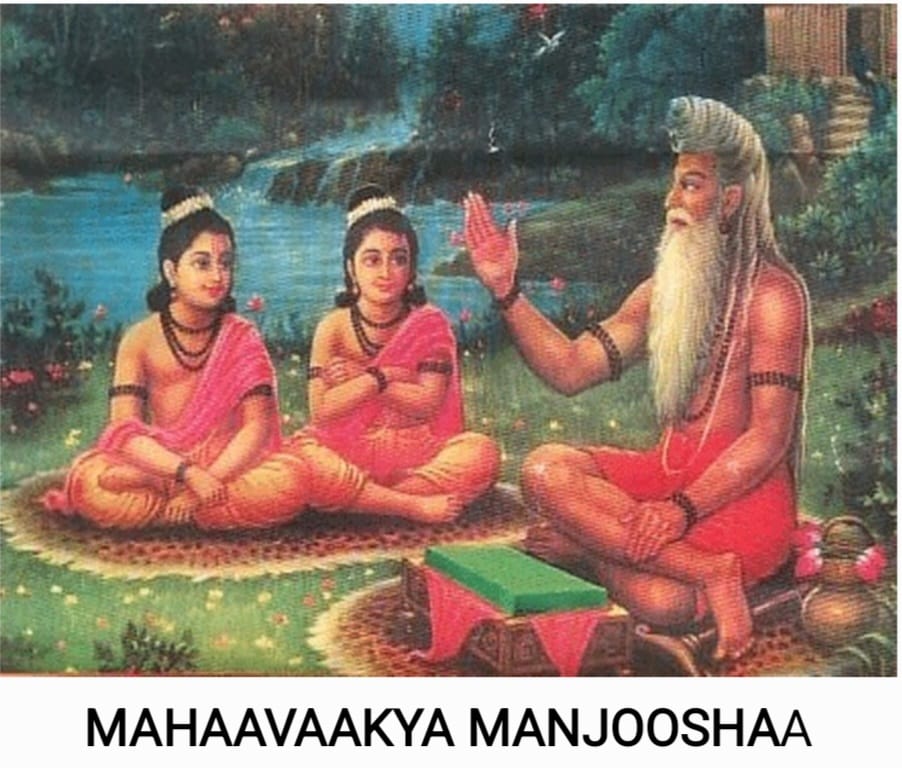
KAIVALYOPANISHAD
JAI SHANKAR (KAIVALYOPANISHAD)
This is a small Upanishad belonging to Atharva Veda. It is a dialogue between the sage
Ashvalaayana and Brahmaa – the Disciple and the Teacher. It stresses the importance of
Renunciation in the path of knowing Brahman.
Its शान्ति मन्त्र is भद्रं कर्णेभिः शृणुयाम देवाः भद्रं पश्येमाक्षभिर्यजत्राः। स्थिरैः अङ्गैः तुष्टुवांसस्तनूभिः व्यशेम देवहितं यदायुः।।(This has been explained in an earlier series)
Ashvalaayana says to Creator Brahmaa:
KAIVALYOPANISHAD
JAI SHANKAR (KAIVALYOPANISHAD)
This is a small Upanishad belonging to Atharva Veda. It is a dialogue between the sage
Ashvalaayana and Brahmaa – the Disciple and the Teacher. It stresses the importance of
Renunciation in the path of knowing Brahman.
Its शान्ति मन्त्र is भद्रं कर्णेभिः शृणुयाम देवाः भद्रं पश्येमाक्षभिर्यजत्राः। स्थिरैः अङ्गैः तुष्टुवांसस्तनूभिः व्यशेम देवहितं यदायुः।।(This has been explained in an earlier series)
Ashvalaayana says to Creator Brahmaa:
01. अधीहि भगवन् ब्रह्मविद्यां वरिष्ठाम्। सदा सद्भिः सेव्यामानां
निगूढाम्। ययाऽचिरात् सर्वपापं व्यपोह्य परात्परं पुरुषं याति विद्वान्।।(1)
01. Revered Master, teach me the knowledge of Brahman. I hear that this is the supreme knowledge, hidden and sacred, sought by the wise and that he who seeks it is freed from
impurities and attains the Supreme Being.
02. तस्मै स होवाच पितामहश्च। श्रद्धा भक्ति ध्यानयोगादवेहि।।
(2)
02. The Patriarch Brahmaa said: Seek to know
Brahman by acquiring faith (in the word of the scriptures and in the Guru), devotion and
meditation.
NOTE: In His Rathotsava Ashirvachan on 16-4-2003(Sunbeam of June 2003) our P.P.Swamiji said: “Know Him by means of Shraddhaa, Bhakti and Dhyaana Yoga, says the
Upanishadic dictum. This is a very important spiritual utterance, a spiritual maxim of utmost significance….. Faith, Devotion and Meditation – These three are foundational essentials.
Cultivate Shraddhaa. Let it grow. Then, what happens? It will pave the way to Devotion,Bhakti. Bhakti is not just a passing mood or sentiment. It implies true Nishthaa,
a firm and abiding anchorage in God. Equipped with these two essentials, you can enter the portals of Dhyaana. If this regimen is followed,
God-Realization is, indeed, possible (देवागेलो
साक्षात्कार सुद्धा संभव आस्स)”.(Tr. V.Rajagopal Bhat)
03. न कर्मणा न प्रजया धनेन त्यागेनैके अमृतत्वमानशुः।
परेण नाकं निहितं गुहायां विभ्राजते यद्यतयो विशन्ति।।(3)
03. Not by work nor by progeny, nor by wealth, but by renunciation, they(aspirants) attained
immortality. The Supreme shines in the cave of
the heart. The self-possessed aspirants enter
That(realize Him). This joy surpasses the joy of heaven.
04. वेदान्त विज्ञान सुनिश्चितार्थाः संन्यासयोगाद् यतयः
शुद्धसत्त्वाः। ते ब्रह्मलोकेषु परान्तकाले परामृतात् परिमुच्यन्ति
सर्वे।।(4)
04. Having attained indubitable and correct knowledge of Vedaanta, having acquired purity by the Yoga of Renunciation, they, (the dedicated aspirants), enter Brahmaloka at the end and shed all bondage.
NOTE: The end(परान्त काल) should not be construed to mean end of the tenure of life, but the end of I and mine notion.
Above two Mantra-s (3,4) are chanted while honouring visiting spiritual dignitaries with
Phala SamarpaN. I am sure most of my readers have listened to these Mantra-s at SCM Shirali
during Dhoolbhet PhalasamarpaN.
05. उमासहायं परमेश्वरं प्रभुं, त्रिलोचनं नीलकण्ठं प्रशान्तम्।
ध्यात्वा मुनिर्गच्छति भूतयोनिं, समस्त साक्षिं तमसः परस्तात्।।
(7)
05. By meditating on the Supreme Lord, who has Uma to keep company, three-eyed,
blue-throated and peaceful, the seer reached the source of all beings, the witness of all and goes beyond darkness.
06. स ब्रह्मा स शिव: सेन्द्रः सोऽक्षर: परमः स्वराट्।
स एव विष्णुः स प्राणः स कालोऽग्निः स चन्द्रमाः।(8)
06. He (the Supreme Lord) is Brahmaa, He is
Shiva, He is Indra, He is Supreme, the changeless Reality,. He is VishNu, He is the
Vital Force, He is Time, Agni and the moon.
07. स एव सर्वं यद्भूतं यच्च भव्यं सनातनम्।
ज्ञात्वा तं मृत्युमत्येति नान्यः पन्था विमक्तये।।( 9)
07. He is all. He is what has been and what shall be. He who knows Him conquered death. There is no other way to liberation.
NOTE: नान्यः पन्था विमुक्तये, नान्यः पन्था विद्यते अयनाय – This is the recurring refrain in the Upanishads. Only by ‘knowing’ Him, we can overcome birth and death. As we saw in SHVETAASHVATARA UPANISHAD just as we cannot roll up the sky
like a mat, so we can’t attain freedom without ‘knowing’ Him(ज्ञात्वा देवं मुच्यते सर्व पाशैः).
08. सर्वभूतस्थमात्मानं सर्वभूतानि चात्मनि।
संपश्यन् ब्रह्म परमं याति नान्येन हेतुना।।(10)
08. By seeing the Self in all beings and all beings in the Self, one realizes Brahman. There is no other way.
NOTE: संपश्यन् means समं पश्यन् seeing God equally present everywhere – समं पश्यन् हि सर्वत्र समवस्थितमीश्वरम्। न हिनस्त्यात्मनात्मानं ततो याति परां गतिम्।।(गीता १३-२८). In our Math logo we have सं च पश्येम).
09. आत्मानमरणिं कृत्वा प्रणवं चोत्तरारणिम्।
ध्यान निर्मथनाभ्यासात् पाशं दहति पण्डितः।।(11)
09. By making the self the lower fire-stick and
the syllable AUM the upper one, the wise aspirant performs the churn in the form of meditation and burns away his bond.
10. एतस्मात् जायते प्राणो मनः सर्वेन्द्रियाणि च।
खं वायुः ज्योतिरापः पृथिवी विश्वस्य धारिणी।।(15).
10. From Him emanate the Vital Force, mind, all the senses, ether, air, fire, water and the earth the upholder of all.
11. यत् परं ब्रह्म सर्वात्मा विश्वस्यायतनं महत्।
सूक्ष्मात् सूक्ष्मतरं नित्यं तत् त्वमेव त्वमेव तत्।।(16)
11. He is the Supreme Brahman. He is in all, He is the comprehensive container of all. Subtler than the subtlest is He. He is eternal. He is thou. Thou art He.
12. जाग्र्स्वप्नसुषुप्त्यादि प्रपञ्चं यत् प्रकाशते।
तद् ब्रह्माहमिति ज्ञात्वा सर्वबन्धैः प्रमुच्यते।।(17)
12. It is Brahman who sports as this spectacle of waking, dream and deep sleep. I am that
Brahman. With this Realisation, one is released from all bonds.
13. त्रिषु धामसु यद् भोग्यं भोक्ता भोगश्च यद्भवेत्।
तेभ्यो विलक्षणः साक्षी चिन्मात्रोऽहं सदाशिवः।।(१८।।)
13. In the three states of consciousness, whatever appears as the enjoyable, enjoyer and the enjoyment, I am the witness thereof, separate from all. I am pure Consciousness. I am the eternally tranquil Shiva.
14. मय्येव सकलं जातं मयि सर्वं प्रतिष्ठितम्।
मयि सर्वं लयं याति तद् ब्रह्माद्वयमस्म्याहम् ।।(१९।।
14. Everything comes into being in me, all exist in me and all merge back into me. I am Brahman, One without a second.
15. अणोरणीयान् अहमेव तद्वत्, महान् अहं विश्वमहं विचित्रम्।
पुरातनोऽहं पुरुषोऽहमीशो, हिरण्मयोऽहं शिवरूपमस्मि।।२०।।
15. I am subtler than the subtlest; Likewise, I am greater than the greatest. I am this wonderful universe. I am the Ancient One of golden effulgence. I am Shiva, the Peaceful.
16. अपाणिपादोऽहमचिन्त्यशक्तिः,
पश्याम्यचक्षुः स शृणोम्यकर्णः।
अहं विजानामि विविक्तरूपो
न चास्ति वेत्ता मम चित्सदाहम्।।२१।।
16. I am without hands or feet. My powers are
unthinkable. I see without eyes and hear without ears. I know in depth everything. I stand aside and apart. None knows me. I am
the eternal consciousness.
17. वेदैरनेकैरहमेव वेद्यो, वेदान्तकृद्वेदविदेव चाहम्।
न पुण्यपापे मम नास्ति नाशो, न जन्म देहेन्द्रिय बुद्धिरस्ति।।२२।।
17. I am the One knowable from the many Veda-s. I am the giver of Upanishads propounding Vedaanta. AMerit and demerit don’t apply to me. I am beyond destruction.
I am unborn. Body, senses, mind and intellect are not in me.
NOTE: The first line of the above Mantra is the 3rd and 4th line of verse no.15 in chapter 15 of Gita (सर्वस्य चाहं हृदि सन्निविष्टो….).
18. न भूमिरापो न च वह्निरस्ति, न चानिलो मेऽस्ति न चाबरं च।
एवं विदित्वा परमात्मरूपं, गुहाशयं निष्कलमद्वितीयम्।।२३।। समस्तसाक्षिं सदसद्विहीनं, प्रयाति शुद्धं परमात्मरूपम्।।२४।।
18/19. Earth, water, fire, air and ether are not in me. Thus should one identify himself as the Supreme Self indwelling the cave of the heart.
(With such practice of his true identity) the Saadhaka attains Paramaatman, the witness of all, beyond manifest and unmanifest, the stainless, pure, the One without a second.
This is KAIVALYA – LIBERATION. It is the flight of the ALONE(केवल )to the ALONE as the Greek
philosopher Plotinus put it. We are केवल in birth
and केवल in death too(एको हि जायते जन्तुः एक एव प्रलीयते). We shouldn’t forget this truth. Our forgetfulness begets sorrow – more dependence, more expectations and, therefore, more disappointments. Remember the famous song of revered Rabindranath Tagore: EKLA CHALO EKLA CHALO EKLA CHALORE!
GLEANINGS FROM KAIVALYA UPANISHAD
CONCLUDED.